
Anyone who’s spent time welding mild steel and then switches to stainless quickly learns it’s a different animal. The reason welding stainless steel is difficult comes down to how the metal handles heat and reacts during the weld. Stainless holds heat longer, so it’s easy to overheat the joint, cause warping, or end up with excessive discoloration and distortion.
Welders often struggle with issues like poor penetration, cracking, or losing corrosion resistance, especially when they use the wrong filler rods or apply mild-steel habits to stainless work. Factors like metal thickness, joint prep, heat input, and arc control matter far more here than most people expect.
Getting it wrong can weaken the weld and shorten the life of the part. In this guide, I’ll break down why stainless behaves the way it does and how to overcome those challenges with practical, shop-tested techniques.
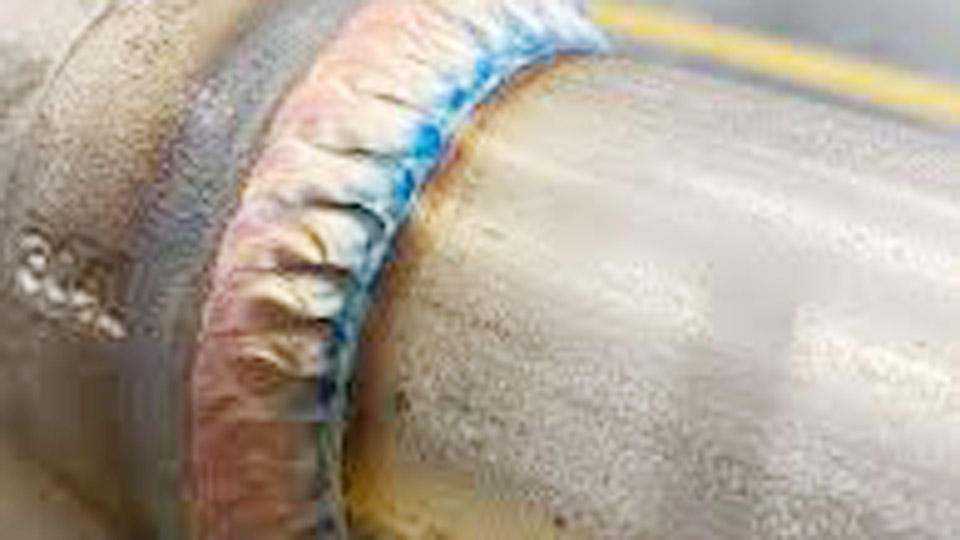
Photo by TIG welding
What Causes All That Distortion in Stainless Steel Welds?
Distortion is one of the biggest headaches when welding stainless steel. It’s basically the metal warping or twisting out of shape due to uneven heating and cooling. Unlike mild steel, which spreads heat nicely, stainless holds onto it like a miser, concentrating the energy right in the weld zone.
This happens because stainless has about half the thermal conductivity of carbon steel. Heat doesn’t dissipate quickly, so the area around the weld expands a lot while the rest stays put. Then, as it cools, everything contracts unevenly, pulling the piece out of alignment. I’ve seen flat sheets turn into potato chips after a long bead.
You’ll run into this on any job where precision matters, like fabricating frames for food processing equipment or repairing automotive parts.
Use low-heat techniques when distortion could ruin tolerances – think thin sheets under 1/8 inch or assemblies that need to fit together perfectly. Because ignoring it leads to extra grinding, hammering, or even scrapping the part, jacking up costs.
On the shop floor, clamp everything down tight with fixtures or backer bars to absorb heat. I always preheat thicker sections to 200-300°F to even things out, but don’t overdo it or you’ll invite other problems like cracking.
For TIG welding, which I prefer for control, keep your travel speed steady at 4-6 inches per minute to avoid lingering heat. If distortion hits anyway, use a hammer and dolly gently while the metal’s still warm – but wear your gloves; I’ve got scars from rushing that.
How Does Heat Tint Sneak Up and Ruin Your Stainless Welds?
Heat tint is that rainbow-colored oxide layer that forms on stainless steel during welding. It’s not just ugly; it strips away the chromium oxide film that gives stainless its rust-proof superpowers, leaving spots vulnerable to corrosion.
The process kicks in when temperatures hit 800-1400°F. Oxygen in the air reacts with the chromium, creating a scale that ranges from straw yellow to blue-black. The darker it gets, the worse the corrosion resistance drops. I’ve pulled apart failed welds on brewery tanks where tint led to pitting and leaks.
This is critical for hygienic applications like pharma or food industries, where contamination can’t happen. Even in DIY projects like custom grills, tint means rust spots down the line. Avoid it by using proper shielding gas – argon or argon-helium mixes for TIG and MIG.
In practice, back-purge the inside of pipes or tubes with argon to protect both sides. I set my flow rate to 15-20 CFH on the torch and 5-10 CFH for purging. Post-weld, pickle the tint with a nitric acid paste if it’s light, or grind it off carefully with a flap disc.
Common mistake? Skimping on gas coverage – I’ve seen pros do it to save argon, only to redo the whole job. For stick welding (SMAW), use low-hydrogen electrodes like E308L-16 to minimize spatter that traps oxygen.
Why Do Cracks Appear So Easily in Stainless Steel?
Cracking in stainless welds comes in flavors: hot cracking during solidification and cold cracking later on. Austenitic grades like 304 and 316 are prone to hot cracking because their fully austenitic structure solidifies with low ferrite, making them brittle at high temps.
Hot cracking forms as the weld pool cools and shrinks, pulling apart if there’s not enough filler to fill gaps. Cold cracking hits in the heat-affected zone (HAZ) from hydrogen pickup or residual stresses. It’s a nightmare because cracks can hide and cause catastrophic failures under load.
Tackle this on high-stress jobs like pressure vessels or structural repairs. Why? Safety first – a cracked weld on a railing could lead to falls. Use it when your base metal is sensitized from previous heat cycles.
Shop tip: Control your heat input to under 1.5 kJ/mm for TIG on thin stuff. I always add ferrite-promoting fillers like 308LSi for MIG to boost crack resistance. Preheat martensitic grades like 410 to 400°F to avoid cold cracks.
Mistake I see often: Over-welding with too many passes, building up stress. Fix bad welds by grinding out the crack fully, then re-weld with lower amps. For example, on 1/4-inch 316, I’d run 90-120 amps on TIG with a 3/32-inch tungsten.
Picking the Right Welding Process for Stainless Steel
Choosing between TIG, MIG, or stick depends on your setup and job. TIG (GTAW) offers precision but is slow; MIG (GMAW) is faster for production; stick (SMAW) is portable but messier.
TIG works by creating an arc with a non-consumable tungsten electrode, shielded by gas. MIG feeds wire continuously, great for longer runs. Stick uses flux-coated rods that melt into the weld.
Go TIG for thin materials or root passes where control matters, like sanitary piping. MIG shines on thicker plates in shops with steady power. Stick for outdoor repairs where wind blows away gas shields.
Practically, for US machines like Lincoln or Miller, set TIG polarity to DCEN for penetration. Amps: 50-80 for 16-gauge stainless. Electrode diameter: 1/16-inch for fine work. Joint prep: Bevel edges at 30 degrees for butt joints over 1/8 inch. Handle materials with clean gloves – oil from your hands causes porosity.
Anecdote: I once MIG’d a stainless tank without pulsing, and the heat warped it bad. Switched to pulsed MIG at 100-150 amps, and it laid flat.
Here’s a quick comparison table:
| Process | Pros | Cons | Best For | Amperage Range (1/8″ Stainless) |
|---|---|---|---|---|
| TIG | Excellent control, clean welds, no spatter | Slow, requires skill | Precision work, thin sheets | 70-100 amps |
| MIG | Fast, semi-automatic, good for thick material | More spatter, needs clean setup | Production runs, structural | 120-180 amps |
| Stick | Portable, works in wind, cheap rods | Slag cleanup, rougher finish | Field repairs, dirty environments | 80-120 amps |
Matching Filler Metals to Your Stainless Base
Filler metal compatibility is key – mismatch it, and you get weak welds or corrosion. For austenitic stainless like 304, use 308L rods or wire to keep carbon low and avoid sensitization.
It works by alloying similar elements: nickel for toughness, chromium for corrosion. L designates low carbon, under 0.03%, to prevent carbide formation.
Use when your project faces corrosion, like marine or chemical exposure. Why? Mismatched fillers crack or rust faster.
Tips: Store rods dry to avoid hydrogen. For 316, go 316L for molybdenum boost against pitting. Diameter: 1/16-inch wire for MIG on thin stock.
Common error: Using mild steel filler on stainless – it dilutes properties. Fix: Cut out and re-weld properly. In my shop, I label everything to avoid mix-ups during rush jobs.
Setting the Perfect Amperage for Stainless Welds
Amperage controls heat input, too high and you burn through or distort; too low, no penetration. For stainless, run 10-20% lower than mild steel due to its sensitivity.
It dictates arc stability and puddle flow. Higher amps widen the bead, lower keep it narrow.
Adjust based on thickness and position – overhead needs less to avoid drips. Why? Proper settings ensure fusion without defects.
Shop advice: Start at 1 amp per 0.001 inch of thickness as a rule of thumb. For 1/8-inch 304 TIG, 80-110 amps. Test on scrap first. I’ve dialed in too hot on a fence repair, causing undercut – fixed by dropping 20 amps and weaving less. Use foot pedals for real-time tweaks on variable machines.
Prepping Joints Like a Pro for Stainless Success
Joint preparation cleans and shapes edges for better fusion. Stainless demands it because contaminants cause porosity.
Grind or file bevels, then wipe with acetone. For V-grooves, aim 60-70 degrees total.
Essential for all joints, especially thick ones where multi-pass is needed. Why? Poor prep leads to inclusions and weak bonds.
Tips: Use dedicated stainless brushes to avoid carbon pickup. Gap butt joints 1/16-inch for filler.
Anecdote: Skipped degreasing once on a manifold, got pinholes everywhere – lesson learned, now I solvent clean religiously.
Step-by-Step Guide to TIG Welding Stainless Steel
Let’s walk through TIG on a basic butt joint for 16-gauge 304.
- Clean the pieces with a stainless wire brush and acetone.
- Set your machine: DCEN, 70-90 amps, argon at 15 CFH.
- Sharpen a 1/16-inch thoriated tungsten to a point.
- Clamp the work flat.
- Strike the arc, add 1/16-inch 308L filler, move at 5 IPM with a slight weave.
- Back-purge if it’s a closed joint.
- Let cool slowly under gas.
This gives clean, strong welds. Adjust for thickness – add preheat for over 1/4 inch.
Handling Safety When Wrestling with Stainless
Safety isn’t optional; stainless welding kicks up fumes with chromium that can irritate lungs.
Wear respirators, gloves, and leathers. Ventilate your space.
Always when indoors or on chrome-heavy alloys. Why? Hexavalent chromium is a carcinogen.
Tips: Use fume extractors positioned close. I’ve felt the burn from skipping masks – now I don’t. Eye protection against UV too.
Common Mistakes Even Pros Make with Stainless
Beginners rush heat, causing burn-through. Pros forget to purge, getting sugaring on the back.
Fix: Slow down, practice on scraps. For wrong rod size – too thick clogs the puddle – switch to thinner.
Machine tips: Calibrate your welder yearly. Joint prep: Always chamfer.
When to Use Shielding Gases and Purging
Shielding protects the weld from oxygen. Argon for most, helium for deeper penetration.
Purging fills the back side with inert gas.
For pipes or tanks. Why? Prevents oxidation inside.
Setups: Use dams or tape to contain gas. Flow 10 CFH until clear.
Pros and Cons of Pulsed MIG for Stainless
Pros: Lower heat, less distortion, better control.
Cons: Needs fancy machines, slower than continuous.
Great for thin automotive panels.
Fixing Porosity in Your Stainless Welds
Porosity is gas bubbles trapped. From dirt or bad gas.
Grind out, clean, re-weld with fresh filler.
Prevent: Dry rods, check hoses for leaks.
Wrapping Up
It’s clear that stainless steel welding demands respect for the material’s quirks. You’ve now got the tools to spot issues like distortion or cracking before they bite, pick the right process and settings, and prep like a seasoned fabricator.
This knowledge equips you to tackle jobs with confidence, whether it’s a hobby project or a pro gig, reducing waste and boosting quality. Always walk your bead with a consistent dab rhythm in TIG – it keeps the heat even and your welds looking like art.
FAQs
Can I weld stainless steel with a regular MIG welder?
Yes, but switch to stainless wire like 308LSi and tri-mix gas (90% He, 7.5% Ar, 2.5% CO2). Set voltage 20-24V, wire speed 300-400 IPM for 0.035 wire on 1/8 inch. Clean everything spotless to avoid spatter.
What amperage should I use for stick welding 304 stainless?
For 1/8-inch E308-16 rods, run 75-110 amps DCEP. Keep a short arc, drag at 10-15 degrees. Too high amps burn the flux; too low, it sticks.
How do I prevent warping on thin stainless sheets?
Clamp to a copper backing plate, use low amps (50-70 for TIG), and stitch weld in short bursts. Cool between passes with compressed air, but not water – it shocks the metal.
Is preheating necessary for all stainless types?
Not for austenitic like 304, but yes for martensitic 410 – 300-500°F to avoid cracks. Use a temp stick to check, and post-heat if quenching fast.
Why does my stainless weld turn black inside pipes?
That’s sugaring from no back purge. Fill the pipe with argon before welding, maintain 5-10 CFH flow. Test with a balloon setup to ensure seal.