
When your MIG welder isn’t working, it can throw off your whole project in a hurry. I’ve had plenty of moments where I pulled the trigger expecting a smooth arc, only to get sputtering, weak penetration, erratic wire feed, or a bead that looked completely wrong.
MIG welding is great when everything is tuned right, but even small issues — low gas flow, dirty metal, worn contact tips, incorrect voltage, or liner problems — can make the machine act up fast. These little hiccups can ruin weld quality, waste wire, and eat up time if you don’t know what to look for.
In this guide, I’ll break down the most common reasons a MIG welder stops performing and show you the exact shop-tested fixes that get things running strong again.
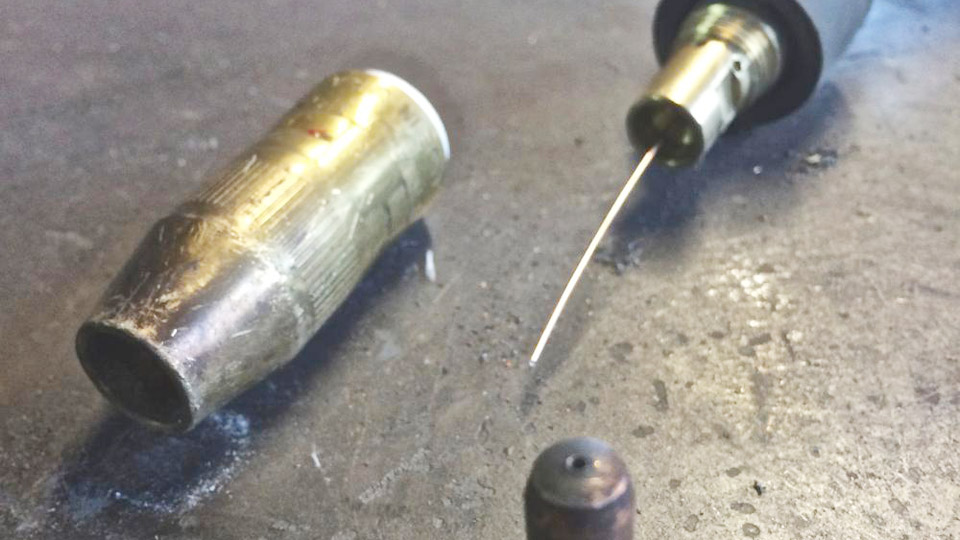
Image by thefabricator
Getting to the Root of MIG Welder Problems
Before we jump into specific fixes, let’s talk about why these issues pop up in the first place. MIG welding, or Metal Inert Gas welding, relies on a delicate balance of electricity, welding gas, welding wire, and technique. When one piece goes off-kilter, the whole process grinds to a halt.
In my experience, about 80% of MIG troubles stem from simple oversights like poor maintenance or mismatched settings, rather than a busted machine. Think of it like tuning a carburetor on an old truck—if the air-fuel mix is wrong, it won’t run smooth.
I remember my first big MIG headache back in the ’90s. I was welding up a trailer frame for a buddy, using a Lincoln Electric machine I’d just bought. The wire kept bird-nesting, tangling up inside the drive rolls. Turns out, I’d skimped on liner maintenance and had a kink building up. A quick clean and realignment fixed it, but it taught me a lesson: regular check-ups prevent downtime.
Common culprits include contaminated consumables, electrical glitches, or environmental factors like humidity in your shop. Addressing these early ensures your welds meet AWS standards for strength and durability, especially on structural jobs where integrity matters most.
Start by powering down your welder and inspecting the basics. Check your power source— is it a stable 220V outlet, or are you running off a generator that might be fluctuating? In the US, most home shops use 110V or 220V setups, but undersized extension cords can drop voltage and cause weak arcs.
Grab a multimeter and verify your input power; it should match the machine’s specs. If it’s low, relocate closer to the breaker or upgrade your cord to at least 10-gauge for longer runs.
Wire Feed Issues: Why Your Wire Isn’t Advancing Smoothly
One of the most frustrating MIG problems is when the wire feed motor hums but nothing comes out, or it stutters like a bad record. This hits DIYers and pros alike, often halting a project dead in its tracks.
Wire feed troubles usually trace back to mechanical snags, tension settings, or consumable wear—stuff that’s easy to overlook in the heat of the moment.
You’re laying beads on mild steel tubing, and suddenly the wire stops cold. In my shop, this happened during a rush job on ATV frames. I traced it to over-tightened drive rolls crushing the wire.
Loosening them slightly and switching to a V-groove roll for my .030-inch welding wire got things flowing again. Always match your drive roll groove to the wire diameter—.023 to .045 inch are common for US market machines like Millers or Hobarts.
To fix erratic feeding, start with a step-by-step check. First, open the side panel and inspect the spool for tangles or bird-nesting. If it’s snarled, cut the bad section and reload, ensuring the spool brake isn’t too tight—it should allow free spin but prevent overrun.
Next, examine the liner; a dirty or kinked one restricts flow. Blow it out with compressed air or replace it every 6-12 months, depending on usage. I keep spares on hand, sized for my wire type—steel liners for solid wire, Teflon for aluminum to reduce friction.
Tension is key here. Set your drive roll pressure just enough to feed without slipping; test by pulling the wire manually—it should advance steadily without deforming.
For settings, on a 180-amp machine like my old reliable, I dial wire speed to 200-300 inches per minute for 1/8-inch steel, adjusting based on voltage (around 18-22V). Common mistake? Ignoring polarity.
MIG typically uses DCEP (electrode positive), but flip to DCEN for some flux-cored wires. If it’s still balky, check the motor brushes or relay—worn ones need replacement, but that’s rare in modern units.
No Arc? Troubleshooting Arc Starting Failures
Nothing’s more aggravating than pulling the trigger and getting zilch—no spark, no sizzle. Your MIG welder isn’t arcing, and you’re left scratching your head. This issue often boils down to electrical connections, ground clamps, or contact tip problems, especially in dusty workshops where corrosion builds up fast.
I once had a no-arc nightmare on a job site welding rebar cages. The machine clicked, but no action. Turns out, the ground clamp was oxidized from sitting in the rain. A quick sandpaper scrub and re-clamp fixed it, but it cost me an hour.
Lesson learned: Always test your ground on scrap before starting. In US codes like AWS D1.1 for structural steel, a solid ground is non-negotiable for consistent penetration.
Step one: Verify power. Is the fan running? If not, check the plug, fuse, or thermal overload—overheated machines shut down automatically.
Next, inspect the torch assembly. The contact tip should be clean and snug; a worn one loses conductivity. Replace with the right size for your wire—.030 tip for .030 wire—and recess it 1/8 to 1/4 inch inside the nozzle for optimal gas coverage.
If that’s good, look at the trigger switch or control board. Loose wires inside the gun can fail; disassemble carefully and reseat connections. For settings, ensure voltage is set appropriately—too low (under 15V) won’t strike an arc on thicker materials.
I aim for 17-20V startup on 16-gauge sheet metal. Environmental factors play in too; cold weather thickens wire liner grease, so warm your shop or use anti-freeze sprays. If all else fails, it might be a faulty rectifier—time to call a tech, but that’s usually after exhausting these basics.
Dealing with Porosity: Those Pesky Bubbles in Your Welds
Porosity shows up as tiny holes or pits in your weld bead, weakening the joint and inviting corrosion. It’s a top complaint among hobbyists transitioning from stick to MIG, often from inadequate shielding or dirty prep work. In real-world apps, like welding exhaust systems, porosity can lead to leaks and failures, costing you redo time.
From my days fabricating boat trailers near the Great Lakes, humidity was the enemy—moisture in the air or on the metal caused instant porosity. I fixed it by storing materials indoors and using a pre-heat torch to dry surfaces.
Causes include low gas flow, drafts, or contaminated wire/gas. Always use argon-CO2 mixes (75/25 for steel) from reputable US suppliers like Airgas to avoid impurities.
To prevent it, set your gas flow to 20-30 CFH on the regulator—too low starves the puddle, too high creates turbulence. Clean your base metal with a wire brush or angle grinder; remove mill scale, rust, or oil.
Torch angle matters: Push at 10-15 degrees for better gas coverage. If porosity persists, check for leaks in hoses or fittings with soapy water. Fix by grinding out the bad weld and redoing with fresh settings.
Pro tip: On aluminum, switch to pure argon and spool gun for smoother feeding, reducing porosity risks.
Cracks in Your Welds: Causes and Quick Repairs
Cracks—whether hot, cold, or crater types—signal stress or incompatibility, and they’re a red flag for structural integrity. I’ve seen them ruin high-stakes jobs, like pressure vessel repairs, where AWS codes demand zero tolerance. Hot cracks form during solidification from impurities; cold ones post-weld from hydrogen or rapid cooling.
Anecdote time: Welding high-carbon steel brackets, I got centerline cracks from quenching too fast. Solution? Pre-heat to 300°F with a rosebud torch and slow cool under blankets.
Match your filler—ER70S-6 for mild steel—to the base metal’s strength. For crater cracks at the end, backstep your bead to fill the pool before stopping.
Prep is crucial: Bevel joints for full penetration on thicker stock (over 1/4 inch). Settings-wise, lower amps to control heat input—say 140-160A on 3/16-inch plate.
If cracks appear, grind them out completely, then reweld in multiple passes. Avoid common pitfalls like welding over paint or using damp wire; dry storage is essential in humid US climates.
Undercutting and Overlap: Smoothing Out Edge Issues
Undercutting digs grooves along the weld toe, while overlap piles excess metal without fusion—both compromise strength and aesthetics. Fabrication hobbyists often hit this with inconsistent technique, especially on fillets.
In my experience building gates, undercut came from torching too fast on thin gauge. I slowed to 10-15 inches per minute and centered the arc.
Causes: High amps, steep angles, or insufficient filler. Fix by dropping voltage to 18V and weaving slightly for better fill.
For overlap, reduce wire speed if it’s globbing up—aim for 250 IPM on .035 wire. Practice on scrap to nail your push technique. If it’s bad, grind flush and reweld.
Table comparison: Undercut pros (none really), cons (weakens joint); fixes (slow speed, lower heat). Overlap pros (extra metal), but cons (poor fusion); fixes (less filler, more heat).
Managing Distortion and Burn-Through
Distortion warps your workpiece from uneven heating, a nightmare on precision fits like automotive frames. Burn-through melts holes in thin stock, common for students learning on sheet metal.
I’ve distorted plenty of panels rushing long beads. Now, I use stitch welding—short 2-inch runs, alternating sides—to minimize heat buildup. Clamp everything solidly with C-clamps or magnets. For burn-through, drop amps to 100-120A on 18-gauge, increase travel to 20 IPM.
Pre-plan your sequence: Weld from center out on large pieces. If warped, heat the convex side with a torch and hammer straight while hot. Always test settings on similar scrap first.
Lack of Fusion and Penetration Problems
Lack of fusion leaves unfused layers, while poor penetration skips the root—both fail load tests per US welding standards. Slow speed or low heat are usual suspects.
On a pipeline mockup, I had shallow penetration from misaligned joints. Fixed by gapping 1/16 inch and upping volts to 22V. Hold a tight arc, 3/8-inch stickout max. For fusion, drag at 5-10 degrees on flux-core.
Step-by-step: Clean edges, set machine (20V/200 IPM for 1/8 steel), weld steadily. Inspect with dye penetrant if critical.
Slag Inclusions and Spatter Control
Slag inclusions trap flux in the weld, from incomplete cleaning between passes. Spatter scatters molten bits, messing up your finish.
I hate spatter on painted jobs—use anti-spatter gel on nozzles. Causes: High volts, dirty wire. Fix: Clean between layers, set 18V/250 IPM.
For inclusions, chip slag thoroughly with a chipping hammer. Store wire dry to avoid moisture.
Craters and Bead Shape Fixes
Craters are depressions at weld ends, inviting cracks. Convex beads hump up from cold settings; concave sink from hot ones.
Backfill craters by pausing and reversing. For beads, balance heat—19V for flat on mild steel.
Optimal Machine Settings for Common Materials
Tailor settings to material.
| Material | Thickness | Voltage | Wire Speed (IPM) | Gas Flow (CFH) | Amps |
|---|---|---|---|---|---|
| Mild Steel | 1/8″ | 18-20 | 250-300 | 20-25 | 140-160 |
| Stainless | 16 gauge | 17-19 | 200-250 | 25-30 (Argon/CO2) | 120-140 |
| Aluminum | 1/4″ | 20-22 | 300-350 (spool gun) | 25-35 (Argon) | 160-180 |
Adjust based on your machine—Lincoln might differ from Eastwood.
Safety First: Preventing Hazards in Troubleshooting
Safety isn’t optional. Wear PPE: helmet, gloves, jacket. Ventilate for fumes—use exhaust fans in enclosed shops. Ground properly to avoid shocks.
I’ve singed eyebrows from flashbacks; now I check gas before striking. Follow OSHA guidelines for US shops.
Maintenance Routines to Keep Your MIG Running
Daily: Clean nozzle, check tips. Weekly: Liner blow-out, spool tension. Monthly: Inspect cables, calibrate dials.
Prolongs life, cuts breakdowns.
Conclusion
You’ve now got a toolbox of fixes for why your MIG welder isn’t working—from wire woes to defect debugging. You’re better equipped to tackle issues head-on, ensuring strong, safe welds that hold up in real applications.
Whether you’re a weekend warrior or shop pro, remember: Patience and practice pay off. One pro tip—always log your successful settings in a notebook; it’ll save you guesswork next time.
FAQ
Why is my MIG welder popping and sputtering?
Popping often means contaminated wire or gas. Clean your consumables, check for leaks, and ensure proper flow—20-25 CFH for steel. Adjust voltage down if it’s too high, creating instability.
How do I fix bird-nesting in my wire feeder?
Bird-nesting happens from loose tension or kinks. Reset drive roll pressure to grip without crushing, straighten the liner, and reload the spool carefully. Test feed without gas first.
What causes weak welds on thin metal?
Usually burn-through from excess heat. Lower amps, speed up travel, and use pulsed MIG if your machine has it for better control on gauge materials.
Why does my MIG arc wander or blow out?
Drafts disrupting shielding gas are common. Block wind with screens, increase flow slightly, and keep nozzle close—1/2 inch from work. Check polarity too.
How often should I replace MIG consumables?
Tips every 8-10 hours of welding, nozzles weekly if spattery, liners quarterly. Depends on usage, but fresh parts prevent 90% of issues.