
One question that comes up again and again in the shop is how much does a stick welder make, and it’s one I’ve personally had to figure out along the way. When you’re spending your days running 6011 or 7018 filler rods, focusing on clean arc control, and comparing stick welding vs MIG vs TIG jobs, the pay side of the trade can feel confusing.
Earnings change depending on skill level, the ability to handle different metal thicknesses, solid joint prep, and tougher work like stainless welding or structural repairs.
This matters in real-world welding because better technique leads to stronger, safer welds — and those skills directly open the door to higher-paying work. Keep reading, because this guide breaks down what stick welders actually earn and what really influences the paycheck.
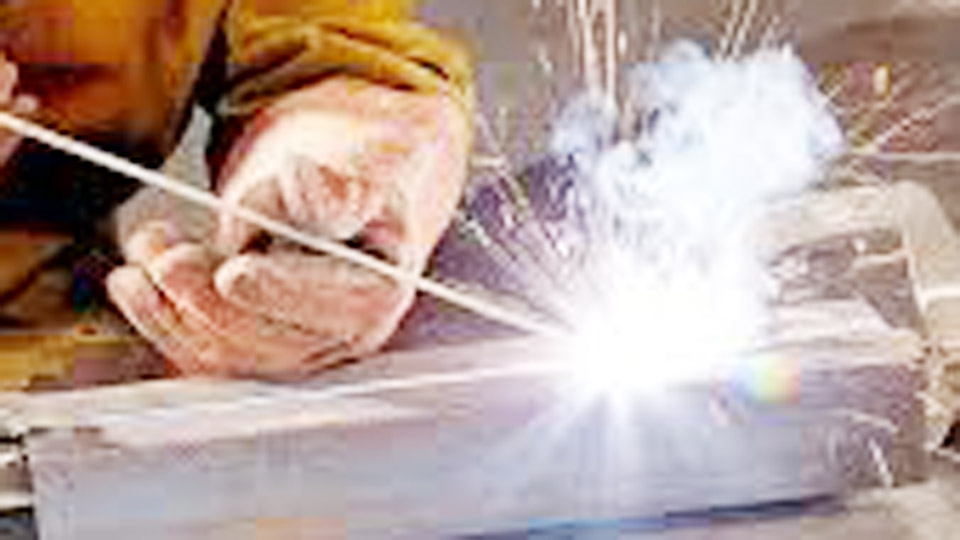
Image by tooliom
What is Stick Welding and Why Does It Matter for Your Wallet?
Stick welding is that old-school process where you strike an arc with a flux-coated electrode, melting it into the joint while the flux shields the weld from crap in the air. It’s versatile as hell—works on dirty metal, outdoors in the wind, and on thick plates that other methods can’t touch without fancy gas setups.
I’ve used it on everything from repairing heavy machinery in the rain to building bridges where precision isn’t as critical as sheer strength.
But here’s why it ties straight to your earnings: stick welding shines in industries like construction, pipeline, and shipbuilding, where jobs pay premium for guys who can handle tough conditions. It’s not about pretty beads; it’s about welds that hold under pressure, like on structural beams where a failure means disaster.
Safety-wise, you’re dealing with high amps and slag that can fly, so always wear your full PPE—no shortcuts, or you’ll end up in the ER missing shifts.
Material compatibility is key too; stick rods like 6010 for deep penetration on rusty steel or 7018 for clean, strong fills. Choose wrong, and you’re reworking, which eats time and money.
In my experience, specializing in stick got me into union jobs faster because it’s essential for code work. If you’re a student or hobbyist, practice on scrap—dial in 90-120 amps for 1/8-inch rods, keep a tight arc, and watch your travel speed.
Common mistake? Too much heat leading to undercut; fix it by steadying your hand and angling the rod right. This skill set directly boosts your marketability, turning a basic welder into one shops fight over.
Average Earnings for Stick Welders in the USA
From what I’ve seen across shops and job sites, the average stick welder pulls in around $40,000 to $55,000 a year, but that jumps with experience and location. That’s roughly $20 to $26 per hour, depending on overtime and perks.
Nationally, welders as a group average about $49,550 annually, or $23.82 hourly, but stick specialists often land in the mid-range because it’s a core skill in heavy industries.
Why the spread? It’s all about where you work and what you bring. In 2025, projections show averages holding steady around $35,000 to $80,000 overall for welders, but stick guys in demanding roles push the upper end. I’ve worked gigs where base pay was $22 an hour, but with travel per diems and hazard pay, it added up quick.
Here’s a quick table breaking down average annual salaries by state, based on real data—focus on high-demand areas if you’re mobile:
| State | Average Annual Salary | Notes |
|---|---|---|
| Alaska | $70,000 | High due to remote oil work; cold weather premium. |
| Hawaii | $68,000 | Island logistics bump pay; stick for ship repairs. |
| Washington | $52,441 | Strong in aerospace and construction. |
| New York | $51,500 | Union heavy; urban infrastructure jobs. |
| Texas | $48,000 | Pipeline heaven for stick welders. |
| Florida | $40,766 | Lower cost of living, but marine work available. |
| Georgia | $41,650 | Manufacturing hubs; entry-friendly. |
If you’re in a low-pay state, consider relocating—I’ve chased jobs from the Midwest to the Gulf Coast, and it paid off. Always factor in cost of living; $50k in Texas stretches farther than in California.
Entry-Level Stick Welder Salaries: Getting Your Foot in the Door
Starting out as a stick welder? Expect $35,000 to $45,000 a year, or about $17 to $22 per hour. That’s for fresh boots with basic certs, grinding and tacking in shops or on basic repairs. I remember my first job—$15 an hour welding farm gates, learning to strike arcs without sticking every time.
What it is: Entry-level means you’re qualified but green, handling simple joints like lap or butt welds on mild steel.
How it works: Shops test you on basics—set your machine to DC positive for most rods, clean the base metal thoroughly, and maintain a 1/8-inch arc length. When to use: For quick fixes or production where speed matters over perfection.
Why start here? It builds fundamentals, and pay ramps up fast with practice. Safety tip: Always ground properly—I’ve seen sparks fly from bad clamps, risking shocks. Material insights: Stick to E6013 for easy starts on thin stuff; it’s forgiving for newbies.
Common mistakes: Rushing prep, leading to porosity. Fix by wire brushing and using anti-spatter. Pro tip: Practice vertical ups—dial 70-90 amps, weave slightly for better fusion. This skill gets you noticed for better gigs.
As a hobbyist or student, grab a cheap inverter welder and scrap metal. DIY projects like building a workbench teach joint design—bevel edges for full penetration. In six months, you could bump to $20+ hourly with a solid portfolio.
Experienced Stick Welder Earnings: Where the Real Money Kicks In
Once you’ve got years under your belt, earnings climb to $50,000+, with top guys hitting $80,000 or more in specialized roles. I’ve pulled $60k easy on structural jobs, welding I-beams where every pass counts for integrity.
For mid-career (3-6 years), expect $45,000-$60,000; seniors (7+) can top $70,000. It’s about reliability—shops pay for welders who minimize rework.
Factors That Influence Your Pay as a Stick Welder
Location’s huge—Alaska or Hawaii for top dollar, but Midwest for steady work. Certifications like AWS D1.1 boost you $10k-20k annually. Industry matters: Pipeline stick welders average higher due to hazards.
Experience level: More time means handling complex setups, like multi-pass on thick pipe. Skills like reading blueprints or NDT add value.
Personal story: I doubled my pay by getting pipe certs—learned to root with 6010, fill with 7018. Settings: 100 amps root, 120 fill; preheat to avoid cracks.
Pros of experience: Better jobs, overtime. Cons: Physical toll—back issues from awkward positions. Tip: Use knee pads and rotate tasks.
Comparing Stick Welding Salaries to Other Processes
Stick isn’t always the highest payer, but it’s steady. Here’s a comparison:
| Process | Average Annual Salary | When to Use | Pros/Cons for Earnings |
|---|---|---|---|
| Stick (SMAW) | $40,000-$55,000 | Dirty, outdoor work | Reliable in tough spots; lower entry but caps without certs. |
| MIG | $60,971 | Production, clean metal | Faster, higher volume jobs; easier to learn for quick raises. |
| TIG | $60,291 | Precision, exotics | Top pay in aero; steep learning curve pays off long-term. |
| Flux-Core | $50,000-$65,000 | Heavy fab, windy sites | Similar to stick but faster; good for shipyards. |
I’ve switched processes mid-job—stick for roots, MIG for fills—to speed up and earn more. If you’re a pro, learn TIG for premium; hobbyists, stick’s cheap to start.
Safety across all: Ventilation for fumes; stick’s flux creates more slag, so chip carefully.
High-Paying Jobs That Rely on Stick Welding Skills
Pipeline welding: $70,000-$100,000+; mobile rigs pay big, like $200k for pros. Stick for downhill roots on line pipe.
Structural welder: $50,000-$70,000; buildings, bridges. Use 7018 for code compliance.
Underwater: $54,000 average, but hazards up it. Stick works wet.
Rig welder: $77,000 on oil platforms. Travel required.
I’ve done pipeline—prep joints with grinders, weld in ditches. Tip: Dry rods in ovens to avoid hydrogen cracking.
Common mistake: Poor fit-up; fix with clamps for tight gaps.
How to Increase Your Earnings as a Stick Welder
Want more cash? Get certified—AWS stick certs add $15k+. Step-by-step: 1) Practice positions (flat, vertical). 2) Test at a lab—bend tests prove strength. 3) Renew every few years.
Learn extras: Pipe fitting, rigging. Travel for contracts—I’ve made $100/hr on shutdowns.
Union up: Better benefits, $48/hr possible. Side gigs: Repair work at $50/hr.
Personal lesson: Specialized in 6G pipe—settings 80-100 amps, short arc—landed high-pay jobs.
Safety: Certs include hazard training, keeping you working.
Real-World Shop Stories and Lessons from the Field
Back in ’15, I was on a bridge job, stick welding gussets in the wind. Pay was $28/hr, but overtime pushed $65k that year. Mistake: Forgot to shield from gusts—porous welds. Fixed by tenting and slower speed.
Another time, hobbyist buddy started DIY, made $10k side welding trailers. Tip: Use 6011 for AC machines on dirty metal.
In fabs, I’ve seen guys burn out from ignoring ergonomics—rotate wrists to avoid strain.
These stories show: Skills + smarts = better pay. Focus on quality—strong welds mean repeat business.
Conclusion
You’ve got the straight scoop on how much a stick welder makes, from entry scraps to six-figure hauls in the right niches. Whether you’re grinding your first bead or chasing pipeline bucks, these insights arm you to pick processes, certs, and jobs that fit your life.
You’re better prepared to tackle real-world challenges—like choosing 7018 for critical strength or prepping joints to save time and avoid costly fixes. Always bake your low-hydrogen rods before use; it prevents cracks and keeps your welds code-ready, opening doors to those premium-paying gigs. Stay safe out there, and keep the arc steady.
FAQs
How Does Experience Affect a Stick Welder’s Pay?
Experience turns $35k starters into $70k vets by proving you can handle pressure jobs without babysitting. I’ve seen it firsthand—after 5 years, you’re trusted with multi-pass structural work, bumping hourly to $30+.
What’s the Best Way to Get Certified in Stick Welding?
Start with AWS basics: Practice 3G/4G positions on plate, test at an accredited shop. Costs $200-500, but pays back quick in raises. Focus on clean roots and caps for passing bends.
Why Might Stick Welding Pay Less Than TIG in Some Jobs?
Stick’s rugged but slower for precision; TIG shines in aero at $60k+, while stick dominates construction at $50k. Blend both for versatility and higher overall earnings.
How Can Location Impact My Earnings as a Welder?
Head to Alaska for $70k in oil, or Texas for pipeline volume. I’ve moved for $10k bumps—factor living costs, but remote spots add per diems.
What Common Mistakes Lower a Welder’s Earning Potential?
Skipping certs or safety training leads to low-ball jobs. Fix by investing in skills—poor prep causes rework, killing efficiency and bonuses.