
Brazing copper is a fundamental skill for plumbers, HVAC technicians, and DIY enthusiasts working with copper pipes and fittings. This metal-joining process creates strong, leak-proof connections that can withstand high pressures and temperatures. Unlike soldering, brazing uses higher temperatures and stronger filler metals to create joints that are often stronger than the base metal itself.
To braze copper, you need to heat the joint to 1100-1500°F using a torch, apply flux to prevent oxidation, then feed brazing rod into the heated joint where it melts and flows through capillary action. The process requires proper surface preparation, controlled heating of the fitting first, and allowing the filler metal to completely surround the joint before cooling naturally.
Copper Brazing Basics
Brazing involves heating copper components to temperatures between 1100°F and 1500°F while applying a brass or bronze filler rod that melts and flows into the joint. The process creates a metallurgical bond that’s both durable and corrosion-resistant.
The key difference between brazing and soldering lies in temperature. Soldering typically occurs below 840°F, while brazing requires higher heat. This temperature difference results in stronger joints that can handle greater stress and pressure.
Copper brazing applications include:
– HVAC refrigeration lines
– Plumbing connections
– Industrial piping systems
– Electrical components
– Decorative metalwork
Essential Tools and Materials for Copper Brazing
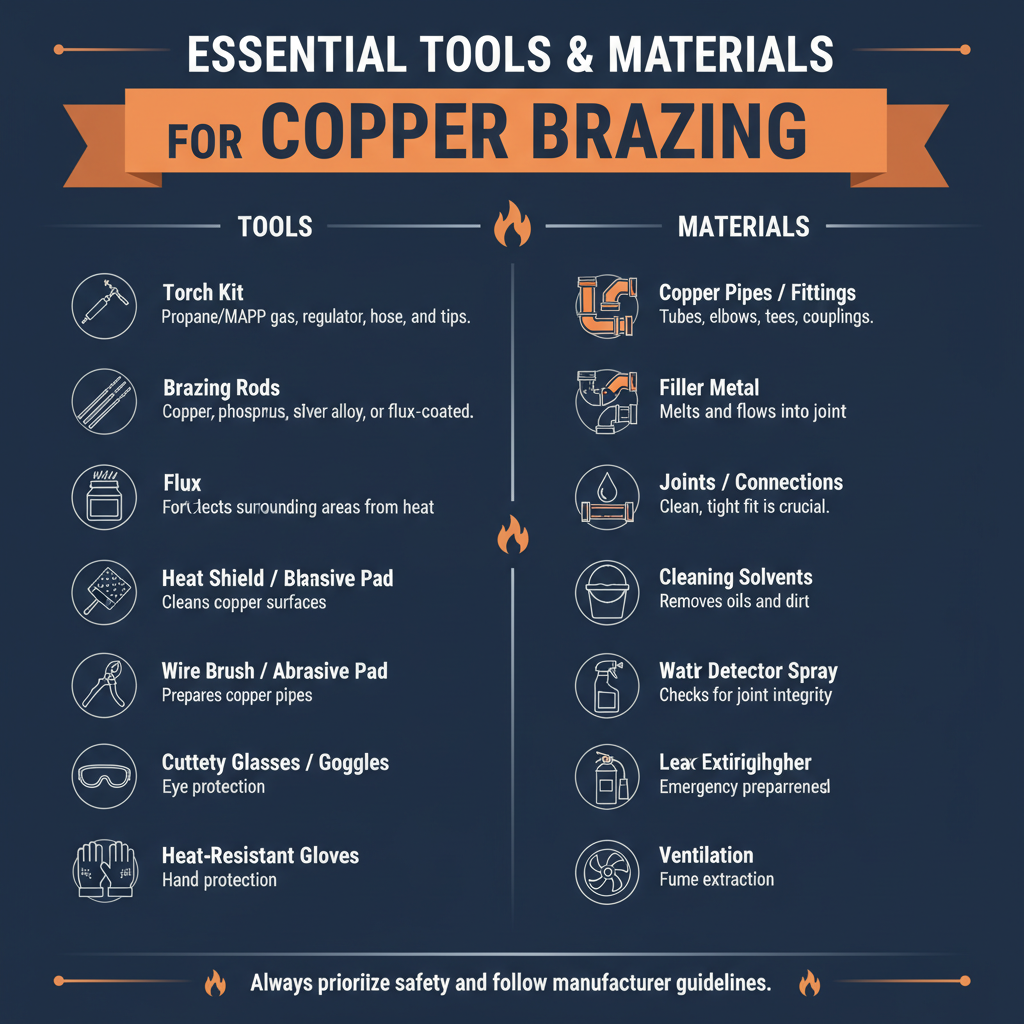
Required Equipment
A reliable torch is crucial for successful copper brazing. The Harris 4400-4 Cutting and Welding Outfit provides consistent heat output and precise flame control, making it ideal for both beginners and professionals working with various copper pipe sizes.
Other essential tools include:
– Pipe cutters or hacksaw
– Emery cloth or sandpaper
– Wire brush
– Flux brush
– Safety glasses
– Heat-resistant gloves
– Fire extinguisher or water bucket
Materials Needed
Brazing flux prevents oxidation during heating and helps the filler metal flow properly. Choose a flux specifically designed for copper brazing.
Filler rods come in different compositions:
– BCuP (copper-phosphorus): Self-fluxing on copper
– BAg (silver-bearing): Higher strength, requires flux
– RBCuZn (brass): Cost-effective for general applications
Safety Equipment
Proper ventilation is essential when brazing copper. Work outdoors or in well-ventilated areas to avoid inhaling fumes. Always wear safety glasses and heat-resistant gloves to protect against burns and flying sparks.
Step-by-Step Copper Brazing Process
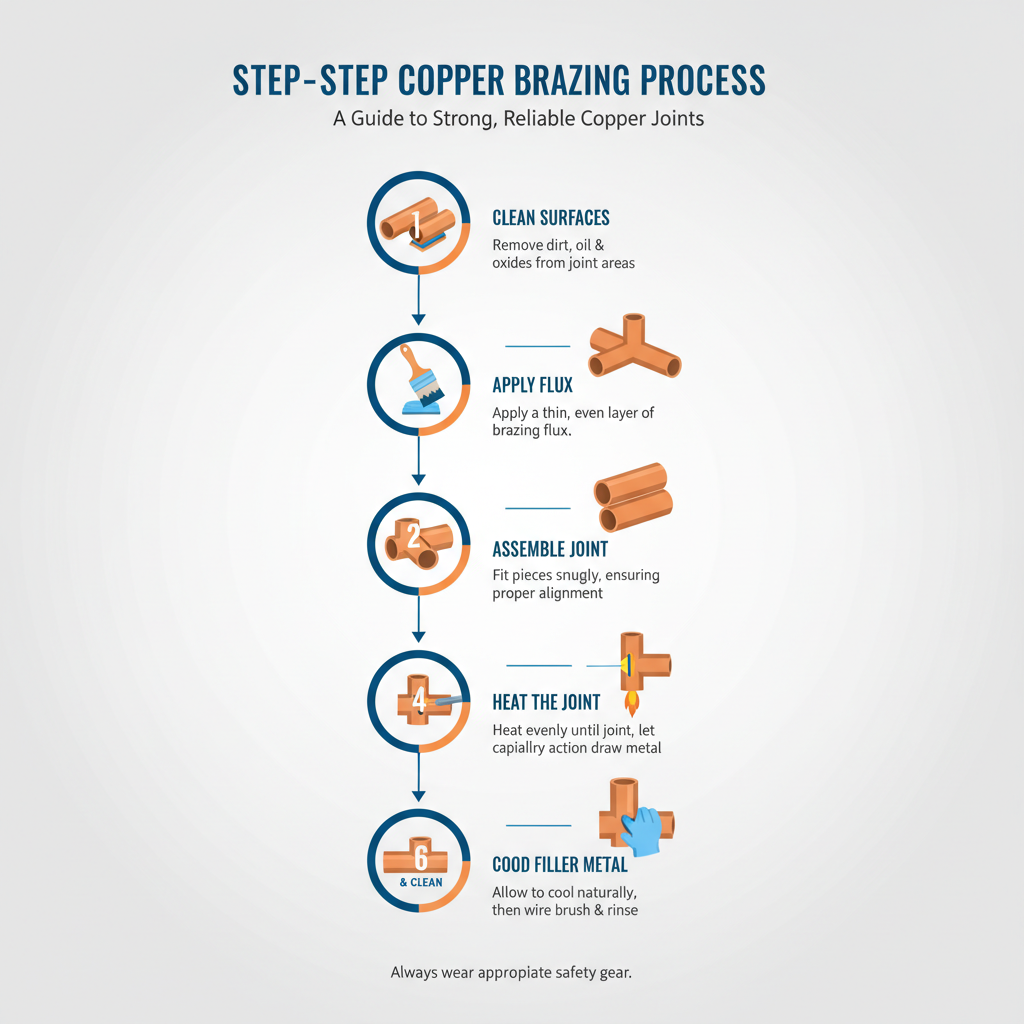
Step 1: Prepare the Joint
Cut copper pipes square using a pipe cutter for clean, perpendicular cuts. Remove any burrs from the inside and outside of the pipe using a deburring tool or file.
Clean both surfaces thoroughly with emery cloth or sandpaper until they shine. Remove all oxidation, dirt, and grease. The joint area should be bright copper color for optimal brazing results.
Step 2: Apply Flux
Brush flux onto both the pipe end and fitting socket. Use a thin, even coat covering the entire joint area. Flux prevents oxidation during heating and promotes proper filler metal flow.
Assemble the joint immediately after applying flux. Ensure proper fit-up with appropriate clearances – typically 0.002 to 0.005 inches for capillary action.
Step 3: Heat the Joint
Light your torch and adjust the flame to a neutral setting. Begin heating the thickest part of the joint first, typically the fitting rather than the pipe.
Move the flame in a circular motion around the joint to ensure even heating. The Bernzomatic TS8000 High Intensity Torch offers excellent heat control and consistent flame characteristics for precise temperature management during the brazing process.
Heat until the flux becomes clear and active, indicating the joint has reached proper brazing temperature.
Step 4: Apply Filler Metal
Touch the brazing rod to the joint opposite the flame. When the base metal reaches proper temperature, the rod will melt and flow into the joint through capillary action.
Feed the rod steadily as it melts, allowing it to flow completely around the joint. A properly brazed joint shows a complete fillet of filler metal around the entire circumference.
Step 5: Cool and Clean
Remove heat and allow the joint to cool naturally. Don’t quench with water, as rapid cooling can cause stress cracks.
Once cooled, remove flux residue with a wire brush and warm water. Flux residue can cause corrosion if left on the joint.
Common Copper Brazing Techniques
Capillary Joint Brazing
This most common technique relies on capillary action to draw molten filler metal into tight clearances between pipe and fitting. Proper clearance is critical – too tight prevents filler flow, while too loose creates weak joints.
Fillet Brazing
Used for joints that don’t rely on capillary action, such as overlapping plates or components with larger gaps. The brazing material forms a visible fillet around the joint perimeter.
Step Brazing
When brazing multiple joints in close proximity, use different melting point filler metals. Start with high-temperature alloys and progress to lower-temperature materials to avoid remelting previous joints.
Troubleshooting Common Brazing Problems
Incomplete Joint Penetration
Causes:
– Insufficient heat
– Poor joint clearance
– Contaminated surfaces
– Inadequate flux
Solutions:
– Increase heat gradually
– Verify proper fit-up
– Clean surfaces thoroughly
– Apply fresh flux
Porous or Weak Joints
Symptoms:
– Visible holes or gaps in filler metal
– Joint failure under pressure
– Discolored or rough appearance
Prevention:
– Maintain proper heating rate
– Use correct filler metal composition
– Ensure adequate joint cleanliness
– Avoid overheating
Flux-Related Issues
Excessive flux can cause porosity, while insufficient flux leads to oxidation. Apply thin, even coats and remove residue completely after brazing.
Quality Control and Testing
Visual Inspection
Examine completed joints for:
– Complete filler metal coverage
– Smooth, uniform appearance
– Proper fillet formation
– No cracks or voids
Pressure Testing
Test brazed systems according to applicable codes. Typical test pressures range from 1.5 to 2 times working pressure, held for specified durations.
Leak Detection
Use approved leak detection methods such as:
– Soap solution testing
– Electronic leak detectors
– Pressure decay testing
Maintenance and Best Practices
Equipment Care
Clean torch tips regularly to maintain proper flame characteristics. Store brazing rods in dry conditions to prevent contamination.
Skill Development
Practice on scrap materials before working on critical applications. Develop consistent heating techniques and filler metal application methods.
Code Compliance
Follow applicable plumbing and HVAC codes for your region. Many jurisdictions require specific brazing procedures and inspector approval for certain applications.
Conclusion
Mastering copper brazing requires understanding proper techniques, using quality materials, and practicing consistently. The process creates strong, reliable joints suitable for demanding applications when performed correctly. Focus on thorough preparation, controlled heating, and proper filler metal application for successful results.
Remember that safety should always be your first priority. Work in well-ventilated areas, use appropriate protective equipment, and keep fire safety tools readily available. With practice and attention to detail, you’ll develop the skills needed to create professional-quality brazed copper joints that provide years of reliable service.
Whether you’re a professional tradesperson or DIY enthusiast, these fundamental brazing principles will help you achieve consistent, high-quality results in your copper joining projects.