
Every welder knows the struggle of trying to tack out a project on a wobbly workbench or an old, cramped table in the corner of the garage. When I decided to build a custom welding table for my garage, it wasn’t just about having a sturdy surface — it was about creating a space where I could handle everything from thin metal MIG welds to heavier TIG projects, with proper joint prep, arc control, and room for all my filler rods and clamps.
The right table makes a huge difference for weld quality, safety, and efficiency, especially when you’re juggling metal thicknesses or working with stainless steel.
Too many welders underestimate this, ending up with warped parts, messy welds, or even injuries. In this guide, I’ll show you step-by-step how to build a table that’s strong, versatile, and perfect for any garage setup — so you can weld like a pro without compromise.
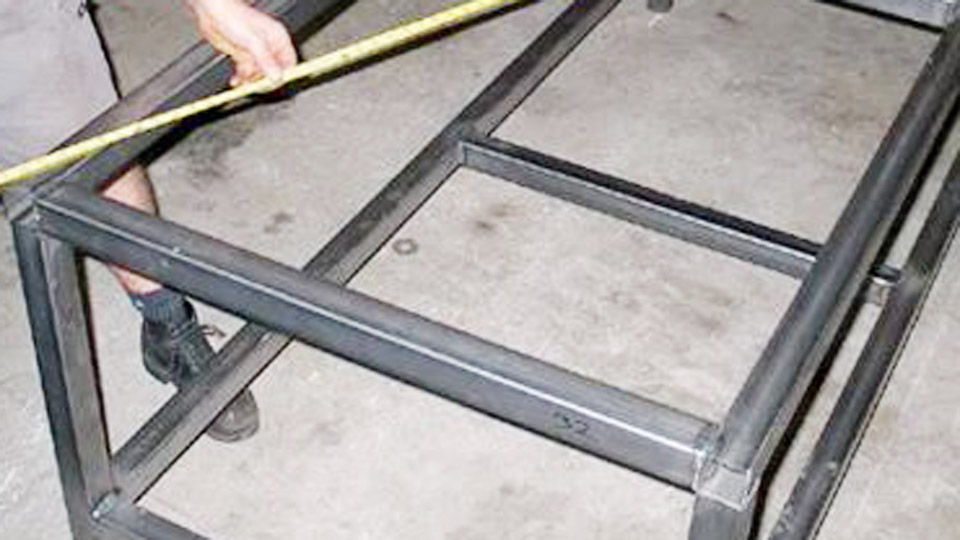
Photo by motortrend
Why a Custom Welding Table Beats Store-Bought Options
Off-the-shelf welding tables are fine if you’re just starting out, but they often come with compromises. They’re either too small for bigger projects, like fabricating a trailer hitch, or overpriced for what you get—a thin top that dents easily under clamping pressure.
I’ve seen guys shell out hundreds on a table that warps after a few heavy MIG sessions because the frame wasn’t beefy enough.
Building your own lets you tailor it to your garage’s footprint. Maybe you need it mobile with casters for rolling out of the way, or extra sturdy for plasma cutting thick plate.
From a safety standpoint, a custom table means you can add grounding points right where you need them, reducing the risk of arc flashes or electrical hazards.
Plus, it ensures better weld integrity since you can level it perfectly, avoiding those uneven beads that lead to weak spots.
Think about material compatibility too. Store-bought ones might use mystery metal that reacts poorly to spatter, but when you build it, you choose steel that’s easy to clean and won’t contaminate your welds.
In my shop, I once used a generic table that rusted quick in humid weather, ruining a batch of stainless workpieces. Lesson learned—custom is king for reliability.
Planning Your Welding Table Design
Before you strike an arc or cut a single piece, sketch it out. I’ve wasted material jumping straight in, only to realize the height was off and I was bending over like a pretzel all day. Start by measuring your garage space.
Aim for a table around 3×5 feet if you’re working on automotive parts, or smaller like 2×4 for hobby stuff. Height-wise, I like mine at waist level—about 36 inches—so I can weld standing without straining.
Consider your welding processes. If you’re mostly TIG on aluminum, you might want a thicker top for heat dissipation. For stick welding heavy steel, reinforce the legs to handle the weight.
Draw a simple blueprint on graph paper or even scrap cardboard. Factor in add-ons like vise mounts, tool hooks, or shelves underneath for storing rods and wire.
User intent here is key: folks search for this because they want something functional, not fancy. Keep it simple—four legs, a frame, and a top. But think about expansion. My first table had slots for future extensions, which saved me rebuilding when I added a plasma cutter setup.
Choosing the Right Materials for Durability and Performance
Materials make or break your table. I’ve learned the hard way that skimping here leads to wobbles and warps. For the top, go with mild steel plate, at least 1/4-inch thick.
It’s affordable, welds easy, and holds up to grinding and hammering. If you’re flush, 3/8-inch gives extra rigidity for heavy fab work, like building gates or frames.
For the frame and legs, square tubing is your friend—2×2 inch with 1/8-inch wall thickness works for most garages. It’s strong, light enough to move, and doesn’t flex under load.
Avoid round pipe; it’s harder to level and clamp to. Casters? Get locking ones rated for 500 pounds each if you want mobility.
Don’t forget extras: angle iron for bracing, flat bar for shelves, and maybe some expanded metal for a lower tray to catch spatter.
Cost-wise, expect $200-400 in materials from a local supplier like a steel yard—way cheaper than buying pre-made. Check for mill scale on the steel; grind it off before welding to avoid porosity in your joints.
In terms of compatibility, if you’re welding stainless often, consider a stainless top to prevent cross-contamination. But for general use, mild steel with a good coat of paint after building keeps rust at bay.
Pros and Cons of Common Table Top Materials
Use a table like this to compare options quickly:
| Material | Pros | Cons | Best For |
|---|---|---|---|
| Mild Steel Plate | Affordable, easy to weld, durable | Can rust if not protected | General fabrication, MIG/Stick |
| Stainless Steel | Corrosion-resistant, clean for sensitive welds | Expensive, harder to source thick pieces | TIG on aluminum/stainless |
| Cast Iron | Excellent heat sink, flat surface | Heavy, prone to cracking if dropped | Precision work, but rare in garages |
| Aluminum | Lightweight, no rust | Warps under high heat, expensive | Light-duty, non-ferrous projects |
This helps you decide based on your shop’s needs. I stick with mild steel 90% of the time—it’s forgiving and versatile.
Essential Tools and Equipment for the Build
You don’t need a full fab shop, but gather the basics. A good MIG welder like a Lincoln or Miller with at least 200 amps handles the joints fine. I’ve used my old Hobart for years on these builds. Angle grinder with cutoff wheels and flap discs for prepping and cleaning.
Measuring tools: tape measure, square, level—non-negotiable for straight cuts and level top. Clamps, lots of them; C-clamps and magnetic squares keep everything aligned during tacking.
Safety gear: welding helmet, gloves, respirator for grinding dust. If you’re cutting with a plasma, add eye protection rated for that. For garage warriors without fancy tools, a chop saw or even a hacksaw works for tubing, but invest in a bandsaw if you do this often.
Pro tip from experience: Calibrate your welder settings before starting. For 1/8-inch tubing, I run 18-20 volts on MIG with .035 wire at 250-300 IPM feed speed. Test on scrap to avoid burn-through.
Step-by-Step Guide to Building Your Table
Let’s get our hands dirty. I’ll break this down like I’m walking you through it in the shop. Assume you’ve got your materials cut to size—legs at 34 inches (for 36-inch height with top), frame pieces to match your dimensions.
Preparing Your Materials and Workspace
First, clear your garage floor. Lay out all pieces and double-check measurements. Grind off any burrs or scale from cuts—this prevents weak welds. If your steel’s oily, wipe it down with acetone for clean joints.
Set up your welder: For MIG, use 75/25 argon/CO2 gas, .035 ER70S-6 wire. Stick with 7018 rods if that’s your process—low hydrogen for strength. Safety check: Fire extinguisher nearby, good ventilation to avoid fumes building up.
Assembling the Frame
Start with the legs. Stand them upright and tack the cross braces. I use 2-foot sections of tubing for horizontals, spaced evenly for stability. Clamp everything square—use a framing square at each corner.
Tack weld lightly first, maybe 1-inch beads at 140 amps. Check for plumb with your level. If it’s off, break the tacks and adjust.
Full weld once aligned: Run continuous beads on all joints for max strength. I’ve skipped this step before and ended up with a wobbly mess—don’t do it.
Attaching the Top
Flip the frame upside down on a flat surface. Place the steel plate on top, centered. Clamp it down tight. Tack around the edges, then weld fully. For thicker plate, preheat to 200°F with a torch to avoid cracking.
If adding slots or holes for clamps, mark and drill them now—1-inch holes spaced 6 inches apart work great for hold-downs. Grind welds flush for a smooth surface.
Adding Custom Features
Here’s where it gets personal. Weld on vise mounts using angle iron brackets. For mobility, attach casters to the legs—drill and bolt them securely. Add a grounding lug: Weld a bolt to the frame for easy clamp attachment.
Shelf underneath? Weld flat bars across the lower braces and lay expanded metal on top. It’s perfect for storing consumables without cluttering the top.
Finishing Touches and Testing
Grind all welds smooth, then paint with rust-inhibiting primer and enamel. Let it cure 24 hours. Test it: Clamp a piece and weld a test joint. Jump on it—shouldn’t budge. If it does, reinforce weak spots.
Total build time? 4-6 hours for experienced hands, longer if you’re new. Cost efficiency shines here: My last one ran $250, lasts forever.
Safety Considerations During and After the Build
Safety isn’t an afterthought—it’s baked in. During building, wear full PPE: Helmet for welding, face shield for grinding. Sparks fly far, so clear flammables from your garage.
Post-build, ground your table properly. Attach a heavy gauge wire to your welder’s ground—prevents shocks. Level it to avoid tip-overs with heavy loads. If using casters, lock them during work.
Heat management: Welding tables get hot, so use fire-resistant mats underneath if your floor’s concrete. I’ve seen slag start smoldering on wood chips—big no-no. For long sessions, add ventilation fans to pull fumes away.
In real scenarios, like fabbing exhaust systems, a safe table means no slipping workpieces that could cause burns. Always inspect for cracks after heavy use.
Customizing for Specific Welding Needs
One size doesn’t fit all. If you’re into automotive, add extensions for longer pipes. For precision TIG, incorporate adjustable height legs—weld threaded feet for tweaking.
Hobbyists might want foldable sides for storage in tight garages. Pros handling heavy plate? Double up the legs or add diagonal braces for torsion resistance.
Material tweaks: For aluminum work, epoxy a sacrificial aluminum sheet on top to avoid contamination. I’ve customized mine with built-in rulers etched along the edges—saves measuring time on repetitive jobs.
Common mistake: Over-customizing early. Start basic, add as you go based on what your projects demand.
Common Mistakes and How to Avoid Them
Even seasoned welders mess up. One biggie: Uneven legs leading to a rocking table. Fix by shimming or grinding the short ones—measure diagonally for squareness during assembly.
Warped top from overheating? Weld in short bursts, alternate sides to distribute heat. I’ve salvaged one by clamping it flat and re-welding braces.
Poor joint prep: Dirty metal causes porosity. Always grind to shiny before welding. If beads crack, it’s likely wrong settings—dial down amps for thinner stock.
Cost pitfall: Buying fancy add-ons first. Stick to essentials; upgrade later. And test welds on scrap—saves redoing the whole thing.
Maintaining Your Custom Welding Table
A good table lasts decades with care. After each use, brush off spatter and slag—prevents buildup that scratches workpieces. Weekly, wipe with a degreaser.
Check welds for cracks, especially if you hammer on it. Repaint chipped areas to fight rust. If mobile, grease caster wheels yearly.
In humid garages, store rods dry nearby to avoid moisture issues. My table’s 10 years old, still flat as day one because I maintain it like my welder.
Conclusion
Building a custom welding table for your garage isn’t just a project—it’s an investment in your craft that pays off in better welds, fewer headaches, and safer days in the shop. You’ve now got the blueprint: From planning and materials to step-by-step assembly and tweaks for your style.
You’re better equipped to tackle fab jobs with confidence, knowing your setup won’t let you down on strength or stability. Always overbuild the frame a bit—extra bracing has saved me from collapses under heavy loads more than once. Get out there and build; your back will thank you.
FAQs
Can I build a welding table without a welder?
Sure, but it’s tougher for durability. Use bolts and brackets for assembly if you’re MIG-less—drill holes in tubing and secure with grade 8 hardware. It won’t be as rigid, but for light duty, it works. I’ve helped buddies do this when starting out; just reinforce joints with gussets.
What thickness steel should I use for the top?
Depends on your work. 1/4-inch mild steel handles most garage fab, like brackets or repairs. Go 3/8-inch for heavy hammering or plasma. Thinner warps easy under heat—I’ve replaced a 3/16-inch one after it bowed on a hot day.
How do I make my welding table fireproof?
Coat the top with a heat-resistant paint or leave it bare for easy cleaning. Add a fire blanket underneath if on wood floors. Use non-flammable mats around it. In my experience, keeping spatter contained with lips on the edges helps prevent floor fires.
Is it worth adding wheels to my welding table?
Absolutely for garage flexibility—roll it out for big projects or storage. Use heavy-duty locking casters; cheap ones fail under weight. I’ve got mine on wheels, makes sweeping under easy too. Just ensure they’re rated double your expected load.
How can I level my welding table on an uneven garage floor?
Adjustable feet are key—weld nuts to leg bottoms and thread in bolts. Shim with washers if needed. Use a long level across diagonals. Uneven floors plague many garages; I’ve fixed mine by pouring self-leveling compound in spots, but feet are quicker.