
How to Know if Something is Stainless Steel: 7 Proven Methods

Identifying stainless steel can be challenging, especially when dealing with items that look similar to other metals. Whether you’re purchasing cookware, jewelry, or industrial equipment, knowing how to determine if something is genuine stainless steel helps you make informed decisions and avoid counterfeit products.

This comprehensive guide covers seven reliable methods to test and identify stainless steel items, from simple visual inspections to advanced testing techniques.

Understanding Stainless Steel Basics

Stainless steel is an iron-based alloy containing at least 10.5% chromium, which creates a protective oxide layer that prevents rust and corrosion. This unique composition gives stainless steel its distinctive properties and appearance.

The most common grades include 304, 316, and 430 stainless steel, each with different magnetic properties and corrosion resistance levels. Understanding these variations helps you identify authentic stainless steel items more accurately.
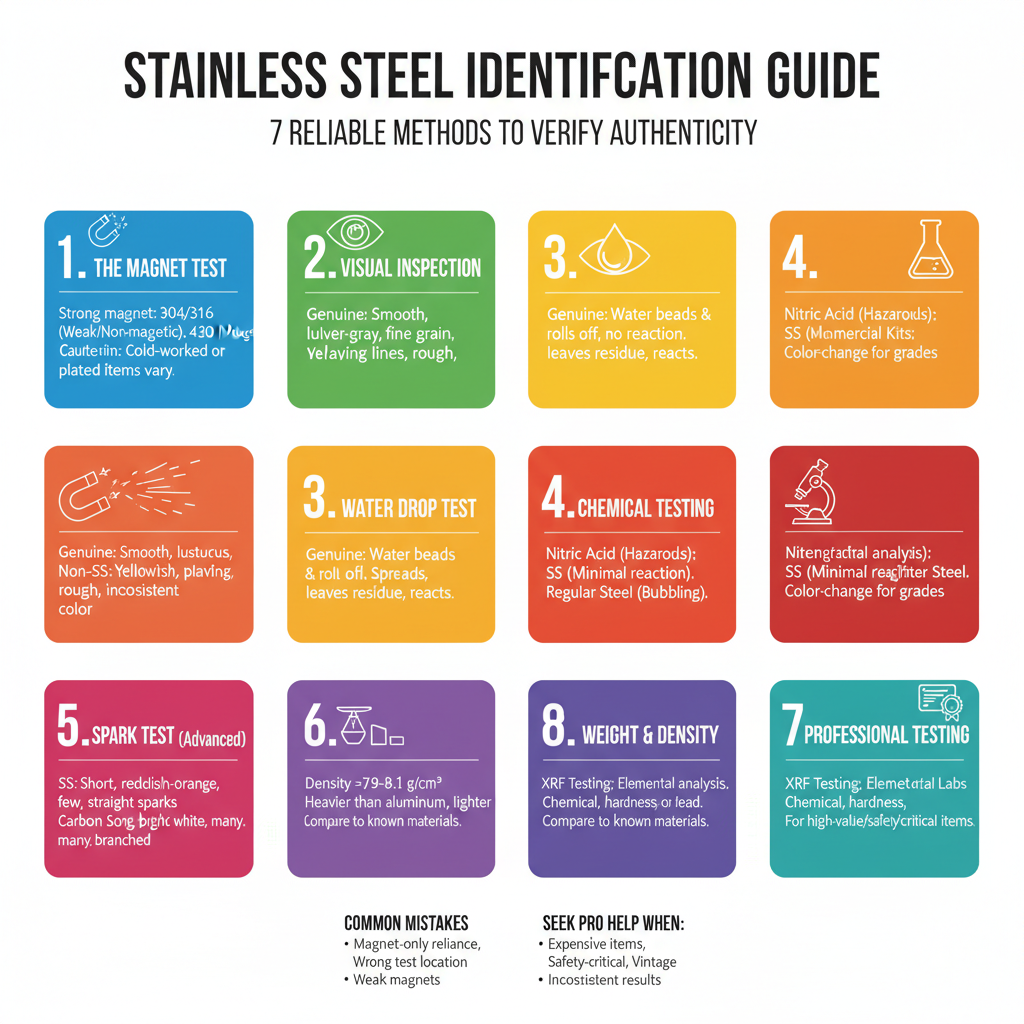
summerise and Make Infographics "Identifying stainless steel can be challenging, especially when dealing with items that look similar to other metals. Whether you're purchasing cookware, jewelry, or industrial equipment, knowing how to determine if something is genuine stainless steel helps you make informed decisions and avoid counterfeit products.

This comprehensive guide covers seven reliable methods to test and identify stainless steel items, from simple visual inspections to advanced testing techniques.

Understanding Stainless Steel Basics

Stainless steel is an iron-based alloy containing at least 10.5% chromium, which creates a protective oxide layer that prevents rust and corrosion. This unique composition gives stainless steel its distinctive properties and appearance.

The most common grades include 304, 316, and 430 stainless steel, each with different magnetic properties and corrosion resistance levels. Understanding these variations helps you identify authentic stainless steel items more accurately.


Method 1: The Magnet Test

The magnet test is the most popular and accessible method for identifying stainless steel. However, this test requires understanding the magnetic properties of different stainless steel grades.

Austenitic stainless steel (grades 304 and 316) is generally non-magnetic or weakly magnetic. When you hold a strong magnet against these grades, it should not stick firmly.

Ferritic and martensitic stainless steel (grade 430) is magnetic and will attract magnets strongly.

To perform this test effectively, use a strong neodymium magnet rather than a weak refrigerator magnet. A neodymium magnet provides more accurate results and can detect subtle magnetic properties that weaker magnets might miss.

Important Considerations for Magnetic Testing

- Cold-worked stainless steel may become slightly magnetic due to processing
- Some stainless steel items contain magnetic components or fasteners
- Plated items may appear non-magnetic while having magnetic base metals underneath

Method 2: Visual Inspection and Surface Characteristics

Authentic stainless steel has distinctive visual characteristics that help distinguish it from other metals and alloys.

Surface finish: Genuine stainless steel typically has a consistent, smooth finish with a subtle luster. The surface should appear uniform without obvious discoloration or uneven textures.

Color consistency: Stainless steel maintains a consistent silver-gray color throughout the item. Look for color variations that might indicate plating or coating over different base metals.

Grain structure: High-quality stainless steel often shows a fine, consistent grain pattern when examined closely under good lighting.

Signs of Non-Stainless Steel Materials

- Yellowish or brass-like coloring
- Obvious plating lines or seams
- Rough or pitted surface textures
- Inconsistent coloring across the item

Method 3: The Water Drop Test

The water drop test evaluates stainless steel's corrosion resistance properties. This simple test can help identify genuine stainless steel items.

Place a small drop of water on the item's surface and observe how it behaves:

- Genuine stainless steel: Water beads up and rolls off easily due to the smooth, non-reactive surface
- Other metals: Water may spread out, leave residue, or cause immediate surface reactions

Leave the water drop for several minutes and check for any discoloration or surface changes. Authentic stainless steel should show no immediate reaction to water contact.

For more thorough testing, you can use specialized tools like a stainless steel testing kit, which contains chemical solutions designed to identify different stainless steel grades and detect counterfeit materials.

Method 4: Chemical Testing Methods

Chemical tests provide more definitive identification of stainless steel composition. These tests are particularly useful for valuable items or when precise identification is crucial.

Nitric Acid Test

Warning: This test involves hazardous chemicals and should only be performed by experienced individuals with proper safety equipment.

Apply a small drop of diluted nitric acid to an inconspicuous area:

- Stainless steel: Shows minimal or no reaction
- Regular steel: Produces immediate bubbling and discoloration
- Plated items: May show reaction if acid penetrates the plating

Stainless Steel Testing Solutions

Commercial testing solutions offer safer alternatives to nitric acid. These solutions change color when applied to different metals, providing clear identification results.

Most testing kits include multiple solutions for identifying various stainless steel grades and distinguishing them from similar-looking alloys.

Method 5: Spark Test (For Advanced Users)

The spark test involves grinding a small portion of the metal and observing the sparks produced. This method requires experience and proper safety equipment.

Stainless steel sparks characteristics:
- Short, reddish-orange sparks
- Fewer sparks compared to carbon steel
- Sparks tend to be straighter with less branching

Carbon steel produces:
- Long, bright white sparks
- Heavy spark production
- Highly branched spark patterns

This test should only be performed on items where small material removal is acceptable and by individuals experienced with metalworking.

Method 6: Weight and Density Comparison

Stainless steel has a specific density range (approximately 7.9-8.1 g/cm³) that differs from other common metals and alloys.

Compare the item's weight to similar-sized objects made from known materials:

- Stainless steel: Heavier than aluminum, lighter than lead
- Aluminum: Significantly lighter than stainless steel
- Brass or bronze: May feel similar in weight but have different color characteristics

This method works best when combined with other identification techniques, as weight alone cannot definitively identify stainless steel.

Method 7: Professional Testing and Certification

For valuable items or when absolute certainty is required, professional testing provides the most accurate identification.

X-ray fluorescence (XRF) testing analyzes the exact elemental composition of metals without damaging the item. This non-destructive testing method can identify specific stainless steel grades and detect any adulterants or coatings.

Metallurgical laboratories offer comprehensive testing services that include chemical analysis, hardness testing, and microstructure examination.

Professional testing is particularly valuable for:
- High-value purchases
- Industrial applications requiring specific grades
- Items where safety depends on material properties
- Authentication of vintage or collectible stainless steel items

Common Mistakes to Avoid When Identifying Stainless Steel

Many people make errors when attempting to identify stainless steel. Understanding these common mistakes helps improve identification accuracy.

Relying solely on magnetic testing: Different stainless steel grades have varying magnetic properties, so a single magnet test may not provide complete information.

Ignoring surface treatments: Some stainless steel items have coatings or treatments that may affect test results.

Testing in wrong locations: Always test inconspicuous areas and avoid testing near welds or joints where different materials might be present.

Using weak magnets: Refrigerator magnets or weak magnetic tools may not provide accurate results for magnetic testing.

When to Seek Professional Help

Consider professional identification services when:

- Purchasing expensive stainless steel equipment or jewelry
- Working with items where material properties affect safety
- Dealing with vintage or antique items of uncertain composition
- Results from multiple tests are inconsistent or unclear

Professional testing eliminates guesswork and provides documentation of material composition when needed for warranties, insurance, or resale purposes.

Conclusion

Identifying stainless steel requires understanding its unique properties and using appropriate testing methods. The magnet test provides a quick initial assessment, while visual inspection reveals surface characteristics typical of genuine stainless steel. Chemical testing and professional analysis offer more definitive identification when needed.

Combining multiple identification methods increases accuracy and helps avoid the common pitfalls of relying on single tests. Whether you're evaluating cookware, jewelry, or industrial components, these seven methods provide reliable ways to determine if something is truly stainless steel.

Remember that different stainless steel grades have varying properties, so understanding these differences helps you make better identification decisions and choose the right stainless steel products for your specific needs."

Method 1: The Magnet Test

The magnet test is the most popular and accessible method for identifying stainless steel. However, this test requires understanding the magnetic properties of different stainless steel grades.

Austenitic stainless steel (grades 304 and 316) is generally non-magnetic or weakly magnetic. When you hold a strong magnet against these grades, it should not stick firmly.

Ferritic and martensitic stainless steel (grade 430) is magnetic and will attract magnets strongly.

To perform this test effectively, use a strong neodymium magnet rather than a weak refrigerator magnet. A neodymium magnet provides more accurate results and can detect subtle magnetic properties that weaker magnets might miss.

See also  How to Solder Copper Pipe: A Complete Step-by-Step Guide for Beginners

Important Considerations for Magnetic Testing

– Cold-worked stainless steel may become slightly magnetic due to processing
– Some stainless steel items contain magnetic components or fasteners
– Plated items may appear non-magnetic while having magnetic base metals underneath

Method 2: Visual Inspection and Surface Characteristics

Authentic stainless steel has distinctive visual characteristics that help distinguish it from other metals and alloys.

Surface finish: Genuine stainless steel typically has a consistent, smooth finish with a subtle luster. The surface should appear uniform without obvious discoloration or uneven textures.

Color consistency: Stainless steel maintains a consistent silver-gray color throughout the item. Look for color variations that might indicate plating or coating over different base metals.

Grain structure: High-quality stainless steel often shows a fine, consistent grain pattern when examined closely under good lighting.

Signs of Non-Stainless Steel Materials

– Yellowish or brass-like coloring
– Obvious plating lines or seams
– Rough or pitted surface textures
– Inconsistent coloring across the item

Method 3: The Water Drop Test

The water drop test evaluates stainless steel’s corrosion resistance properties. This simple test can help identify genuine stainless steel items.

Place a small drop of water on the item’s surface and observe how it behaves:

Genuine stainless steel: Water beads up and rolls off easily due to the smooth, non-reactive surface
Other metals: Water may spread out, leave residue, or cause immediate surface reactions

Leave the water drop for several minutes and check for any discoloration or surface changes. Authentic stainless steel should show no immediate reaction to water contact.

For more thorough testing, you can use specialized tools like a stainless steel testing kit, which contains chemical solutions designed to identify different stainless steel grades and detect counterfeit materials.

Method 4: Chemical Testing Methods

Chemical tests provide more definitive identification of stainless steel composition. These tests are particularly useful for valuable items or when precise identification is crucial.

See also  Advantages and Disadvantages of Electron Beam Welding: A Complete Guide

Nitric Acid Test

Warning: This test involves hazardous chemicals and should only be performed by experienced individuals with proper safety equipment.

Apply a small drop of diluted nitric acid to an inconspicuous area:

Stainless steel: Shows minimal or no reaction
Regular steel: Produces immediate bubbling and discoloration
Plated items: May show reaction if acid penetrates the plating

Stainless Steel Testing Solutions

Commercial testing solutions offer safer alternatives to nitric acid. These solutions change color when applied to different metals, providing clear identification results.

Most testing kits include multiple solutions for identifying various stainless steel grades and distinguishing them from similar-looking alloys.

Method 5: Spark Test (For Advanced Users)

The spark test involves grinding a small portion of the metal and observing the sparks produced. This method requires experience and proper safety equipment.

Stainless steel sparks characteristics:
– Short, reddish-orange sparks
– Fewer sparks compared to carbon steel
– Sparks tend to be straighter with less branching

Carbon steel produces:
– Long, bright white sparks
– Heavy spark production
– Highly branched spark patterns

This test should only be performed on items where small material removal is acceptable and by individuals experienced with metalworking.

Method 6: Weight and Density Comparison

Stainless steel has a specific density range (approximately 7.9-8.1 g/cm³) that differs from other common metals and alloys.

Compare the item’s weight to similar-sized objects made from known materials:

Stainless steel: Heavier than aluminum, lighter than lead
Aluminum: Significantly lighter than stainless steel
Brass or bronze: May feel similar in weight but have different color characteristics

This method works best when combined with other identification techniques, as weight alone cannot definitively identify stainless steel.

Method 7: Professional Testing and Certification

For valuable items or when absolute certainty is required, professional testing provides the most accurate identification.

See also  How Much Is Chrome Plating: Complete Cost Guide for 2026

X-ray fluorescence (XRF) testing analyzes the exact elemental composition of metals without damaging the item. This non-destructive testing method can identify specific stainless steel grades and detect any adulterants or coatings.

Metallurgical laboratories offer comprehensive testing services that include chemical analysis, hardness testing, and microstructure examination.

Professional testing is particularly valuable for:
– High-value purchases
– Industrial applications requiring specific grades
– Items where safety depends on material properties
– Authentication of vintage or collectible stainless steel items

Common Mistakes to Avoid When Identifying Stainless Steel

Many people make errors when attempting to identify stainless steel. Understanding these common mistakes helps improve identification accuracy.

Relying solely on magnetic testing: Different stainless steel grades have varying magnetic properties, so a single magnet test may not provide complete information.

Ignoring surface treatments: Some stainless steel items have coatings or treatments that may affect test results.

Testing in wrong locations: Always test inconspicuous areas and avoid testing near welds or joints where different materials might be present.

Using weak magnets: Refrigerator magnets or weak magnetic tools may not provide accurate results for magnetic testing.

When to Seek Professional Help

Consider professional identification services when:

– Purchasing expensive stainless steel equipment or jewelry
– Working with items where material properties affect safety
– Dealing with vintage or antique items of uncertain composition
– Results from multiple tests are inconsistent or unclear

Professional testing eliminates guesswork and provides documentation of material composition when needed for warranties, insurance, or resale purposes.

Conclusion

Identifying stainless steel requires understanding its unique properties and using appropriate testing methods. The magnet test provides a quick initial assessment, while visual inspection reveals surface characteristics typical of genuine stainless steel. Chemical testing and professional analysis offer more definitive identification when needed.

Combining multiple identification methods increases accuracy and helps avoid the common pitfalls of relying on single tests. Whether you’re evaluating cookware, jewelry, or industrial components, these seven methods provide reliable ways to determine if something is truly stainless steel.

Remember that different stainless steel grades have varying properties, so understanding these differences helps you make better identification decisions and choose the right stainless steel products for your specific needs.

Scroll to Top