
Removing a Kohler engine from a Miller welder requires careful preparation and systematic disassembly. The process involves disconnecting electrical connections, fuel lines, and mounting hardware before lifting the engine from the frame. Most Miller welders with Kohler engines can be separated in 2-3 hours with basic tools and proper safety precautions.
This guide walks you through each step of the removal process, from initial preparation to final engine extraction. You’ll learn the specific tools needed, safety considerations, and common challenges that arise during this maintenance task.
Essential Tools and Safety Equipment to Remove Kohler Engine from Miller Welder
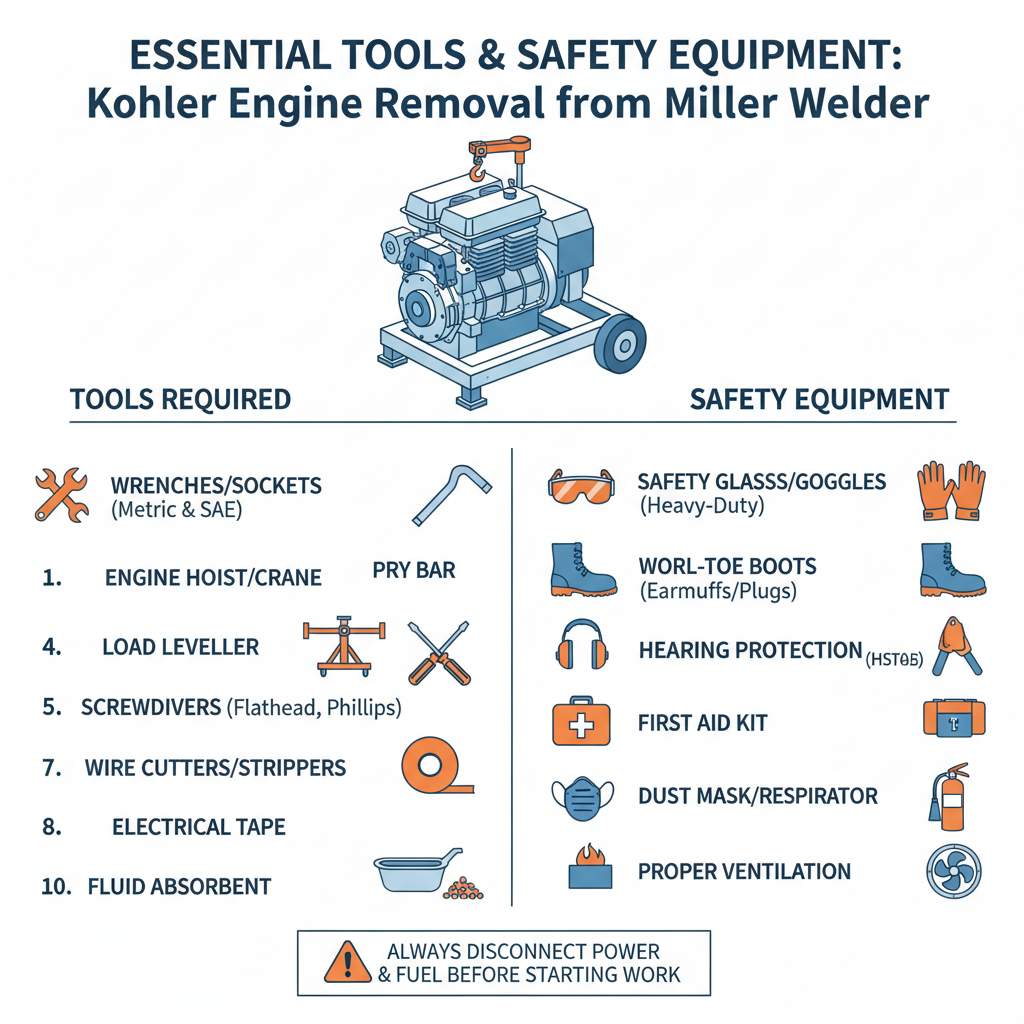
Before starting the engine removal process, gather all necessary tools and safety equipment. Having everything ready prevents delays and ensures a smooth workflow.
Required tools include a socket set with metric and standard sizes, combination wrenches, pliers, and a drain pan for fluids. You’ll also need a suitable lifting device such as an engine hoist or come-along with proper rigging.
Safety equipment is equally important. Wear safety glasses, work gloves, and steel-toed boots throughout the process. Ensure adequate ventilation in your work area, especially when dealing with fuel and oil.
Pre-Removal Preparation Steps to Remove Kohler Engine from Miller Welder
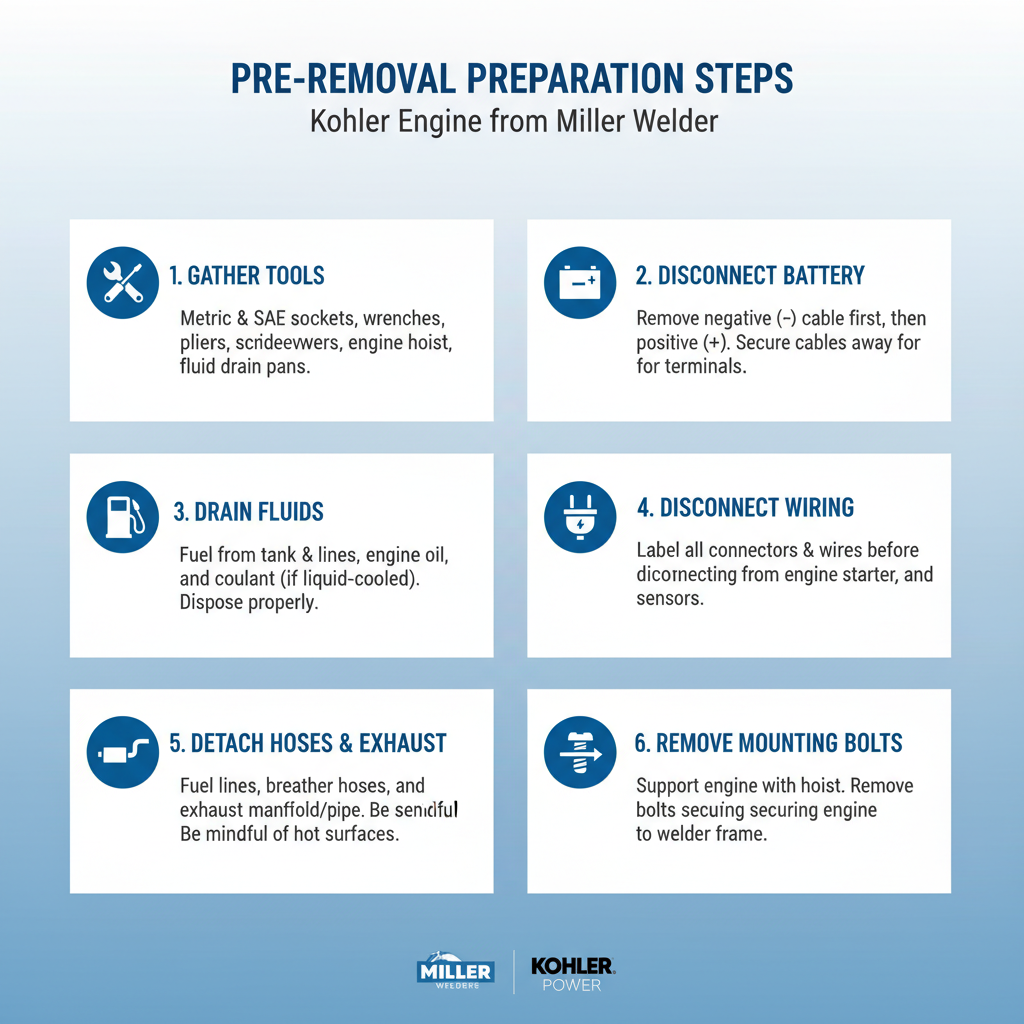
Proper preparation significantly reduces complications during engine removal. Start by positioning the welder on level ground and engaging the parking brake if equipped.
Disconnect the battery negative terminal first, then the positive terminal. This prevents electrical shorts and protects sensitive electronic components during the removal process.
Drain all fluids from the engine including oil, coolant, and fuel. Use appropriate containers and dispose of fluids according to local environmental regulations. Remove the air cleaner assembly and any external accessories that might interfere with removal.
Removal Steps of Kohler Engine from Miller Welder
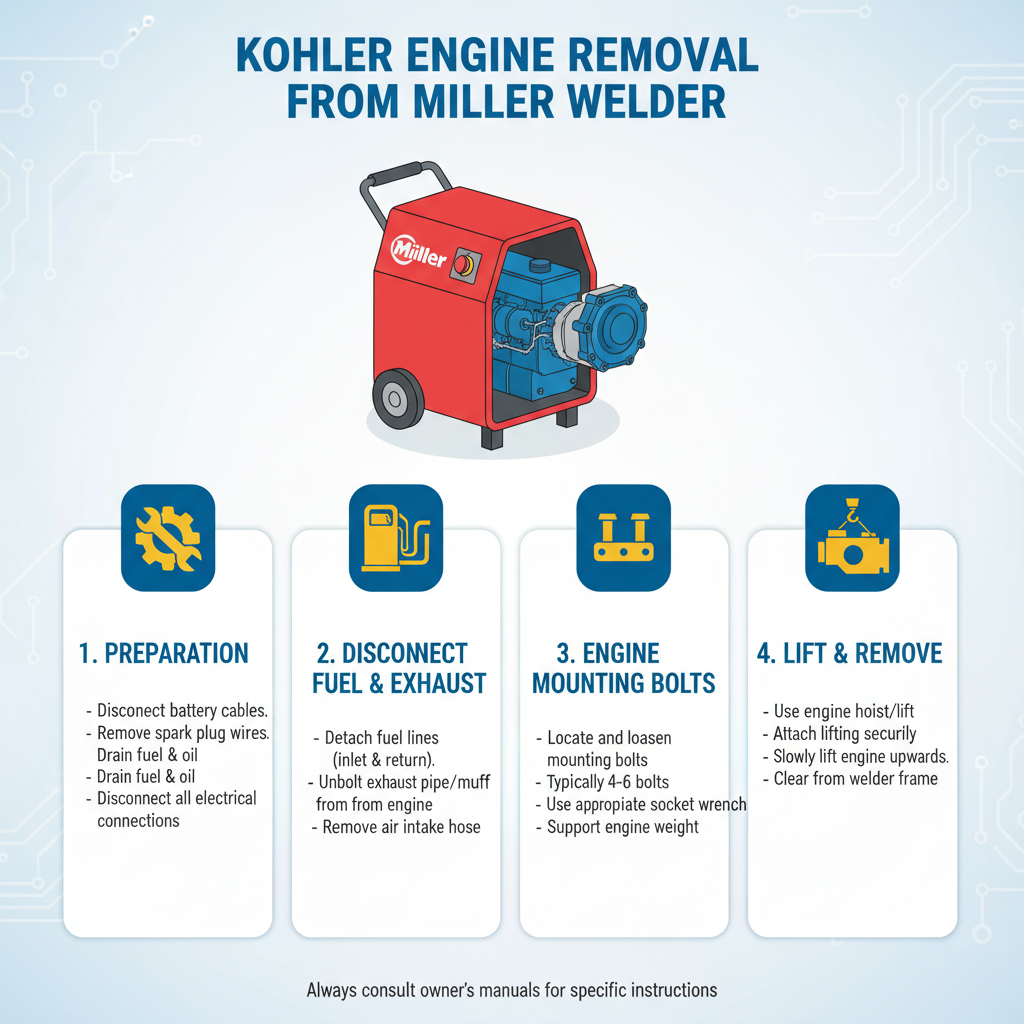
Disconnecting Electrical Connections
Miller welders typically have multiple electrical connections between the engine and welder components. Document each connection with photos or labels before disconnecting to ensure proper reassembly.
Start with the main alternator connections, which usually include heavy gauge wires secured with nuts or bolts. Remove these carefully and secure the wires away from the work area.
Disconnect the engine control module connections, ignition system wires, and any sensors attached to the engine. Most connections use weatherproof connectors that require pressing release tabs while pulling the connector apart.
Fuel System Disconnection
The fuel system requires careful attention due to fire hazards and environmental concerns. Work in a well-ventilated area away from ignition sources.
Locate the fuel line connections at the engine, typically near the fuel pump or carburetor. Use proper fuel line disconnect tools if available, or carefully remove clamps with pliers.
Have a container ready to catch fuel spillage. Some fuel will remain in the lines even after draining the tank. Clean up any spills immediately and allow vapors to dissipate before continuing.
Removing Engine Mounting Hardware
Engine mounting points vary between Miller welder models, but most use four main mounting bolts or studs. These connections bear the engine’s weight and vibration loads during operation.
Access to mounting hardware may require removing covers, guards, or other components. Take photos of the mounting arrangement before disassembly to aid in reassembly.
Remove mounting bolts gradually, supporting the engine weight as you work. Never remove all mounting hardware without proper engine support in place.
Lifting and Extraction Techniques
Engine removal requires proper lifting techniques to prevent injury and equipment damage. The Kohler engines used in Miller welders typically weigh between 80-150 pounds depending on the model.
Position your lifting device directly over the engine’s center of gravity. Most engines have lifting eyes or brackets designed for this purpose. If not available, use a lifting sling around the engine block.
Lift slowly and steadily, checking for any remaining connections that might prevent removal. Keep the engine level during extraction to prevent damage to oil passages or other internal components.
Common Challenges and Solutions
Several issues commonly arise during engine removal from Miller welders. Hidden or hard-to-reach connections often cause delays and frustration.
Corroded or seized mounting hardware presents another frequent challenge. Apply penetrating oil well in advance and use proper tools to avoid damage. Heat application may help with severely corroded fasteners.
Space constraints in the welder frame sometimes complicate engine extraction. You may need to remove additional components or approach the lift from a different angle. Field experience shows that patience and methodical work overcome most obstacles.
Post-Removal Inspection and Storage
Once the engine is removed, inspect both the engine and welder frame for damage or wear. Look for cracked mounting points, worn rubber isolators, or signs of excessive vibration.
Clean the engine exterior before storage or service work. This prevents contamination of internal components and makes future work easier.
Store the removed engine in a clean, dry location. Cover openings to prevent debris entry and consider adding fuel stabilizer if the engine will be stored for extended periods.
Frequently Asked Questions
How long does it take to remove a Kohler engine from a Miller welder?
Most engine removals take 2-3 hours for experienced technicians, while first-time attempts may require 4-5 hours including preparation and cleanup time.
Do I need special tools to remove the engine?
Basic hand tools are sufficient for most removals. You’ll need a lifting device capable of handling 150+ pounds and various socket sizes for mounting hardware.
Can I remove the engine without draining all fluids?
While possible, draining fluids prevents spills and contamination. It’s considered best practice and may be required by environmental regulations in your area.
What’s the most common mistake during engine removal?
Forgetting to disconnect all electrical connections before lifting causes the most problems. Always double-check for hidden wires or sensors before attempting removal.
Should I mark the mounting bolt locations?
Yes, marking or photographing mounting arrangements helps ensure proper reassembly. Different bolt lengths or positions are common and must be restored correctly.
How do I know if my lifting equipment is adequate?
Your lifting device should handle at least twice the engine weight for safety. Most Kohler engines in Miller welders weigh 80-150 pounds, so 300+ pound capacity is recommended.
Is it safe to remove the engine alone?
While possible with proper equipment, having an assistant improves safety and makes the job easier. The helper can guide the engine during extraction and watch for potential problems.
Final Thoughts
Successfully removing a Kohler engine from a Miller welder requires methodical preparation, proper tools, and attention to safety. The key steps include thorough fluid drainage, careful documentation of connections, and proper lifting techniques. Take your time during the process, as rushing often leads to damaged components or missed connections. With patience and the right approach, this maintenance task becomes straightforward and manageable for most technicians and skilled DIY mechanics.