
Setting up a welder in my garage was one of the best decisions I ever made, but I’ll admit — it wasn’t as simple as just plugging in a machine and striking an arc. I had to figure out what power my garage could handle, where to place my MIG or flux core welder, how to safely store filler rods and gas cylinders, and how to manage sparks without setting anything on fire.
A good setup isn’t just about the welder itself — it’s about ventilation, grounding, proper joint prep space, and room to maneuver when working with different metal thicknesses or stainless projects.
Get it right, and you’ll have a clean, efficient workspace that lets you focus on arc control and laying strong beads instead of fighting with clutter, fumes, or power issues.
In this guide, I’ll walk you through exactly how to set up a welder in your garage the smart way — safe, functional, and ready for real fabrication work.
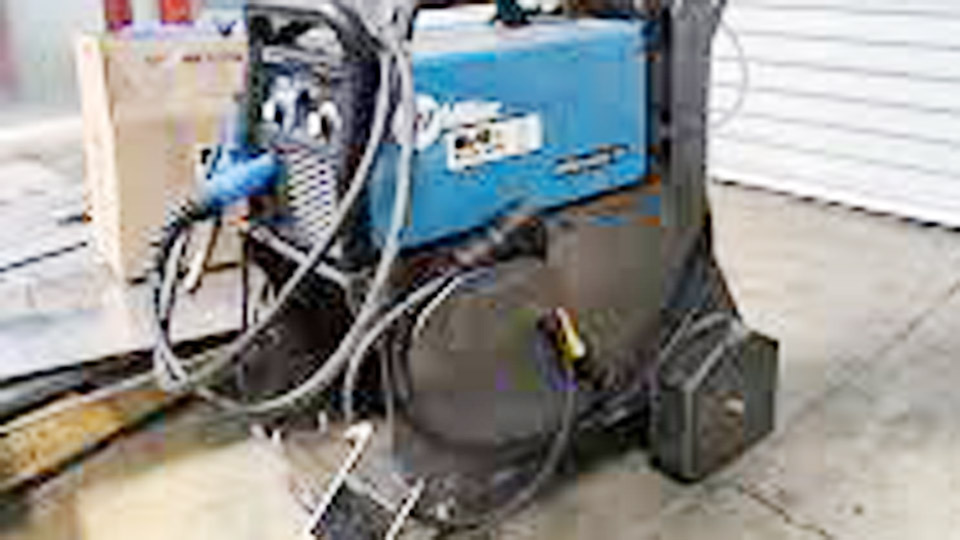
Image by reddit
Choosing the Right Welder for a Garage Environment
Not every machine belongs in a home shop. I learned that the hard way when I fried a cheap 110V buzzbox trying to weld ⅜-inch plate for a buddy’s truck bumper.
Stick welders (SMAW) are still my go-to for dirty, rusty farm equipment because they forgive scale and wind better than anything else. MIG is king inside the garage when you want clean, fast welds on thinner material—think car patches, lawnmower decks, or custom brackets.
Flux-core (FCAW) without gas lets you weld outside on a breezy day without fighting porosity. And if you’re ready to invest real money, a 200–250 amp multi-process machine that does MIG, flux-core, stick, and DC TIG will grow with you for decades.
Buy once, cry once. A Lincoln 210 MP, Miller Multimatic 215, or the new PrimeWeld MTS200 have been the sweet spot for most serious garage guys I know in 2025.
Finding the Perfect Spot in Your Garage
Heat, fumes, and flying sparks don’t play nice with lawn chemicals, kids’ bikes, or your wife’s minivan. I push everything flammable at least 35 feet away or store it in metal cabinets. My welding table sits in the back corner with two solid walls behind it—sparks bounce off concrete block instead of drywall.
Leave yourself 4–5 feet of clear space on all sides of the table. You’ll be swinging 25-foot leads and 8-foot pieces of angle iron more often than you think. I also mounted a 4×8 sheet of ¼-inch plate on the wall as a permanent backstop for stray arc strikes.
Electrical: The Part That Burns Houses Down
This is where 90% of garage welders screw up. A 250-amp multi-process machine will pull 50–60 amps at full blast on 220V.
That’s not a dryer plug. I ran 6-gauge wire from my 200-amp house panel straight to a 60-amp double-pole breaker and installed an industrial 6-50R receptacle. Cost me $380 in materials and a Saturday with my electrician buddy, but I’ve never tripped a breaker since.
If you’re stuck with 110V only, stick to machines 140 amps or less and keep your duty cycle in mind—ten minutes on, ten minutes off isn’t a suggestion, it’s physics.
Ventilation That Actually Works
I tried the “open the man-door and hope” method for about two weeks. Then I started tasting metal in my coffee. Real ventilation is non-negotiable.
My cheap-but-effective setup: two 20-inch box fans—one blowing fresh air in at floor level on the opposite wall, one pulling air out high on the same wall as my table.
Add a 400 CFM fume extractor with a flexible arm positioned six inches from the arc and you’ll actually see the end of your tungsten again. I still wear a 3M half-mask with P100 filters when I’m grinding or running flux-core all day.
Building a Bomb-Proof Welding Table
Forget the Harbor Freight special that flexes like a wet noodle. I built mine from 2×2×¼ square tubing and topped it with a 4×6-foot, ⅜-inch thick steel plate I found on Marketplace for $200. Four heavy casters and a brake on each corner let me roll it outside when I’m welding galvanized.
Slot the legs so you can bolt fixtures or strongbacks anywhere. I welded ⅝ nuts every 6 inches underneath the top—perfect for clamping with pony clamps or Strong Hand tools.
Grounding and Why Your Wife Will Divorce You If You Skip It
A bad ground is the fastest way to turn $1,200 worth of welder into a spark-spewing paperweight. Clean metal-to-metal contact every single time. I keep a dedicated 4½-inch grinder with a knotted wire wheel just for ground clamps.
I also welded a ½-inch copper bus bar across the back of my table—every project gets a 10-gauge lead bolted straight to it. No more fishing for a clean spot on the workpiece.
Organizing Gas Bottles So They Don’t Kill You
I chain my argon/CO2 bottle to the wall with two chains—one at ⅔ height, one at ⅓. The regulator stays on, but I crack the valve closed every night. A $22 brass cap keeps crud out of the threads. Keep a fire extinguisher rated ABC within arm’s reach—mine hangs on the same post as the bottle.
Setting Up Your First MIG Machine Like a Pro
Let’s say you just brought home that Multimatic 215. Here’s the exact order I use every time:
- Roll out 25–30 ft of lead so you’re not fighting kinks.
- Install a 0.030 or 0.035 liner for most garage work.
- Load an 8-inch spool of ER70S-6 (my everyday wire).
- Set tension on the drive rolls so a rolled-up dollar bill just slips when you pull—too tight and you’ll bird-nest, too loose and you’ll lose feed.
- Trim the wire with ⅜–½ inch stick-out.
- Voltage and wire speed: start at 18–19 volts and 300 inches per minute for ⅛-inch mild steel. Adjust from there—one knob at a time.
Stick Welding Settings I Actually Use in the Garage
For 7018 rods on anything structural:
- 1/8-inch rod → 110–130 amps
- 5/32-inch rod → 140–180 amps (my go-to for trailer frames)
Run 7018 low-hydrogen rods slightly downhill on verticals, keep them in a rod oven at 250 °F if you’ve had them open more than a few hours. For quick repairs on rusty junk, I grab 6011 and crank it 10 amps hotter than the dial says.
Essential Hand Tools Every Garage Welder Forgets
- 4½-inch grinder with flap discs (40, 60, 80 grit)
- Chipping hammer that isn’t from the dollar store
- Wire brush rows (stainless for aluminum/stainless, carbon for steel)
- Soapstone and silver Sharpie
- Speed square, 6-inch ruler, and center punch
- Strong Hand BuildPro clamps—buy one at a time, you’ll own twenty before you know it
Lighting That Makes You See the Puddle
Overhead fluorescent is worthless. I have two 5000K LED shop lights on adjustable arms directly over the table plus a 10,000-lumen clip-on trouble light. No more guessing if that’s slag or undercut.
Safety Gear I Refuse to Weld Without
Auto-darkening helmet (I’ve worn a Jackson Balder for years—lens still perfect).
Leather jacket or at least a Tillman sleeved jacket.
Good gloves—Tillman 50 green for MIG, blue elkskin for TIG.
Leather boots, never sneakers.
And yes, I still have all ten fingers and both corneas because I never cheap out here.
Common Garage Welding Mistakes I Still See
- Welding on concrete without cardboard underneath—spatter pits the floor forever.
- Leaving the MIG gun hanging by the trigger—burns the switch out in a year.
- Storing rods in the plastic tube on the garage floor—moisture kills low-hydrogen rods fast.
- Ignoring duty cycle—pushing a 20% machine at 100% melts the insides.
Why Taking the Time to Do This Right Matters
A proper garage setup means you walk in, flip one switch, and lay perfect welds without fighting equipment. I’ve had buddies show up with a trunk full of parts, we knock out a bumper or a gate in an afternoon, drink a beer, and everything still works the next weekend. That’s the difference between a welding corner and a real shop.
You now have the exact blueprint I use for every single garage setup I help friends with across the Midwest. Pick your machine, run the wire, build the table, and start burning rod. The first perfect bead you lay in your own shop is worth every minute you spent reading this.
Pro tip: weld a 12-inch scrap of 2×2 tubing to the wall next to your table at perfect 90 degrees. It’s the fastest way to check if your clamps are actually square when you’re by yourself—no second set of hands needed.
Can I weld in my garage without ventilation?
You can, but you shouldn’t. Even mild steel throws off manganese fumes that build up fast in a closed space. A couple box fans and a fume arm cost less than one trip to the ER.
How much does it cost to set up a decent garage welding shop in 2025?
Realistically $2,500–$5,000 if you buy smart. $1,800–$2,500 for a good multi-process welder, $400 table materials, $300 electrical, $400 in tools and safety gear. Buy quality used when you can—Facebook Marketplace is full of barely-used Lincolns and Millers from guys who thought welding was their new hobby.
Is 110V welding enough for a garage?
For body panels, brackets, and light fabrication—absolutely. Anything over 3/16-inch thick or structural and you’ll fight duty cycle and penetration all day.
Do I need a welding curtain in my garage?
If you ever have anyone else in the shop, yes. UV arc flash will burn retinas through eyelids. A cheap translucent orange curtain from Northern Tool saves marriages and friendships.
How do I keep neighbors from calling the cops about noise?
Grind and cut during reasonable hours, run flux-core instead of stick when possible (quieter arc), and invite the neighbors over for a beer and a demo. Works every time.