
Sweating copper pipe is a fundamental plumbing skill that involves joining copper pipes and fittings using solder and heat. This time-tested method creates permanent, leak-proof connections that can last decades when done correctly.
Sweating copper pipe involves cleaning the pipe and fitting, applying flux, heating the joint with a torch, and feeding solder into the connection. The process requires proper preparation, the right temperature, and allowing the solder to flow completely around the joint. With practice and attention to detail, anyone can master this essential plumbing technique.
Key Steps:
• Clean pipe ends and fitting interiors thoroughly
• Apply flux to both surfaces
• Assemble the joint
• Heat evenly with a propane torch
• Feed solder into the joint until it flows around completely
• Allow to cool without moving the connection
The Sweating Process of Copper Pipe
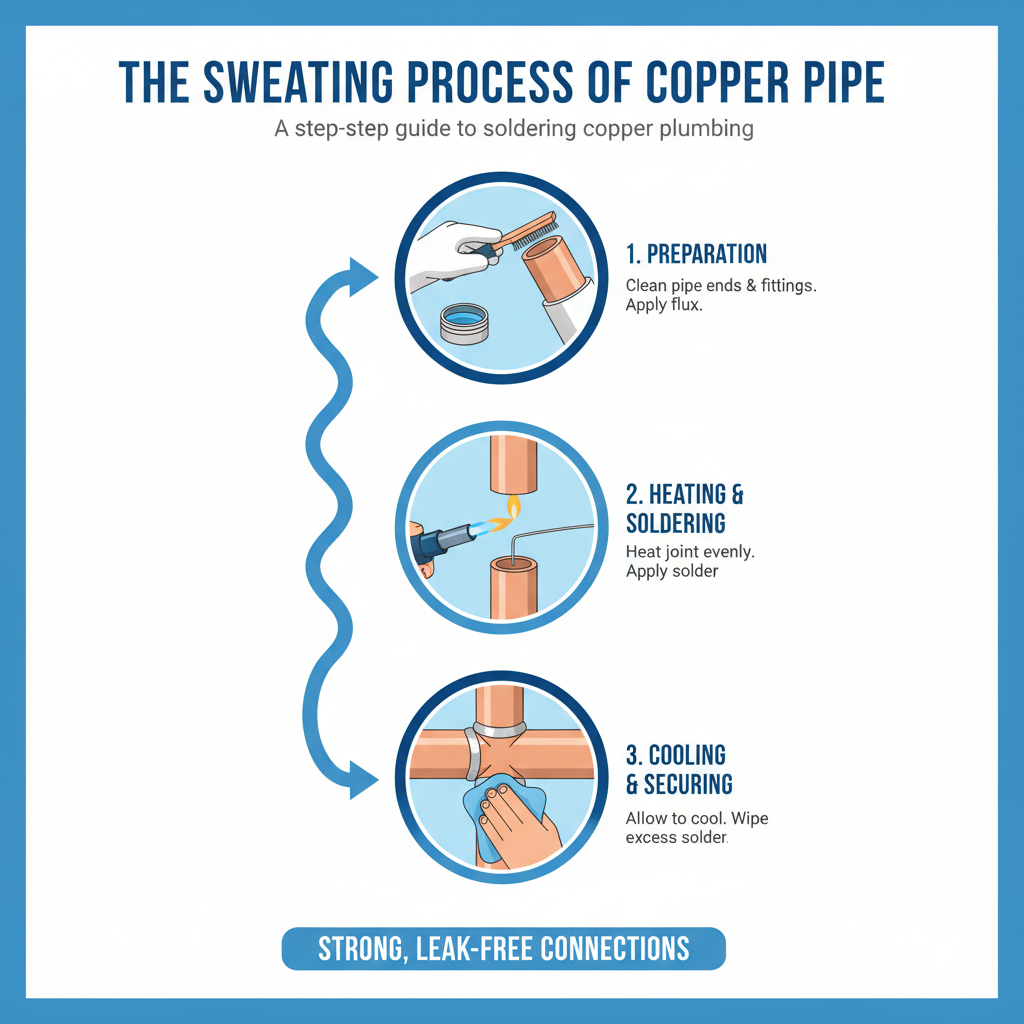
Sweating copper pipe relies on capillary action to draw molten solder into the microscopic gap between the pipe and fitting. When heated to the proper temperature, solder flows into this space and creates a strong, watertight seal upon cooling.
The process gets its name from the way solder appears to “sweat” out of the joint when the connection reaches the correct temperature. This visual cue helps plumbers know when enough solder has been applied.
Successful sweating requires three essential elements: proper cleaning, correct flux application, and adequate heat. Miss any of these components, and the joint will likely fail.
Essential Tools and Materials to Sweat Copper Pipe
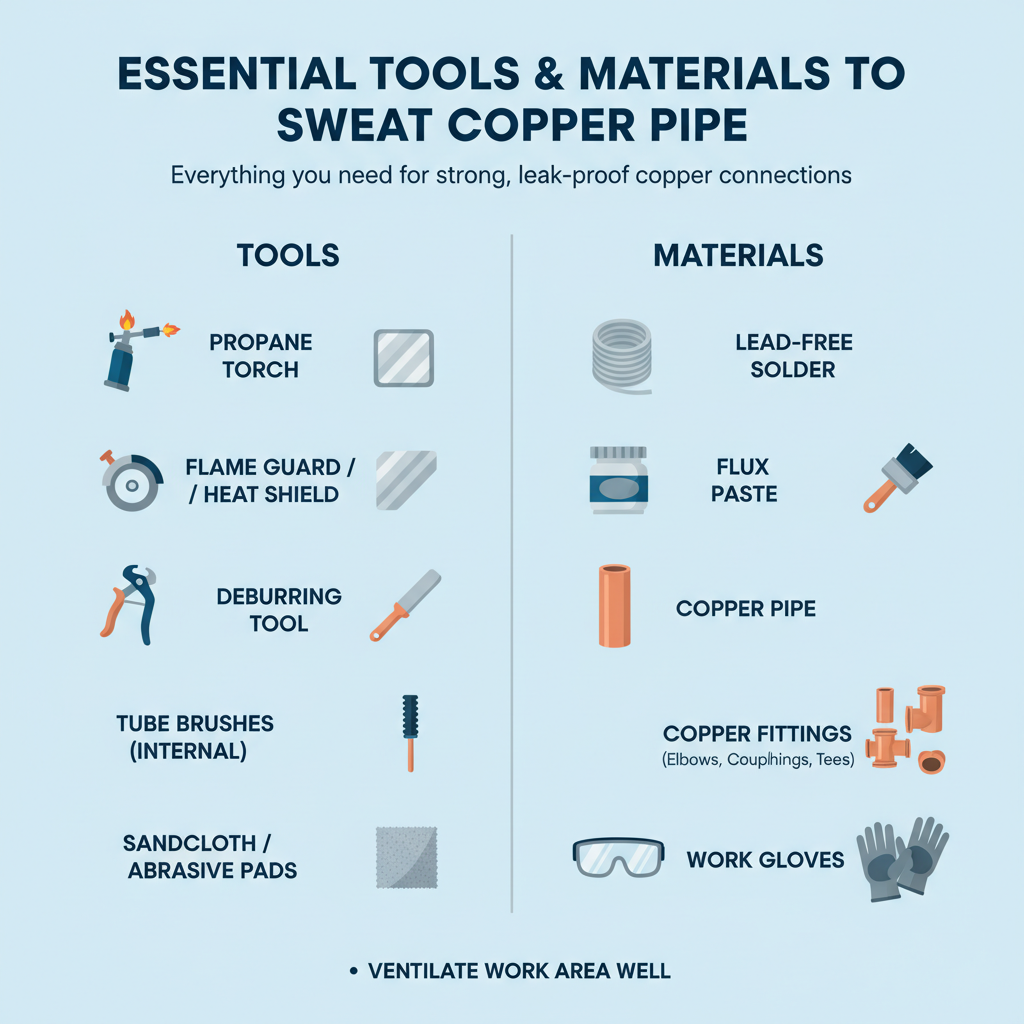
Before starting any sweating project, gather the necessary tools and materials. Having everything ready prevents delays that could affect joint quality.
Required Tools:
• Propane torch (Bernzomatic TS4000 is popular among professionals)
• Pipe cutter or hacksaw
• Emery cloth or sandpaper
• Wire brush or fitting brush
• Flux brush
• Safety glasses and gloves
Materials Needed:
• Lead-free solder (95/5 tin-antimony or similar)
• Flux paste
• Clean rags or paper towels
Choose lead-free solder for all potable water applications. The 95/5 tin-antimony composition works well for most residential plumbing projects and meets current plumbing codes.
Step-by-Step Sweating Process Of Copper Pipe
Cutting and Preparing the Pipe
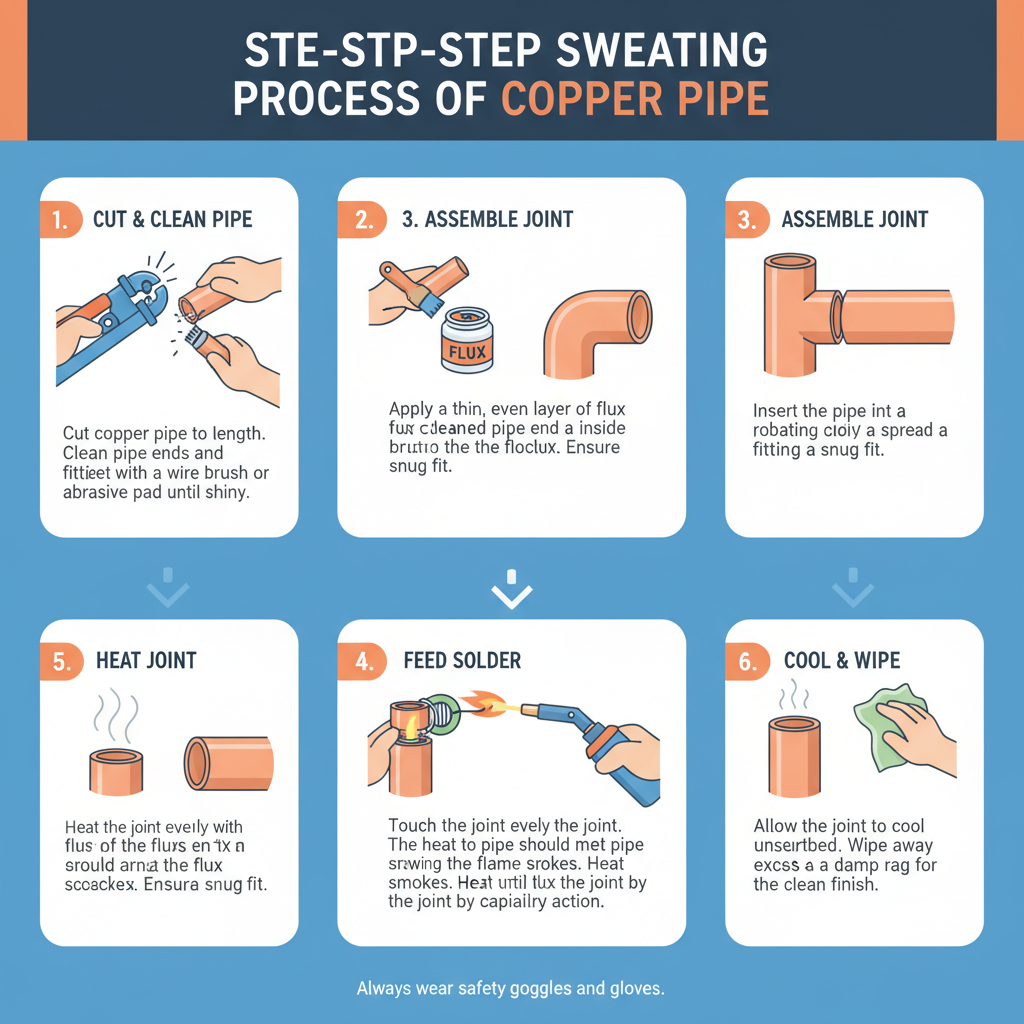
Start by cutting the copper pipe to the required length using a pipe cutter for the cleanest cut. A pipe cutter creates a square end without burrs, which is crucial for proper fitting.
If using a hacksaw, ensure the cut is perfectly square and remove all burrs with a file. Uneven cuts prevent proper fitting seating and can cause leaks.
Measure twice before cutting. Copper pipe is expensive, and mistakes are costly. Account for the depth the pipe inserts into the fitting when calculating lengths.
Cleaning the Connection Points
Thorough cleaning is perhaps the most critical step in sweating copper pipe. Any dirt, oxidation, or old flux will prevent proper solder adhesion.
Clean the outside of the pipe end using emery cloth or sandpaper. Remove approximately one inch of the outer surface until it shines like a new penny. The copper should be bright and free of any discoloration.
Clean the inside of the fitting using a wire brush or specialized fitting brush. Rotate the brush inside the fitting until the interior surface is bright and clean. Some plumbers prefer the Ridgid inner-outer reamer for this task.
Avoid touching cleaned surfaces with bare hands, as oils from skin can interfere with solder adhesion. Handle cleaned pipes and fittings carefully.
Applying Flux
Flux serves multiple purposes in the sweating process. It prevents oxidation during heating, helps solder flow smoothly, and indicates when the joint reaches proper temperature.
Apply a thin, even coat of flux to both the cleaned pipe end and the interior of the fitting. Use a flux brush to ensure complete coverage without excess buildup.
Quality flux makes a significant difference in joint reliability. Oatey No. 5 flux is widely used and trusted by professional plumbers for its consistent performance.
Work quickly after applying flux, as it can attract dirt and moisture. Assemble the joint promptly after flux application.
Heating the Joint
Proper heating technique separates successful joints from failures. The goal is to heat the fitting, not the solder directly.
Light the propane torch and adjust the flame to a medium blue cone. Avoid using excessive flame, which can overheat the joint and burn the flux.
Direct the flame primarily at the fitting, moving it around to heat evenly. The fitting’s mass requires more heat than the thinner pipe wall.
Heat until the flux begins to bubble and sizzle. This indicates the joint is approaching the correct temperature for solder application.
Applying the Solder
When the joint reaches proper temperature, touch the solder to the pipe where it enters the fitting. If the joint is hot enough, solder will melt immediately upon contact.
Feed solder into the joint, allowing capillary action to draw it around the connection. You’ll see solder appear around the entire circumference when enough has been applied.
For typical residential pipe sizes, use approximately one inch of solder per inch of pipe diameter. A ½-inch pipe joint needs about ½-inch of solder wire.
Remove heat immediately after solder flows completely around the joint. Continued heating can cause the solder to run out of the connection.
Cooling and Inspection
Allow the joint to cool naturally without moving or disturbing it. Movement during cooling can create cracks in the solder that may not be immediately visible.
The solder joint should appear smooth and consistent around the entire circumference. A properly sweated joint has a slight concave appearance where the solder meets the pipe and fitting.
Wipe away excess flux with a damp cloth after the joint cools completely. Residual flux can cause corrosion over time if left on the pipe.
Working with Different Pipe Sizes
Larger diameter pipes require more heat and solder but follow the same basic process. The key difference is heating time and solder quantity.
For pipes larger than 1 inch, consider using a larger torch tip or multiple torches to achieve even heating. Uneven heating can cause warping or incomplete solder flow.
Smaller pipes heat quickly and require less solder. Be careful not to overheat thin-walled pipes, which can cause them to collapse or become misshapen.
Common Mistakes to Avoid
Insufficient Cleaning: Dirty or oxidized surfaces prevent proper solder adhesion. Always clean until surfaces are bright and shiny.
Too Much or Too Little Flux: Excess flux can cause messy joints and corrosion. Insufficient flux leads to poor solder flow and weak joints.
Overheating: Excessive heat burns flux and can damage pipes. Heat just enough to melt solder consistently.
Moving the Joint While Cooling: Any movement during cooling can crack the solder connection. Keep joints stationary until completely cool.
Using the Wrong Solder: Lead-based solder is illegal for potable water systems. Always use lead-free solder for drinking water applications.
Inadequate Solder: Skimping on solder creates weak joints. Use enough solder to fill the entire joint gap.
Poor Pipe Preparation: Burrs, uneven cuts, or bent pipes prevent proper fitting seating and cause leaks.
Pro Tips for Better Results
Pre-assemble Before Heating: Test-fit all connections before applying flux and heat. This ensures proper alignment and identifies potential problems.
Work in Good Lighting: Proper lighting helps you see when solder flows completely around joints and identify any gaps or problems.
Practice on Scrap Materials: Perfect your technique on practice pieces before working on actual plumbing installations.
Keep Joints Dry: Any moisture in the system will turn to steam and prevent proper solder flow. Ensure all water is drained from the lines.
Use Proper Ventilation: Work in well-ventilated areas and avoid breathing flux fumes, which can be harmful.
Maintain Consistent Heat: Move the torch steadily around the joint to prevent hot spots and ensure even heating.
Have Fire Safety Equipment Ready: Keep a fire extinguisher nearby when working with torches, especially in confined spaces.
Troubleshooting Common Problems
Solder Won’t Flow: Usually indicates insufficient heat or dirty surfaces. Clean thoroughly and apply more heat to the fitting.
Leaking Joints: Often caused by movement during cooling, insufficient solder, or contaminated surfaces. Cut out the joint and start over.
Rough or Lumpy Solder Appearance: Typically results from overheating or poor flux application. The joint may still be functional but isn’t aesthetically pleasing.
Solder Runs Out of Joint: Caused by excessive heat or incorrect pipe positioning. Ensure pipes are level and don’t overheat.
Safety Considerations
Always wear safety glasses when sweating copper pipe. Hot solder can splatter, and flux fumes can irritate eyes.
Work in well-ventilated areas to avoid inhaling flux vapors. Some flux compounds can release harmful gases when heated.
Keep a fire extinguisher rated for electrical and flammable liquid fires nearby. Propane torches can ignite nearby combustible materials.
Allow adequate cooling time before handling sweated joints. Hot copper can cause severe burns even after the torch is removed.
Be aware of what’s behind walls or ceilings when using a torch. Heat can transfer through pipes and ignite hidden materials.
Frequently Asked Questions
How long should I wait before turning water back on after sweating joints?
Wait at least 30 minutes for joints to cool completely before pressurizing the system. Hot joints under pressure can fail or develop leaks.
Can I sweat copper pipe that already has water in it?
No, water in the system will turn to steam and prevent proper solder flow. Always drain the system completely before sweating joints.
What’s the difference between sweating and soldering copper pipe?
These terms are used interchangeably in plumbing. Both refer to the same process of joining copper pipes and fittings with solder and heat.
How do I know if I’ve used enough solder?
You should see a continuous ring of solder around the entire joint circumference. The solder should have a slight concave appearance where it meets the pipe and fitting.
Can I reuse copper fittings after cutting them out?
Yes, but they must be thoroughly cleaned to remove all old solder and flux. It’s often easier and more reliable to use new fittings.
What temperature does solder melt at?
Lead-free plumbing solder typically melts between 430-460°F, depending on the specific alloy composition.
Why did my joint leak even though it looked good?
Leaks can result from contaminated surfaces, insufficient solder penetration, or movement during cooling. Even small amounts of dirt or oil can cause joint failure.
How long should I wait before testing a joint?
Allow joints to cool completely before testing, typically 10-15 minutes for standard residential pipe sizes. Rushing this step can cause the solder to crack or create weak spots in the connection.
What’s the difference between 95/5 and 50/50 solder?
The numbers refer to tin and lead percentages. However, lead-based solders like 50/50 are prohibited for potable water systems. Always use lead-free options like 95/5 tin-antimony for drinking water applications.
Can I sweat copper in freezing temperatures?
Cold weather makes sweating more challenging because it takes longer to heat the joint and condensation can interfere with the process. Work in heated areas when possible, and allow extra time for proper heating.
Conclusion
Mastering the art of sweating copper pipe takes practice, but the fundamental principles are straightforward. Focus on thorough cleaning, proper flux application, and adequate heating for consistent results. Remember that patience and attention to detail are more important than speed when learning this skill. With these techniques and safety practices, you’ll be able to create reliable, long-lasting copper pipe connections that meet professional standards.
Advanced Troubleshooting Techniques
When joints fail despite following proper procedures, several advanced troubleshooting methods can help identify and resolve issues.
Identifying Contamination Sources
Oil residue from cutting tools represents one of the most common contamination sources. Even small amounts of cutting oil can prevent proper solder adhesion. Clean all surfaces with denatured alcohol after cutting and before assembly.
Water contamination poses another significant challenge. Even small amounts of moisture can create steam pockets that prevent proper solder flow. Use bread plugs or specialized pipe plugs to block water flow during repairs on active systems.
Heat Distribution Problems
Uneven heating often causes partial joint failure. Large diameter pipes require moving the torch around the joint circumference to ensure uniform temperature. Focus heat on the fitting rather than the pipe, as fittings typically have more mass and require more energy to reach proper temperature.
Wind and drafts can significantly affect heating efficiency. Create windbreaks using sheet metal or work in enclosed areas when possible. Cold ambient temperatures require longer heating times and may necessitate preheating larger assemblies.
Solder Flow Issues
Poor solder flow typically indicates insufficient heat or contaminated surfaces. If solder balls up instead of flowing smoothly, stop and re-clean all surfaces. Apply fresh flux and ensure adequate heating before attempting to add more solder.
Excessive solder creates weak joints and waste material. The capillary action should draw solder into the joint automatically when proper temperature is reached. Adding too much solder can actually reduce joint strength by creating thick, brittle connections.
Working with Different Pipe Sizes
Pipe diameter significantly affects sweating techniques and timing requirements.
Small Diameter Pipes (1/2″ to 3/4″)
These sizes heat quickly and require careful attention to prevent overheating. Use a smaller torch tip and keep the flame moving to avoid burning the flux. Total heating time typically ranges from 15-30 seconds.
Medium Diameter Pipes (1″ to 2″)
Medium sizes require more sustained heating and benefit from heating the fitting first, then the pipe. Allow 45-90 seconds for proper heat penetration. Watch for flux activity around the entire joint circumference before applying solder.
Large Diameter Pipes (2.5″ and above)
Large pipes may require multiple torch passes or larger torch tips like those found on professional torches such as the Bernzomatic TS8000. Preheat the assembly gradually and maintain consistent temperature across the entire joint area.
Flux Selection and Application Techniques
Different flux types serve specific applications and working conditions.
Water-Soluble Flux
This flux type cleans easily with water but offers limited working time. It works well for simple joints completed quickly but may not provide adequate protection for complex assemblies requiring extended work time.
Paste Flux
Paste flux stays active longer and provides superior cleaning action on heavily oxidized surfaces. Brands like Oatey No. 5 flux offer excellent performance for most residential applications. Apply paste flux with a brush for even coverage.
Liquid Flux
Liquid flux penetrates tight spaces effectively but may run off vertical surfaces. It works well for horizontal joints and situations where brush application proves difficult.
Safety Considerations for Indoor Work
Working indoors requires additional safety precautions beyond basic torch handling.
Ventilation Requirements
Flux fumes can irritate respiratory systems, especially in confined spaces. Ensure adequate ventilation or use exhaust fans to remove fumes. Never work in completely enclosed spaces without proper air circulation.
Fire Prevention
Keep a fire extinguisher rated for Class B fires nearby when working indoors. Remove flammable materials from the work area and have a spray bottle of water available for cooling hot pipes and fittings.
Heat Shields
Use heat shields or wet rags to protect nearby combustible materials. Drywall, wood framing, and insulation can ignite from radiant heat even without direct flame contact.
Repair Techniques for Existing Systems
Repairing existing copper systems presents unique challenges compared to new installations.
Draining Systems
Complete drainage rarely occurs in complex plumbing systems. Use specialized techniques like bread plugs or pipe freezing kits to isolate work areas. Even small amounts of residual water can prevent successful joint completion.
Access Limitations
Tight spaces may require offset techniques or specialized tools. Flexible torch extensions help reach confined areas, while right-angle torch heads provide access in cramped conditions.
System Pressure Considerations
Existing systems may retain pressure even after shutoff valves are closed.