
Welding stainless steel at home sounds simple until you actually strike an arc and realize it doesn’t behave like mild steel. That’s why how to weld stainless steel at home is such a common question among DIY welders and garage fabricators.
Limited power, basic machines, and unfamiliar settings often lead to overheating, warping, and welds that look clean but lack strength. Choosing the right process—whether stick, MIG, or TIG—along with proper filler rods, metal thickness awareness, joint prep, and arc control makes a huge difference.
These details matter because stainless steel is usually used where strength, corrosion resistance, and appearance all count.
In this guide, I’ll walk you through practical, home-shop-friendly methods to weld stainless steel safely and get reliable results without expensive equipment.
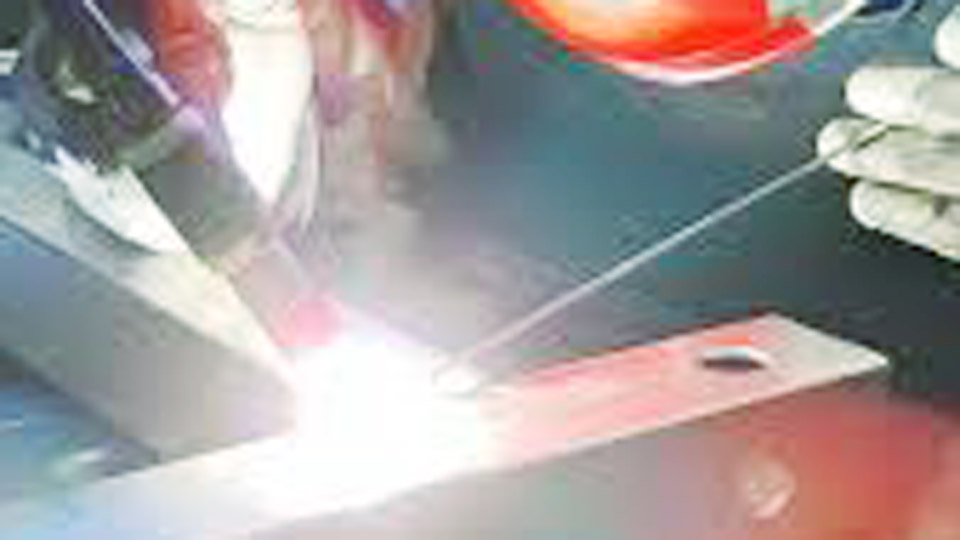
Photo by trgsl.es
What Sets Stainless Steel Welding Apart from Regular Steel?
Stainless steel brings its own challenges to the table because of how it handles heat and resists corrosion. It’s alloyed with chromium and nickel, which form a protective layer against rust, but that same makeup makes it prone to overheating.
Unlike mild steel, which forgives a bit of extra amps, stainless expands and contracts more, leading to warping if you’re not careful. I’ve seen guys crank up the heat thinking it’ll penetrate better, only to end up with a twisted piece that needs hammering straight.
This difference shows up in every step. For one, stainless demands cleaner prep—any grease or dirt contaminates the weld pool, causing porosity or weak bonds. It also conducts heat poorly, so the heat stays localized, burning through thin sections if your settings are off.
Use it when you need that corrosion resistance, like for kitchen repairs, outdoor furniture, or automotive parts exposed to moisture. In my shop, I turn to stainless for projects that see salt or chemicals, where mild steel would pit and fail.
Always check the grade first. Common ones like 304 are great for general home use—food-safe and affordable—while 316 handles marine environments better with added molybdenum. Mismatch grades, and your weld might crack under stress.
I once welded a 304 bracket with the wrong filler; it held for a month before splitting. Lesson learned: Match everything to avoid headaches.
Picking the Right Welding Process for Your Home Setup
Choosing a process depends on your gear, the job’s thickness, and how clean you want the finish. At home, I lean toward methods that don’t require industrial setups.
TIG gives precision for thin stuff, MIG speeds things up for longer runs, stick works for quick fixes without gas, and flux-cored handles dirty jobs. Each has its place—think about your welder’s capabilities and the project’s demands.
Why TIG Welding Shines for Stainless Steel at Home
TIG, or gas tungsten arc welding, uses a non-consumable tungsten electrode and separate filler rod, shielded by argon gas. It works by creating an arc that melts the base metal while you dip in filler for the joint.
I use it when appearance matters, like on visible rails or pipes, because it produces smooth, spatter-free beads with minimal cleanup.
Go for TIG on thin materials under 1/8 inch to avoid burn-through—it’s all about low heat input for control. Why? It minimizes distortion and preserves the stainless’s corrosion resistance by keeping the heat-affected zone small. In real jobs, like welding a custom grill grate, TIG lets me stack dimes without warping the frame.
Shop-floor tips: Sharpen your tungsten to a fine point for a focused arc—I’ve found a 2% thoriated works best for DC on stainless. Set your machine to DC electrode negative for deeper penetration.
Practice on scrap: Start the arc without filler to form a puddle, then add rod steadily.
Common slip-up? Too much heat—dial amps down 20% from mild steel settings. If your weld turns sugary (carbide precipitation), back off the amps and speed up travel.
Getting Started with MIG Welding on Stainless
MIG, or gas metal arc welding, feeds a continuous wire electrode through a gun, melting it into the joint under shielding gas. It’s semi-automatic, so you control the gun while the wire feeds itself—great for efficiency. The process arcs between the wire and workpiece, creating a pool you guide along.
I pull out MIG for thicker stainless, say 1/8 inch and up, or when I need speed on longer seams like building a workbench frame. It deposits metal faster than TIG, reducing time on big repairs, and handles positions like overhead better with pulse modes on modern machines.
Why choose it? Less skill needed for decent beads, and it’s forgiving on home welders like a Lincoln or Miller 140-amp unit. But use tri-mix gas (90% helium, 7.5% argon, 2.5% CO2) to stabilize the arc—pure argon can make it wander.
Tips from experience: Push the gun at a 10-15 degree angle for better gas coverage, and keep stick-out short, around 3/8 inch, to avoid spatter.
Beginners often set voltage too low, causing stubbing—bump it up for a smooth spray transfer. If you’re welding dissimilar metals, like stainless to mild steel, grab ER309L wire to bridge the gap without cracking.
When Stick Welding Makes Sense for Stainless Projects
Stick welding, or shielded metal arc welding, uses a flux-coated electrode that melts to form the weld and shield. You strike an arc, drag the rod along, and the flux creates slag you chip off later. It’s basic—no gas bottles needed, just your welder and rods.
This one’s for outdoor or portable jobs at home, like fixing a gate where wind blows away gas. Use it on thicker stock, over 1/16 inch, when TIG’s too finicky. Why? It’s tough on rust or paint, and cheap for occasional use.
In practice, for a repair on my shop’s stainless shelving, stick got the job done fast without setup hassle. But it leaves rougher beads, so plan for grinding.
Pro advice: Run hotter rods like E308-16 for 304 stainless—set amps lower than mild steel, say 50-80 for 3/32 inch rods, to avoid burn-off. Drag at a steep angle, and weave slightly for wider joints. Mistake I see: Long arcs trap slag—keep it tight. If porosity hits, dry your rods in an oven first.
Flux-Cored Welding: A Gasless Option for Quick Stainless Fixes
Flux-cored arc welding uses a tubular wire with flux inside, self-shielding or with gas. It arcs like MIG but the flux protects without full gas coverage. For home, go gasless for windy spots.
It shines on contaminated surfaces or thick plates, depositing metal quickly for builds like a trailer hitch. Why? High penetration without pre-cleaning perfection, and no cylinders to lug.
I’ve used it for patching exhausts—fast and strong, but slag needs chipping. Dual-shield with CO2 boosts bead quality.
Tips: DC electrode negative for self-shielded wire. Travel fast to beat heat buildup. Common error: Slow speed causes distortion—practice stringers. Match wire like E308LT-1 for your grade.
Here’s a quick comparison table to pick your process:
| Process | Pros | Cons | Best For | Amperage Example (1/8″ Thick) |
|---|---|---|---|---|
| TIG | Precise, clean beads, low distortion | Slow, needs skill, gas required | Thin sheets, aesthetics | 80-120 amps |
| MIG | Fast, easy for beginners, good penetration | Spatter possible, gas needed | Longer seams, thicker stock | 100-150 amps |
| Stick | Portable, no gas, handles dirt | Rough finish, slag cleanup | Outdoor repairs, thick material | 70-100 amps |
| Flux-Cored | High deposition, gasless option | Slag, potential porosity | Dirty jobs, quick fixes | 90-130 amps |
Prepping Your Stainless Steel: The Make-or-Break Step
Prep separates good welds from junk. Stainless picks up contaminants easily, ruining corrosion resistance. Start by degreasing with acetone—wipe until the rag’s clean. Grind or brush oxides, but use dedicated stainless tools to avoid carbon pickup.
How it works: Contaminants burn into the weld, causing pits or cracks. Do this right before welding to dodge dust.
Use when material’s been stored or handled—always, basically. For joints, bevel edges on thick pieces for full penetration.
Shop anecdote: I skipped thorough cleaning once on a food cart repair; the weld looked fine but rusted quick from embedded oils. Now, I acetone everything and clamp pieces square.
Tip: Fit-up tight—no gaps over 1/16 inch, or you’ll bridge with too much filler, inviting cracks.
Matching Filler Metals: Don’t Skimp Here
Filler metal fills the joint and must match your stainless grade for strength and rust-proofing. For 304, use ER308L wire or E308 rods—the “L” means low carbon, cutting carbide risks.
It bonds by melting into the base, alloying properly. Mismatch, and you get brittle spots.
Always for any process except autogenous TIG on thin stuff. Why? Maintains properties like in marine or food apps.
Tips: Stock common sizes—0.035 inch wire for MIG on 1/8 inch stock. Beginners grab overmatched fillers like 309L for unknowns—it forgives grade mixes. I learned this fixing a mystery exhaust; 308 cracked, but 309 held.
Dialing In Welder Settings: Amps, Gas, and More
Settings keep your arc stable and heat controlled. For stainless, run cooler to fight warping—about 20-30% less amps than mild steel.
Gas: Pure argon for TIG (15-20 CFH), tri-mix for MIG to wet edges.
Amperage ranges by thickness:
- 1/16 inch: 50-80 amps
- 1/8 inch: 80-120 amps
- 1/4 inch: 120-160 amps
Adjust voltage for MIG: 18-22 volts for short circuit transfer.
Why these? Low heat preserves chrome oxide layer. Use when material thickness varies—tack first, then full passes.
Personal fix: If beads gray out (oxidation), up gas flow or post-flow time. I burned through thin sheet early on by ignoring this—now I pulse amps on tricky spots.
Your Step-by-Step Guide to Welding Stainless at Home
- Gather gear: Welder, filler, gas, PPE, clamps.
- Clean pieces: Acetone wipe, grind if needed.
- Set up: Clamp square, set amps/gas per thickness.
- Tack weld: Short bursts to hold position without warp.
- Run beads: Steady travel, watch puddle size—match to thickness.
- Cool slowly: Avoid quenching; let air cool to prevent cracks.
- Inspect: Look for undercuts or porosity; grind if off.
For a butt joint on 1/8 inch 304: TIG at 100 amps, argon at 18 CFH, dip 1/16 inch rod evenly. Travel 4-6 inches per minute.
Anecdote: On a home brewery tank, I tacked every inch—kept it straight despite heat.
Spotting and Fixing Common Welding Mistakes on Stainless
Mistakes hit everyone—too much heat warps, poor cleaning causes sugaring (grainy surface from carbides).
How to fix warped pieces: Clamp to a table and heat evenly with a torch, then cool. For porosity, re-clean and up gas.
Pros err by rushing travel, leaving cold laps—slow down for fusion.
Tip: If rods burn off fast in stick, drop amps 10%. I fixed a bad weld by grinding out and redoing with lower heat—saved the part.
Safety First: Gear and Habits for Safe Home Welding
Safety isn’t optional—stainless fumes carry chromium, bad for lungs. Ventilate your space; use a fan or extractor.
Gear: Auto-darkening helmet (shade 10-13), leather gloves/jacket, respirator with P100 filters, steel-toe boots.
How it protects: Blocks UV burns, sparks, inhalants.
Always use, especially indoors. Why? I’ve felt the sting of spatter—now I layer up.
Tip: Check gas lines for leaks; keep fire extinguisher handy. No loose clothes.
Cleaning Up After: Post-Weld Finishing for Lasting Results
Post-weld, stainless needs passivation to restore corrosion resistance. Chip slag if stick/flux, then pickle with paste or grind lightly.
How: Apply paste, rinse after 20 minutes—removes heat tint.
Use on all exposed welds. Why? Untreated tint rusts faster.
Tip: Wire brush with stainless bristles only. I finish with a flap disc for shine on visible parts.
Wrapping Up
You’ve got the complete guide to pick the right process, set your machine spot-on, and avoid the pitfalls that trip up even seasoned hands. With this under your belt, you’ll tackle projects confidently, knowing your joints won’t warp, crack, or corrode prematurely—saving time and frustration on repairs.
Remember, the real edge comes from practicing those settings on scrap until it feels natural. Always let your weld cool under gas coverage a few extra seconds—it locks in that bright, rust-free finish every time.
FAQs
Can I weld stainless steel with a regular stick welder?
Yes, grab E308 or E316 rods matching your grade, set amps low (60-90 for 1/8 inch), and drag tight. Chip slag after—works for basic home fixes without gas.
What’s the best gas for MIG welding stainless at home?
Tri-mix (helium-argon-CO2) stabilizes the arc best. Flow at 30-40 CFH; it wets edges smoothly and cuts spatter on US machines like Hobart or Everlast.
How do I prevent warping when welding thin stainless sheets?
Run low amps, tack often, and travel fast. Use heat sinks like copper backing if possible—clamps help too. If it warps, straighten gently while warm.
Is TIG welding stainless harder for beginners?
It takes practice for puddle control, but start with 1/16 inch material at 70 amps. Dip filler steadily; it’s worth it for clean results on hobby projects.
What filler do I use for welding 304 to 316 stainless?
Go with 316L filler—it’s versatile and prevents cracking. For home, stock a pack; overmatch if unsure for stronger bonds.