
For gasless MIG welding, wire feed speed and voltage must work together. Use 18-22 volts with 200-300 inches per minute (IPM) wire speed for thin materials (18-20 gauge), 20-24 volts with 300-400 IPM for medium thickness (14-16 gauge), and 22-26 volts with 400-500 IPM for thicker materials (10-12 gauge).
Getting your gasless MIG welding settings right can make the difference between strong, clean welds and frustrating spatter-filled joints. This comprehensive guide provides the exact settings charts you need, plus troubleshooting tips to help you achieve professional results with flux-cored wire welding.
You’ll learn how to match wire feed speed with voltage for different material thicknesses, understand the relationship between these critical parameters, and avoid the most common setting mistakes that lead to poor weld quality.
Gasless MIG Welding Parameters
Gasless MIG welding, also known as flux-cored arc welding (FCAW), uses a tubular wire filled with flux instead of solid wire with shielding gas. The flux creates its own protective atmosphere when heated, eliminating the need for external gas cylinders.
Two primary settings control your weld quality: wire feed speed and voltage. Wire feed speed determines how fast the electrode wire feeds through the gun, measured in inches per minute. Voltage controls the arc characteristics and penetration depth.
The relationship between these settings is critical. Too much wire speed with insufficient voltage creates a cold weld with poor penetration. Too much voltage with slow wire speed burns through thin materials and creates excessive spatter.
Complete Gasless MIG Settings Chart
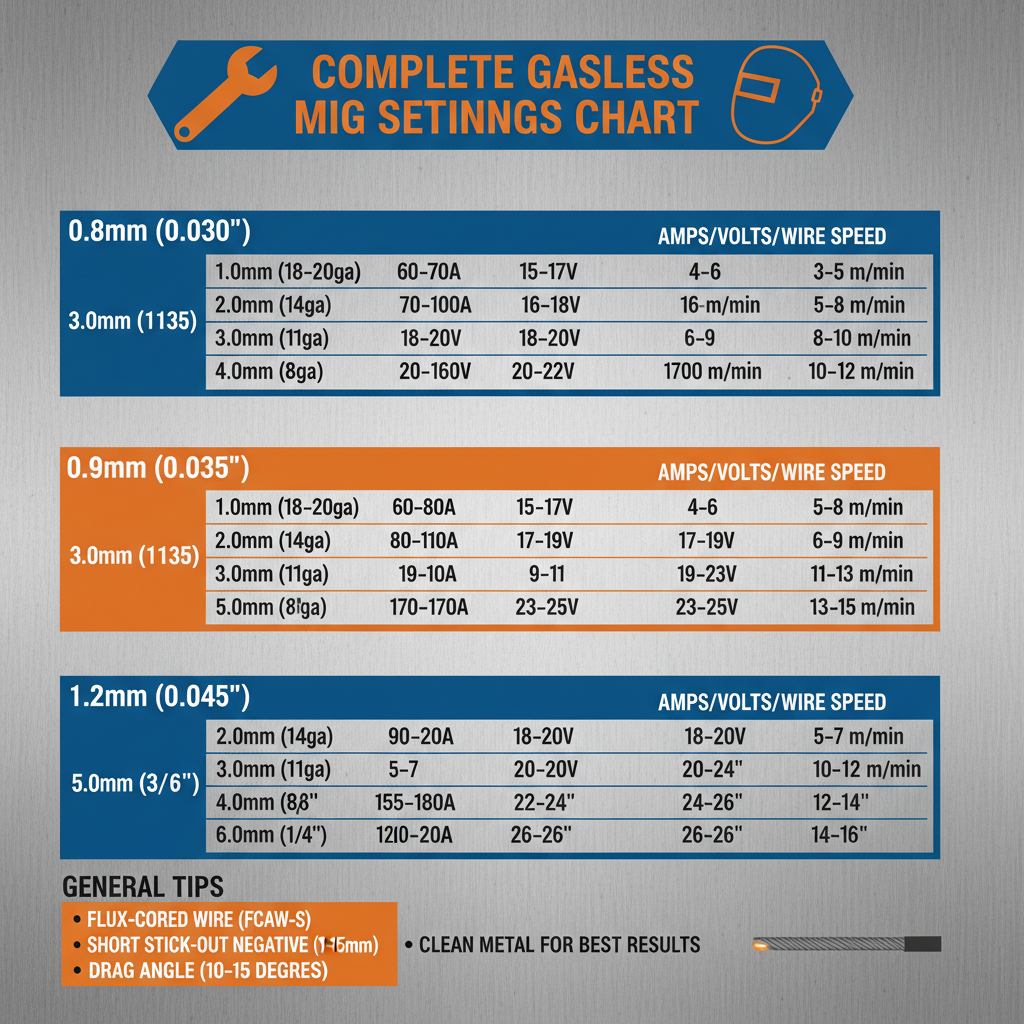
Thin Materials (18-20 Gauge Steel)
– Wire Feed Speed: 200-300 IPM
– Voltage: 18-22 volts
– Wire Diameter: 0.030″ flux-cored
– Travel Speed: 8-12 inches per minute
– Typical Applications: Sheet metal, automotive bodywork, light fabrication
Medium Thickness (14-16 Gauge Steel)
– Wire Feed Speed: 300-400 IPM
– Voltage: 20-24 volts
– Wire Diameter: 0.035″ flux-cored
– Travel Speed: 6-10 inches per minute
– Typical Applications: General fabrication, brackets, structural components
Thick Materials (10-12 Gauge Steel)
– Wire Feed Speed: 400-500 IPM
– Voltage: 22-26 volts
– Wire Diameter: 0.035″ or 0.045″ flux-cored
– Travel Speed: 4-8 inches per minute
– Typical Applications: Heavy fabrication, structural welding, repair work
Heavy-Duty Applications (8 Gauge and Thicker)
– Wire Feed Speed: 500-600 IPM
– Voltage: 24-28 volts
– Wire Diameter: 0.045″ flux-cored
– Travel Speed: 3-6 inches per minute
– Typical Applications: Structural steel, heavy equipment repair
Fine-Tuning Your Settings
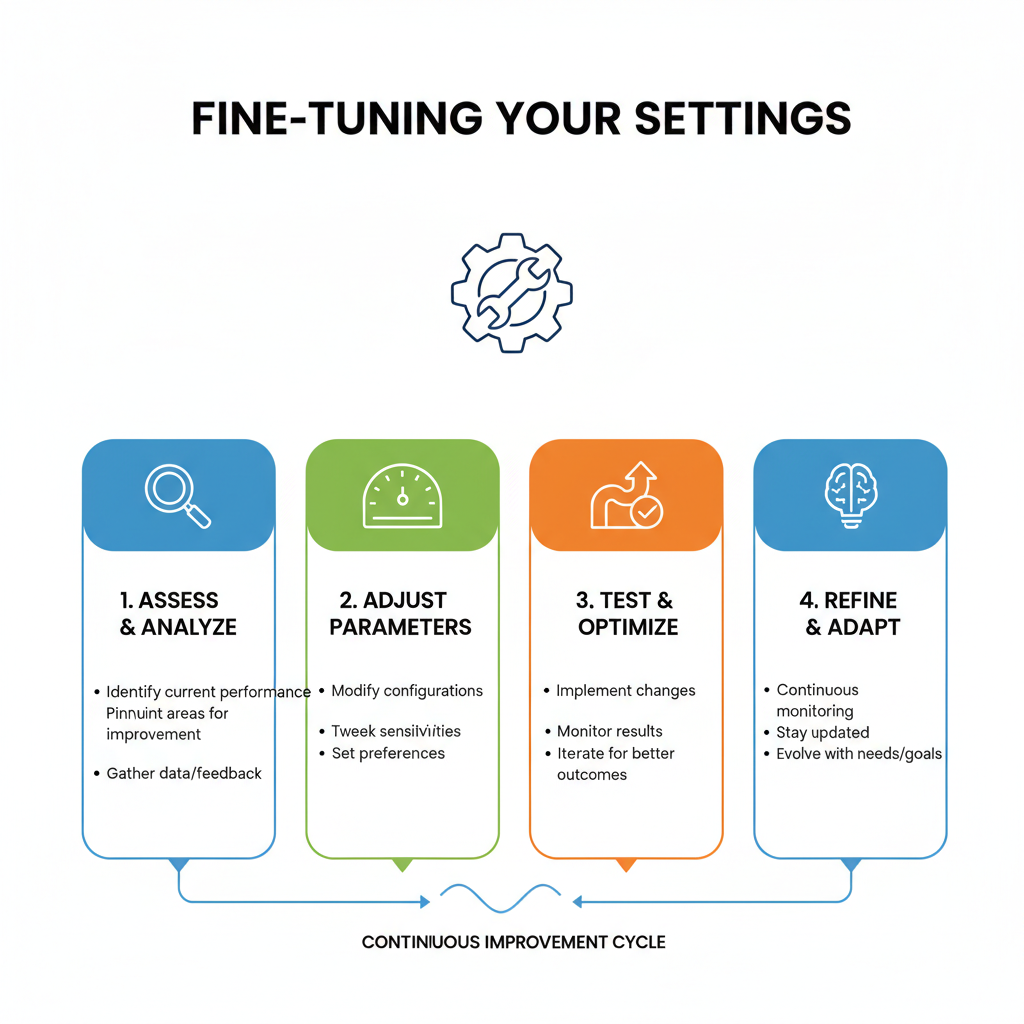

Start with the base settings from the chart, then make small adjustments based on your specific conditions. Environmental factors like ambient temperature, material cleanliness, and joint configuration all affect optimal settings.
If your weld bead appears too narrow or has insufficient penetration, increase voltage by 1-2 volts. For excessive spatter or burn-through, reduce voltage incrementally. Wire feed speed adjustments should be made in 25-50 IPM increments.
Listen to your arc. A steady crackling sound indicates proper settings. Excessive popping suggests too much voltage, while a stuttering arc typically means insufficient voltage or excessive wire speed.
Common Setting Problems and Solutions
Excessive Spatter: Usually caused by voltage too high for the wire feed speed. Reduce voltage by 1-2 volts or increase wire speed by 25-50 IPM. Also check for dirty base material or incorrect contact tip distance.
Poor Penetration: Indicates insufficient heat input. Increase voltage by 1-2 volts or slow down travel speed. Ensure proper joint preparation and fit-up.
Burn-Through: Most common on thin materials. Reduce voltage, increase travel speed, or use a backing plate. Consider switching to a smaller diameter wire for better control.
Porosity in Welds: Often results from contaminated base material or drafts affecting the flux shielding. Clean materials thoroughly and shield the work area from wind.
Wire Selection Impact on Settings
Wire diameter significantly affects your settings requirements. Smaller diameter wires (0.030″) require lower voltage and wire feed speeds but offer better control on thin materials. They’re ideal for sheet metal work and detailed fabrication.
Larger diameter wires (0.045″) handle higher amperages and work better on thick materials. They provide faster deposition rates but require higher voltage settings and more precise technique.
In practice, 0.035″ flux-cored wire offers the best balance for most applications. It handles materials from 16 gauge up to 1/4 inch thickness with good control and reasonable deposition rates.
Machine Limitations and Considerations
Your welder’s output capacity directly affects achievable settings. Most 120V machines max out around 140 amps, limiting you to materials under 1/8 inch thickness. For serious fabrication work, 240V machines provide the power needed for thicker materials.
Duty cycle becomes important during extended welding sessions. A machine rated at 20% duty cycle at maximum output needs cooling time between welds. This affects productivity and may require setting adjustments to stay within the duty cycle limits.
Contact tip wear affects wire feeding consistency. Replace tips regularly, especially when welding at higher amperages. A worn tip creates erratic arc behavior that no setting adjustment can fix.
Joint Design Influence on Settings
Different joint types require setting modifications from the base chart. Butt joints need full penetration, often requiring slightly higher voltage than fillet welds. Lap joints may need reduced settings to prevent burn-through of the top piece.
Root pass welding on groove joints typically uses lower settings for better control, with fill passes using higher parameters for faster completion. This multi-pass approach prevents distortion while ensuring complete joint penetration.
Corner joints and T-joints each have their own considerations. Corner joints often require backing to prevent burn-through, while T-joints need careful heat management to avoid undercutting the vertical member.
Frequently Asked Questions
What wire feed speed should I use for 16 gauge steel?
Start with 350 IPM wire feed speed and 22 volts for 16 gauge steel using 0.035″ flux-cored wire. Adjust based on your specific welding conditions and desired bead appearance.
Can I use the same settings for different flux-cored wire brands?
Different manufacturers’ wires may require slight setting adjustments due to flux composition variations. Start with your standard settings and fine-tune as needed for each wire brand.
Why does my gasless MIG weld have more spatter than gas-shielded welding?
Flux-cored welding naturally produces more spatter due to the flux burning off during the process. Proper settings minimize this, but some spatter is normal compared to gas-shielded welding.
How do I know if my voltage is too high?
Excessive voltage creates a wide, flat bead with lots of spatter. The arc sounds harsh and aggressive. Reduce voltage by 1-2 volts and observe the improvement in bead appearance.
Should I change settings when welding in different positions?
Yes, overhead and vertical welding typically require 10-15% lower heat input than flat position welding. Reduce voltage by 1-2 volts and possibly decrease wire feed speed for better control.
What’s the maximum thickness I can weld with gasless MIG?
Most portable gasless MIG welders handle up to 1/4 inch steel in a single pass. Thicker materials require multiple passes or preheating, depending on your machine’s output capacity.
How often should I clean the contact tip?
Clean or replace the contact tip every few pounds of wire consumed, or immediately if you notice erratic wire feeding or arc instability. A clean tip ensures consistent electrical contact and proper arc characteristics.
Final Thoughts
Mastering gasless MIG welding settings requires understanding the relationship between wire feed speed, voltage, and material thickness. Use these charts as starting points, then fine-tune based on your specific conditions and desired results. Remember that consistent technique and proper material preparation are just as important as correct settings for achieving professional-quality welds. Practice with scrap materials to develop your feel for how setting changes affect weld characteristics before tackling important projects.