
For most TIG welding applications, use 100% argon as your primary shielding gas. Argon provides excellent arc stability, good penetration, and works well with aluminum, stainless steel, and thin carbon steel. For thicker carbon steel or when you need deeper penetration, consider argon-helium mixtures (75% argon/25% helium). Pure helium is reserved for specialized applications requiring maximum heat input.
Choosing the right shielding gas for TIG welding can make the difference between professional-quality welds and frustrating failures. The gas you select affects arc stability, penetration depth, weld appearance, and overall quality. This comprehensive guide provides practical gas charts and selection criteria to help you achieve optimal results across different materials and applications.
Primary TIG welding gases and Their Properties
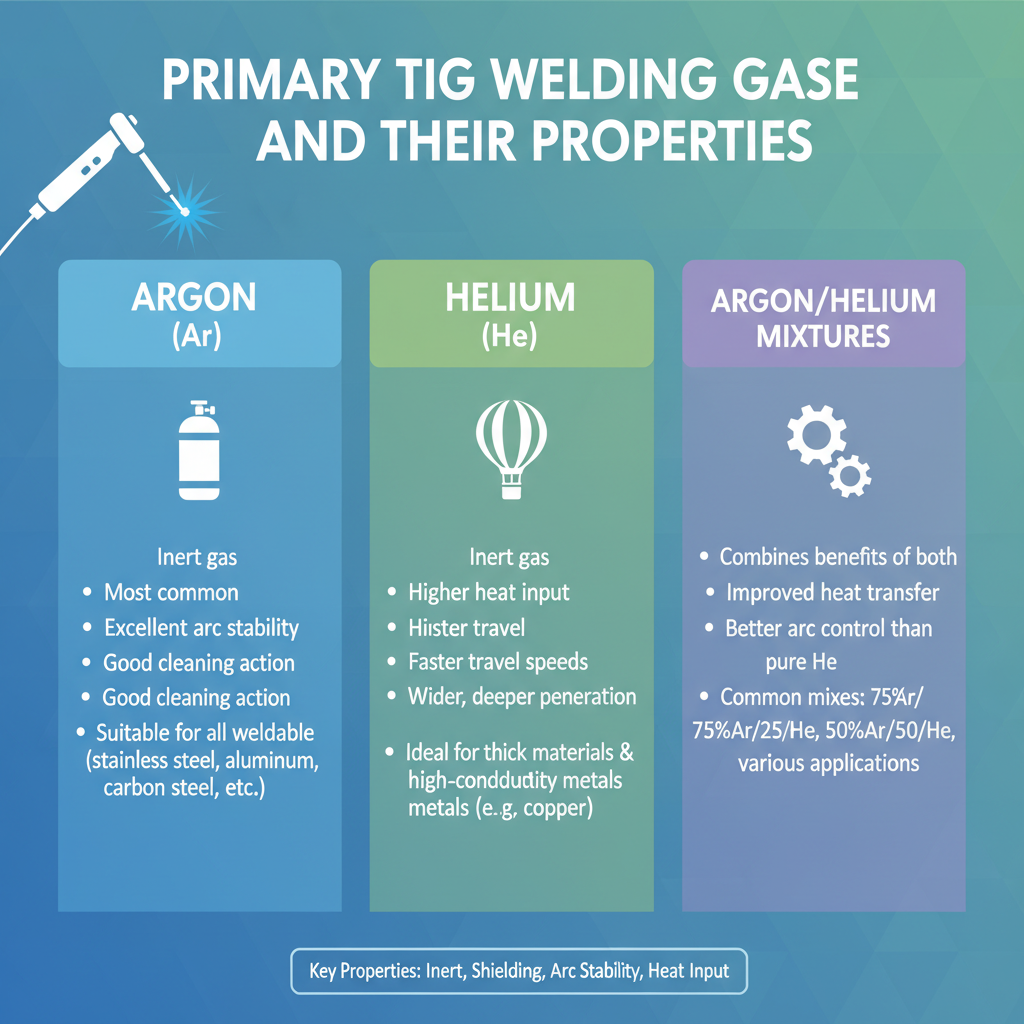
Understanding the fundamental characteristics of each shielding gas helps you make informed decisions for your specific welding needs.
Argon serves as the workhorse of TIG welding gases. This inert gas creates a stable arc that’s easy to control, making it ideal for beginners and precision work. Argon is heavier than air, providing excellent coverage of the weld pool. It produces a narrow, focused arc with moderate penetration.
Helium generates significantly more heat than argon due to its higher ionization potential. This characteristic makes it valuable for welding thick materials or metals with high thermal conductivity like aluminum and copper. However, helium is lighter than air and requires higher flow rates for adequate coverage.
Argon-helium mixtures combine the stability of argon with the increased heat input of helium. These blends offer a compromise between arc control and penetration depth, making them versatile for various applications.
Material-Specific Gas Selection Chart
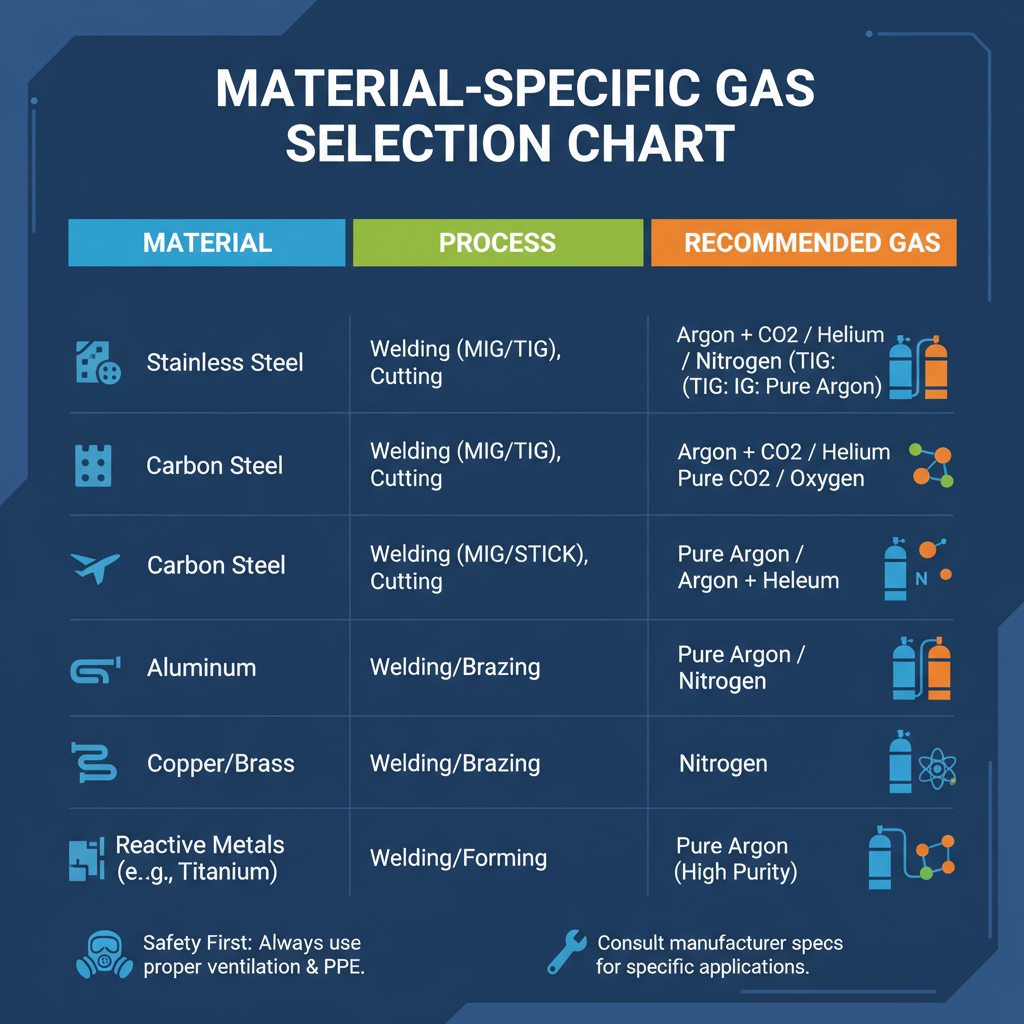
Different metals respond better to specific shielding gases based on their thermal properties and oxidation characteristics.
Aluminum Welding:
– Thin aluminum (up to 1/8″): 100% argon at 15-20 CFH
– Medium aluminum (1/8″ to 1/2″): 75% argon/25% helium at 20-25 CFH
– Thick aluminum (over 1/2″): 50% argon/50% helium at 25-35 CFH
Stainless Steel Welding:
– All thicknesses: 100% argon at 15-20 CFH
– High-speed welding: 90% argon/10% helium at 20-25 CFH
Carbon Steel Welding:
– Thin steel (up to 1/8″): 100% argon at 15-20 CFH
– Medium to thick steel: 75% argon/25% helium at 20-30 CFH
Copper and Copper Alloys:
– All applications: 75% argon/25% helium or 100% helium at 25-40 CFH
Flow Rate Guidelines by Material Thickness
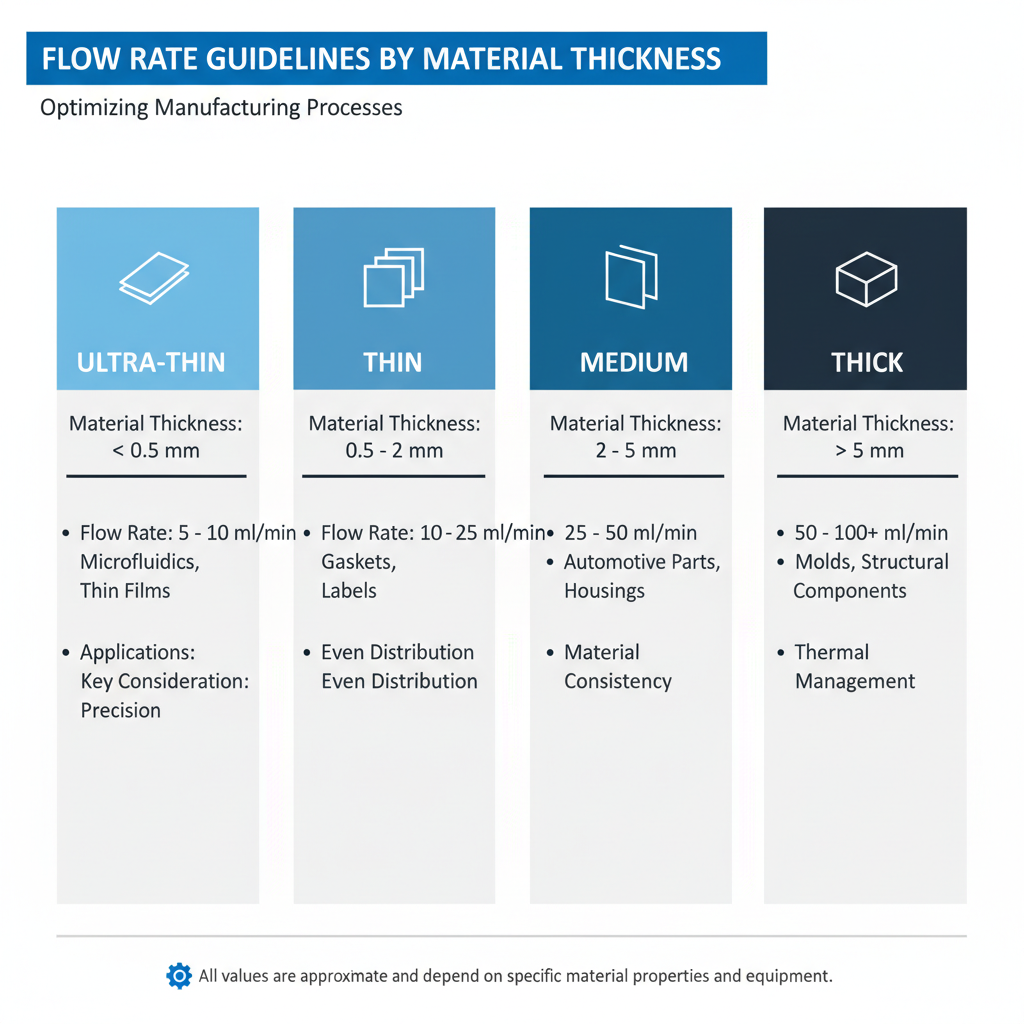
Proper gas flow rates ensure adequate shielding without waste or turbulence that can compromise weld quality.
For materials up to 1/8 inch thick, flow rates between 15-20 cubic feet per hour (CFH) typically provide sufficient coverage. The lighter weight and focused heat input don’t require excessive gas volume.
Medium thickness materials from 1/8 to 1/2 inch benefit from flow rates of 20-25 CFH. The increased heat input and larger weld pool require more gas volume to maintain proper shielding.
Thick materials over 1/2 inch often need 25-35 CFH, especially when using helium-rich mixtures. The higher heat input and larger affected area demand increased gas coverage.
Field experience shows that outdoor welding or drafty conditions may require flow rates 25-50% higher than indoor recommendations to compensate for air movement.
Gas Mixture Benefits and Trade-offs
Each gas combination offers specific advantages while presenting certain limitations that affect your welding approach.
100% Argon Advantages:
– Excellent arc stability and control
– Lower cost compared to helium mixtures
– Good for precision work and thin materials
– Easy to strike and maintain arc
100% Argon Limitations:
– Limited penetration on thick materials
– Slower travel speeds on high thermal conductivity metals
– May require multiple passes on thick sections
Argon-Helium Mixture Benefits:
– Increased heat input for better penetration
– Faster travel speeds possible
– Better performance on thick materials
– Improved fluidity of weld pool
Argon-Helium Mixture Drawbacks:
– Higher gas costs
– Requires higher flow rates
– Less forgiving arc characteristics
– More challenging for beginners
Common Gas Selection Mistakes
Many welders make predictable errors when choosing shielding gases, leading to poor weld quality and increased costs.
Using excessive flow rates wastes gas and can create turbulence that pulls atmospheric contamination into the weld zone. A common issue technicians encounter is setting flow rates too high, thinking more gas equals better protection.
Selecting pure helium for thin materials often results in burn-through and difficult arc control. Helium’s high heat input overwhelms thin sections, making it unsuitable for delicate work.
Sticking with 100% argon for all applications limits welding efficiency on thick materials. While argon works universally, helium mixtures significantly improve productivity on heavy sections.
Ignoring environmental conditions leads to inadequate shielding. Wind, drafts, and outdoor conditions require flow rate adjustments that many welders overlook.
Cost Optimization Strategies
Balancing gas performance with cost considerations helps maintain profitability while achieving quality results.
Volume Purchasing: Buying larger gas cylinders reduces the cost per cubic foot significantly. Industrial-size cylinders offer the best value for high-volume operations.
Application-Specific Selection: Using expensive helium mixtures only when necessary keeps costs reasonable. Reserve premium gases for thick materials or specialized applications.
Flow Rate Monitoring: Proper flow rate adjustment prevents waste while maintaining quality. Too much gas provides no additional benefit while increasing costs unnecessarily.
Equipment Maintenance: Well-maintained regulators and flowmeters ensure accurate gas delivery, preventing waste from leaks or incorrect settings.
Specialty Applications and Exotic Gases
Certain welding situations require specialized gas mixtures or pure gases beyond standard argon-helium combinations.
Reactive Metals: Titanium and other reactive metals may require ultra-high purity argon or specialized trailing gas setups to prevent contamination during cooling.
Root Pass Welding: Pipe welding often uses 100% argon for root passes to ensure maximum penetration control, switching to argon-helium mixtures for fill and cap passes.
Automated Welding: High-speed automated systems frequently benefit from helium-rich mixtures that allow faster travel speeds and improved productivity.
In practice, these specialty applications represent a small percentage of typical TIG welding work but require specific gas selection knowledge for success.
Equipment Considerations for Different Gases
Your welding equipment setup affects gas performance and may require adjustments based on your chosen shielding gas.
Following standard operating procedures ensures your equipment is properly configured for the selected shielding gas.
Regulator Selection: Helium requires different regulator specifications than argon due to its lower density. Using argon regulators with helium can result in inaccurate flow readings.
Flowmeter Calibration: Flow meters calibrated for argon will show different readings with helium mixtures. Conversion factors or helium-specific flowmeters ensure accurate gas delivery.
Torch Design: Some torch designs work better with specific gases. Larger gas lenses may be necessary for helium mixtures to maintain adequate coverage.
Hose Length: Longer gas hoses can affect flow characteristics, particularly with lighter gases like helium that may require pressure adjustments.
Frequently Asked Questions
What’s the most versatile TIG welding gas for a home workshop?
100% argon is the most versatile choice for home welders. It works well with all common metals, provides excellent arc control, and costs less than gas mixtures. You can weld aluminum, stainless steel, and carbon steel effectively with argon alone.
Can I use the same gas for both thin and thick materials?
While 100% argon works for all thicknesses, you’ll achieve better results using helium mixtures for materials over 1/4 inch thick. The increased heat input improves penetration and reduces the number of passes needed.
How do I know if my gas flow rate is correct?
Start with manufacturer recommendations based on material thickness, then adjust based on weld appearance. Too little gas causes oxidation and porosity, while too much creates turbulence and waste. The weld should have a bright, clean appearance without discoloration.
Is it worth buying helium mixtures for occasional thick material welding?
For occasional use, the improved productivity and weld quality often justify the higher gas cost. Calculate the time savings against gas expense – helium mixtures typically reduce welding time by 25-40% on thick materials.
What gas should I use for welding outdoors?
Outdoor welding requires higher flow rates and often benefits from heavier gases. Use 100% argon with increased flow rates (25-50% higher) and consider windscreens to protect the weld area from air movement.
Can I mix my own gas combinations?
While technically possible, pre-mixed cylinders ensure consistent ratios and quality. Gas suppliers have precise mixing equipment that maintains accuracy better than field mixing methods.
How long do gas cylinders typically last?
Cylinder life depends on flow rates and welding time. A standard 80 cubic foot argon cylinder lasts approximately 4-5 hours of continuous welding at 20 CFH flow rate. Track your usage to predict replacement needs.
Final Thoughts
Selecting the right TIG welding gas directly impacts your weld quality, productivity, and costs. Start with 100% argon for general applications, then consider argon-helium mixtures when welding thick materials or metals with high thermal conductivity. Match your flow rates to material thickness and environmental conditions, adjusting as needed for optimal coverage without waste. Remember that proper gas selection works hand-in-hand with good technique – even the best shielding gas cannot compensate for poor welding fundamentals. Focus on understanding how different gases affect your specific applications, and you’ll achieve consistently better results while managing costs effectively.