
When working with threaded fasteners and tapped holes, selecting the correct drill bit size is crucial for creating strong, properly fitting threads. Whether you’re working on automotive repairs, machinery maintenance, or general fabrication projects, understanding tap drill sizes ensures your threaded connections will hold securely without damaging the material.
For a 5/16-18 tap, drill a 17/64″ hole. For a 5/16-24 tap, drill an F-size drill bit hole (0.257″).
The pilot hole size depends on the thread pitch of your 5/16 tap. The 5/16-18 (coarse thread) requires a slightly larger pilot hole than the 5/16-24 (fine thread) because coarse threads cut deeper into the material.
This guide covers everything you need to know about drilling pilot holes for 5/16 taps, including the exact measurements, drilling techniques, and common troubleshooting tips that will help you achieve professional results every time.
Understanding 5/16 Tap Specifications
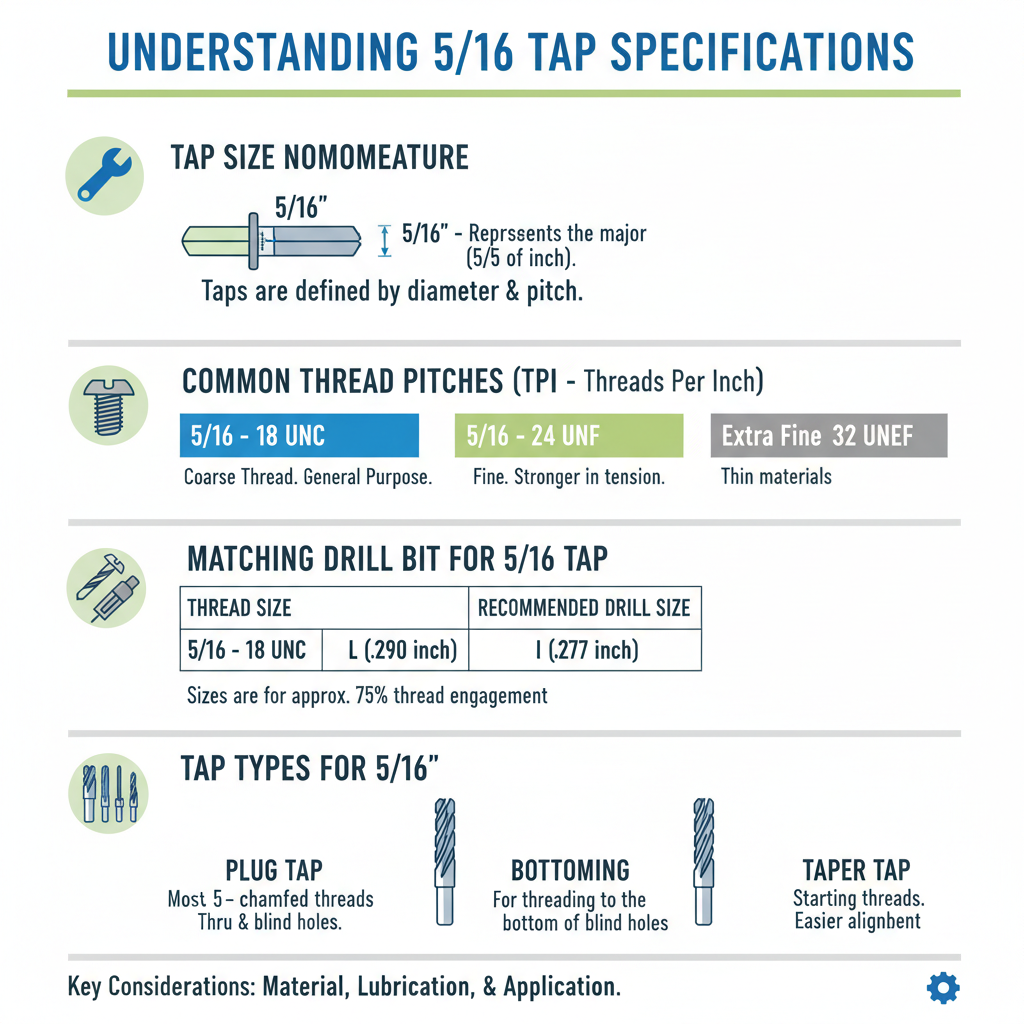
A 5/16 tap creates internal threads with a major diameter of 5/16 inch (0.3125″). However, the pilot hole size varies based on the thread pitch specification.
The two most common 5/16 tap varieties are:
- 5/16-18: Coarse thread with 18 threads per inch
- 5/16-24: Fine thread with 24 threads per inch
Thread pitch directly affects how much material the tap removes. Coarse threads (5/16-18) cut deeper grooves and require larger pilot holes to maintain proper thread engagement. Fine threads (5/16-24) remove less material and work with smaller pilot holes.
Exact Drill Bit Sizes for 5/16 Taps
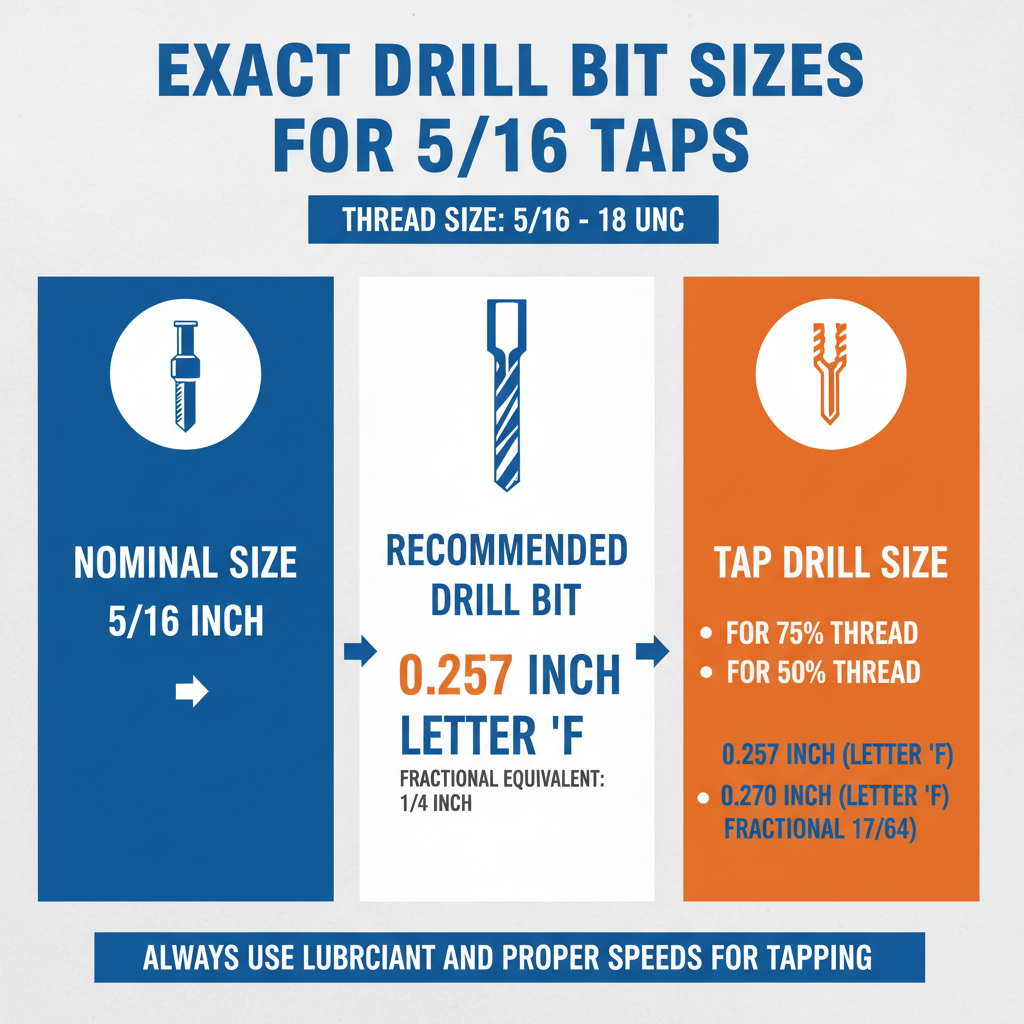
5/16-18 Coarse Thread
- Pilot hole size: 17/64″ (0.266″)
- Decimal equivalent: 0.2656″
- Metric equivalent: 6.75mm
5/16-24 Fine Thread
- Pilot hole size: F drill bit (0.257″)
- Decimal equivalent: 0.2570″
- Metric equivalent: 6.53mm
These measurements provide approximately 75% thread engagement, which offers the optimal balance between thread strength and tapping ease. Field experience shows that 75% engagement delivers nearly the same holding power as 100% engagement while significantly reducing tap breakage risk.
Step-by-Step Drilling Process
Material Preparation
Mark your hole location precisely using a center punch or awl. This prevents the drill bit from wandering during initial contact. Secure your workpiece firmly in a vise or clamp system to eliminate movement during drilling.
Clean the drilling area of any debris, oil, or paint that could interfere with accurate hole placement.
Drilling Technique
Start with a smaller pilot hole if working with hard materials. A 1/8″ or 3/32″ starter hole helps guide larger drill bits accurately, especially in steel or cast iron.
Use cutting fluid appropriate for your material. Light machine oil works well for steel, while aluminum benefits from specialized cutting compounds or even WD-40.
Maintain steady, moderate pressure. Let the drill bit cut at its own pace rather than forcing it through the material. Excessive pressure generates heat that dulls bits and can cause dimensional inaccuracies.
Drilling Speed Guidelines
- Steel: 300-500 RPM for 17/64″ bit
- Aluminum: 800-1200 RPM
- Cast iron: 200-400 RPM
- Stainless steel: 150-300 RPM
Higher speeds work better in softer materials, while harder materials require slower speeds to prevent overheating and premature bit wear.
Thread Engagement Calculations
The relationship between pilot hole size and thread engagement follows established machining principles. A 75% thread engagement means the tapped threads will contact 75% of the bolt’s thread surface area.
For 5/16-18 threads, the theoretical 100% engagement hole would be 0.2614″. The recommended 17/64″ (0.2656″) hole creates slightly less than 75% engagement, providing excellent strength while making tapping easier.
Fine thread applications often use higher engagement percentages because the threads are smaller and more numerous. The F drill size for 5/16-24 creates approximately 75-80% engagement.
Material-Specific Considerations
Steel and Iron
These materials hold threads well and can handle full 75% engagement without issues. Use sharp drill bits and adequate cutting fluid to prevent work hardening around the hole edges.
Stainless steel requires special attention due to its work-hardening properties. Maintain consistent feed rates and avoid dwelling in one spot, which can create hardened areas that resist tapping.
Aluminum Alloys
Aluminum’s softness allows for slightly higher thread engagement percentages. Some machinists successfully use slightly smaller pilot holes in aluminum, but the standard sizes work reliably across all aluminum grades.
Built-up edge formation can be problematic in aluminum. Sharp bits and appropriate cutting fluids minimize this issue.
Cast Materials
Cast iron and cast aluminum often contain hard spots or inclusions that can deflect drill bits. Start with smaller pilot holes and step up to final size when working with castings.
Common Drilling Mistakes and Solutions
Oversized Holes
Drilling holes too large reduces thread engagement below safe levels. This typically happens when drill bits are dull or when excessive pressure causes bit deflection.
Solution: Always verify drill bit size before use and replace dull bits immediately. Use proper drilling speeds for your material.
Undersized Holes
Holes that are too small increase tapping torque and raise the risk of tap breakage. This often occurs when using worn drill bits that cut undersize or when confusing metric and imperial measurements.
Solution: Measure pilot holes with pin gauges or drill bit shanks before tapping. Keep separate sets of metric and imperial bits clearly marked.
Off-Center Holes
Wandering drill bits create holes that aren’t perpendicular to the surface, leading to crooked tapped threads. Poor workpiece clamping and inadequate center punching cause this problem.
Solution: Use drill presses when possible for critical holes. Always center punch hole locations and use shorter, stiffer drill bits for better accuracy.
Tap Drill Chart Reference
| Thread Size | TPI | Tap Drill Size | Decimal | % Engagement |
|---|---|---|---|---|
| 5/16-18 | 18 | 17/64″ | 0.2656″ | 74.2% |
| 5/16-24 | 24 | F | 0.2570″ | 76.8% |
| 5/16-20 | 20 | 17/64″ | 0.2656″ | 71.5% |
| 5/16-32 | 32 | 9/32″ | 0.2812″ | 68.4% |
The 5/16-20 and 5/16-32 threads are less common but occasionally encountered in specialized applications. The 5/16-20 uses the same pilot hole as the 5/16-18, while the uncommon 5/16-32 requires a larger 9/32″ hole.
Professional Tips for Success
Bit Selection
Use jobber-length drill bits for most applications. They provide good rigidity while offering sufficient length for typical hole depths. Stub-length bits work better in hard materials where maximum rigidity is needed.
High-speed steel (HSS) bits handle most materials effectively. Cobalt bits last longer in stainless steel and other tough alloys, while carbide bits excel in production environments.
Cutting Fluid Applications
Apply cutting fluid before drilling begins, not after problems develop. A few drops of oil on the bit tip and in the hole location prevents heat buildup and extends bit life.
In production settings, flood coolant systems maintain consistent temperatures and wash away chips that could interfere with cutting action.
Quality Control
Check pilot hole diameter with pin gauges or by test-fitting the drill bit shank. The bit should slide through the hole with minimal clearance.
Verify hole depth before tapping, especially in blind holes. Insufficient depth prevents full thread engagement, while excessive depth wastes material and time.
Frequently Asked Questions
What happens if I drill the pilot hole too small for a 5/16 tap?
A pilot hole that’s too small increases tapping torque significantly and raises the risk of tap breakage. The tap will struggle to cut threads and may bind or snap, especially in harder materials. Always verify pilot hole size before tapping.
Can I use a metric drill bit instead of fractional sizes?
Yes, but choose carefully. A 6.8mm bit (0.2677″) works acceptably for 5/16-18 threads, while 6.5mm (0.2559″) suits 5/16-24 applications. However, standard fractional sizes are more readily available and provide proven results.
How deep should I drill the pilot hole?
For through holes, drill completely through the material. For blind holes, drill at least as deep as the threaded portion you need, plus 1-2 thread pitches extra. This prevents the tap from bottoming out before reaching full depth.
Why do coarse and fine threads need different pilot hole sizes?
Coarse threads (5/16-18) cut deeper into the material and remove more metal than fine threads (5/16-24). The larger pilot hole for coarse threads compensates for this greater material removal while maintaining proper thread engagement.
What’s the maximum thread engagement I should aim for?
Generally, 75-80% thread engagement provides optimal strength without excessive tapping difficulty. Higher engagement percentages increase tap breakage risk without proportional strength gains. In soft materials like aluminum, you can safely use up to 85% engagement.
Can I tap without drilling a pilot hole first?
Self-tapping screws can create their own holes in thin, soft materials, but traditional taps require pilot holes. Attempting to tap without proper pilot holes will break the tap and potentially damage your workpiece.
How do I know if my drill bit is the right size?
The drill bit shank should slide through your drilled hole with just slight clearance. If there’s significant play, the hole is too large. If the bit won’t fit, the hole is too small. Pin gauges provide the most accurate hole size verification.
Professional Results Every Time
Success with 5/16 taps depends on using the correct pilot hole size for your specific thread pitch. The 17/64″ hole for 5/16-18 threads and F-size hole for 5/16-24 threads represent decades of machining experience and provide reliable results across various materials.
Remember that proper drilling technique matters as much as correct sizing. Sharp bits, appropriate speeds, adequate cutting fluid, and secure workpiece clamping all contribute to professional results. Take time to verify measurements and hole quality before tapping to avoid costly mistakes and broken taps.