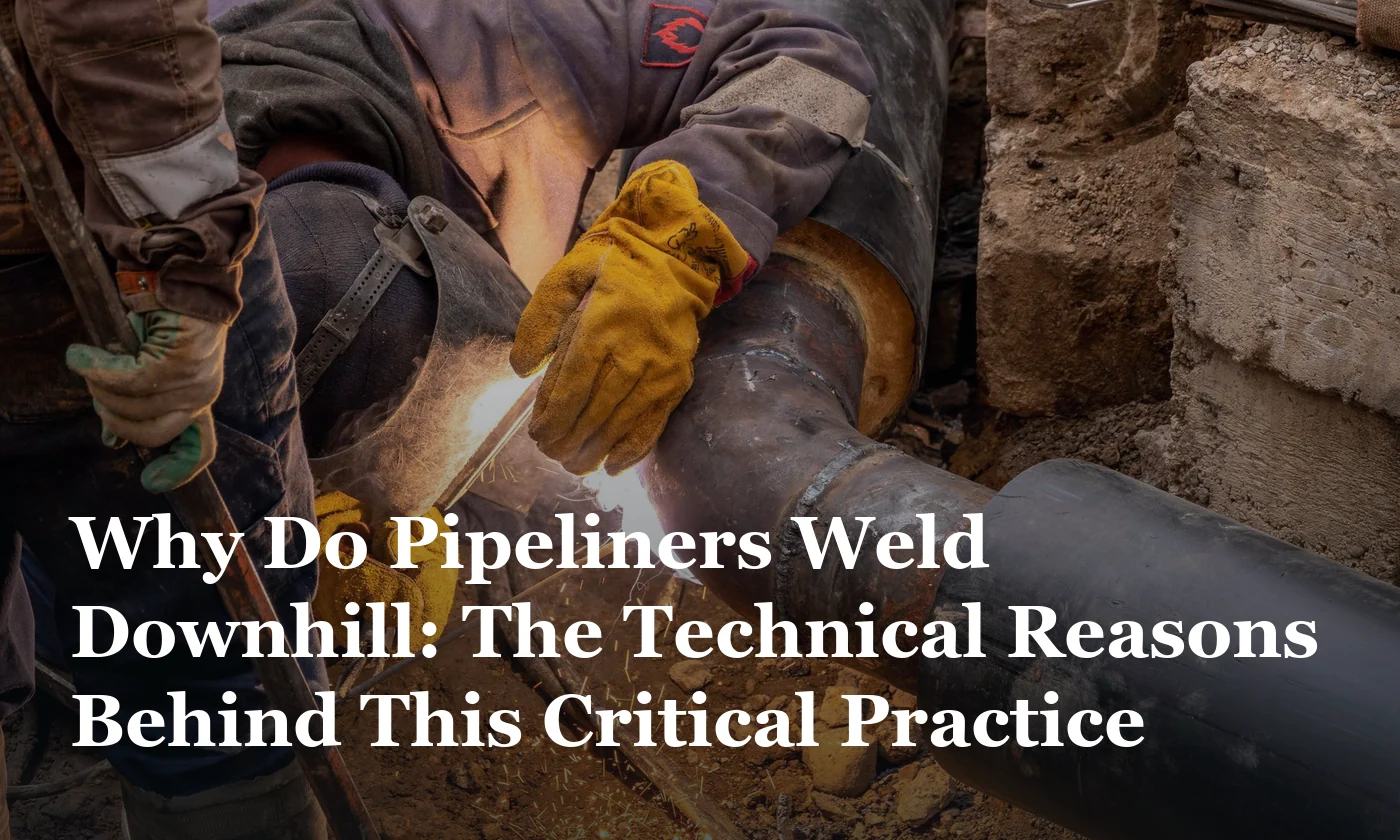
Pipeliners weld downhill primarily because it allows faster travel speeds, better penetration control, and superior root pass quality on thick-wall pipe. The downhill progression enables welders to achieve consistent penetration while maintaining high productivity rates essential for pipeline construction schedules. This technique also provides better control over heat input and reduces the risk of burn-through on critical root passes.
Pipeline welding represents one of the most demanding applications in the welding industry, where safety, speed, and structural integrity cannot be compromised. Understanding why pipeliners consistently choose downhill welding techniques reveals the sophisticated engineering principles that govern high-pressure pipeline construction. This article explores the technical, practical, and safety reasons that make downhill welding the preferred method for pipeline construction across the energy industry.
The Physics Behind Downhill Pipeline Welding
Downhill welding leverages gravity to assist the molten metal flow, creating a natural progression that enhances weld quality. When welding in the downhill position, the arc force and gravity work together to drive the molten metal ahead of the welding electrode.
This combination creates several distinct advantages. The molten metal flows more smoothly into the joint, reducing the likelihood of incomplete fusion or lack of penetration defects. The natural flow pattern also helps eliminate trapped slag and gas inclusions that commonly occur in uphill welding.
Field experience shows that downhill welding produces a more consistent weld profile across varying pipe diameters and wall thicknesses. The technique particularly excels when welding the critical root pass, where penetration control directly impacts pipeline integrity.
Penetration Control and Root Pass Quality
The root pass represents the most critical weld in pipeline construction, as it must achieve full penetration while avoiding burn-through. Downhill welding provides superior control over this delicate balance through several mechanisms.
The downhill angle naturally reduces the heat input concentration at any single point, distributing thermal energy more evenly across the weld zone. This distribution prevents excessive heating that leads to burn-through while maintaining sufficient energy for complete penetration.
Professional pipeliners often achieve root pass success rates above 95% using downhill techniques, compared to significantly lower success rates with uphill methods on similar pipe specifications. The improved success rate directly translates to reduced repair time and lower overall project costs.
Speed and Productivity Advantages
Pipeline construction operates under intense schedule pressures, where welding speed directly impacts project economics. Downhill welding enables significantly faster travel speeds compared to uphill techniques without sacrificing weld quality.
Typical downhill welding speeds range from 8 to 15 inches per minute, depending on pipe diameter and wall thickness. These speeds represent a 40-60% improvement over comparable uphill welding operations. The increased speed stems from the natural metal flow that eliminates the need for complex manipulation techniques required in uphill welding.
The productivity gains extend beyond raw welding speed. Downhill welding reduces the number of electrode changes, minimizes cleanup requirements, and decreases the likelihood of defects requiring repair. These factors combine to create substantial time savings across large pipeline projects.
Heat Input Management
Managing heat input becomes critical when welding high-strength pipeline steels that require specific thermal cycles to maintain mechanical properties. Downhill welding provides better heat input control through its natural thermal distribution characteristics.
The downhill progression spreads heat input over a larger area, reducing peak temperatures and cooling rates. This thermal behavior helps maintain the heat-affected zone properties essential for pipeline performance under high-pressure service conditions.
In practice, downhill welding typically requires 15-25% less heat input than uphill methods to achieve equivalent penetration. The reduced heat input minimizes distortion, reduces residual stresses, and preserves the base metal microstructure critical for pipeline integrity.
Joint Geometry Considerations
Pipeline welding joints feature specific geometric requirements that favor downhill welding techniques. The typical pipeline joint includes a narrow root opening with a backing ring or open root configuration that demands precise penetration control.
Downhill welding naturally accommodates these geometric constraints through its controlled metal flow characteristics. The technique effectively bridges narrow root openings while maintaining consistent penetration depth across the entire joint circumference.
The joint geometry also benefits from the reduced spatter production associated with downhill welding. Lower spatter levels improve joint accessibility for subsequent passes and reduce cleanup requirements between welding operations.
Electrode Selection and Technique Factors
Successful downhill pipeline welding requires specific electrode selections and technique modifications optimized for the downhill progression. Low-hydrogen electrodes with cellulosic coatings typically perform best in downhill applications due to their arc characteristics and slag behavior.
The electrode angle becomes critical in downhill welding, typically maintained between 15-30 degrees from vertical. This angle optimizes the arc force direction while maintaining proper shielding gas coverage and slag protection.
Welding current settings for downhill operations generally run 10-20% higher than equivalent uphill settings to compensate for the faster travel speeds. The increased current maintains adequate penetration while supporting the higher deposition rates achievable with downhill techniques.
Quality Control and Inspection Benefits
Downhill welding produces weld profiles that facilitate more effective quality control and inspection procedures. The consistent weld geometry and reduced defect rates simplify radiographic interpretation and ultrasonic testing protocols.
The smooth weld profile characteristic of downhill welding eliminates many of the geometric indications that complicate inspection of uphill welds. This clarity improves defect detection reliability and reduces false rejection rates during quality control procedures.
Field inspection data consistently shows lower defect rates in downhill pipeline welds, with typical rejection rates below 3% compared to 8-12% for uphill welding on similar applications. The improved quality metrics directly support pipeline integrity and regulatory compliance requirements.
Environmental and Safety Considerations
Pipeline construction often occurs in challenging environmental conditions where welding technique selection impacts both safety and productivity. Downhill welding provides advantages in windy conditions, cold weather, and confined space applications common in pipeline work.
The natural metal flow in downhill welding creates better wind resistance, maintaining weld quality in outdoor conditions that would compromise uphill techniques. The faster welding speeds also reduce exposure time to harsh environmental conditions.
Safety benefits include reduced welder fatigue due to more natural body positioning and decreased arc time exposure. The improved ergonomics of downhill welding contribute to better long-term welder health and reduced injury rates on pipeline projects.
Frequently Asked Questions
What welding positions do pipeliners use for downhill welding?
Pipeliners primarily use the 6G position (45-degree inclined pipe) for downhill welding, progressing from the 12 o’clock position downward. This position allows gravity to assist metal flow while maintaining accessibility around the pipe circumference.
Can all pipeline steels be welded downhill?
Most pipeline steels including X52, X60, X65, and X70 grades can be successfully welded downhill with proper procedures. However, some ultra-high strength steels may require modified techniques or uphill welding to meet specific mechanical property requirements.
What are the main disadvantages of downhill pipeline welding?
The primary disadvantages include potential for cold lap defects if technique is improper, limited effectiveness on very thick walls over 1 inch, and reduced deposition rates per pass compared to uphill welding. Proper training and technique development minimize these concerns.
How does downhill welding affect weld strength?
When properly executed, downhill pipeline welds meet or exceed the strength requirements of the base metal. The key is maintaining proper penetration and avoiding defects through correct technique and parameters.
What equipment modifications are needed for downhill pipeline welding?
Standard pipeline welding equipment works for downhill applications, though some welders prefer machines with enhanced arc control features. The main requirement is selecting appropriate electrodes designed for downhill progression.
Why don’t all welding applications use downhill techniques?
Downhill welding works best on specific joint geometries and thickness ranges common in pipeline work. Other applications may require the deeper penetration characteristics of uphill welding or have geometric constraints that favor other welding positions.
How long does it take to master downhill pipeline welding?
Experienced welders typically require 2-4 weeks of focused training to develop proficiency in downhill pipeline techniques. Complete mastery including advanced troubleshooting skills may take 6-12 months of field experience.
Final Thoughts
Downhill welding has become the standard practice in pipeline construction due to its unique combination of speed, quality, and reliability advantages. The technique’s ability to produce high-quality root passes while maintaining exceptional productivity makes it indispensable for modern pipeline projects. Understanding these technical principles helps explain why pipeliners consistently choose downhill welding despite the additional training requirements and technique considerations involved. The method’s proven track record in producing defect-free welds under challenging field conditions continues to drive its adoption across the pipeline industry worldwide.