
A MIG welder that’s producing weak arcs, overheating, or no output at all often has a failing transformer at the root of the problem. Before replacing the entire machine, testing the transformer can tell you whether it’s the actual fault or if something else is to blame.
To test a MIG welder transformer, use a digital multimeter to check primary winding resistance, secondary winding resistance, and insulation integrity. Disconnect power completely before testing. A healthy transformer will show low, consistent resistance across each winding and no continuity between windings or between windings and the core. Infinite resistance between the primary and secondary confirms electrical isolation is intact.
Safety Before You Touch Anything
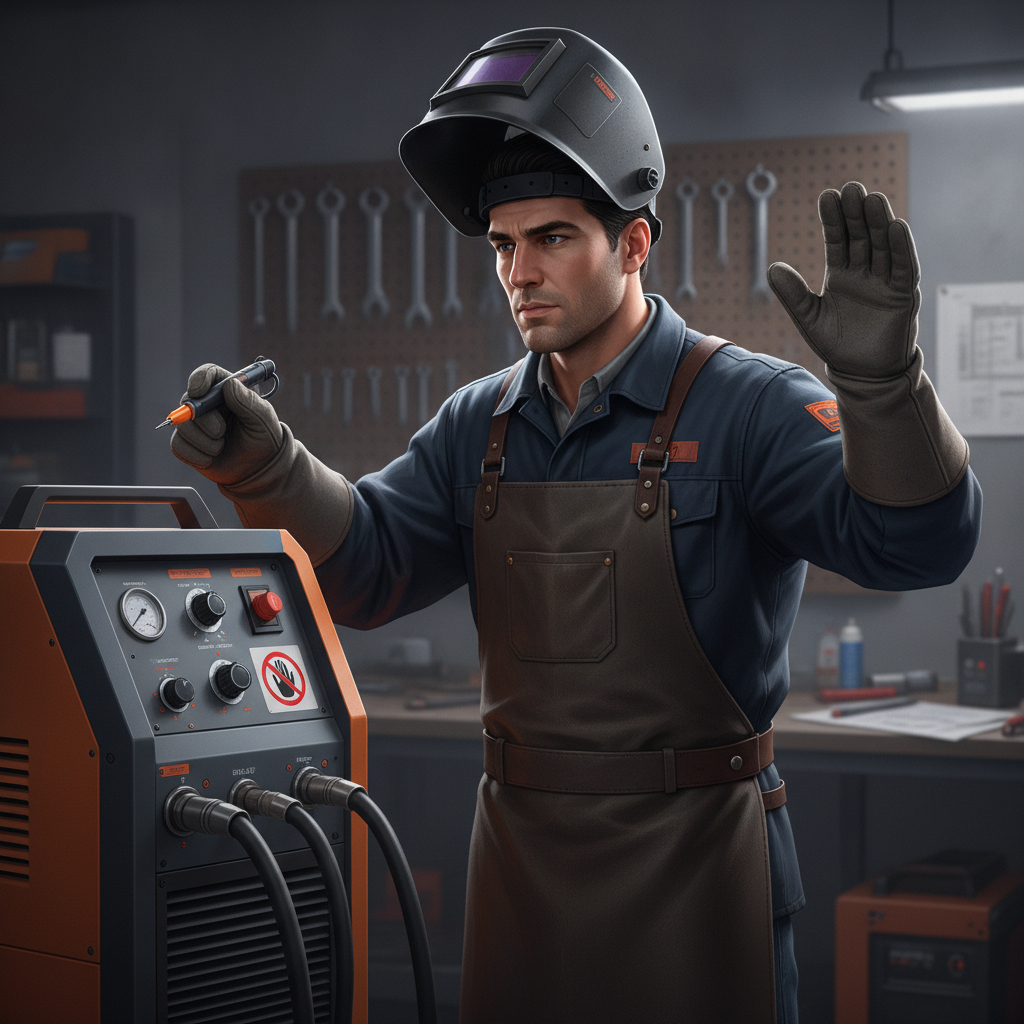
MIG transformers operate at mains voltage on the primary side — typically 120V or 240V depending on your machine. Even after unplugging, large filter capacitors inside the welder can hold a dangerous charge for several minutes.
Before opening the case:
- Unplug the machine from the wall
- Wait at least 5 minutes before reaching inside
- Discharge capacitors using a resistor or insulated discharge tool if you’re confident doing so
- Never probe inside a powered welder
If you’re unfamiliar with high-voltage electronics, this is worth stating plainly: the transformer itself is safe to measure when unplugged, but the surrounding circuit components are not forgiving of mistakes.
Tools You’ll Need
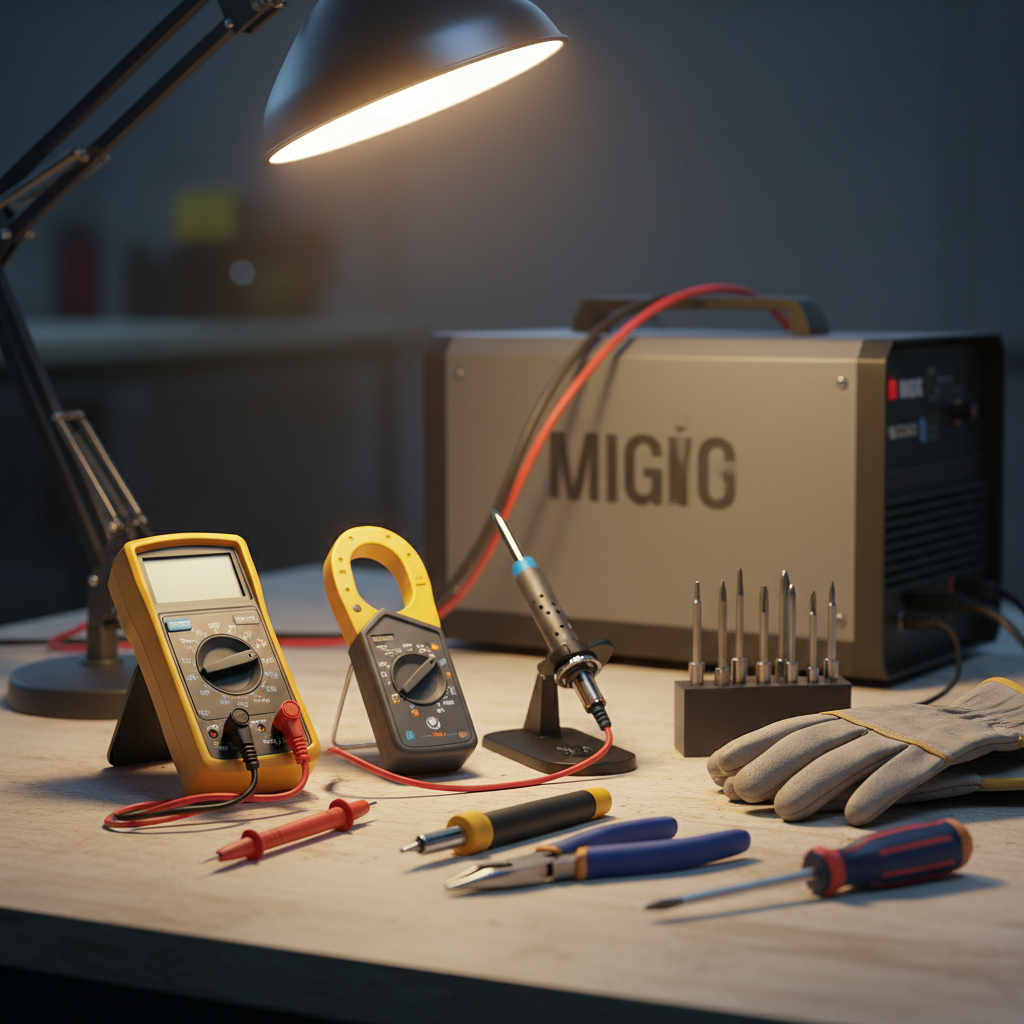
Testing a MIG transformer doesn’t require specialized equipment. A basic digital multimeter handles all the essential checks.
| Tool | Purpose |
|---|---|
| Digital multimeter (DMM) | Resistance and continuity testing |
| Insulation resistance tester (megohmmeter) | High-voltage insulation check |
| Wiring diagram (if available) | Identifying winding terminals |
| Screwdrivers / socket set | Opening the welder casing |
A budget multimeter like the AstroAI AM33D is capable of handling all the basic transformer tests described here. For a more thorough insulation test, a megohmmeter rated at 500V or 1000V is the proper tool — though most DIY troubleshooting skips this step and relies on the standard DMM continuity check instead.
Identifying the Transformer Terminals
Before measuring anything, you need to locate the primary and secondary winding leads.
In most MIG welders:
- Primary windings connect to the input power line (live, neutral, and sometimes a tap for dual voltage)
- Secondary windings connect to the rectifier board or directly to the output terminals
Older transformer-based MIG machines (as opposed to inverter-based models) typically have large, heavy transformers with visible wire leads. The primary leads are usually insulated with thicker, higher-rated wire. Secondary leads carry high current at low voltage and are often heavier gauge copper.
If you have the machine’s wiring diagram, identify each terminal before measuring. If not, trace the leads visually from the transformer body.
Step-by-Step: Testing the Transformer
Step 1 — Check Primary Winding Resistance
Set your multimeter to the resistance (ohms) setting.
Place the probes across the two primary winding leads. A functional primary winding on a standard MIG transformer will typically read anywhere from 1 ohm to 30 ohms depending on the machine’s power rating. Smaller hobby machines sit toward the lower end.
What to look for:
- Normal reading: Low resistance, consistent with the machine’s specs
- Open circuit (OL / infinite): Winding is broken — transformer is failed
- Zero or near-zero resistance: Possible shorted turns — transformer is likely failed
Step 2 — Check Secondary Winding Resistance
Repeat the same process on the secondary winding leads.
Secondary resistance is usually lower than primary resistance — often 0.1 ohm to 5 ohms — because the secondary carries more current at lower voltage. Very low readings here are normal. The key is to confirm the winding isn’t open.
Again, an “OL” reading means the winding is broken and the transformer needs replacement.
Step 3 — Check Isolation Between Primary and Secondary
This test confirms the windings are electrically isolated from each other, which they must be for safe operation.
Place one probe on any primary lead and the other probe on any secondary lead.
Expected result: OL (open circuit) — no continuity
If you get any measurable resistance or continuity between the primary and secondary windings, the insulation has broken down. This is a serious fault. The transformer is unsafe and must be replaced.
Step 4 — Check Winding-to-Core Isolation
Place one probe on a winding lead (either primary or secondary) and touch the other probe to the transformer’s metal core or frame.
Expected result: OL — no continuity
Continuity between any winding and the core indicates a winding-to-ground fault. This is both a safety hazard and a functional failure.
Step 5 — Visual Inspection
While you have the machine open, check the transformer physically:
- Burnt smell or visible scorch marks around the windings
- Discolored insulation or melted varnish
- Cracked or damaged bobbin
- Swollen or bulging core laminations
Any of these signs point toward thermal failure, which usually means the machine was overloaded or ran without adequate cooling for extended periods.
What the Results Mean
| Test | Normal Result | Fault Indication |
|---|---|---|
| Primary resistance | Low, stable reading | OL = open winding / 0Ω = shorted turns |
| Secondary resistance | Very low, stable reading | OL = open winding |
| Primary to secondary isolation | OL (no continuity) | Any reading = insulation failure |
| Winding to core isolation | OL (no continuity) | Any reading = ground fault |
Common Causes of Transformer Failure
Transformer failures in MIG welders aren’t random. Most trace back to a handful of predictable causes:
- Duty cycle abuse: Running the machine beyond its rated duty cycle causes excessive heat buildup, which degrades winding insulation over time
- Blocked cooling vents: Fan failure or clogged vents concentrate heat inside the transformer
- Voltage spikes: Surges from poor power supply quality can damage insulation in the primary winding
- Age and vibration: On older machines, varnish-coated windings dry out and crack, leading to gradual insulation breakdown
- Moisture ingress: Storage in damp conditions accelerates insulation deterioration
In practice, the most common failure mode in hobby and light-industrial MIG machines is thermal — the insulation slowly breaks down until winding shorts develop.
Transformer-Based vs. Inverter-Based MIG Welders
This testing procedure applies specifically to transformer-based MIG welders — machines that use a large, heavy iron-core transformer to step down mains voltage.
Inverter-based MIG welders (which now dominate the market) work differently. They use high-frequency switching circuits and smaller transformers, and the fault diagnosis process is more complex. You can still test the transformer within an inverter welder using the same resistance checks, but inverter failures are more commonly related to the IGBT switching transistors, control boards, or rectifier bridges than the transformer itself.
If you own a compact, lightweight machine, it’s almost certainly inverter-based. Testing still follows the same resistance principles, but expect much lower winding resistances and smaller physical components.
FAQ
What resistance should a MIG welder transformer read?
Primary winding resistance on most MIG transformers falls between 1 and 30 ohms. Secondary winding resistance is typically lower — often 0.1 to 5 ohms — because it’s designed for high current at low voltage. The exact values vary by machine wattage and design. The important thing is getting a stable, finite reading rather than an open circuit.
Can a MIG transformer be repaired, or does it need replacing?
Minor repairs like re-varnishing or re-taping damaged leads are possible but rarely practical for most users. Rewinding a transformer requires specialized knowledge and equipment. In most cases, a failed transformer means replacing the unit entirely — or replacing the complete welder if a replacement transformer isn’t available from the manufacturer.
Why does my MIG welder have power but no welding output?
If the machine powers on but produces no arc, the transformer may have an open secondary winding, or the rectifier diodes or output circuit downstream of the transformer may have failed. Test the transformer secondary resistance first. If it reads correctly, the fault likely lies in the rectifier bridge or output contactor rather than the transformer itself.
Is it safe to test a MIG transformer with the machine plugged in?
No. Always test with the machine fully unplugged. Even with power removed, wait several minutes for internal capacitors to discharge before probing. Testing with live power present is dangerous and unnecessary for resistance-based transformer testing.
How do I know if my MIG welder has a transformer or inverter design?
Weight is the most reliable indicator. Transformer-based MIG welders typically weigh 40–80 lbs or more. Inverter-based machines are significantly lighter, often under 20 lbs. Opening the case confirms it: a large, heavy iron-core transformer means it’s transformer-based. A circuit board with smaller components and switching transistors means it’s an inverter design.
Can a MIG transformer test normal but still be faulty?
Yes. A transformer can pass basic resistance tests but still have partially shorted turns that reduce output power without fully breaking the circuit. This fault is harder to detect with a basic multimeter alone. Symptoms include weak arc performance, excessive heat, and lower-than-expected output voltage despite normal resistance readings. A proper turn ratio test or power-on secondary voltage measurement is needed to catch this.
What does OL mean on a multimeter when testing a transformer?
OL means “over limit” — the multimeter cannot measure the resistance because it exceeds its range, effectively meaning open circuit (infinite resistance). During isolation tests between windings or between a winding and the core, OL is the correct and expected result. During winding continuity tests, OL indicates a broken winding.
Transformer testing on a MIG welder comes down to four basic checks: primary resistance, secondary resistance, primary-to-secondary isolation, and winding-to-core isolation. Any winding that reads open circuit, or any isolation test that shows continuity, identifies a clear fault. The visual inspection adds context that the multimeter alone can’t provide — especially when thermal damage is involved. Most repairs beyond transformer replacement require professional service, so a clear test result saves time and prevents unnecessary part swaps.