
MIG welding is one of the most common welding processes in both professional shops and home garages. If you’re just getting started — or thinking about it — understanding the real risks upfront can be the difference between a safe habit and a serious accident.
MIG welding carries genuine hazards, including UV radiation exposure, toxic fume inhalation, electric shock, fire, and burns. However, with proper protective equipment, good ventilation, and basic safety awareness, most risks are entirely manageable. Many hobbyists and professionals weld safely for decades without serious injury.
The Real Risks of MIG Welding
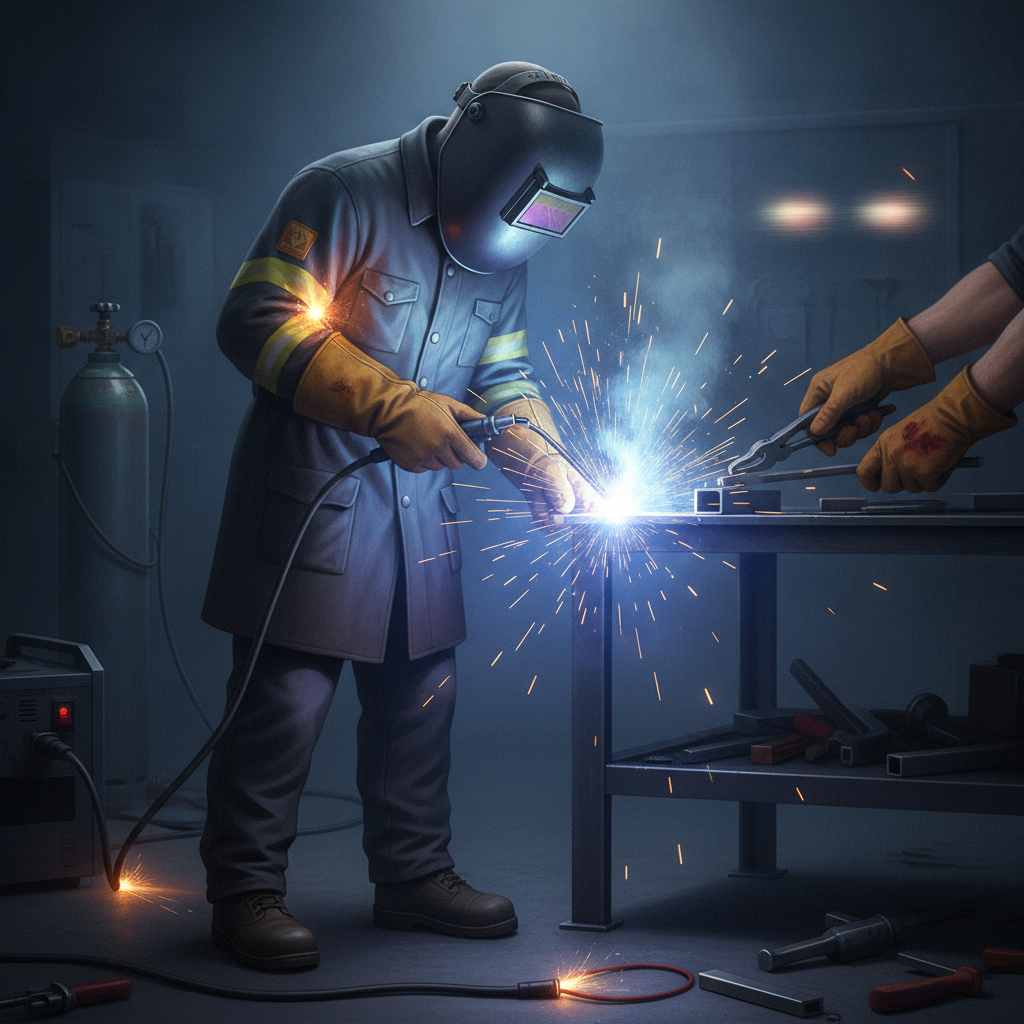
MIG welding combines electricity, intense heat, and molten metal — so the hazard potential is real. The key is knowing exactly what you’re dealing with.
Here are the primary dangers:
- UV and infrared radiation — The welding arc emits ultraviolet and infrared light intense enough to cause “arc eye” (photokeratitis) and serious skin burns within seconds of unprotected exposure.
- Toxic fumes and gases — Burning base metals, coatings, and shielding gas can release manganese, hexavalent chromium, ozone, and carbon monoxide depending on the materials involved.
- Electric shock — MIG welding operates at lower voltages than some processes, but the current is still lethal if proper precautions aren’t taken.
- Fire and explosion — Spatter and sparks can travel up to 35 feet from the weld and ignite combustible materials nearby.
- Burns and heat injury — Freshly welded metal retains heat long after the arc stops, and spatter lands unpredictably.
- Noise exposure — Prolonged grinding and certain MIG processes generate noise levels above safe thresholds without hearing protection.
None of these risks are unique to MIG welding, and none of them are unavoidable. They’re manageable with the right setup.
Fume Exposure: The Most Overlooked Danger
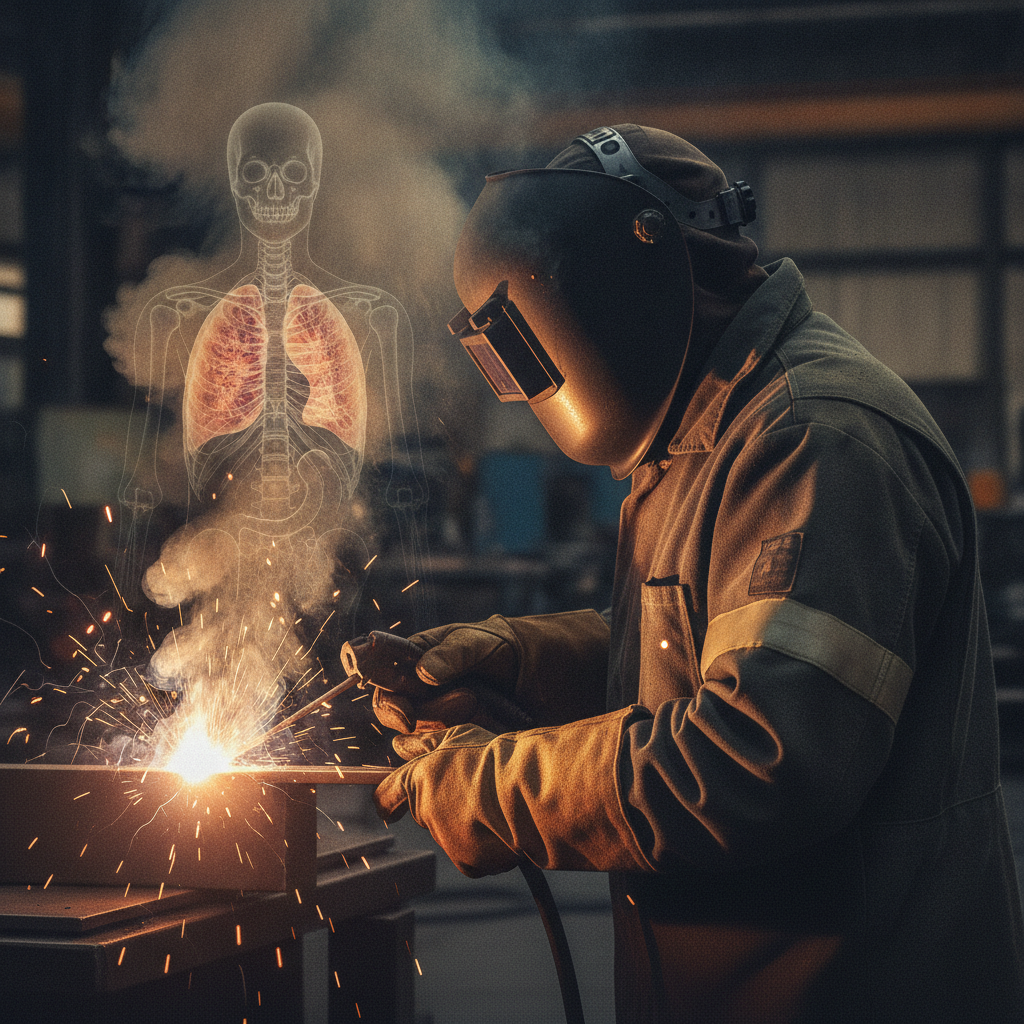
Most beginners think about sparks and burns. Fumes are often the bigger long-term concern.
MIG welding fumes contain fine metallic particles that penetrate deep into lung tissue. Prolonged exposure to manganese — present in most MIG wire — has been associated with neurological conditions similar to Parkinson’s disease. Welding stainless steel without adequate ventilation introduces hexavalent chromium, a recognized carcinogen.
The shielding gas itself — typically 75% argon / 25% CO₂ for carbon steel — isn’t toxic, but it displaces oxygen in confined spaces. Working in a poorly ventilated room or enclosed area can create dangerous oxygen-deficient conditions faster than most people expect.
Practical steps to control fume exposure:
- Weld outdoors when possible — Natural airflow significantly reduces fume concentration.
- Use local exhaust ventilation (LEV) — A fume extractor positioned close to the arc is the most effective indoor solution.
- Wear an appropriate respirator — A half-face respirator with P100 / OV combination cartridges provides meaningful protection. A dust mask does not.
- Avoid galvanized or coated metals without preparation — Burning zinc coatings produces zinc oxide fumes, which cause metal fume fever.
- Never weld in a completely sealed space — Even brief sessions in airtight areas can be dangerous.
Eye and Skin Protection
Arc eye is painful enough to feel like sand in your eyes hours after exposure. It’s caused by UV radiation — the same type that causes sunburn — and it can occur from brief, indirect exposure to a nearby arc without proper eye protection.
A proper auto-darkening welding helmet is essential. Look for a shade rating of at least DIN 9–13 for MIG welding, depending on amperage. Auto-darkening helmets like the Lincoln Electric Viking 3350 respond to the arc in milliseconds, making them practical for positioning before striking the arc.
Skin protection matters too. UV radiation from the arc can burn exposed skin on your arms and neck in minutes. Wear:
- Leather or flame-resistant welding gloves
- Long sleeves made from natural fibers (cotton, wool) or FR-rated fabric
- Leather welding jacket or sleeves for higher-amperage work
- Closed-toe leather boots — never synthetic materials near spatter
Synthetic fabrics melt rather than char, which causes significantly worse burns.
Electrical Safety in MIG Welding
MIG welders typically operate between 15–30 volts at the arc, which is lower than stick welding. That said, the amperage — not voltage — is what kills. Even at relatively low voltages, the current through the secondary circuit is more than enough to cause cardiac arrest under certain conditions.
The highest risk situations include:
- Working in wet or damp environments
- Touching the electrode wire or gun nozzle while the machine is energized
- Using a damaged or improperly grounded welder
- Wearing wet gloves
Key electrical safety habits:
- Always ensure the work clamp (ground clamp) is securely attached to clean, bare metal on the workpiece or welding table.
- Never coil the welding lead around your body.
- Turn the machine off before changing wire or servicing the gun.
- Use a properly grounded outlet — a 240V circuit for most full-size MIG welders should be on a dedicated breaker.
Fire Prevention Around the Welding Area
Spatter is small, but it’s molten metal. A tiny spark landing on a rag, cardboard, or sawdust pile can smolder undetected for hours before igniting into a real fire.
Before starting any weld:
- Clear the area of all combustibles within 35 feet, or use fire-resistant welding blankets to protect what can’t be moved.
- Keep a fire extinguisher within immediate reach — a Class ABC dry chemical extinguisher is the standard recommendation.
- Check the area again after welding — look for smoldering materials, not just open flames.
- Never weld near pressurized containers, aerosol cans, or fuel tanks, even empty ones.
In a home garage setup, a welding blanket draped over a workbench or nearby storage is a practical habit that prevents most accidental ignitions.
How MIG Welding Compares to Other Welding Processes
Understanding relative risk helps put MIG welding in proper perspective.
| Hazard | MIG Welding | Stick (SMAW) | TIG Welding | Flux-Core (FCAW) |
|---|---|---|---|---|
| Fume intensity | Moderate | Moderate–High | Low–Moderate | High |
| UV radiation | High | High | High | High |
| Spatter | Moderate | High | Minimal | High |
| Ease of safe setup | Moderate | Moderate | Moderate | Moderate |
| Risk for beginners | Moderate | Moderate | Lower arc risk | Moderate–High |
MIG welding sits in the middle of the risk spectrum. Flux-core welding produces significantly more fume due to the flux compound in the wire. TIG welding produces minimal spatter but carries the same UV and electrical hazards. Stick welding generates more slag and spatter.
For beginners, a wire-feed machine like the Hobart Handler 140 is often recommended because it’s easier to control than stick, which indirectly reduces beginner mistakes that lead to accidents.
Common Beginner Safety Mistakes
Field experience consistently shows the same errors repeated by newcomers:
- Skipping the respirator because “it’s just a short weld” — fume accumulates even during brief sessions in poorly ventilated spaces.
- Lifting the helmet too soon — the workpiece radiates UV briefly even after the arc stops.
- Using an extension cord not rated for the welder’s amperage draw — undersized cords create heat buildup and fire risk.
- Welding over painted or coated metal without grinding it first — coatings produce fumes significantly more toxic than bare steel.
- Setting the work clamp on a painted surface — poor ground connection causes arc instability and increases shock risk.
FAQ
Can MIG welding fumes cause long-term lung damage?
Yes. Regular exposure to MIG welding fumes without proper ventilation and respiratory protection is associated with pulmonary inflammation and, over extended periods, conditions like siderosis (lung tissue scarring from iron particles). Manganese exposure has also been linked to neurological effects. Using local exhaust ventilation and a proper respirator dramatically reduces cumulative exposure and long-term risk.
Is MIG welding safe to do in a garage?
MIG welding in a garage is safe if ventilation is adequate. The garage door should be open, and ideally a fume extractor or exhaust fan positioned to draw air away from the welder’s breathing zone. Small enclosed garages with the door closed are not safe for extended welding without mechanical ventilation. Always check for stored combustibles before starting.
Can you go blind from MIG welding without a helmet?
Looking directly at a MIG welding arc without eye protection can cause arc eye (photokeratitis) in seconds. Symptoms — pain, light sensitivity, and a gritty sensation — typically appear 6–12 hours after exposure. While arc eye is usually temporary and heals within 24–72 hours, repeated unprotected exposure can cause cumulative retinal damage. Permanent blindness is possible with prolonged direct exposure.
What shielding gas is safest for MIG welding indoors?
The standard 75/25 argon/CO₂ mix (C25) is the most common choice for carbon steel and is not toxic at normal flow rates. The real indoor concern is oxygen displacement in enclosed spaces. Maintain active airflow so shielding gas doesn’t accumulate at low points in the room. Pure CO₂ is also used as a cheaper alternative and carries the same displacement risk.
Is MIG welding safe for home hobbyists with basic precautions?
Yes. Millions of hobbyists weld safely at home. The core requirements are a proper auto-darkening helmet, welding gloves, natural-fiber clothing, adequate ventilation, a cleared workspace, and a fire extinguisher nearby. The risk profile for occasional home use is significantly lower than professional shop environments where exposure is daily and cumulative.
How far can MIG welding sparks travel and start a fire?
Sparks and spatter from MIG welding can travel up to 35 feet from the point of the arc. Hot spatter can land in crevices and smolder for extended periods before igniting. This is why clearing combustibles from the entire work area — not just the immediate weld zone — and returning to check the area after welding are both considered standard safety practice.
Do I need a special power outlet for a MIG welder at home?
Most entry-level MIG welders designed for home use operate on a standard 120V outlet. Higher-amperage machines typically require a dedicated 240V circuit, ideally 30–50 amps depending on the machine’s specifications. Running a large MIG welder on an undersized circuit or shared breaker creates both performance problems and a fire hazard from wiring overload.
MIG welding is genuinely dangerous without awareness and preparation — but it’s not uniquely hazardous compared to many common workshop activities. The risks are well-understood, and the protective measures are straightforward. A proper helmet, good ventilation, fire awareness, and basic electrical safety habits eliminate the vast majority of real-world risk. Take those steps seriously from your first weld, and they become second nature quickly.