
MIG welding has a reputation as the easiest welding process to pick up. But easy compared to what? If you’ve never welded before, even the simplest process takes real practice to do well.
MIG welding is generally considered the most beginner-friendly welding process. You can learn the basic motion and produce a functional weld within a few hours. However, running consistently clean, strong welds across different materials and thicknesses takes weeks to months of regular practice. It’s easy to start, but not effortless to master.
Why MIG Welding Has a Beginner-Friendly Reputation
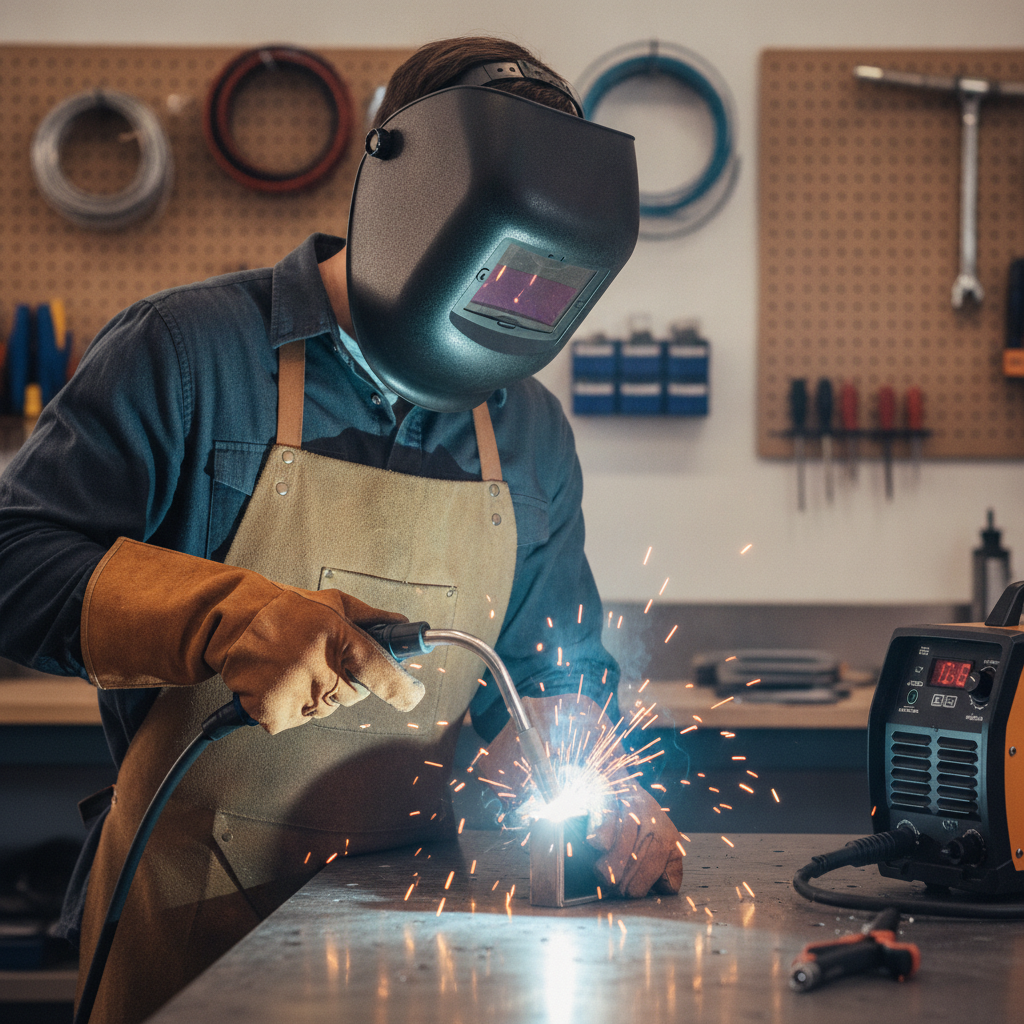
The process is largely automated compared to other welding methods. The wire feeds continuously, so you’re not manually feeding filler rod like TIG welding requires. You squeeze the trigger, maintain your position, and move the gun at a steady pace.
That single-handed operation removes one of the biggest coordination challenges beginners face. You’re focused on gun angle, travel speed, and distance — not juggling multiple variables simultaneously.
The arc is also more forgiving. Minor fluctuations in your hand movement don’t immediately ruin the weld the way they might with TIG. That gives beginners a little more room to develop technique without destroying every piece they touch.
What Makes MIG Welding Challenging for Beginners
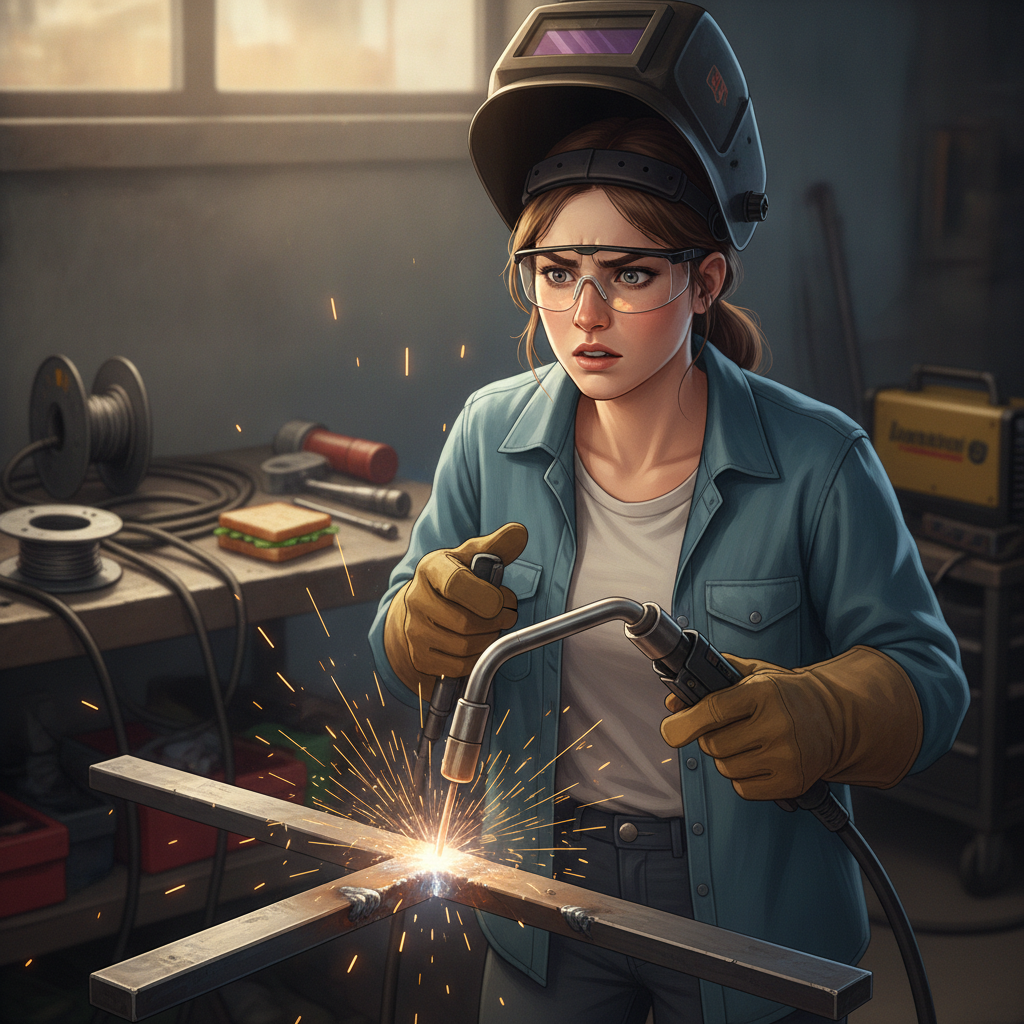
The setup side catches most newcomers off guard. Before you ever strike an arc, you need to dial in wire feed speed, voltage, and shielding gas flow rate. Get those wrong, and no amount of good hand technique will save the weld.
Common beginner struggles include:
- Inconsistent travel speed — moving too fast creates thin, narrow beads; too slow causes excess buildup or burn-through
- Wrong gun angle — even 10–15 degrees off can change penetration and bead shape noticeably
- Poor contact tip distance — holding the gun too far or too close affects arc stability immediately
- Porosity from contaminated metal — MIG is sensitive to rust, oil, and mill scale; preparation matters more than most beginners expect
- Incorrect shielding gas settings — too much or too little flow causes visible weld defects
Understanding how wire speed and voltage work together is one of the first real skills to develop. Most beginners skip this and spend hours troubleshooting problems that are really just settings issues.
MIG vs. Other Welding Processes: How Difficult Is It Really?
| Process | Learning Curve | Coordination Needed | Setup Complexity | Best For |
|---|---|---|---|---|
| MIG | Low | Low–Medium | Medium | General fabrication, beginners |
| Flux Core | Low | Low | Low | Outdoor work, beginners |
| Stick (SMAW) | Medium | Medium | Low | Structural work, field repairs |
| TIG | High | Very High | Medium–High | Precision work, thin materials |
| Oxy-Acetylene | Medium | High | Low | Brazing, cutting, some welding |
MIG welding sits clearly at the easier end of this spectrum. Flux core is arguably even simpler to start with since it doesn’t require a gas cylinder, though it produces more spatter and smoke.
TIG welding is genuinely difficult by comparison. It requires both hands doing different jobs simultaneously plus foot pedal control of the amperage. Most welders spend months before their TIG work looks presentable.
What You Can Realistically Weld After a Short Time
After a few sessions of honest practice, most beginners can:
- Run a flat bead on mild steel plate
- Weld a basic butt joint or T-joint
- Tack weld pieces together for positioning
- Complete simple repair jobs on farm equipment, trailers, or brackets
What takes longer to develop:
- Vertical and overhead welding positions
- Welding thin sheet metal without burning through
- Working with aluminum or stainless steel
- Producing welds that pass visual inspection standards
If you’re wondering how long it realistically takes to learn MIG welding to a competent level, most people estimate 20–40 hours of hands-on practice for basic proficiency, and months more for consistent quality across different positions and materials.
The Setup Steps That Trip Up Beginners
Getting the machine ready correctly is half the battle. Here’s what that process looks like:
- Select the right wire diameter — 0.030″ wire works for most general mild steel work; 0.035″ for thicker material
- Load and tension the wire spool — too loose causes bird-nesting; too tight causes feeding problems
- Set voltage and wire feed speed — most machines have a chart on the inside panel as a starting reference
- Connect the shielding gas — typically 75% argon / 25% CO2 (C25 mix) for mild steel
- Set gas flow rate — generally 15–25 CFH, adjusted based on conditions
- Check polarity — standard MIG welding runs DCEP (electrode positive)
Many beginner-friendly machines like the Hobart Handler 140 include setup charts right on the welder door, which removes a lot of the guesswork when you’re just starting out.
Shielding gas is a topic beginners often overlook until they see the consequences. Proper MIG welding gas pressure settings directly affect weld quality and are worth getting right from the start.
Common Early Mistakes and How to Fix Them
Porosity (holes or pits in the weld) Usually caused by inadequate shielding gas coverage, contaminated base metal, or a drafty environment. Clean the metal thoroughly and check that gas flow isn’t blocked or set too low.
Spatter everywhere Often a sign of voltage too low, wire feed too high, or incorrect polarity. Adjust settings and recheck your polarity setup.
Weld bead too tall and narrow Travel speed is too fast or voltage is too low. Slow down slightly and increase voltage in small increments.
Burn-through on thin material Voltage is too high or travel speed too slow. Reduce voltage, increase travel speed, and consider using stitch welding (short bursts with pauses).
Inconsistent arc, wire stuttering Usually a wire feed tension issue, a worn contact tip, or a liner that needs cleaning or replacement.
If problems persist after adjusting settings, a methodical approach to troubleshooting common MIG welding problems can save a lot of frustration.
Safety: What Beginners Often Underestimate
MIG welding is physically accessible, but it does carry real hazards that deserve serious attention.
- UV radiation from the arc can damage eyes and skin in seconds without proper protection
- Welding fumes are a genuine health concern, especially in enclosed spaces — ventilation isn’t optional
- Spatter and heat create fire risks that are easy to overlook in a home garage setting
- Shielding gas cylinders must be secured properly and stored away from heat sources
A good auto-darkening helmet, proper gloves, a leather welding jacket or sleeves, and adequate ventilation should all be in place before you strike your first arc. Understanding the real risks of MIG welding helps beginners set up a safe workspace from day one rather than learning the hard way.
FAQ
Can a complete beginner learn MIG welding at home?
Yes, many people learn MIG welding in a home garage with a basic machine and a few hours of practice. You’ll need proper safety gear, a decent welder, shielding gas, and some scrap metal to practice on. Starting with flat position welds on mild steel gives you the fastest early progress without overcomplicating things.
How long before my MIG welds look good?
Most beginners can produce clean-looking flat beads within 5–10 hours of focused practice. Welding in different positions, on different materials, or on thin sheet metal adds more time. Consistently strong, visually appealing welds across varied situations typically takes 20–50 hours of real hands-on practice, sometimes more.
Do I need gas for MIG welding as a beginner?
Standard MIG welding requires shielding gas. However, flux core wire allows gasless operation, which is simpler to set up and works better outdoors. Many beginners start with flux core to skip the gas setup, then move to gas-shielded MIG once they understand the basics. The tradeoff is more spatter and slightly more post-weld cleanup.
Is MIG welding strong enough for structural repairs?
Properly executed MIG welds on correctly prepared metal are very strong. The weld itself can actually be stronger than the surrounding base metal when done correctly. The issue for beginners isn’t the process — it’s incomplete fusion, porosity, or poor penetration from incorrect settings or technique. Structural repairs demand solid technique and proper settings, not just completion.
What’s the easiest metal to MIG weld as a beginner?
Mild steel is the most forgiving material for beginners. It’s cheap, widely available, tolerates heat well, and responds predictably to standard settings. Stainless steel and aluminum are significantly more challenging. Aluminum in particular requires different equipment, different gas, and much more careful technique — it’s not a good starting point for new welders.
Is MIG welding safe to do in a garage?
MIG welding in a garage is common and manageable with the right precautions. The biggest concerns are ventilation and fire risk. Welding produces fumes that accumulate quickly in enclosed spaces, and spatter can ignite flammable materials nearby. A fan or ventilation system, a fire extinguisher, and cleared workspace go a long way toward making garage welding genuinely safe.
What’s the best MIG welder for a beginner?
For most beginners, a 140-amp class machine handles thin to medium mild steel perfectly well. The Lincoln Electric Weld-Pak 140 HD is a popular starting point because it’s reliable, easy to set up, and includes clear reference charts for settings. It runs on standard household 120V power, which removes the need for a dedicated 240V circuit.
The Bottom Line
MIG welding is genuinely one of the easiest welding processes to start with — but “easy to start” doesn’t mean “instant results.” The basics are approachable, the equipment is accessible, and most beginners can produce functional welds quickly. What takes time is building the consistency, troubleshooting instincts, and muscle memory to weld well across different situations. Start with mild steel, dial in your settings carefully, and prioritize safety from the beginning. The rest follows with practice.