Copper comes up often in fabrication shops, plumbing repairs, and electrical work. When a weld is needed, the first instinct for many welders is to reach for the MIG welder — it’s fast, familiar, and versatile.
MIG welding copper is technically possible, but it’s rarely the right choice. Copper’s extremely high thermal conductivity pulls heat away from the weld zone so quickly that achieving proper fusion is difficult. Most welders find that TIG welding or braze welding produces far more reliable results on copper. If you must MIG weld copper, it requires significant preheat, specific filler wire, and pure argon shielding gas.
Why Copper Is So Difficult to Weld
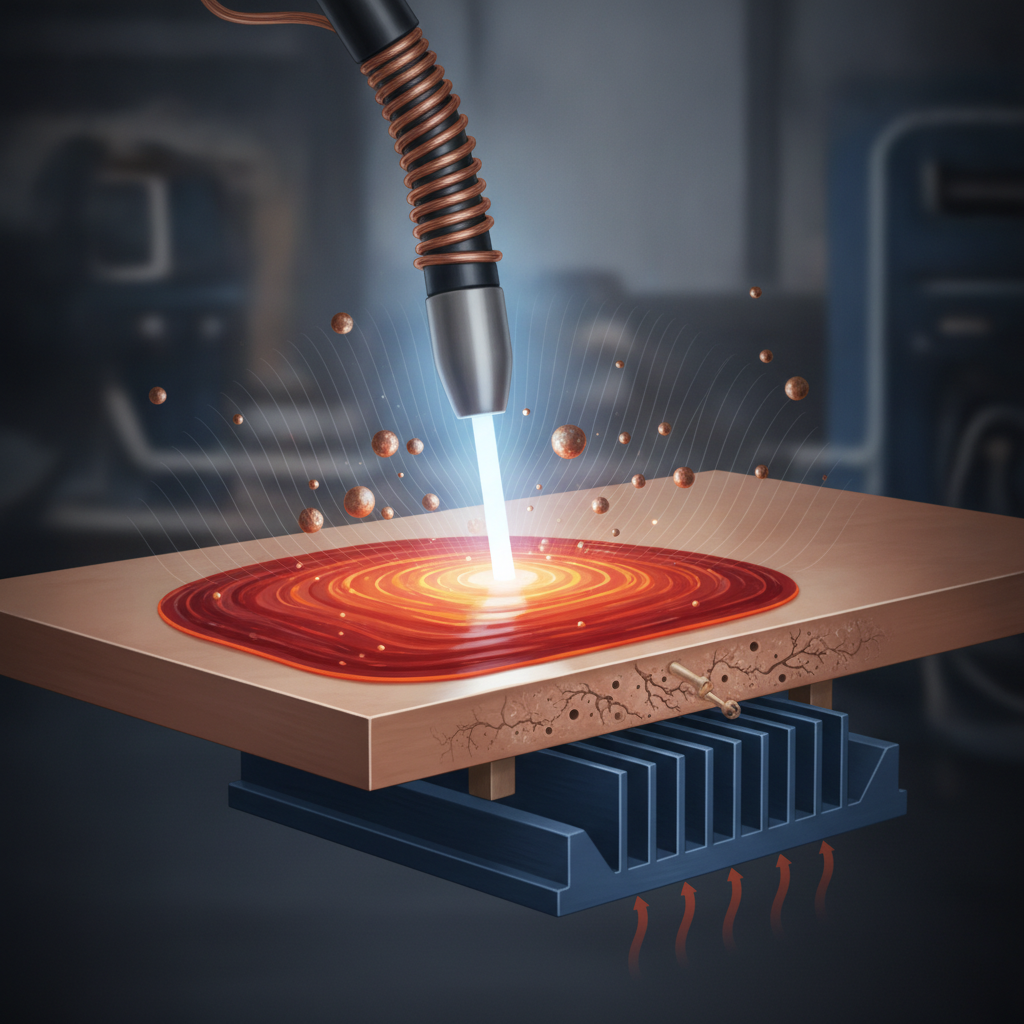
Copper behaves nothing like steel under heat. Its thermal conductivity is roughly eight times higher than mild steel, which means the base metal continuously drains heat away from the weld puddle before fusion can fully occur.
This creates a frustrating situation — you need to pour in significantly more heat to compensate, but too much heat causes distortion, porosity, and grain coarsening that weakens the joint. There’s very little margin for error.
Copper also has a relatively high melting point of around 1085°C (1985°F), and it absorbs oxygen readily when molten. That oxygen absorption leads to porosity in the finished weld unless shielding is excellent and filler material is deoxidized.
What Filler Wire to Use for MIG Welding Copper
Standard steel MIG wire has no place here. When MIG welding copper, you need a copper-based filler wire specifically designed for the application.
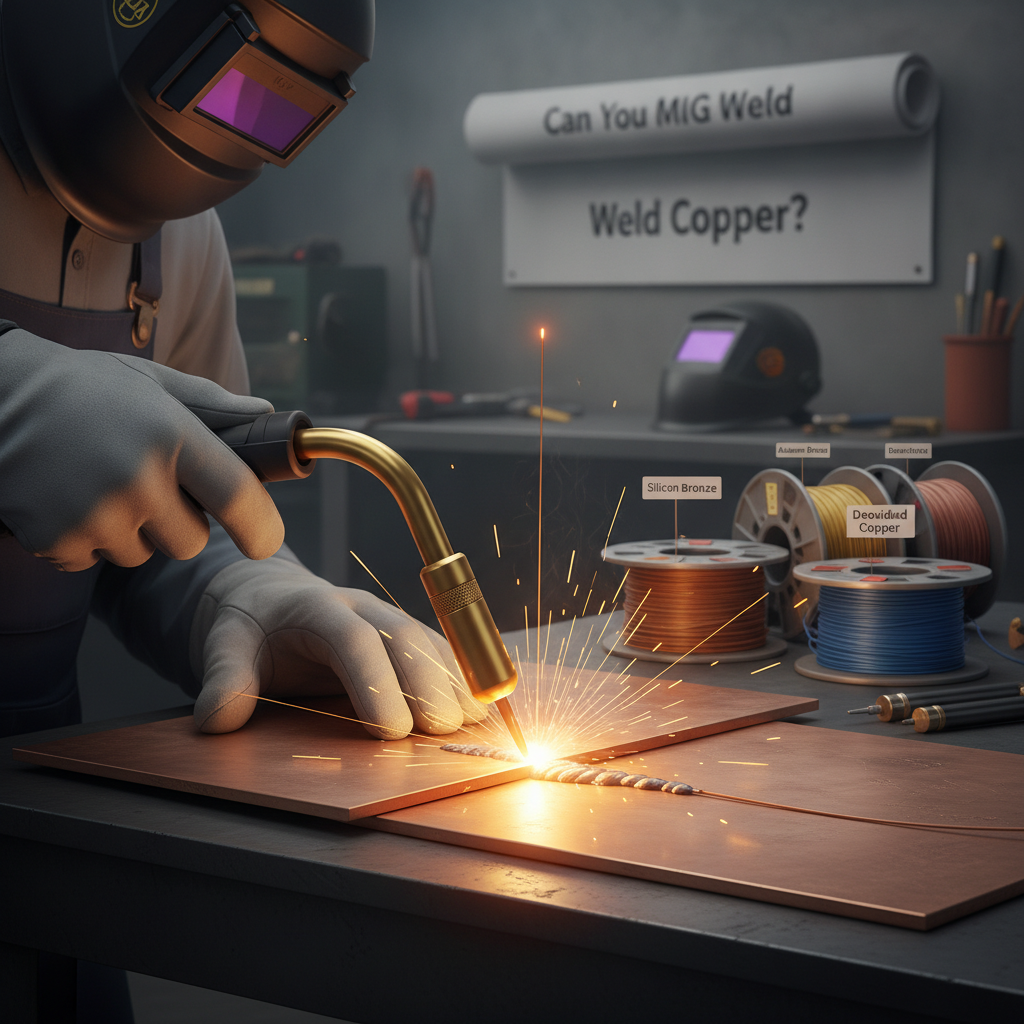
The most commonly used option is ERCu (copper filler wire), which is a deoxidized copper wire that minimizes porosity. Some applications call for ERCuSi-A (silicon bronze wire), which flows more smoothly and tolerates less-than-perfect base metal preparation.
Silicon bronze wire is actually a popular choice because it melts at a lower temperature than pure copper, reducing the extreme preheat requirement. It’s worth noting that welding with silicon bronze wire is technically closer to braze welding than true fusion welding — the base copper doesn’t fully melt. For many repair and fabrication jobs, that distinction doesn’t matter practically, as the joint strength is still acceptable.
Shielding Gas Requirements
For MIG welding copper, pure argon is the standard shielding gas. The argon-CO2 blends used for mild steel welding are not suitable here. CO2 introduces oxidation in the weld pool, which makes porosity and contamination significantly worse on copper.
Some welders use helium or argon-helium mixtures to increase arc energy and help overcome copper’s thermal conductivity. Helium-rich blends run hotter and help offset the heat-sink effect, but pure helium is expensive and harder to source for shop use.
If you want a refresher on how shielding gas selection affects weld quality across different materials, the MIG welding gas selection guide covers the full range of options in detail.
Preheat: The Step Most Welders Skip
Skipping preheat on copper is the fastest way to guarantee a failed weld. Because copper dissipates heat so aggressively, attempting to weld cold copper almost always results in incomplete fusion — the weld metal sits on top of the base material rather than bonding with it.
As a general guideline:
– Thin copper (under 3mm / 1/8 in): Preheat to around 100°C–150°C (212°F–300°F)
– Medium copper (3–6mm / 1/8–1/4 in): Preheat to 300°C–400°C (570°F–750°F)
– Thick copper (over 6mm / 1/4 in): Preheat may need to reach 500°C–600°C (930°F–1110°F)
These are approximate starting points. The thicker and more massive the workpiece, the more preheat it demands. Use a propane torch or induction heater to preheat evenly across the joint area, not just at the weld point.
MIG Welding Copper vs. TIG Welding Copper
For most precision copper work, TIG welding is the preferred method. TIG offers far better control over heat input, which matters enormously with copper. The welder can adjust arc intensity in real time, back off before the base metal overheats, and produce a cleaner, tighter weld.
| Method | Heat Control | Deposition Speed | Skill Level Required | Best For |
|—|—|—|—|—|
| MIG Welding | Lower | Higher | Moderate | Thicker copper, larger beads |
| TIG Welding | Higher | Lower | Higher | Precision work, thin copper |
| Braze Welding | Moderate | Moderate | Moderate | Joints, repairs, dissimilar metals |
| Soldering | Lowest | Lowest | Low | Plumbing, electrical connections |
MIG welding copper becomes more practical on thicker sections where deposition speed matters and precise heat control is less critical. For thin copper sheet or detailed fabrication, TIG welding copper will consistently produce better results.
Common Problems When MIG Welding Copper
Porosity is the most frequent complaint. This appears as small holes in the weld bead and usually traces back to contamination, inadequate shielding gas, or moisture in the base metal.
Lack of fusion happens when preheat is insufficient or travel speed is too fast. The weld bead sits on top of the copper without truly fusing into it. This joint looks passable visually but fails under any meaningful stress.
Distortion and warping become serious on thin copper because the high heat required to achieve fusion also causes thermal expansion. Clamping and tacking in sequence helps, but copper moves more than steel.
Cracking can occur during cooling if the joint is restrained and the copper can’t contract freely. Hot cracking in copper welds is often related to oxygen or sulfur impurities in the base material.
If you’re experiencing recurring porosity and inconsistent beads on any material, the troubleshooting workflow in this article on common MIG welding problems covers systematic diagnosis techniques.
Practical Setup Tips for Copper MIG Welding
If you’ve decided MIG is your method, here’s what to dial in before striking an arc:
1. Clean the base metal thoroughly. Copper oxidizes on the surface. Wire brush and wipe with acetone before welding. Any contamination increases porosity risk significantly.
2. Use ERCu or ERCuSi-A wire matched to your application.
3. Set pure argon shielding gas at 15–20 L/min (approximately 30–40 CFH).
4. Preheat the workpiece as outlined above for the material thickness.
5. Run DCEP (electrode positive) polarity, which is standard for MIG welding.
6. Use a slower travel speed than you would for steel. Copper needs more dwell time to allow proper fusion.
7. Watch the puddle behavior. Copper’s puddle looks different from steel — it’s more fluid and runs easily. Keep travel consistent.
A multi-process welder with good wire feed consistency works well here. The Lincoln Electric Power MIG 210 MP handles copper-based wires reliably and offers the amperage range needed for the extra heat copper demands.
When Not to MIG Weld Copper
Some copper jobs simply aren’t suited for MIG welding regardless of technique:
– Thin copper sheet under 1.5mm (1/16 in): Burn-through risk is very high. TIG or soldering is more appropriate.
– Copper plumbing pipe: For leak-free joints, soldering or brazing is the industry standard and far more practical.
– Electrical bus bars or conductors: Welding can alter the microstructure and reduce conductivity. Mechanical connections or cold welding are better options.
– High-purity copper: Alloy content matters. Some copper alloys contain lead or sulfur, making them essentially unweldable.
FAQ
Can you MIG weld copper to steel?
MIG welding copper directly to steel is very challenging because the metals have different melting points, thermal properties, and metallurgical compatibility. Silicon bronze wire (ERCuSi-A) is sometimes used to braze-weld copper to steel, but this creates a brazed joint rather than a true fusion weld. Results are application-dependent, and the joint should not be expected to carry high structural loads.
What happens if you use standard MIG wire on copper?
Steel or stainless MIG wire will not bond properly with copper. The weld will lack fusion, exhibit heavy porosity, and the filler metal will essentially sit on top of the base material. You need copper-based filler wire — typically ERCu or ERCuSi-A — for any MIG process on copper.
Do you need special MIG wire for copper welding?
Yes. Standard ER70S-6 or flux core wire is designed for steel. For copper, use ERCu (pure copper wire) or ERCuSi-A (silicon bronze wire). ERCuSi-A is generally easier to work with because it flows at a lower temperature and tolerates minor surface contamination better than pure copper wire.
Is braze welding better than MIG welding for copper?
For most practical applications, yes. Braze welding uses lower heat, which reduces distortion, porosity, and the extreme preheat requirements associated with fusion welding. Silicon bronze braze welding produces strong, clean joints on copper and copper alloys without the difficulty of achieving full fusion. It’s the go-to method for many experienced fabricators.
Can flux core wire be used to weld copper?
Standard flux core wire is not suitable for welding copper. There are no widely available flux core wires formulated for copper welding. Flux core is designed for steel applications. Attempting to use it on copper will produce a contaminated, weak joint with heavy slag and porosity.
What shielding gas should I use when MIG welding copper?
Pure argon is the correct choice for MIG welding copper. Mixed gases containing CO2, such as the C25 blend commonly used for mild steel, introduce oxidation into the copper weld pool and dramatically increase porosity. Helium or argon-helium blends can also be used when more arc energy is needed, particularly on thick sections.
Why does my copper weld look bubbly and porous?
Porosity in copper welds typically points to one or more of these causes: insufficient shielding gas coverage, surface contamination on the base metal, moisture, or oxidation of the weld pool. Switching to pure argon, thoroughly cleaning the copper surface, and ensuring your gas flow rate is adequate — typically 15–20 L/min — will address most porosity problems.
The Bottom Line
MIG welding copper is possible, but it requires more preparation, the right consumables, and an understanding of why copper fights the process at every step. Preheat is non-negotiable, pure argon is required, and copper-based filler wire is essential.
For most copper jobs — especially thin material, plumbing, or precision work — TIG welding or braze welding will produce more consistent results with less frustration. Save MIG for thicker copper sections where deposition speed matters and you have the setup properly dialed in.