
Why MIG Is Considered the Easiest Process to Learn
What Makes MIG Welding Challenging at First
The Settings Learning Curve
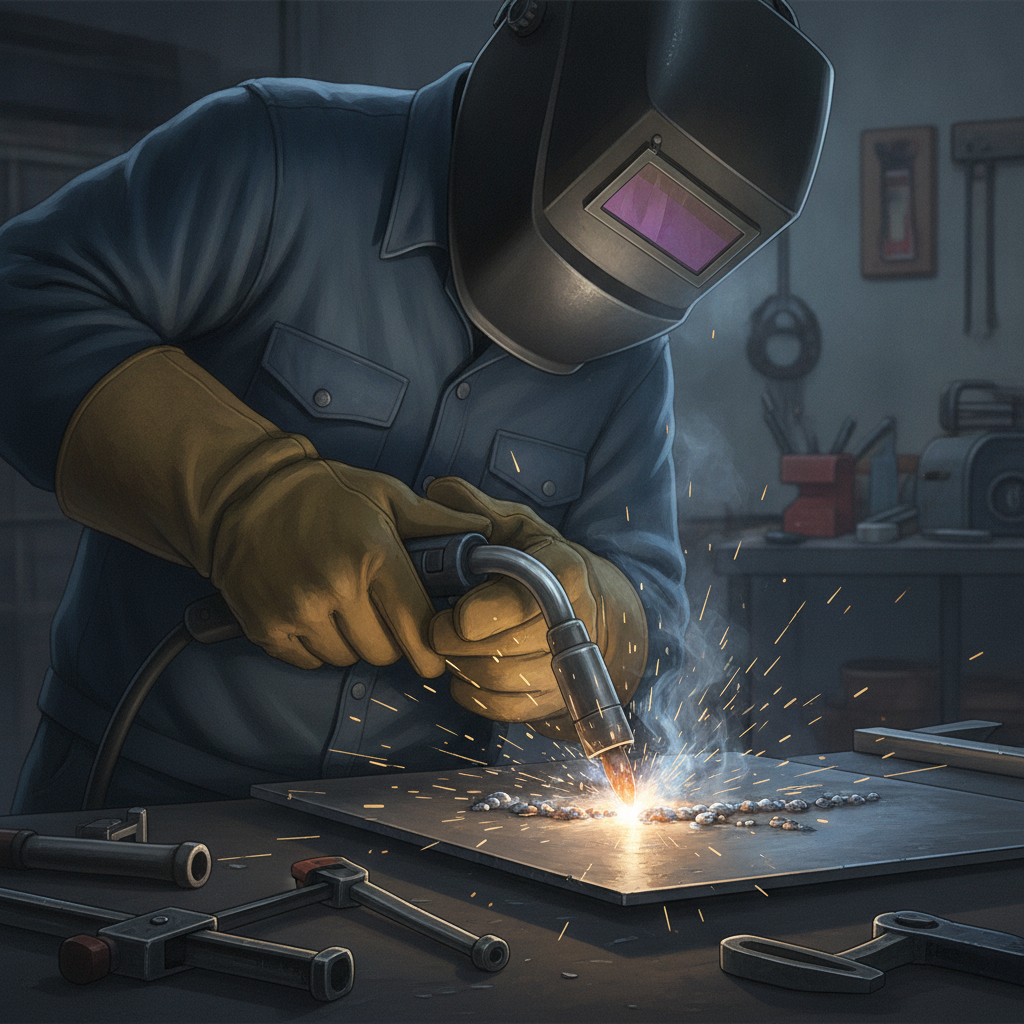
MIG welders have two primary adjustments: voltage and wire feed speed. Getting them balanced is essential, and this is where many beginners spend most of their frustration. A good starting point is to match your settings to the material thickness you’re welding. Most welders include a settings chart inside the door panel, and those charts are genuinely useful for getting into the right ballpark. From there, you adjust by listening. A properly set MIG welder sounds like a steady frying bacon sound — a consistent, even crackle. A voltage that’s too low produces a rough, stuttering arc. Too high and you’ll hear popping with excessive spatter. For those running flux-core wire instead of solid wire with shielding gas, settings behave differently. You can find practical references like a flux core MIG welding settings chart useful when dialing in those specific setups.Shielding Gas Adds Another Variable
If you’re using solid wire, you’ll need shielding gas — and that introduces another element beginners sometimes overlook. The gas type, flow rate, and pressure all affect the weld. Most mild steel MIG welding uses a 75% Argon / 25% CO₂ blend, commonly called C25. Pure CO₂ is cheaper and works, but produces more spatter. The gas flow rate is also important — too low and contamination creeps in; too high causes turbulence that also lets contamination in. Getting the correct shielding gas flow rate for MIG welding is one of those details that’s easy to overlook but has a noticeable impact on bead quality, especially outdoors where drafts can disrupt coverage.How Long Does It Actually Take to Get Good?
For basic flat position welding on mild steel, most people reach a functional level within 5–10 hours of practice. You’ll be producing welds that hold and look reasonable, even if they’re not pretty. Consistent, clean welds across different positions — horizontal, vertical, overhead — takes considerably longer. Vertical up welding, for example, fights gravity constantly and requires a different technique and rhythm compared to flat welding. How long MIG welding takes to learn properly depends heavily on how often you practice, the quality of your feedback (a mentor helps enormously), and whether you’re troubleshooting problems on your own or with guidance.Common Beginner Mistakes and How to Avoid Them
These are the mistakes that slow down most beginners: Moving too slowly. This piles up the bead and leads to poor fusion. Aim for a steady, deliberate pace — fast enough that the puddle doesn’t build up excessively. Holding the gun too far from the work. The contact tip to work distance (CTWD) should typically be around 3/8 to 5/8 inch for solid wire. Going further than that weakens the arc and invites porosity. Not cleaning the base metal. Mill scale, rust, paint, and oil all cause contamination. A quick wire brush or grinder pass makes a significant difference. Ignoring polarity. Solid wire MIG runs on DCEP (DC Electrode Positive). Flux-core wire often runs DCEN depending on the wire type. Running the wrong polarity produces a weak, erratic arc. If your welds seem off despite good settings, checking your MIG welder’s polarity setup is worth doing early. Not wearing proper PPE. Fumes, UV radiation, and spatter are real hazards that beginners sometimes underestimate when they’re focused on technique.A Good Entry-Level Machine Makes a Difference
Equipment quality matters more than most beginners realize. A machine that feeds wire inconsistently or has poor arc stability will frustrate your learning process in ways that have nothing to do with your technique. For home shop and beginner use, the Lincoln Electric Weld-Pak 140 HD is a well-regarded option that delivers consistent wire feed and a stable arc without requiring professional-grade infrastructure. It runs on standard 120V power, which makes it practical for home garages without panel upgrades. If you want more headroom, the Hobart Handler 190 steps up to 240V and handles thicker material more comfortably, which becomes relevant once you start taking on projects beyond sheet metal and light structural work.MIG vs. Other Processes: Difficulty Comparison
| Process | Learning Curve | Setup Complexity | Ideal For | |—|—|—|—| | MIG (GMAW) | Low–Moderate | Moderate | General fabrication, auto body, beginners | | Flux-Core (FCAW) | Low–Moderate | Low | Outdoor welding, thicker steel | | Stick (SMAW) | Moderate | Low | Outdoor, structural, field repairs | | TIG (GTAW) | High | High | Precision work, stainless, aluminum | MIG sits in a practical middle ground — easier to start than TIG or Stick in terms of coordination, but not as simple as simply pointing and squeezing the trigger.FAQ
Can a complete beginner learn MIG welding on their own? Yes, many people teach themselves using YouTube tutorials, practice material, and the settings chart inside their welder’s door. That said, having even one session with an experienced welder to observe your technique can compress the learning curve significantly. Self-teaching works, but bad habits can go unnoticed for a while without external feedback. Is MIG welding harder on aluminum than on steel? Considerably harder. Aluminum has very different thermal properties — it heats up and conducts heat rapidly, making burn-through a constant risk. The wire is also softer and more prone to bird-nesting in the liner. Most beginners should get comfortable with mild steel before attempting aluminum. Do I need gas to MIG weld? Not necessarily. Flux-core wire is designed to run without shielding gas, using a flux compound inside the wire to protect the weld pool. It’s more forgiving outdoors, but produces more spatter and a rougher bead compared to solid wire with gas. Many entry-level welders support both options. What thickness of metal is MIG welding best suited for? MIG welding handles a wide range — typically from around 24-gauge sheet metal up to about 1/2 inch in a single pass, depending on the machine. Thicker material can be welded in multiple passes. It’s particularly well-suited for material in the 18-gauge to 3/8-inch range, which covers most DIY and light fabrication work. What’s the hardest part of MIG welding for beginners? Most beginners struggle most with maintaining consistent travel speed and reading the weld pool while it’s happening. The instinct to slow down and watch leads to overheating. Learning to trust the process and keep moving at a steady pace is often the first real breakthrough moment. Is MIG welding safe to do at home? It can be done safely with proper precautions — good ventilation, appropriate PPE including a proper auto-darkening helmet, fire-resistant clothing, and a safe workspace. The risks involved in MIG welding are real but manageable with the right setup. Never weld in an enclosed space without adequate airflow. How do I know if my MIG weld is strong enough? A good weld has consistent width and height, minimal porosity or cracking, and proper fusion at the edges where it meets the base metal. Destructive testing — bending the weld in a vise or performing a break test on a practice coupon — is the most reliable way to verify actual strength before trusting welds on structural applications.MIG welding is genuinely accessible to beginners, but it rewards consistent practice more than raw instinct. The first few sessions will feel awkward and the results will look rough — that’s expected. What separates welders who improve quickly from those who plateau is paying attention to what the arc is telling them and making deliberate adjustments rather than hoping the next bead just happens to look better.