
You pull the trigger on your MIG gun and get absolutely nothing — no wire feed, no arc, no sound, no gas. It’s one of the more frustrating situations in the workshop, especially when you were mid-project.
When a MIG welder doesn’t respond to the trigger, the most common causes are a faulty or stuck trigger switch, a tripped thermal overload, a blown fuse, a loose or disconnected ground clamp, a wire feed obstruction, or a problem with the power supply. In most cases, the fix is straightforward once you systematically work through each possible cause.
Start With the Obvious Before Digging Deeper
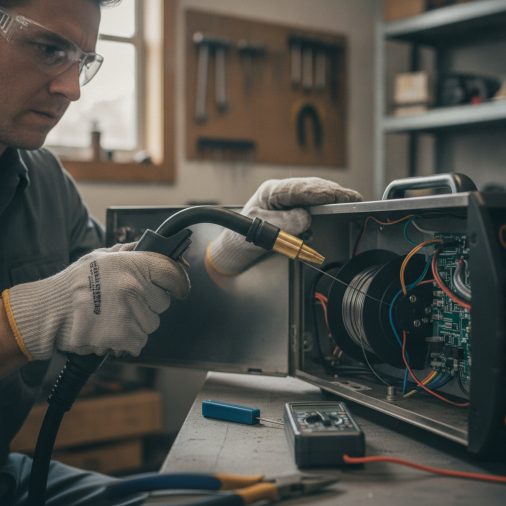
Before assuming an internal failure, check the basics. A surprising number of “dead trigger” situations come down to something simple.
– Is the machine actually switched on at the front panel?
– Is the power cord fully plugged into the outlet?
– Has the circuit breaker at the wall tripped?
– Is the work clamp (ground clamp) securely clamped to clean, bare metal on the workpiece?
A loose or corroded ground clamp won’t just cause a weak arc — it can prevent the circuit from completing at all, resulting in zero response when you pull the trigger. Clean the contact point on your workpiece with a grinder or wire brush if there’s any rust, paint, or scale.
If you’re running the machine through a long or undersized extension cord, voltage drop can prevent the machine from operating correctly. This is a commonly overlooked cause, particularly with 120V machines. For guidance on extension cord sizing, the details on using an extension cord safely with a MIG welder are worth reviewing before assuming a machine fault.
Thermal Overload Cutout
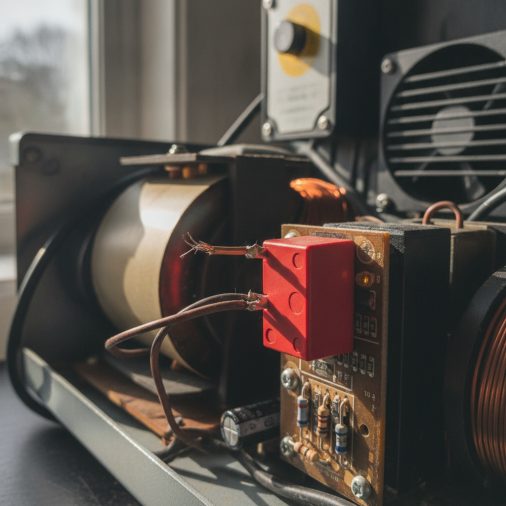
Most MIG welders have a built-in thermal protection circuit that shuts the machine off automatically when it overheats. This is one of the most common reasons for a completely unresponsive trigger, especially after extended welding sessions.
When the thermal cutout activates, the machine will typically show a warning light — often labeled “Thermal” or “Overheat” — on the front panel. Some machines cut power completely, others only disable the output.
What to do:
1. Stop welding and switch the machine off.
2. Leave it to cool for 15–30 minutes with the fan running or in a well-ventilated area.
3. Do not block the machine’s cooling vents or stack materials against the casing.
4. Switch back on and test the trigger.
If the thermal indicator activates frequently, the machine is being pushed beyond its duty cycle rating. Check your machine’s documentation for its rated duty cycle at your current amperage setting.
Check the Internal Fuse
Many MIG welders have one or more internal fuses that protect the control board, wire feed motor circuit, or trigger circuit. If a fuse has blown, the trigger will produce no response at all — even if the machine powers on normally.
The fuse location varies by machine. On most machines, it’s accessible behind the side panel or near the wire feed compartment. Check your owner’s manual for the exact location and the correct fuse rating before replacing anything.
Never install a higher-rated fuse than the manufacturer specifies. Doing so bypasses the protection the fuse provides and can damage the machine or create a fire hazard.
Wire Feed Problems That Can Prevent the Trigger From Working
A jammed or severely bird-nested wire can create enough resistance in the drive system that the trigger appears to do nothing — or the machine triggers internally but can’t feed wire, so no arc starts.
Open the wire compartment and check for:
– Wire tangled around the drive rolls
– A bird’s nest (tangled coil of wire) inside the liner or at the drive rolls
– A bent or kinked wire tip at the contact tip
– Wire that has fed past the contact tip and is touching the nozzle interior
If you find a bird’s nest, cut the wire back cleanly, remove the tangle, check the liner for obstructions, and re-thread the wire through the drive rolls and gun liner. A clogged or worn liner is often responsible for repeated bird-nesting. If your machine is a Lincoln welder and the wire feed is completely unresponsive, the problem may also be at the motor level — a detailed breakdown of Lincoln welder wire feed motor faults covers that diagnosis specifically.
The Trigger Switch Itself May Have Failed
The trigger on a MIG gun is a simple momentary switch. Like any switch, it can fail — either through physical damage, a loose connection at the gun’s lead, or worn contacts inside the trigger housing.
To test whether the trigger is the problem:
1. With the machine off and disconnected from power, locate the two small trigger wires that run through the gun cable and connect to the machine’s control terminals.
2. Using a multimeter set to continuity, press the trigger and check whether the circuit closes. No continuity when the trigger is depressed means the switch has failed.
3. Alternatively, on many machines, briefly touching the two trigger terminals together (with the machine on but not welding) will activate the wire feed if the machine is otherwise functional — confirming the trigger is the fault.
Replacement MIG gun triggers and complete gun assemblies are available as aftermarket parts for most common machines. On budget machines, replacing the entire gun is often more cost-effective than repairing the trigger internally.
Contactor or Control Board Failure
If all the above checks pass and the trigger still produces no response, the fault may be inside the machine — either at the main contactor (the high-current relay that connects power to the output) or on the control board.
The contactor is an electromechanical component that can stick, corrode, or burn out over time. When it fails open, pulling the trigger does nothing because the output circuit never closes.
A control board failure is less common but possible, particularly on machines that have been exposed to moisture or have sustained a voltage spike. For machines with suspected internal faults — especially transformer-type machines — testing the MIG welder transformer can help rule out a power-stage problem before sending the machine for service.
Internal repairs beyond fuse replacement or trigger switch replacement should only be attempted by someone with electrical repair experience. Working inside a welder involves capacitors that can hold a dangerous charge even after the machine is unplugged.
Systematic Troubleshooting Summary
| Check | What to Look For | Likely Fix |
|---|---|---|
| Power supply | Tripped breaker, loose cord | Reset breaker, reseat cord |
| Ground clamp | Poor contact, corroded clamp | Clean workpiece, tighten clamp |
| Thermal overload | Overheat indicator light active | Cool down 15–30 min, check duty cycle |
| Internal fuse | Blown fuse | Replace with correct-rated fuse |
| Wire feed | Bird’s nest, jam, liner clog | Clear jam, re-thread wire, inspect liner |
| Trigger switch | No continuity when pressed | Replace trigger or gun assembly |
| Contactor/board | No audible click when triggered | Service or replace |
Work through this list from top to bottom. In most garage and hobby welding situations, the cause will appear within the first four or five checks.
A Common Situation Worth Mentioning
On entry-level machines like the Hobart Handler 140, the most frequent cause of a completely dead trigger is a tripped breaker at the outlet combined with a thermal shutdown that wasn’t noticed. Both have to reset before the machine responds. Checking only one and not the other leaves the machine silent and the welder puzzled.
If you’ve recently had a complete diagnosis of your machine’s overall behavior, the broader guide on why your MIG welder isn’t working covers additional fault scenarios that may also apply.
Safety Reminder Before Opening the Machine
If you’re going to open the wire compartment or inspect trigger wiring, always unplug the machine from the wall first. Even a machine that appears fully off can carry voltage at accessible terminals.
Discharge welding capacitors by leaving the machine unplugged for several minutes before touching internal components. When in doubt about internal electrical work, take the machine to a qualified repair technician or contact the manufacturer’s service line.
FAQ
Why does my MIG welder hum but nothing comes out when I pull the trigger?
A hum with no wire feed or arc usually means the machine is powering on normally but the output circuit isn’t activating. The most likely causes are a stuck or failed contactor, a blown wire-feed fuse, or a failed trigger switch. Check the fuse first — it’s the easiest fix. If that’s clear, test the trigger switch for continuity before assuming a contactor or board problem.
Can a bad ground clamp cause a MIG welder trigger to do nothing?
Yes, in some cases. If the work circuit is open due to a completely disconnected or heavily corroded ground clamp, the machine may not be able to complete the circuit required to start an arc. Always verify the clamp is biting into clean, bare metal and that the clamp cable is firmly connected to the machine’s ground terminal.
How do I know if my MIG welder’s thermal cutout has tripped?
Most machines will display a thermal warning light on the front panel — typically orange or red and labeled “Thermal,” “Overheat,” or shown with a temperature symbol. Some older or budget machines don’t have a visible indicator and simply go silent until they cool down. If your machine stopped responding after extended use, thermal cutout is the first thing to check.
What causes a bird’s nest in a MIG welder, and can it stop the trigger from working?
A bird’s nest forms when wire feeds faster than it exits the contact tip, usually because of a clogged liner, a worn or incorrect contact tip, or wrong drive roll pressure. A severe bird’s nest can jam the drive motor hard enough that the machine can’t feed, and the trigger appears non-functional. Clearing the jam and re-threading the wire usually restores normal operation.
My MIG welder trigger worked fine last week — what changed?
Trigger switches and their wiring connections are the most likely culprit for sudden failures. The trigger wires inside the gun cable can fatigue and break internally, especially if the cable is frequently coiled tightly or run over. A loose pin at the gun connection point is another common cause. Disconnect and reseat the gun connector, then check trigger continuity with a multimeter.
Is it safe to test the trigger circuit by bridging the control terminals?
Briefly touching the two trigger control terminals together to test the machine’s response is a diagnostic technique used by many technicians — but it should only be done with the drive roll tension backed off so the wire doesn’t run uncontrolled. Never attempt this while the gun is pointed at anyone or while standing near flammable material. Treat any active wire feed as a live electrical hazard.
When should I stop troubleshooting and take the machine in for repair?
Once you’ve ruled out external causes — power supply, ground clamp, fuse, trigger switch, and wire feed obstruction — any remaining fault is likely internal. Contactor failure, control board damage, or transformer problems require component-level diagnosis and replacement. Unless you have experience with electrical repairs and a safe workspace for capacitor discharge, a qualified repair technician is the safer and more reliable option.
Final Thoughts
The majority of MIG trigger failures trace back to something outside the machine — a tripped breaker, a loose ground connection, a thermal shutdown, or a clogged wire path. Work through those checks systematically before assuming an internal fault. If the machine is genuinely dead after clearing every external cause, the trigger switch and internal fuse are the next logical steps. Anything deeper than that is best handled with proper electrical knowledge or by a service technician.