
If you’re looking at a rusted floor pan, a cracked frame rail, or a patch panel that needs welding, MIG welding is probably the first process that comes to mind. It’s fast, relatively forgiving, and widely available — but is it actually the right tool for automotive bodywork?
Yes, MIG welding is one of the most commonly used welding processes for automotive repair. It works well for structural repairs, patch panels, floor pans, and frame work. For thin sheet metal bodywork — typically 18 to 22 gauge steel — MIG produces strong, controllable welds when set up correctly. It’s less ideal for very thin exterior panels where heat distortion is a concern, but for most auto repair tasks, it’s a practical and effective choice.
Why MIG Is the Go-To for Most Auto Repair Shops
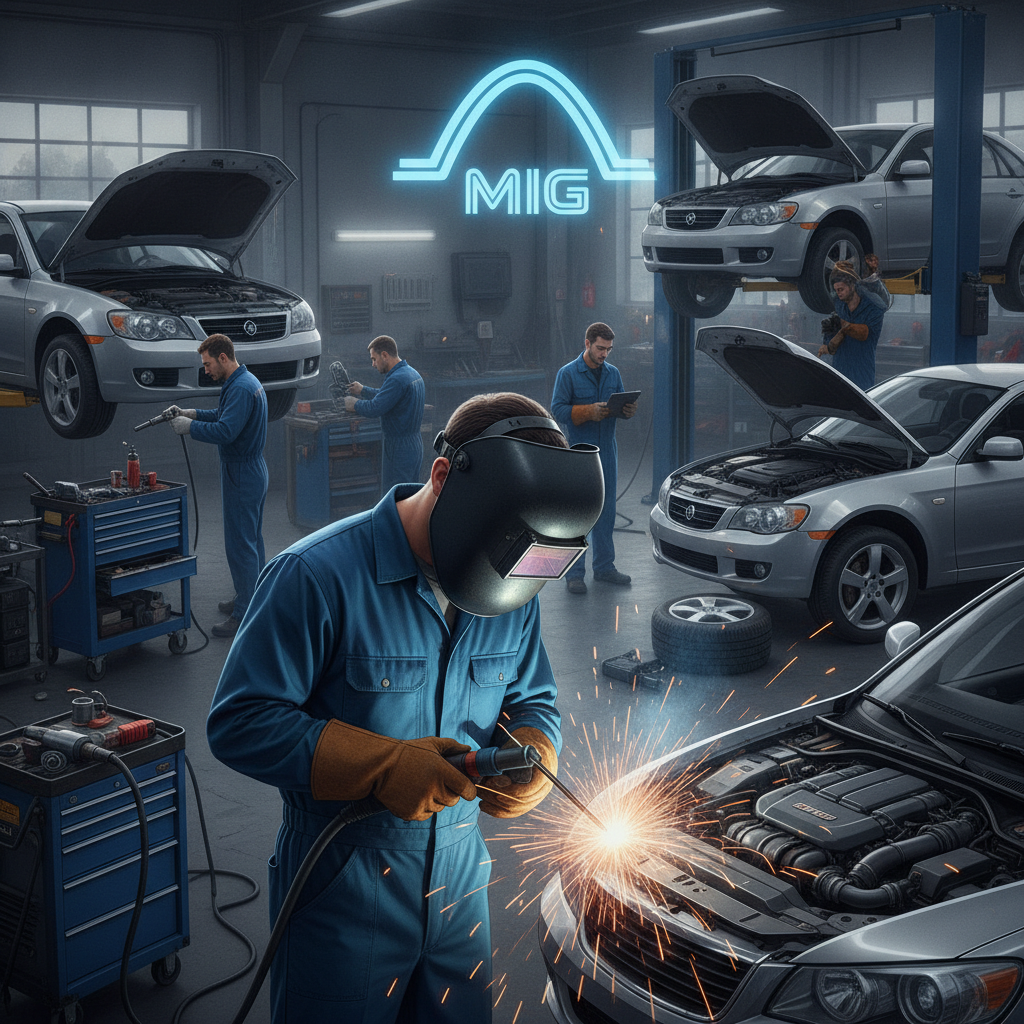
MIG (Metal Inert Gas) welding, also called GMAW (Gas Metal Arc Welding), feeds a continuous wire electrode through a gun while shielding gas protects the weld pool. The process is fast and easy to control compared to stick welding or TIG, which is why it became standard in body shops and home garages alike.
Automotive repair involves a wide range of metals and thicknesses. Most modern vehicles use mild steel panels ranging from 18 to 24 gauge. MIG handles this range well, especially when you dial in the voltage and wire feed speed correctly. It also works on heavier structural steel — subframes, frame rails, suspension brackets — without switching processes.
In practice, experienced technicians use MIG for the majority of their repair welding simply because it’s efficient and delivers consistent results once you understand the settings.
Where MIG Welding Excels in Auto Repair
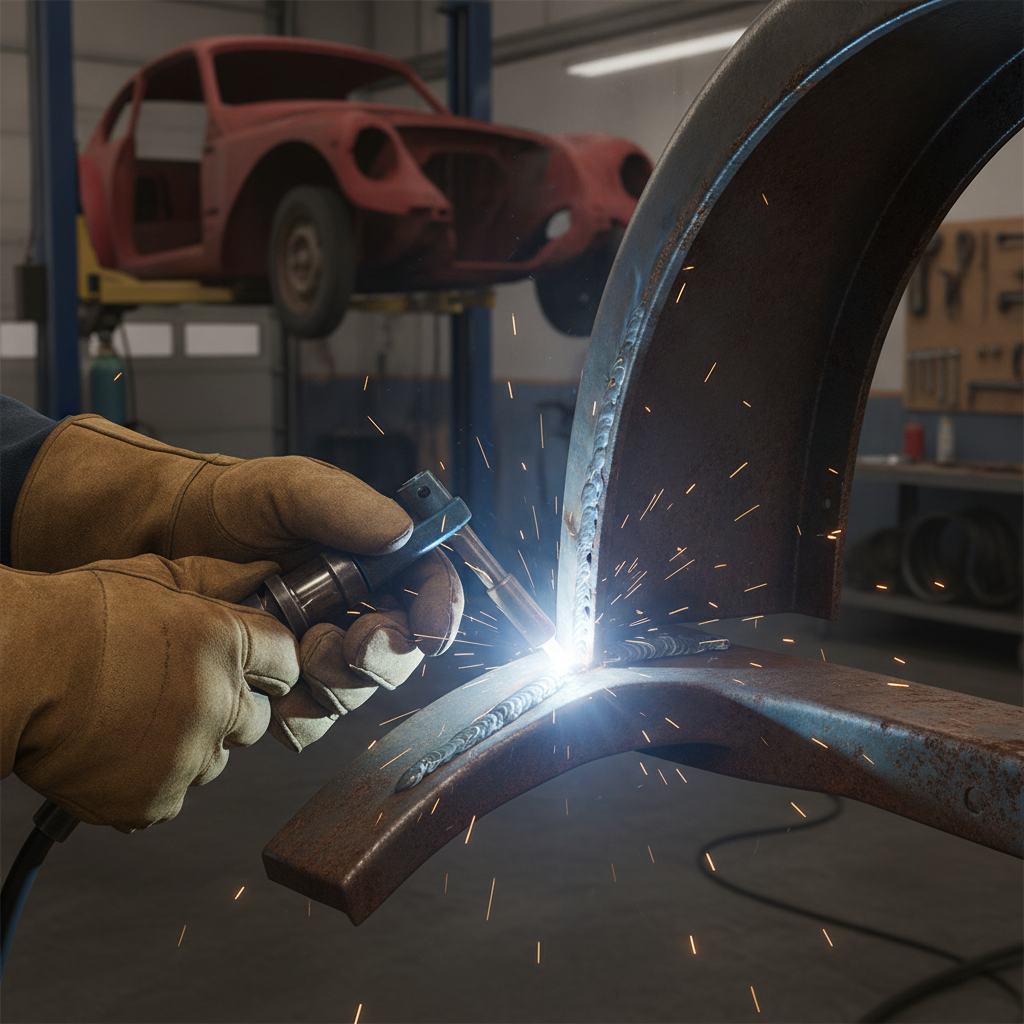
MIG is genuinely strong across several common repair scenarios:
- Floor pan replacement — Typically 18–20 gauge steel, ideal for MIG spot welds and stitch welds
- Patch panel installation — MIG butt welds and lap joints are standard practice
- Frame and structural repairs — Heavier material tolerates MIG’s heat input well
- Rust repair — Cutting out corroded sections and welding in new steel is a classic MIG application
- Roll cage and chassis fabrication — MIG works on mild steel tubing efficiently
For these jobs, MIG is hard to beat on value, speed, and accessibility.
Where MIG Gets Tricky: Thin Exterior Panels
This is where a lot of people run into problems. Thin exterior body panels — door skins, fenders, quarter panels — are typically 20 to 22 gauge or thinner on newer vehicles. At this thickness, heat distortion becomes a real issue.
MIG introduces more heat than TIG welding, and in thin material, that heat causes the panel to warp. Once a panel warps, you’re either grinding and hammering it back into shape or filling with body filler — which adds work and hides quality.
A few techniques help manage this:
- Stitch welding — Run short 1–2 second bursts, let the metal cool, then continue. Never run long continuous beads on thin sheet metal.
- Skip welding — Tack weld at intervals across the joint, then come back and fill in sections after cooling.
- Use the lowest effective settings — Drop your voltage and wire speed down to the minimum that still gives good fusion.
- Back-step technique — Weld in short segments moving away from the direction of travel.
Many body technicians switch to TIG for cosmetic exterior panels where perfect surface finish matters. But for anything under a rocker panel, inside a wheel well, or structural — MIG is fine.
MIG vs. TIG vs. Flux Core for Auto Repair
| Process | Best For | Limitations |
|---|---|---|
| MIG (GMAW) | Floor pans, frames, patch panels, structural | Heat distortion on very thin panels |
| TIG (GTAW) | Thin cosmetic panels, aluminum, precision work | Slower, higher skill requirement |
| Flux Core (FCAW) | Outdoor work, thicker structural steel | Too aggressive for thin sheet metal; more spatter |
Flux core is sometimes used for frame work in field repairs but is generally avoided for bodywork. It runs hotter and produces more spatter, making cleanup harder. TIG is the premium choice for cosmetic-quality panel work but demands significantly more skill and time.
For the average home mechanic or general repair shop, MIG covers roughly 80% of automotive welding needs effectively.
Gas Settings and Wire Selection Matter
One of the most common mistakes in automotive MIG welding is using the wrong shielding gas or wire diameter.
Shielding gas: Use 75/25 (argon/CO₂), also called C25. It produces cleaner welds with less spatter than pure CO₂ and is better suited for thin automotive steel. Pure CO₂ runs hotter and digs deeper — acceptable for structural work but not ideal for sheet metal.
Wire diameter: For thin automotive sheet metal (18–22 gauge), use 0.023-inch (0.6mm) wire. Many welders come loaded with 0.030-inch or 0.035-inch wire, which works fine for structural material but puts too much heat into thin panels. Switching down to 0.023-inch makes a noticeable difference.
A welder like the Lincoln Electric Weld-Pak 140 HD accepts 0.023-inch wire and handles both thin sheet metal and light structural work well, making it a practical option for home garage auto repair.
Common MIG Mistakes in Auto Body Work
Even experienced welders make these errors when moving into automotive repair:
- Too much heat on thin metal — Running factory default settings on 20-gauge steel will warp panels every time
- Welding over rust or primer — Contamination causes porosity and weak welds. Always clean to bare metal.
- Skipping the back-purge on patches — Leaving mill scale or coating on the back side traps gas and creates inclusions
- Not checking fit-up — Gaps wider than the material thickness cause burn-through and poor fusion
- Rushing cooling — Using compressed air to cool welds rapidly can introduce stress cracking in some materials
Taking time to prep the metal, dial in the machine, and weld in short controlled passes eliminates most of these problems.
Do You Need a Special MIG Welder for Automotive Work?
Not necessarily. A standard 115V or 230V MIG welder with adjustable voltage settings and wire speed control is sufficient for most automotive repairs. The key is having enough adjustment range to weld thin sheet metal — typically in the 18–25 amp range for 20-gauge steel.
Multi-process welders like the Hobart Handler 140 offer the flexibility to handle sheet metal up to structural repairs without needing a dedicated machine for each task. It’s a popular choice among DIY mechanics and small shops for that reason.
For professional body shop work involving aluminum panels or high-end cosmetic repairs, a dedicated TIG or pulse MIG setup becomes worth the investment.
FAQ
Can you MIG weld body panels without warping them?
Yes, but it requires proper technique. Use stitch or skip welding in short bursts, allow the metal to cool between passes, and reduce your heat settings for thin material. Rushing the weld or running continuous beads on thin sheet metal almost always causes warping. Proper preparation and patience are more important than equipment here.
What gauge steel is used in car body panels?
Most automotive body panels range from 18 to 22 gauge mild steel, with some modern vehicles using thinner high-strength steel. Structural components like floor pans, frame rails, and door intrusion beams are typically thicker — ranging from 14 to 18 gauge depending on the application.
Can you MIG weld galvanized or coated automotive steel?
You can weld galvanized steel, but the zinc coating burns off and releases toxic zinc oxide fumes. Always grind the coating away from the weld area, work in a well-ventilated space, and wear appropriate respiratory protection. Welding through primer, paint, or underbody coating creates porosity and weak welds — always clean back to bare metal.
Is flux core welding acceptable for automotive frame repair?
Flux core can be used for structural frame repairs where appearance and thin-metal precision aren’t concerns. However, it runs hotter, produces more spatter, and is harder to control on thinner material. Most professional shops use solid wire MIG with shielding gas for frame work. Flux core is better suited to outdoor field repairs where carrying a gas cylinder isn’t practical.
Do professional body shops use MIG welding?
Yes. MIG is the standard welding process in most collision repair and fabrication shops. OEM-approved repair procedures often specify resistance spot welding (which mimics factory welds) or MIG plug welds as acceptable methods. Some manufacturers also specify MIG stitch welding for structural panel bonding, making it not just acceptable but required for certain repairs.
What’s the difference between a MIG plug weld and a butt weld in auto body repair?
A plug weld is drilled through the top layer and welded through the hole into the layer beneath — it mimics the factory spot weld pattern. A butt weld joins two panels edge-to-edge. Plug welds are used for panel replacement where overlapping is required, while butt welds are preferred for patch panels when a flush, grindable seam is needed.
Can a beginner MIG weld their own car?
A motivated beginner can absolutely learn to MIG weld for automotive repair. Floor pans and patch panels are among the most forgiving repairs to start with. Practice on scrap metal of the same gauge first, dial in settings before touching the car, and start with non-cosmetic repairs. Expect a learning curve of several practice sessions before tackling anything visible.
MIG welding is a legitimate and capable process for automotive repair — professionals rely on it daily for good reason. The key is matching the technique and settings to the material. Thin exterior panels require patience and heat management; structural work is more forgiving. Getting comfortable with stitch welding, proper gas and wire selection, and clean metal prep will take you through the vast majority of auto repair welding with solid, reliable results.