
For most MIG welding applications, use these gas combinations:
– Mild Steel: 75% Argon + 25% CO2 (C25) for general purpose
– Stainless Steel: 98% Argon + 2% CO2 or tri-mix with helium
– Aluminum: 100% Argon for thin materials, argon-helium mix for thick sections
Choosing the right shielding gas for MIG welding can make the difference between a strong, clean weld and a project filled with defects. The proper gas mixture affects penetration depth, bead appearance, spatter levels, and overall weld quality. This guide provides a comprehensive MIG welding gas chart and explains how to select the ideal shielding gas for your specific welding applications, materials, and project requirements.
Complete MIG Welding Gas Selection Chart
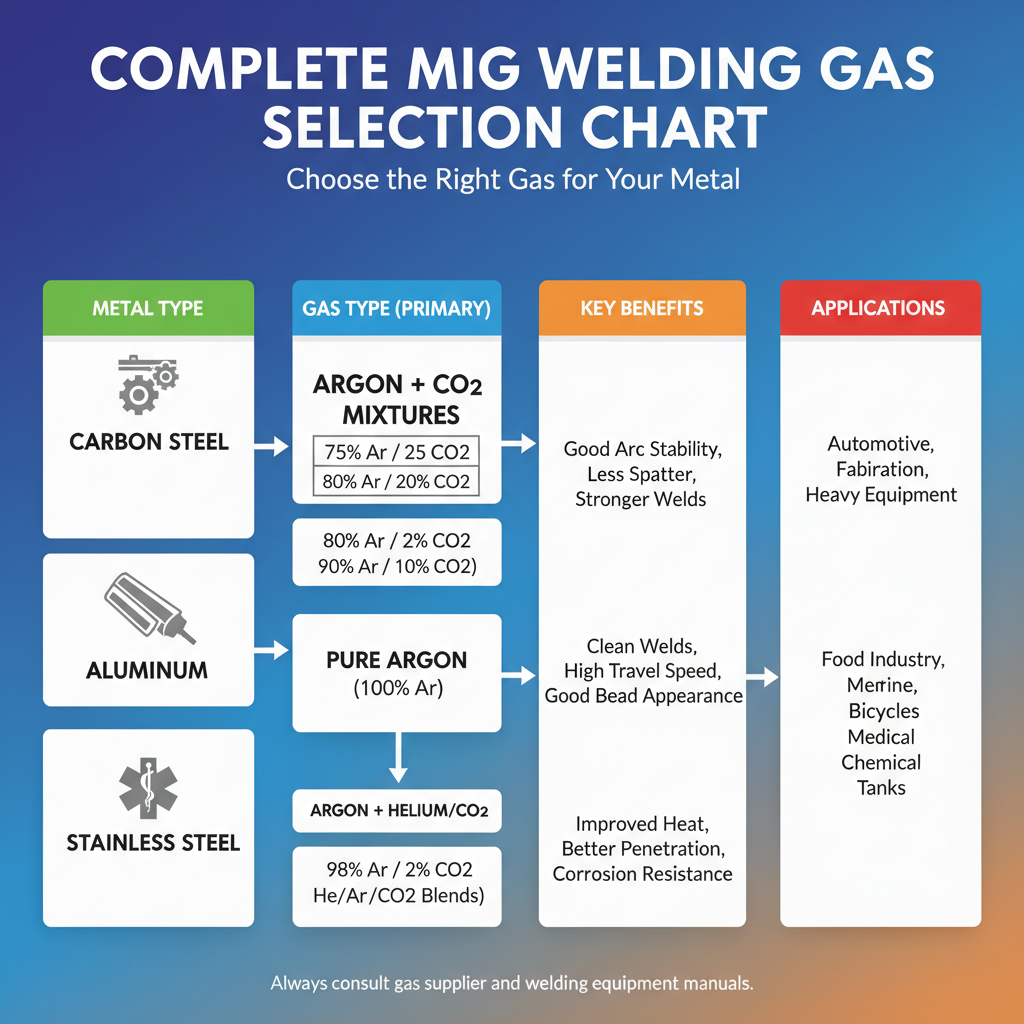
Carbon Steel and Mild Steel Applications
100% CO2 (Carbon Dioxide)
– Best for: Deep penetration, thick materials, outdoor welding
– Advantages: Lowest cost, excellent penetration, wind resistant
– Disadvantages: More spatter, rougher bead appearance
– Typical uses: Structural welding, heavy fabrication, repair work
75% Argon + 25% CO2 (C25)
– Best for: General purpose mild steel welding
– Advantages: Good penetration, reduced spatter, smooth arc
– Disadvantages: Higher cost than pure CO2
– Typical uses: Sheet metal, automotive work, general fabrication
85% Argon + 15% CO2
– Best for: Thin gauge materials, precision work
– Advantages: Minimal spatter, excellent bead appearance, stable arc
– Disadvantages: Reduced penetration on thick materials
– Typical uses: Body work, thin sheet fabrication
90% Argon + 10% CO2
– Best for: Very thin materials, spray transfer
– Advantages: Smooth arc, minimal cleanup required
– Disadvantages: Limited penetration, higher cost
– Typical uses: Sheet metal under 1/8 inch thick
Stainless Steel Gas Mixtures
98% Argon + 2% CO2
– Best for: Most stainless steel applications
– Advantages: Maintains corrosion resistance, good penetration
– Disadvantages: Requires precise gas flow control
– Typical uses: Food service equipment, architectural work
90% Argon + 7.5% CO2 + 2.5% Oxygen
– Best for: Heavy stainless steel sections
– Advantages: Improved penetration, faster travel speeds
– Disadvantages: May affect corrosion resistance slightly
– Typical uses: Industrial stainless fabrication
Tri-mix: Argon + CO2 + Helium
– Best for: Thick stainless steel, high-speed welding
– Advantages: Excellent heat input control, superior penetration
– Disadvantages: Most expensive option
– Typical uses: Production welding, thick plate work
Aluminum Welding Gas Options
100% Argon
– Best for: Aluminum up to 1/2 inch thick
– Advantages: Clean welds, good arc stability, cost-effective
– Disadvantages: Limited heat input for thick sections
– Typical uses: General aluminum fabrication, repair work
75% Argon + 25% Helium
– Best for: Aluminum 1/4 inch to 1 inch thick
– Advantages: Increased heat input, better penetration
– Disadvantages: Higher cost, requires flow rate adjustment
– Typical uses: Medium thickness aluminum welding
50% Argon + 50% Helium
– Best for: Thick aluminum sections over 1 inch
– Advantages: Maximum heat input, deep penetration
– Disadvantages: Highest cost, challenging arc control
– Typical uses: Heavy aluminum plate, production welding
Gas Flow Rate Guidelines
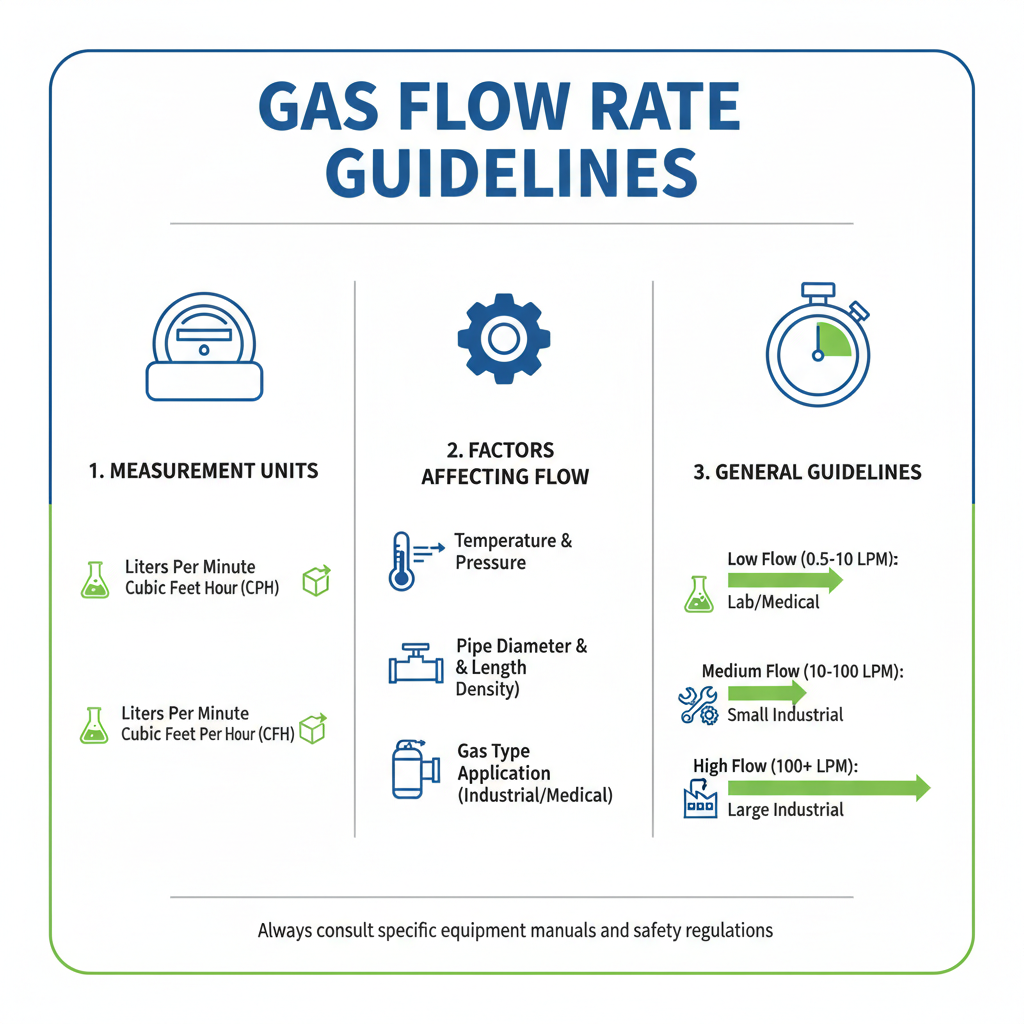
Proper gas flow rates ensure adequate shielding without waste. Field experience shows that incorrect flow rates cause more weld defects than wrong gas selection.
Standard Flow Rates by Material Thickness:
– Thin materials (under 1/8 inch): 15-20 CFH
– Medium thickness (1/8 to 1/4 inch): 20-25 CFH
– Thick materials (over 1/4 inch): 25-30 CFH
– Outdoor or drafty conditions: Increase by 5-10 CFH
Flow Rate Adjustment Factors:
– Wind or air movement requires higher flow rates
– Longer gun cables need slight flow increases
– Gas lens diffusers allow reduced flow rates
– Helium mixtures require 25-30% higher flow rates due to lighter density
Transfer Mode and Gas Selection
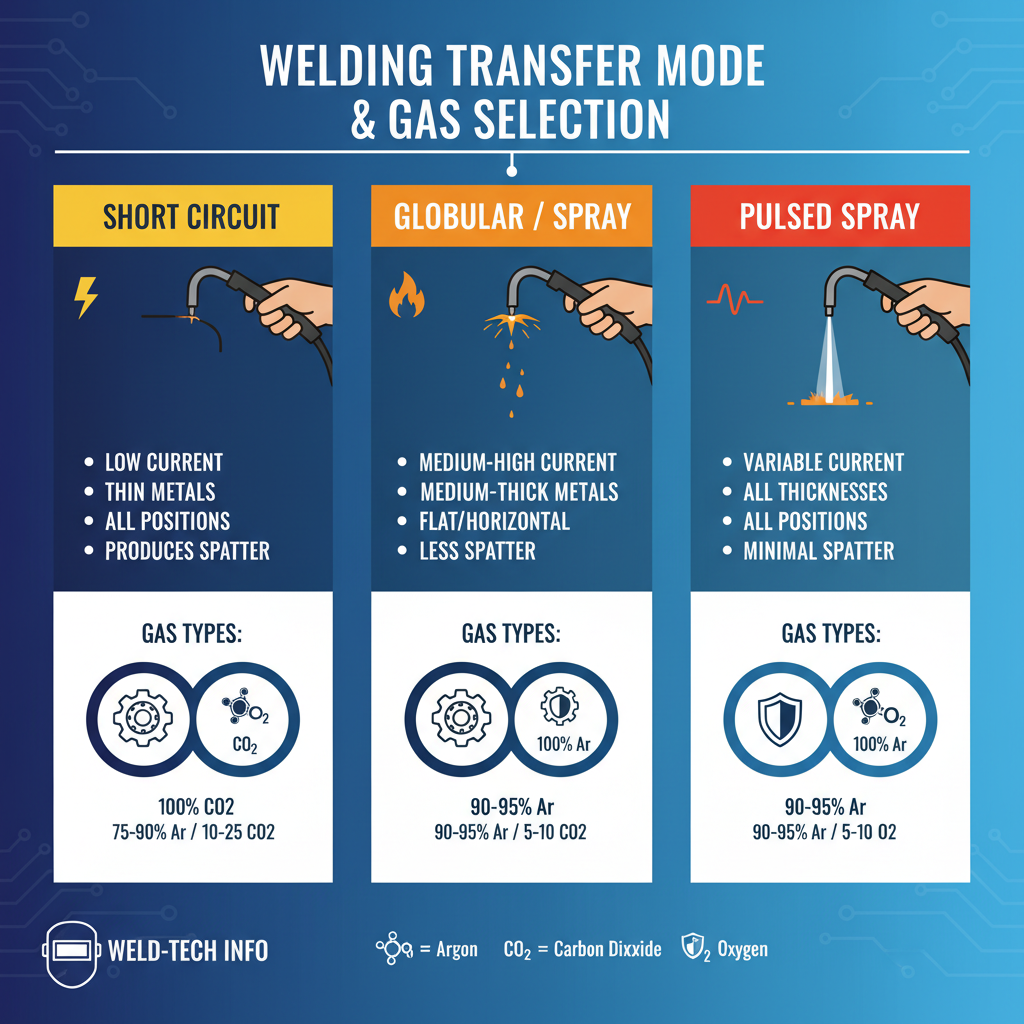
The welding transfer mode significantly influences gas choice. Each transfer method works optimally with specific gas mixtures.
Short Circuit Transfer (GMAW-S)
– Recommended gases: 75/25 or 85/15 argon/CO2 mixes
– Voltage range: 17-22 volts typically
– Best for: Thin materials, out-of-position welding
– Gas considerations: Higher CO2 content improves arc stability
Globular Transfer
– Recommended gases: 85/15 argon/CO2 or higher argon content
– Voltage range: 22-26 volts typically
– Best for: Intermediate thickness materials
– Gas considerations: Avoid pure CO2 to prevent excessive spatter
Spray Transfer (GMAW-P)
– Recommended gases: 90/10 or 95/5 argon/CO2 mixes
– Voltage range: 26+ volts typically
– Best for: Thick materials, flat and horizontal positions
– Gas considerations: High argon content essential for stable spray
Pulse Spray Transfer
– Recommended gases: 95/5 argon/CO2 or pure argon
– Voltage range: Variable with pulse parameters
– Best for: All-position welding, heat-sensitive materials
– Gas considerations: Pure argon often preferred for aluminum
Common Gas Selection Mistakes
Using Pure CO2 for Thin Materials
A common issue technicians encounter is excessive burn-through when using 100% CO2 on sheet metal. The high heat input and deep penetration characteristics make CO2 unsuitable for materials under 1/8 inch thick.
Insufficient Flow Rates in Windy Conditions
Outdoor welding often fails due to inadequate gas coverage. Wind speeds above 5 mph require flow rate increases of 30-50% to maintain proper shielding.
Wrong Gas for Transfer Mode
Using high CO2 content gases with spray transfer creates unstable arcs and excessive spatter. Spray transfer requires minimum 85% argon content for proper operation.
Helium Mix Flow Rate Errors
Helium’s lower density requires higher flow rates than pure argon. Many welders use standard argon flow rates with helium mixes, resulting in inadequate shielding and porosity.
Cost Optimization Strategies
Gas costs significantly impact welding economics. Smart selection balances performance needs with budget constraints.
Volume Purchasing Benefits:
– Bulk gas purchases reduce per-cubic-foot costs by 20-40%
– Long-term contracts provide price stability
– Multiple cylinder exchanges eliminate demurrage charges
Application-Specific Selection:
– Use 100% CO2 for heavy structural work where appearance isn’t critical
– Reserve expensive tri-mix gases for applications requiring their specific benefits
– Consider 75/25 mix as the best general-purpose compromise
Waste Reduction Techniques:
– Proper regulator maintenance prevents gas leaks
– Pre-flow and post-flow timer adjustments minimize waste
– Regular flow meter calibration ensures accurate delivery
Specialty Gas Applications
Duplex Stainless Steel
Requires nitrogen-bearing gas mixtures to maintain metallurgical properties. Typical mix: 90% Argon + 8% CO2 + 2% Nitrogen.
Weathering Steel (Cor-Ten)
Benefits from slightly oxidizing gas mixtures. Use 82% Argon + 18% CO2 for optimal results.
High-Strength Low-Alloy (HSLA) Steels
Require careful heat input control. Use 90% Argon + 10% CO2 to minimize heat-affected zone issues.
Nickel Alloys
Demand ultra-pure argon or argon-helium mixtures. Any CO2 content can cause cracking in high-nickel materials.
Frequently Asked Questions
What gas should I use for welding mild steel outdoors?
Use 100% CO2 for outdoor mild steel welding. Pure CO2 provides the best wind resistance and maintains adequate shielding in breezy conditions. The deeper penetration also helps overcome surface contamination common in outdoor environments.
Can I use the same gas for both steel and aluminum?
No, you cannot use the same gas effectively. Steel requires CO2-bearing mixtures for proper penetration, while aluminum needs pure argon or argon-helium blends. CO2 causes oxidation issues in aluminum welding.
How do I know if my gas flow rate is correct?
Correct flow rate produces a steady, stable arc with minimal spatter. Too low causes porosity and erratic arcs. Too high creates turbulence and pulls atmospheric contamination into the weld zone. Start with manufacturer recommendations and adjust based on results.
Why does my MIG welding produce excessive spatter with CO2?
Pure CO2 naturally produces more spatter due to its arc characteristics. This is normal but can be reduced by using proper voltage settings, maintaining correct stick-out distance, and ensuring clean base materials. Consider switching to 75/25 mix for less spatter.
What’s the difference between C25 and 75/25 gas mixtures?
C25 and 75/25 refer to the same mixture: 75% Argon and 25% CO2. C25 is simply the industry shorthand designation. Both terms describe identical gas compositions with the same welding characteristics.
How long do gas cylinders last during welding?
Cylinder duration depends on flow rate, welding time, and cylinder size. A standard 125 cubic foot cylinder at 25 CFH flow rate provides about 5 hours of actual welding time. Factor in pre-flow, post-flow, and setup time for total usage calculations.
Should I use different gases for different welding positions?
Position affects gas selection indirectly through transfer mode requirements. Out-of-position welding typically uses short-circuit transfer, favoring higher CO2 content gases. Flat position spray transfer works best with high-argon mixtures. Match gas to transfer mode rather than position directly.
Final Thoughts
Selecting the right shielding gas transforms MIG welding results from acceptable to professional quality. The gas chart provided covers the most common applications, but remember that specific project requirements may demand adjustments. Start with the recommended gas for your base material and thickness, then fine-tune based on actual welding results. Proper gas selection, combined with correct flow rates and welding parameters, ensures strong, clean welds that meet both structural and appearance requirements. Keep detailed records of successful gas and parameter combinations for different materials to build your personal welding reference guide.