
Choosing the right welding gas tank size affects your project efficiency, costs, and workflow. Whether you’re a hobbyist working in your garage or a professional managing multiple welding stations, understanding gas cylinder specifications helps you make informed decisions about equipment purchases and rental agreements.
This guide covers standard welding gas tank sizes, capacity measurements, physical dimensions, and practical considerations for different welding applications. You’ll learn how to match cylinder sizes to your specific needs and avoid common sizing mistakes.
Quick Answer: Standard Welding Gas Tank Sizes
Most common welding gas cylinders range from 20 cubic feet (small portable tanks) to 330 cubic feet (large industrial cylinders). Popular sizes include 40 CF, 80 CF, 125 CF, and 250 CF tanks. Tank capacity is measured in cubic feet of gas at standard temperature and pressure, while physical dimensions vary by manufacturer and gas type.
Understanding Gas Cylinder Capacity Measurements
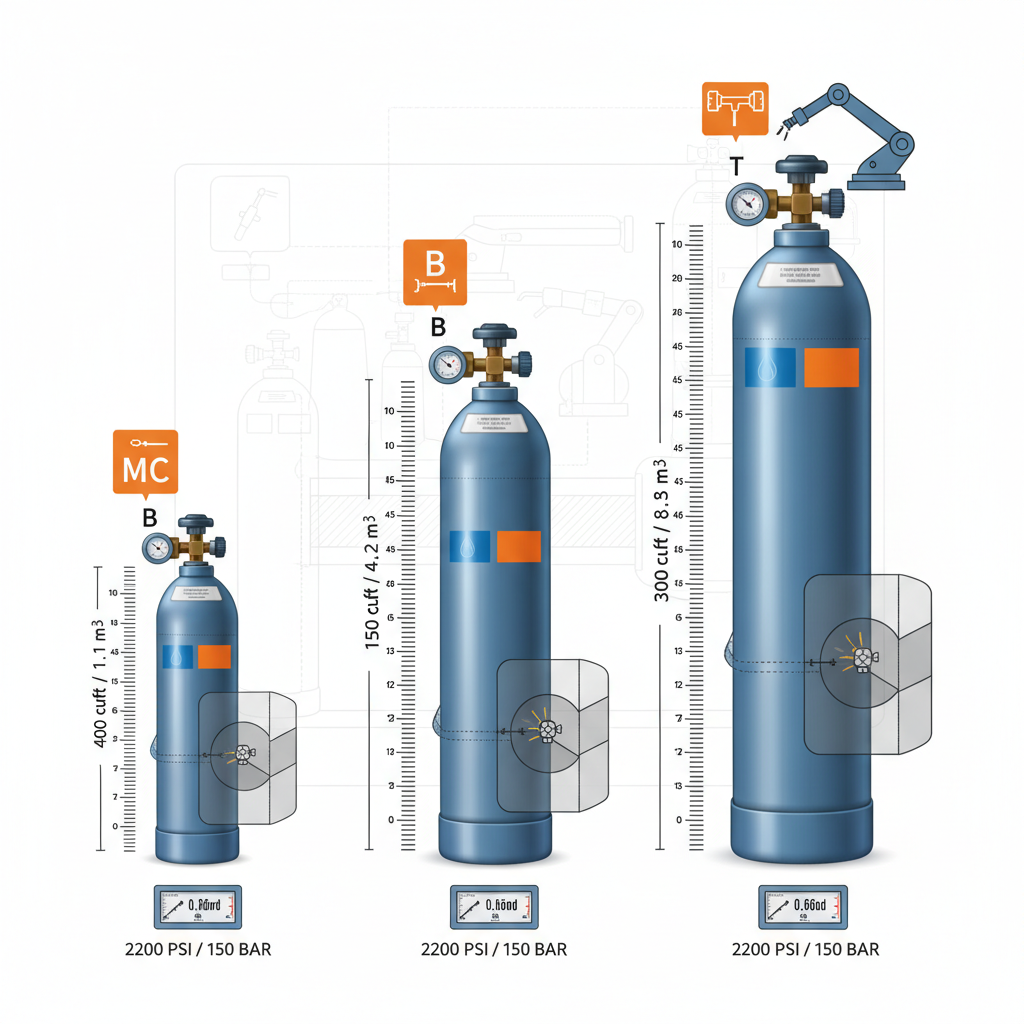
Welding gas tanks use cubic feet (CF) as the standard capacity measurement in the United States. This represents the volume of gas contained at 70°F and 14.7 PSI atmospheric pressure.
The actual gas pressure inside cylinders ranges from 2,000 to 2,500 PSI for most welding gases. When you release gas through your regulator, it expands to atmospheric pressure, providing the cubic footage listed on the tank specification.
International markets often use liters or cubic meters instead of cubic feet. One cubic foot equals approximately 28.3 liters.
Complete Welding Gas Tank Size Chart
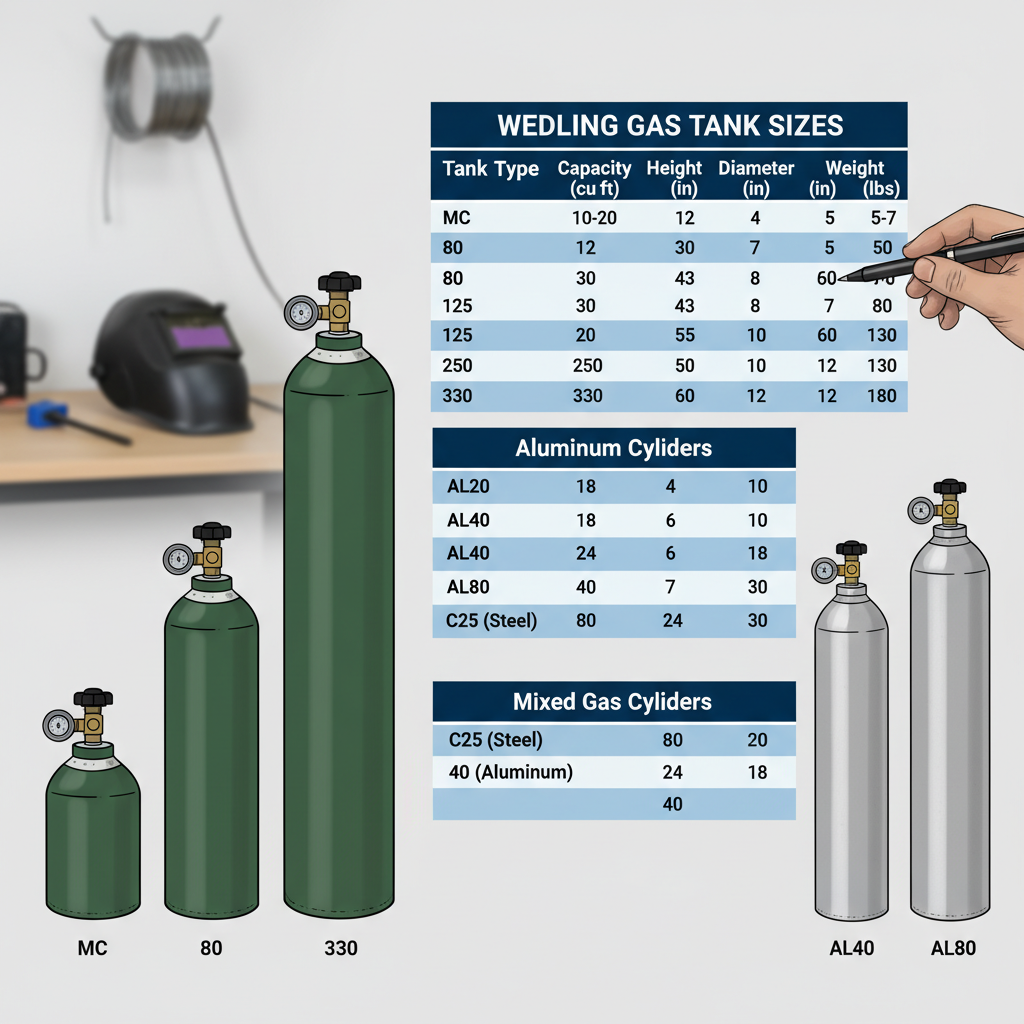
| Tank Size (CF) | Height (inches) | Diameter (inches) | Weight Empty (lbs) | Typical Applications |
|—————-|—————–|——————-|——————-|———————|
| 20 | 17 | 5 | 8 | Portable torch work, small repairs |
| 40 | 20 | 7 | 15 | Hobby welding, light fabrication |
| 80 | 32 | 7 | 25 | Home workshops, small business |
| 125 | 43 | 7 | 35 | Medium fabrication shops |
| 250 | 51 | 9 | 65 | Production welding, multiple stations |
| 330 | 55 | 9 | 75 | Industrial applications, high-volume work |
Tank dimensions vary slightly between manufacturers and gas types. Acetylene cylinders have different proportions due to the porous filler material required for safe storage.
Small Cylinder Options (20-80 CF)
Small welding gas tanks work well for portable applications and occasional use. The 20 CF size fits easily in toolboxes and provides enough gas for basic torch cutting or small welding repairs.
Forty cubic foot cylinders offer a good balance between portability and capacity. These tanks handle most hobby welding projects and light fabrication work without frequent refills.
The 80 CF size serves as the entry point for serious home workshops. Field experience shows this capacity supports several hours of continuous welding, making it suitable for weekend projects and small business applications.
Medium Capacity Tanks (125-250 CF)
Medium-sized cylinders provide extended runtime for professional applications. The 125 CF tank typically lasts a full workday for moderate welding activities.
Professional fabrication shops often choose 250 CF cylinders as their standard size. These tanks balance capacity with manageable weight and dimensions for shop movement.
A common issue technicians encounter is underestimating gas consumption for production work. Medium tanks prevent frequent interruptions while remaining cost-effective for most operations.
Large Industrial Cylinders (330+ CF)
Large welding gas tanks suit high-volume operations and multiple welding stations. The 330 CF size represents the most common large cylinder in industrial settings.
Some suppliers offer 400+ CF tanks for specialized applications. These require proper handling equipment due to their substantial weight when full.
In practice, large cylinders provide the best cost per cubic foot but require adequate storage space and safety considerations for handling.
Gas Type Considerations for Tank Selection
Different welding gases affect tank selection beyond just capacity needs. Argon and helium cylinders follow standard sizing, while acetylene requires special consideration.
Acetylene tanks contain porous material saturated with acetone, making them heavier than other gas cylinders of similar capacity. The maximum safe pressure for acetylene is also lower, affecting storage density.
Mixed gases like argon-CO2 blends use standard cylinder designs but may have different rental or purchase costs depending on your supplier’s inventory.
Calculating Your Gas Consumption Needs
Estimating gas usage helps determine appropriate tank sizes for your applications. MIG welding typically consumes 20-25 cubic feet per hour at moderate settings.
TIG welding uses less gas, averaging 15-20 cubic feet per hour for most applications. Plasma cutting consumption varies widely based on material thickness and cutting speed.
Track your actual usage over several projects to develop accurate consumption estimates. This data helps optimize tank sizing and reduces unexpected runouts during critical work.
Cost Analysis: Purchase vs Rental
Tank ownership makes sense for regular users who can justify the initial investment. Purchase prices range from $150 for small tanks to $400+ for large cylinders, plus the ongoing cost of gas refills.
Rental programs work better for occasional users or those wanting to avoid maintenance responsibilities. Monthly rental fees typically range from $15-50 depending on tank size and supplier.
Field experience shows the breakeven point occurs around 12-18 months of regular use, assuming monthly rental costs versus purchase price plus refill expenses.
Storage and Safety Requirements
Proper storage becomes more critical with larger gas cylinders. Tanks must remain upright and secured to prevent falling or rolling.
Ventilation requirements increase with tank size and quantity. Large cylinders need adequate clearance from heat sources and proper ventilation in enclosed spaces.
Check local fire codes for storage limitations in your area. Some jurisdictions restrict the total gas volume allowed in residential or commercial spaces.
Common Tank Sizing Mistakes
Choosing tanks too small leads to frequent refills and workflow interruptions. This mistake costs time and money while reducing productivity.
Oversizing tanks wastes money on unused capacity and creates handling difficulties. Large cylinders also tie up more capital in gas inventory.
A common issue technicians encounter is mixing tank sizes without considering regulator compatibility. Ensure your equipment works with your chosen cylinder valve connections.
Frequently Asked Questions
How long does a 125 CF welding gas tank last?
A 125 CF tank typically provides 6-8 hours of continuous MIG welding at moderate settings, or 8-10 hours of TIG welding. Actual duration depends on gas flow rates, welding technique, and material thickness.
Can I transport welding gas tanks in my vehicle?
Small tanks (80 CF and under) can usually be transported in vehicles with proper securing and ventilation. Larger cylinders may require commercial transport or special permits depending on local regulations.
What’s the difference between tank capacity and physical size?
Tank capacity measures gas volume at standard conditions, while physical size refers to the cylinder’s exterior dimensions. Different gases have varying storage pressures, affecting the relationship between capacity and tank size.
How do I know when my gas tank is empty?
Most welding regulators show tank pressure, which drops as gas is consumed. Many welders also weigh tanks or use flow indicators to monitor remaining gas levels during projects.
Are there standard valve connections for all tank sizes?
Most welding gases use standard CGA (Compressed Gas Association) fittings, but connection types vary by gas type rather than tank size. Argon, oxygen, and acetylene each have specific valve designs for safety.
Should I buy or rent welding gas tanks?
Purchase tanks if you weld regularly (several times per month) and want long-term cost savings. Rent tanks for occasional use, seasonal work, or when you prefer avoiding maintenance and testing requirements.
How often do welding gas tanks need inspection?
Steel cylinders require hydrostatic testing every 5-10 years depending on the gas type and local regulations. Aluminum tanks may have different testing intervals. Check the stamped date on your cylinder for specific requirements.
Making the Right Choice for Your Needs
Selecting appropriate welding gas tank sizes requires balancing capacity needs, budget constraints, and practical handling considerations. Start with your actual gas consumption data and work requirements rather than assuming bigger is always better.
Consider your workspace limitations, transportation needs, and storage capabilities when evaluating different cylinder sizes. The most cost-effective choice provides adequate capacity without excess inventory or handling difficulties.
Remember that gas suppliers often offer flexible programs allowing tank size changes as your needs evolve. This flexibility helps optimize your setup as projects and requirements change over time.