Choosing the wrong shielding gas is one of the most common reasons beginners struggle with MIG welding. The gas you use directly affects arc stability, weld appearance, spatter levels, and penetration depth.
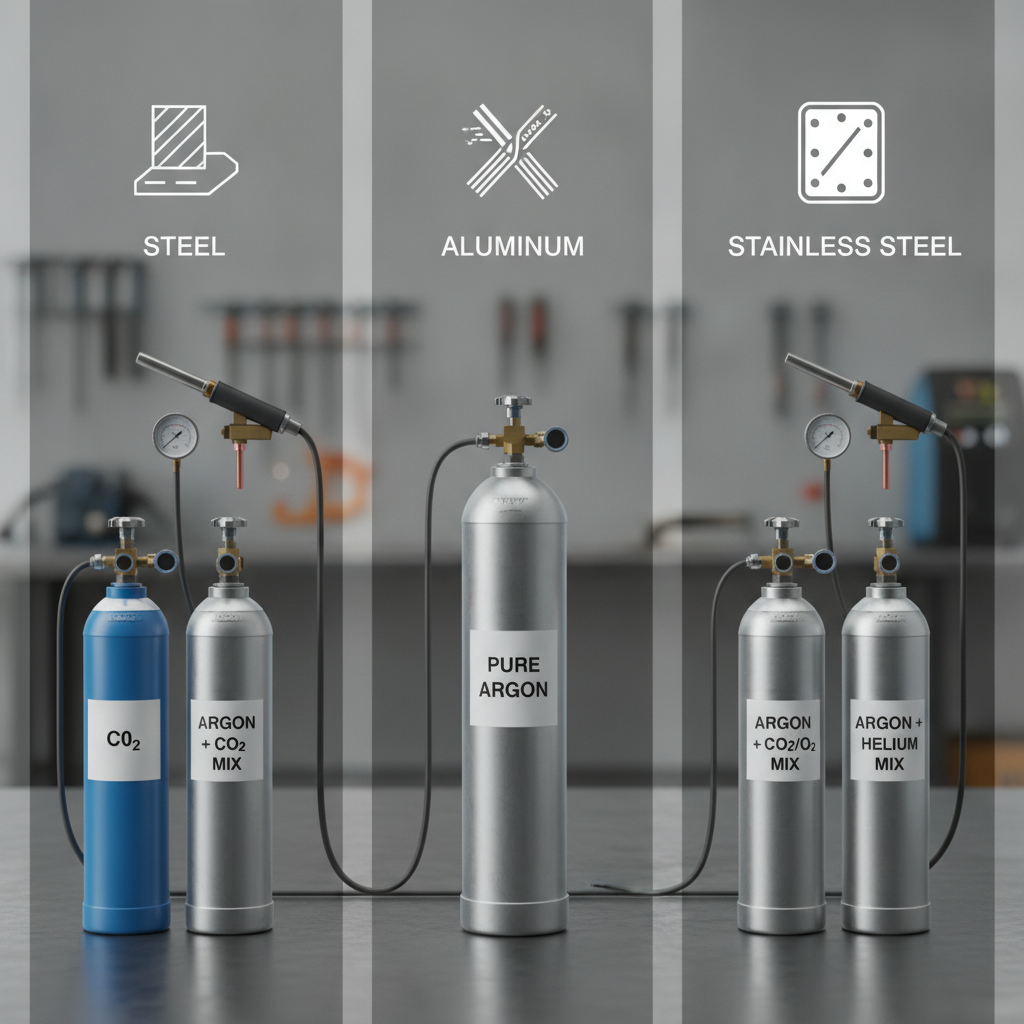
The most common gas for MIG welding is a 75% Argon / 25% CO₂ mixture, often called C25 or 75/25. This blend works well for mild steel and is the standard choice for most home and shop welders. For stainless steel, a tri-mix of 90% Helium / 7.5% Argon / 2.5% CO₂ is typical. For aluminum, use 100% Argon.
Why Shielding Gas Matters in MIG Welding
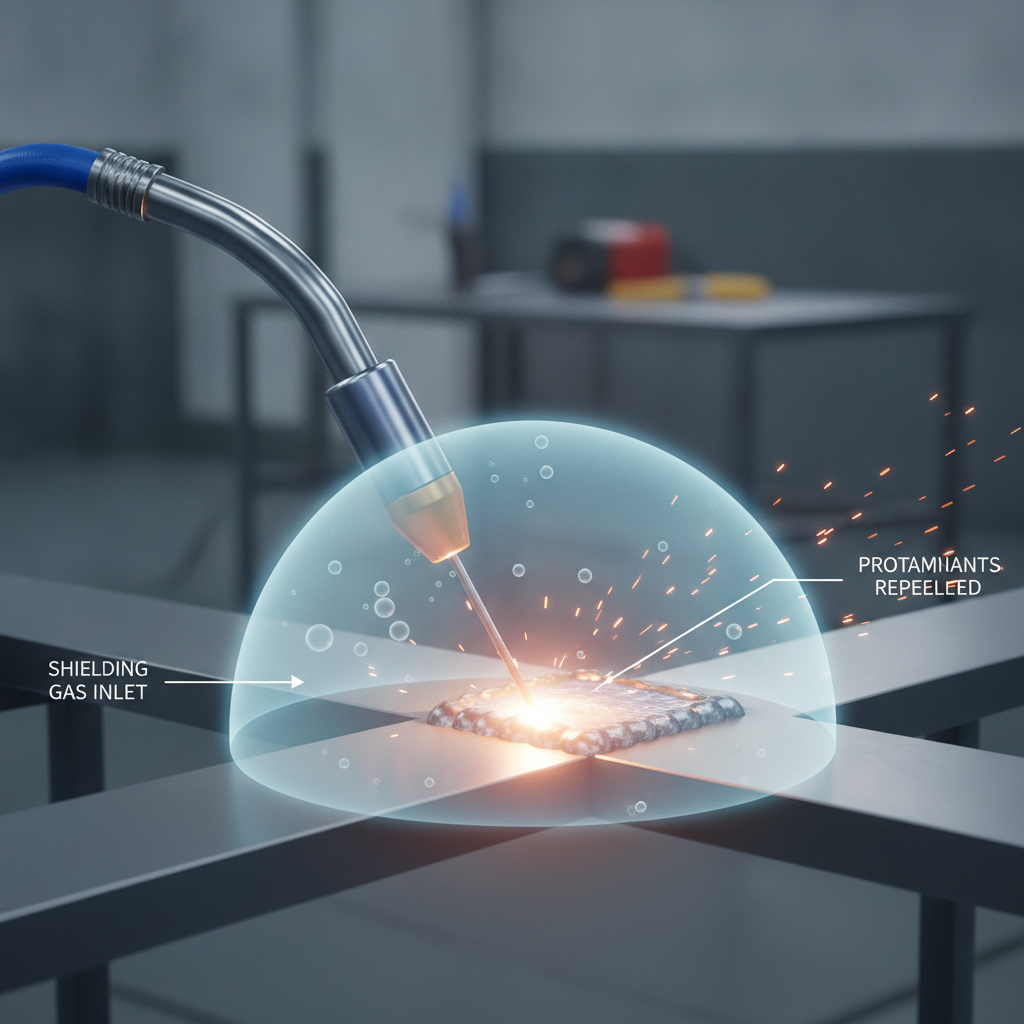
MIG welding creates a molten weld pool that’s extremely vulnerable to oxygen and nitrogen in the surrounding air. Without a protective gas shield, the weld absorbs atmospheric gases and becomes porous, brittle, and weak.
Shielding gas flows from the nozzle around the arc, displacing the atmosphere and protecting the molten metal until it solidifies. The type of gas you use changes the chemistry of the weld, how the arc behaves, and what the finished bead looks like.
This is why selecting the right gas isn’t optional — it’s foundational to weld quality. You can learn more about how shielding gas selection affects MIG weld quality across different materials and applications.
Gas Options for MIG Welding by Material
Different base metals require different gas compositions. There’s no single gas that works perfectly for every situation.
| Material | Recommended Gas | Notes |
|—|—|—|
| Mild Steel | 75% Ar / 25% CO₂ (C25) | Best all-around choice |
| Mild Steel (budget) | 100% CO₂ | More spatter, deeper penetration |
| Stainless Steel | 98% Ar / 2% CO₂ or tri-mix | Prevents oxidation |
| Aluminum | 100% Argon | Required for spray transfer |
| Thin Sheet Metal | 90% Ar / 10% CO₂ | Softer arc, less burn-through |
This reference gives you a quick baseline. The sections below explain each choice in more detail.
MIG Welding Gas for Mild Steel
Mild steel is the most commonly welded material for DIY projects, automotive fabrication, and general shop work. C25 (75% Argon / 25% CO₂) is the go-to gas for a reason — it produces a stable arc, manageable spatter, good penetration, and clean-looking welds.
The argon component stabilizes the arc while the CO₂ adds penetration and heat. Together they balance each other out in a way that’s forgiving for welders at any experience level.
Pure CO₂ is cheaper and available almost everywhere. It works fine, but it produces a more turbulent arc with noticeably more spatter. In practice, most welders who switch from pure CO₂ to C25 immediately notice the difference in how smooth and controllable the weld feels. If you’re comparing these two options, a dedicated look at the best gas for MIG welding mild steel covers the CO₂ vs. argon mix decision in detail.
Stainless steel requires a gas that minimizes oxidation and preserves the chrome content of the weld. The two most commonly used options are:
– 98% Argon / 2% CO₂ — A clean, low-oxidation mix that works well for most stainless applications. Often easier to source than tri-mix.
– Tri-mix (90% He / 7.5% Ar / 2.5% CO₂) — Adds helium for extra heat and penetration. Better for thicker stainless sections.
Using standard C25 on stainless will work in a pinch but can cause sugaring (oxidation) on the back side of the weld and may compromise corrosion resistance. If you’re regularly welding stainless, having the correct gas mix is worth the cost difference.
For stainless settings and technique, proper MIG welding stainless steel settings make a significant difference alongside gas selection.
MIG Welding Gas for Aluminum
Aluminum MIG welding requires 100% Argon. No exceptions. Argon is the only gas that delivers the arc characteristics needed for aluminum — it supports spray transfer mode, cleans the oxide layer from the aluminum surface, and prevents porosity.
CO₂ or mixed gases cause an unstable arc on aluminum and produce welds that are visually and structurally poor. Aluminum also requires higher wire feed speeds and specific voltage settings compared to steel.
Most aluminum MIG setups use a spool gun to prevent the soft aluminum wire from bird-nesting in the liner. The Lincoln Electric Magnum PRO 100SG is a well-regarded spool gun that pairs with several popular welders and handles aluminum wire reliably.
Pure Argon vs. CO₂ vs. Mixed Gas
Understanding the role of each gas component helps when you’re troubleshooting or choosing between available options.
Argon — Inert gas that stabilizes the arc. Produces a smooth, narrow bead with low spatter. Required for aluminum. Alone, it lacks the penetration needed for steel in short-circuit transfer.
CO₂ (Carbon Dioxide) — Active gas that increases penetration and heat. Much cheaper than argon. Creates a hotter, more turbulent arc with more spatter. Commonly used as a budget-friendly option for mild steel.
Helium — Adds heat energy to the arc. Often blended with argon for stainless or aluminum applications where more penetration is needed. Increases welding speed but costs more.
The blend ratio changes the arc’s behavior. More CO₂ means more penetration and spatter. More argon means a cleaner, smoother arc with less penetration. Most shop welding hits the sweet spot with C25 for steel, and pure argon for aluminum.
Flow Rate: How Much Gas Do You Actually Need?
Getting the gas type right is only half of it — the flow rate matters too. Too little gas and the weld pool isn’t protected. Too much gas causes turbulence that actually pulls air into the shielding zone.
For most MIG welding:
– Standard indoor welding: 15–20 CFH (cubic feet per hour) or roughly 7–9 L/min
– Larger nozzles or higher amperage: Up to 25 CFH
– Outdoors or with drafts: Increase slightly, or use a wind break
A regulator with a flow gauge is essential for setting this accurately. The correct MIG welding gas pressure settings guide explains how to dial in flow rate for different situations.
If you’re running through gas faster than expected, calculating MIG welding gas consumption can help you estimate how long a cylinder should last and identify waste.
Common Mistakes With MIG Welding Gas
Even with the right gas, these errors are frequently the cause of poor welds:
– Using steel gas on aluminum. C25 doesn’t work on aluminum. The arc becomes erratic and the weld will be porous.
– Running too low a flow rate. The weld pool gets exposed to air, causing porosity, discoloration, and weak joints.
– Running too high a flow rate. Creates turbulence that draws in atmospheric gases — counterproductive and wastes gas.
– Leaking connections. A slow leak at the regulator, hose, or gun connection can cause mysterious weld quality problems. Always check fittings before welding.
– Forgetting the gas when switching from flux core. If your machine was running gasless flux core wire and you switch to solid wire, the gas must be connected and turned on.
FAQ
Can I use 100% argon for MIG welding mild steel?
Yes, but it’s not ideal. Pure argon on steel produces an unstable arc and poor fusion in short-circuit transfer mode. It can work in spray transfer at higher currents, but for most shop applications, a C25 mix gives far better results. Argon alone is best reserved for aluminum and some TIG welding applications.
What is C25 gas and where do I get it?
C25 is a premixed blend of 75% argon and 25% CO₂. It’s widely available from welding supply stores, gas distributors, and some hardware retailers. You can rent or purchase cylinders in various sizes. It’s the most commonly stocked gas for MIG welding and shouldn’t be hard to find in most areas.
Can I MIG weld without gas at all?
Yes, using flux core wire. Gasless flux core wire contains flux compounds inside the wire that shield the weld when burned, eliminating the need for external shielding gas. It’s useful outdoors where wind makes gas shielding impractical. However, weld appearance and cleanliness are generally not as good as gas-shielded MIG.
What gas do professional welders use for production welding on mild steel?
Most production shops use C25 (75/25 Ar/CO₂) as the standard. Some high-volume operations use higher CO₂ percentages — like 80/20 or even 90/10 — when faster deposition and deeper penetration are prioritized over bead appearance. The exact blend depends on material thickness, transfer mode, and welding speed requirements.
Does the brand of gas matter, or is argon just argon?
The chemical composition is what matters, not the brand. Industrial argon from different suppliers is the same gas. What does vary is purity grade. For welding, you want welding-grade or industrial-grade argon, not a lower purity. High-purity argon used in laboratory settings is unnecessarily expensive and unnecessary for welding purposes.
What happens if I use the wrong gas for MIG welding?
Results vary by mistake. Using CO₂ on aluminum will cause a chaotic arc and a porous, unusable weld. Using C25 on stainless may work visually but can damage corrosion resistance and cause back-side oxidation. Using too little of any gas leads to porosity and discoloration. Matching gas to material is essential for structurally sound welds.
Is tri-mix gas necessary for stainless steel?
Not always. The 98% Argon / 2% CO₂ blend handles most stainless MIG welding effectively and is easier to find. Tri-mix (He/Ar/CO₂) is better suited for thicker stainless sections where extra penetration and heat are needed. For light fabrication or thin sheet stainless, the simpler argon/CO₂ blend is usually sufficient.
Practical Takeaway
For most welders, C25 (75% Argon / 25% CO₂) covers the majority of work on mild steel. Aluminum needs pure argon, and stainless needs a low-CO₂ argon mix or tri-mix. Getting the gas right before you strike an arc is one of the simplest ways to improve weld quality immediately — no settings change required.