
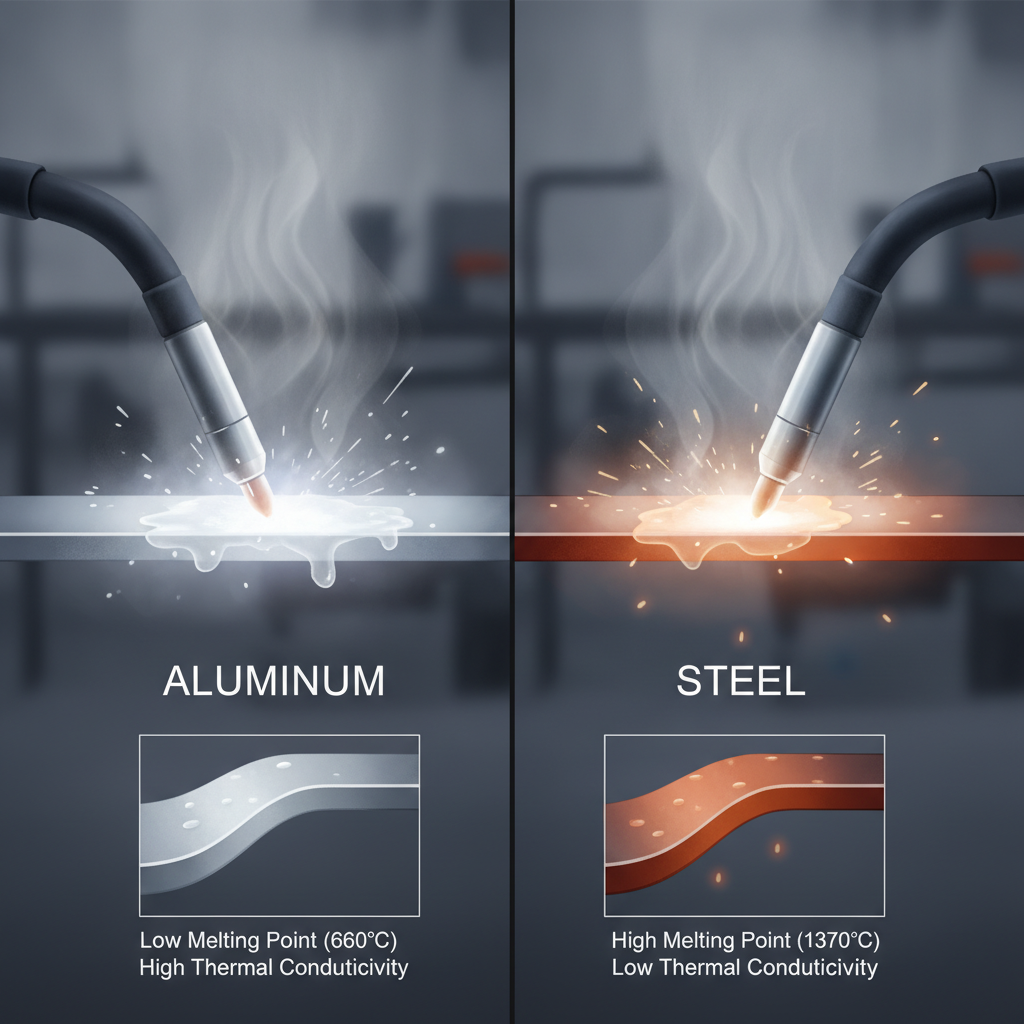
Why Aluminum Behaves Differently Than Steel
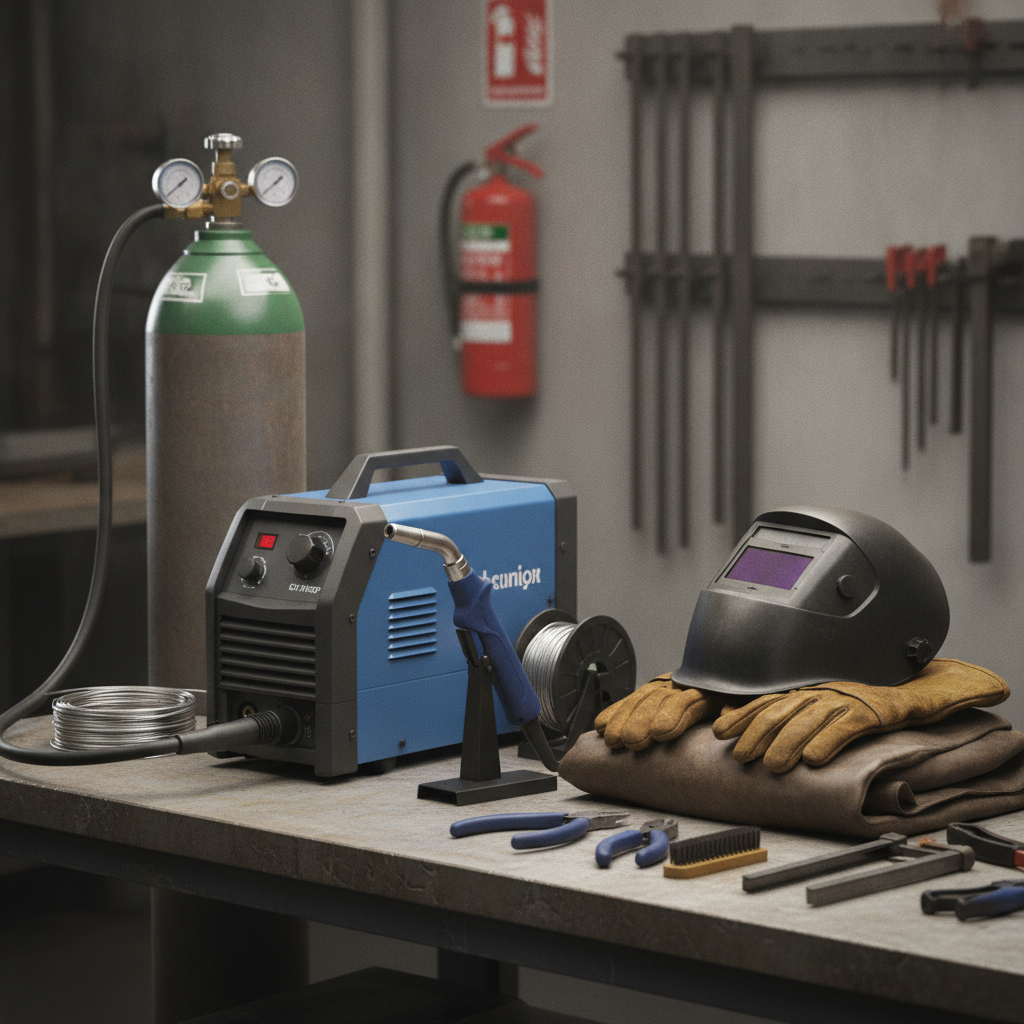
Equipment You Actually Need
Spool Gun or Push-Pull Gun
Standard MIG liner setups feed steel wire reliably because steel is stiff. Aluminum wire is soft and wants to kink, bird-nest, or stall inside a standard torch liner. A spool gun keeps the wire spool at the gun itself, eliminating the long liner run entirely. If your welder supports it, a spool gun is the practical solution for most shop setups. Many welders in the Lincoln Electric Weld-Pak class and above support dedicated spool gun inputs. For more detail on matching a spool gun to your setup, the guide on aluminum spool gun compatibility with Lincoln MIG welders covers the connection and setup process well. Push-pull guns use a synchronized motor at both ends of the liner to keep tension controlled. They’re more expensive but preferred in production environments where long cable runs are unavoidable.Shielding Gas
Use 100% argon — no CO2, no argon/CO2 blends. CO2 is fine for steel, but it creates contamination in aluminum welds and causes excessive spatter. A flow rate of 20–25 CFH is typically sufficient for most shop work.Filler Wire
Two aluminum filler wires cover most applications: | Wire | Alloy | Best For | |—|—|—| | ER4043 | Silicon-based | General purpose, automotive, castings | | ER5356 | Magnesium-based | Structural, marine, higher strength needed | ER4043 is more forgiving in terms of crater cracking and flows more smoothly. ER5356 produces a stronger weld but is stiffer and slightly harder to feed. For most beginners, 0.035″ ER4043 wire is a good starting point on material 1/8″ and above.Cleaning the Base Metal
This step gets skipped more than any other, and it causes more failed welds than poor technique does. Before welding: 1. Wipe the surface with acetone to remove oil, grease, and contamination. 2. Use a dedicated stainless steel wire brush — one that has never been used on steel — to break up the oxide layer. 3. Weld within a few minutes of brushing. The oxide layer begins reforming almost immediately. Do not use the same wire brush you use on steel. Steel particles contaminate the aluminum surface and cause porosity. Keep a dedicated brush just for aluminum.Setting Up Your MIG Welder for Aluminum
Aluminum welding settings are different from steel in almost every way. Polarity: Set the machine to DCEP (electrode positive). This is standard for MIG and also helps with oxide cleaning during the arc. Voltage and wire feed speed: Both run higher than you’d use for equivalent steel thickness. Aluminum requires more heat input. | Material Thickness | Wire Diameter | Voltage | Wire Feed Speed | |—|—|—|—| | 1/8″ (3mm) | 0.035″ | 18–20V | 250–300 IPM | | 3/16″ (5mm) | 0.035″–3/64″ | 20–22V | 300–380 IPM | | 1/4″ (6mm) | 3/64″ | 22–24V | 380–450 IPM | These are starting ranges. Dial in from there based on how the arc sounds and how the puddle behaves. For a more complete reference with specific alloy and thickness combinations, the aluminum MIG welding settings chart breaks down wire feed, voltage, and gas recommendations in detail. Inductance / arc control: Some machines include an inductance or arc control setting. A lower inductance setting produces a crisper, more defined puddle — often preferred for aluminum.Step-by-Step: Welding Aluminum with a MIG
1. Set up shielding gas. Connect 100% argon and set flow to 20–25 CFH. Purge the line briefly before welding. 2. Load aluminum wire into the spool gun. Trim the wire cleanly. A burr on the tip causes feeding problems. 3. Set polarity to DCEP. Confirm the work clamp is attached directly to the aluminum workpiece, not to a table or fixture. 4. Dial in voltage and wire feed speed based on your material thickness, using the ranges above as a starting point. 5. Clean the base metal with acetone followed by a dedicated stainless brush. 6. Position and clamp your workpiece. Aluminum expands significantly during welding, so tack weld first to control distortion. 7. Strike the arc using a push technique. Hold the gun at 10–15 degrees travel angle, pushing the puddle forward (not dragging). This keeps shielding gas coverage ahead of the weld. 8. Move faster than you would on steel. Aluminum’s thermal conductivity means the heat builds quickly. Slowing down leads to burn-through. 9. Maintain consistent contact tip-to-work distance — typically 3/8″ to 1/2″ for aluminum. 10. Allow the weld to cool before moving the work clamp or repositioning.Common Problems and How to Fix Them
Wire bird-nesting at the drive rolls: Almost always caused by using a standard push gun instead of a spool gun, or incorrect drive roll tension. Use U-groove drive rolls designed for aluminum. Tension should be just enough to feed without slipping — over-tensioning crushes the soft wire. Porosity (small holes in the weld bead): Usually contamination — oil, moisture, or oxide. Reclean the base metal and inspect your gas coverage. Check for air drafts pulling shielding gas away from the puddle. Burn-through: Travel speed too slow, voltage too high, or you let heat build up without pause. On thinner material, managing heat input to avoid burn-through becomes even more critical with aluminum than steel. Cold laps or poor fusion: Not enough voltage or travel speed too fast. The puddle isn’t flowing into the base metal. Increase voltage slightly and slow down. Weld cracking: Common with certain alloys. Switching from ER5356 to ER4043 often resolves crater cracking issues, particularly on castings.Technique Tips That Make a Real Difference
Preheat thick sections. Material over 1/4″ benefits from preheating to 200–250°F. This reduces the thermal shock at arc start and improves fusion. Don’t exceed 300°F — aluminum loses temper at higher temperatures. Use a push angle, always. Dragging aluminum traps oxides under the bead. Pushing keeps gas coverage ahead of the puddle and produces cleaner welds. Tack weld at intervals before running a full bead. Aluminum moves. Tacking prevents distortion and keeps joints aligned. Don’t restart mid-bead if you can avoid it. Arc starts on aluminum are the hardest part of the weld. If you need to stop, restart slightly behind the crater and push forward through it before continuing. The practical techniques for MIG welding aluminum with a spool gun go deeper on gun angle, travel speed, and puddle control if you want more hands-on guidance.When to Consider TIG Instead
MIG welding aluminum is fast and practical for thicker material — generally 1/8″ and above. Below that threshold, TIG welding gives you much better control over heat input and produces cleaner results on thin sections. For structural or appearance-critical work on thin aluminum, most experienced welders switch to TIG. For general fabrication, repairs, and structural welds on thicker aluminum, MIG with a spool gun is efficient and reliable. A welder like the YESWELDER 205A Multi-Process handles both MIG and TIG processes, which can be useful if your work crosses both material thicknesses.FAQ
Can I weld aluminum with a standard MIG torch instead of a spool gun? Technically possible with a Teflon or nylon liner and very short cable runs, but not practical for most setups. Aluminum wire kinks easily in standard steel liners. A spool gun eliminates the feeding distance problem entirely and is strongly recommended for consistent results. What shielding gas do I use for MIG welding aluminum? Always use 100% argon. Argon/CO2 blends designed for steel create contamination and excessive spatter on aluminum. Pure argon maintains a stable arc, provides good oxide cleaning action, and produces clean bead appearance. Flow rate should be 20–25 CFH under normal shop conditions. What is the best filler wire for welding aluminum with a MIG? ER4043 is the most versatile choice for general fabrication, automotive work, and castings. It flows well and resists crater cracking. ER5356 produces a stronger weld and is preferred for marine, structural, or load-bearing applications. Start with 0.035″ diameter for material in the 1/8″ to 3/16″ range. Why does my aluminum weld look black or sooty? Black soot around the weld bead usually indicates contamination — oil, oxide, or moisture on the base metal — or insufficient shielding gas coverage. Clean the metal thoroughly with acetone and a dedicated stainless brush, check for gas flow restrictions, and make sure there are no drafts pulling the shielding gas away from the arc. How do I weld thin aluminum without burning through? Increase travel speed, reduce voltage slightly, and consider pulse welding if your machine supports it. Tack weld first to distribute heat. Preheat is counterproductive on thin material — avoid it below 3/16″. Stitch welding in short intervals with cooling time between passes also helps manage heat buildup on thin sections. Can I use flux core wire to weld aluminum with a MIG? Not in a conventional sense. True aluminum flux core wire does exist but is rarely used and produces significantly lower quality results compared to solid wire with argon shielding. For most shop applications, the practical limitations of welding aluminum with flux core wire make it a last-resort option rather than a standard approach. Do I need to change drive rolls for aluminum welding? Yes. Standard V-groove drive rolls designed for steel will crush aluminum wire. Switch to U-groove drive rolls, which cradle the wire without deforming it. Adjust tension to the minimum needed to feed reliably — usually much lighter than you’d use for steel.Aluminum MIG welding rewards preparation more than any other skill. Get the equipment right — spool gun, pure argon, the correct wire — clean the metal every single time, and dial in your settings before running a full bead. The actual welding technique is faster and more straightforward than most people expect once those fundamentals are in place.