
Why Shielding Gas Matters in MIG Welding
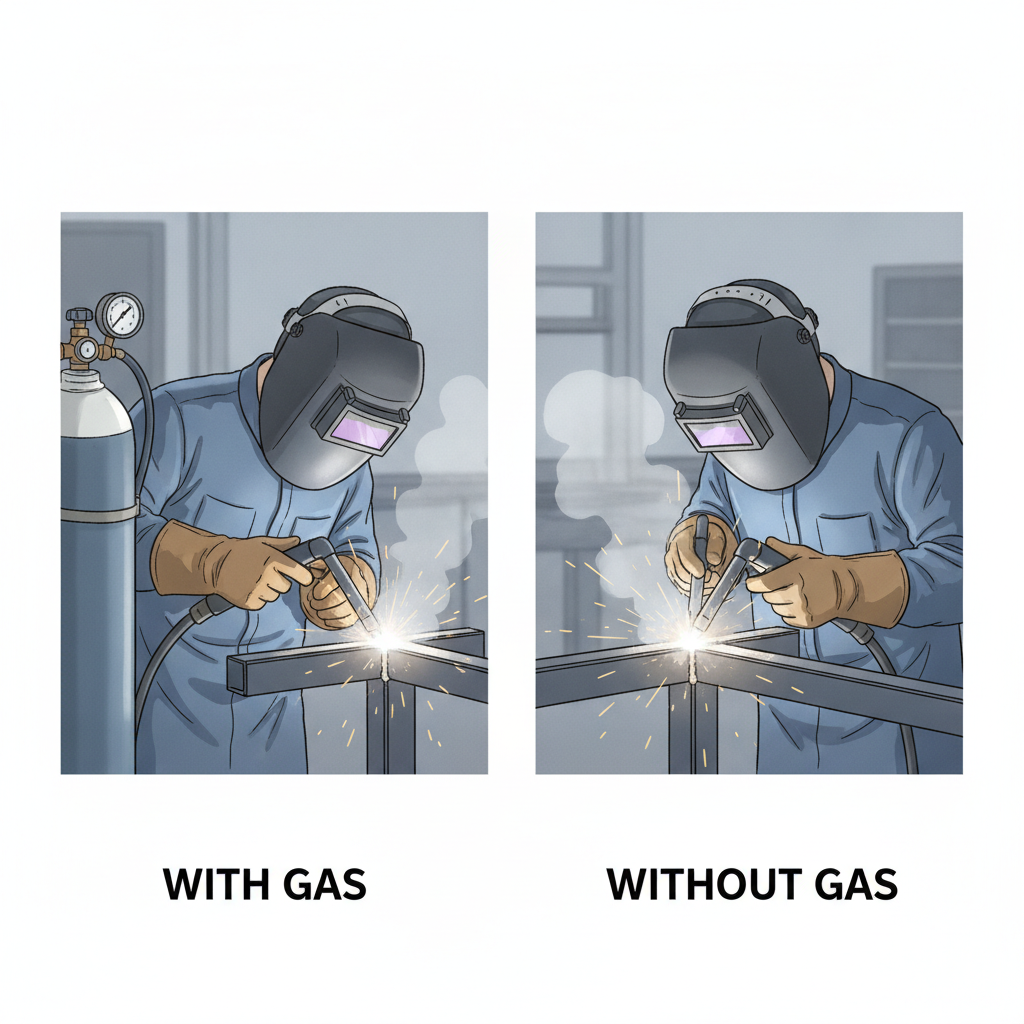
The Two Ways to MIG Weld — With and Without Gas
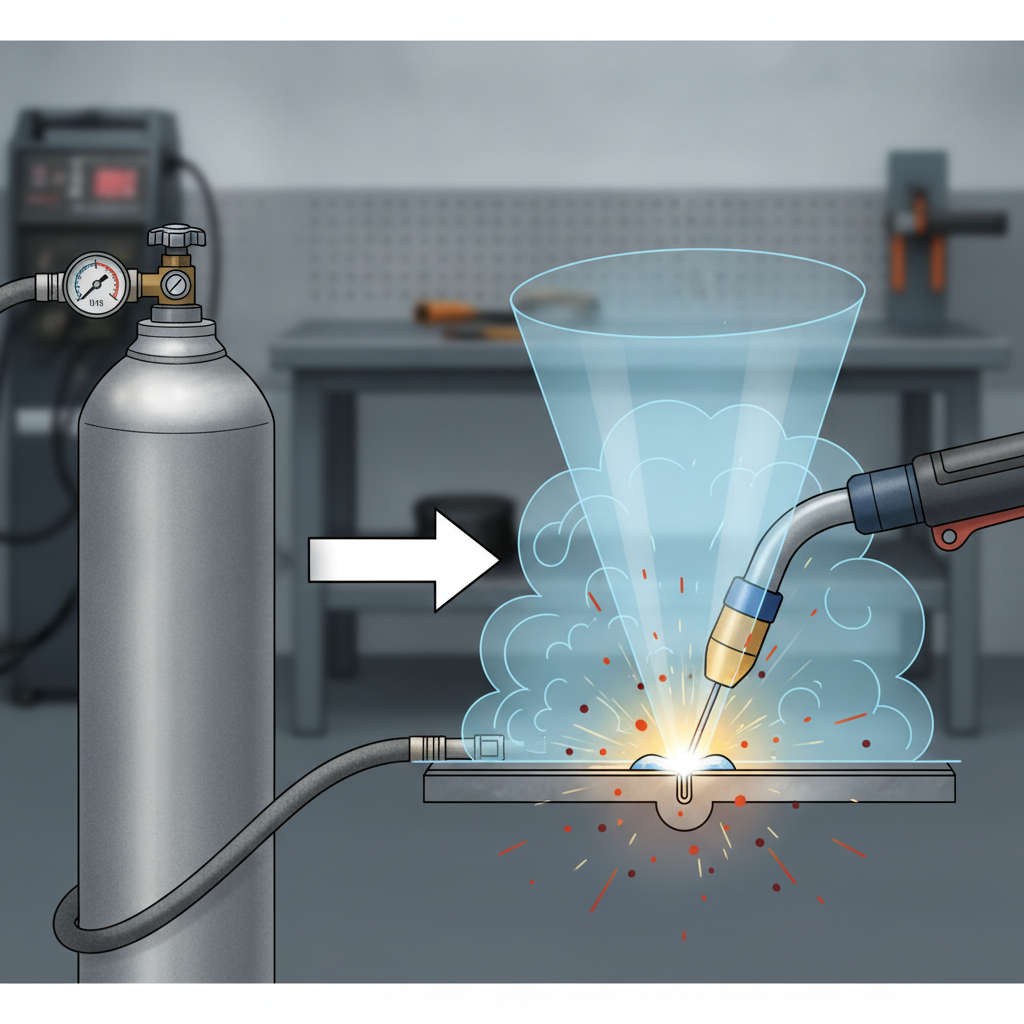
1. Gas-Shielded MIG Welding (Standard MIG)
This is the traditional method. The welder feeds solid wire through the gun while a shielding gas flows from a cylinder through the gun nozzle to protect the arc. Standard MIG with shielding gas produces: – Cleaner, smoother welds – Less spatter – Better appearance on thinner materials – Good control over the weld pool It works best indoors or in areas where wind and drafts are controlled. The Lincoln Electric Weld-Pak 140 HD is a commonly used machine for this style of welding in home shops and light fabrication.2. Gasless MIG (Flux Core Welding)
Gasless welding uses flux core wire instead of solid wire. The flux inside the wire creates shielding gas and slag when it burns, protecting the weld pool from within. Gasless flux core is often preferred for: – Outdoor welding where wind disrupts gas coverage – Field repairs where carrying a gas cylinder is impractical – Thicker steel where deeper penetration is needed – Budget setups where the cost of gas is a factor The tradeoff is more spatter and slag cleanup compared to solid wire with gas. For a thorough look at how flux core shielding actually works, the differences between self-shielded and dual-shield flux core wire are worth understanding before you buy wire.What Gas Is Used for Standard MIG Welding?
Not all shielding gases are the same. The right choice depends on the base metal you’re welding. | Metal | Recommended Gas | Notes | |—|—|—| | Mild Steel | 75% Argon / 25% CO₂ (C25) | Best all-around balance of arc stability and penetration | | Mild Steel (budget) | 100% CO₂ | More spatter, deeper penetration, lower cost | | Stainless Steel | 98% Argon / 2% CO₂ | Minimizes oxidation, cleaner finish | | Aluminum | 100% Argon | Pure argon only; CO₂ or mixed gases damage aluminum welds | C25 (75/25 Argon/CO₂ mix) is the most widely used gas for general MIG welding because it balances spatter control, bead appearance, and penetration. If you’re ever unsure which gas to use for a specific job, a complete MIG welding shielding gas reference chart can help you quickly match the right mix to the material.Gas Flow Rate and Pressure
Even when you have the right gas, using the wrong flow rate causes problems. Too little gas leaves the weld unprotected. Too much creates turbulence that actually pulls air into the weld zone. Typical MIG welding gas flow rates: – Light fabrication / thin metal: 15–20 CFH (cubic feet per hour) or roughly 7–9 L/min – General purpose welding: 20–25 CFH (9–12 L/min) – Overhead or out-of-position welding: 25–30 CFH (12–14 L/min) Setting the correct flow rate also depends on your regulator and cylinder pressure. For a more detailed breakdown, MIG welding gas pressure settings vary depending on wire diameter, material thickness, and nozzle size.When You Might Choose to Weld Without Gas
Running gasless flux core makes practical sense in several real-world situations: – Outdoor repairs — Wind will scatter shielding gas before it reaches the arc. Flux core handles this naturally. – Remote locations — No access to a gas cylinder means flux core is the only option. – Heavy plate welding — Self-shielded flux core penetrates deeper into thicker stock, which can be an advantage in structural work. – Budget welding setups — Eliminating the need to purchase, fill, and transport a gas cylinder reduces ongoing costs. If you own a machine that supports both processes, the steps for setting up a MIG welder without gas involve switching polarity (most flux core runs DCEN) and changing to flux core wire.Can Every MIG Welder Run Without Gas?
Most modern MIG welders are multi-process capable and can run both solid wire with gas and flux core wire without gas. The key difference is polarity: – Solid wire with shielding gas: DCEP (electrode positive) – Self-shielded flux core: DCEN (electrode negative) On most machines, switching polarity means swapping the two internal wire connections inside the welder. Some entry-level machines are gas-only or flux-core-only, so it’s worth confirming what your specific machine supports before buying supplies.Common Gas-Related MIG Welding Problems
| Problem | Likely Cause | Fix | |—|—|—| | Porosity in the weld bead | Low gas flow, drafts, or contaminated gas | Check flow rate, block drafts, inspect hose connections | | Excessive spatter | Wrong gas mix or incorrect flow rate | Switch to C25 mix, adjust flow to 20–25 CFH | | Rough, uneven bead | Air contamination in the weld pool | Inspect nozzle for spatter buildup, clean or replace | | Arc instability | Gas bottle nearly empty or regulator fault | Check cylinder pressure, test regulator | A clogged nozzle is one of the most overlooked causes of poor gas coverage. Spatter builds up inside the nozzle over time and restricts flow. Cleaning or replacing the nozzle regularly solves many unexplained weld quality issues.FAQ
Can you MIG weld without gas at all? Yes, but only if you switch to flux core wire instead of solid wire. Solid wire MIG welding requires shielding gas to protect the weld pool. Flux core wire contains flux that burns and creates its own shielding, making it suitable for gasless operation. You’ll also need to adjust polarity to DCEN before running flux core wire on most machines. What happens if you MIG weld without gas using solid wire? The weld will be contaminated by atmospheric oxygen and nitrogen. You’ll see heavy porosity, excessive spatter, and weak fusion. The bead will look rough and may fail under load. Running solid wire without shielding gas doesn’t produce a functional weld — it’s one of the most common mistakes new welders make when first setting up a machine. Is C25 gas good for all MIG welding? C25 (75% Argon, 25% CO₂) works very well for mild steel and is the most versatile option for general shop welding. It’s not suitable for aluminum, which requires 100% Argon. Stainless steel requires a tri-mix or 98% Argon / 2% CO₂ blend. For most hobbyist and light fabrication work on steel, C25 is the practical default choice. How long does a MIG welding gas cylinder last? It depends on cylinder size and flow rate. A standard 80 cubic foot cylinder running at 20 CFH provides roughly 4 hours of arc-on time. In practice, you also use gas during pre-flow and post-flow periods, so actual run time is somewhat less. Larger cylinders (125–150 CF) are more cost-effective for regular welding and reduce refill trips significantly. Does wind affect MIG welding gas shielding outdoors? Yes, significantly. Even a light breeze of 5–10 mph can displace shielding gas before it reaches the weld pool, causing instant contamination. This is one of the main reasons flux core welding exists. If you must use gas-shielded MIG outdoors, use windshields or temporary barriers, increase flow rate slightly, and position the work to block natural air movement as much as possible. Do you need gas for MIG welding thin sheet metal? Gas-shielded MIG is strongly recommended for thin sheet metal. Flux core welding tends to produce higher heat and deeper penetration, which increases the risk of burn-through on panels under 18 gauge. The cleaner arc of solid wire with C25 or similar gas mix gives much better control over heat input, making it the preferred method for automotive body work and thin fabrication. What’s the difference between MIG and flux core in terms of weld quality? Gas-shielded MIG with solid wire generally produces cleaner, smoother welds with less spatter and no slag to remove. Flux core leaves a slag layer over the bead that must be chipped off, similar to stick welding. On thicker steel outdoors, flux core often provides better results. Indoors on clean steel, gas-shielded MIG typically wins on appearance and ease of cleanup.Gas is a core part of standard MIG welding, but it’s not the only path. The right choice — shielded gas or flux core — comes down to your working environment, the material you’re welding, and what you’re trying to achieve. Most welders end up using both methods depending on the job, and understanding when to switch between them makes you more capable in any situation.