
Choosing the wrong drill size before tapping a 1/8 NPT thread is one of the most common mistakes in metalworking and fabrication shops. Go too large and the threads strip under pressure. Go too small and the tap binds, breaks, or produces incomplete threads that leak.
The correct drill size for a 1/8 NPT (National Pipe Taper) thread is 11/32 inch (0.3438 inches), which is also equivalent to an R drill bit (0.3390 inches) in letter-size drill notation. Most machinists and fabricators use the 11/32 inch drill as the standard starting point. The 1/8 NPT tap has a major diameter of approximately 0.405 inches with a taper of 1/16 inch per inch of thread, so the drill size creates enough material for the tap to form a tapered, pressure-bearing thread. Always verify against the tap manufacturer’s recommendation before drilling.
Why NPT Threads Require a Different Approach Than Standard Taps
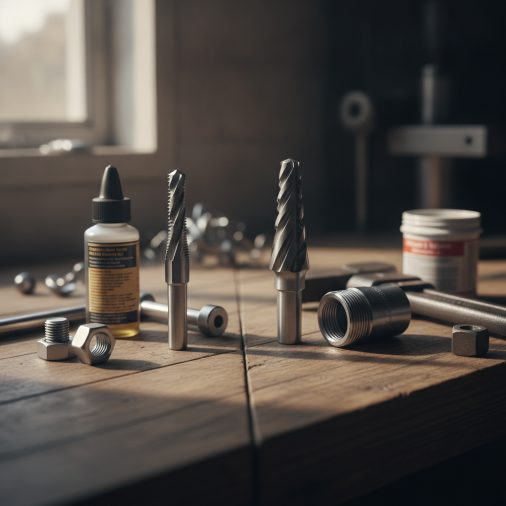
Unlike straight (UNC or UNF) threads, NPT threads are tapered. The thread diameter increases gradually along the length of the tap, which means the thread seals by wedging against the mating fitting as it is tightened — not by a gasket alone.
This taper is what makes NPT fittings effective for hydraulic lines, pneumatic systems, fuel connections, and welding-related gas fittings. It also means the drill size and hole depth have more influence on the final result than with a straight tap. If the hole is too shallow or the drill size is slightly off, the fitting may not seat correctly even if the threads look clean.
1/8 NPT Drill Size at a Glance
| Thread Size | Recommended Drill Bit | Decimal Equivalent | Threads Per Inch |
|---|---|---|---|
| 1/8 NPT | 11/32 inch | 0.3438 in | 27 TPI |
| 1/8 NPT (alternative) | R drill (letter bit) | 0.3390 in | 27 TPI |
| 1/8 NPT (alternative) | 8.7 mm (metric) | 0.3425 in | 27 TPI |
The 11/32 inch bit is the most commonly recommended size and is widely available in standard fractional drill sets. The R drill bit is a close alternative used when a fractional bit of exactly that size is not on hand. For metric shops, an 8.7 mm drill bit falls within acceptable range, though availability varies.
As a practical reference, drilling for 1/8 inch pipe thread requires accounting for both the tapered nature of the thread and the specific material being tapped.
Material Affects the Drill Size Choice
The 11/32 inch recommendation is the general standard, but the base material influences which end of the acceptable range works best in practice.
Mild steel and stainless steel: The 11/32 inch bit is appropriate for most steel applications. Harder steels may benefit from staying at the lower end of the range to avoid tap breakage, though the drill size itself typically remains the same.
Aluminum and softer metals: Some fabricators prefer a slightly smaller drill in aluminum because the softer material forms threads more easily. However, going significantly undersized risks tap binding. The 11/32 inch remains the correct starting point.
Cast iron: Cast iron machines well at the standard drill size. Avoid excessive pressure when tapping, as cast iron can crack under stress. Pre-drilled holes should be cleaned of chips before tapping.
Brass and copper: These materials are common in plumbing fittings and gas manifolds. The standard drill size applies, but threads strip more easily in soft brass, so use steady, consistent torque during tapping.
Hole Depth and Engagement Length
For a 1/8 NPT tap, the number of usable threads that engage depends on the hole depth relative to the tap’s taper length. The effective thread engagement for a 1/8 NPT fitting is typically 4 to 5 threads, with hand-tight engagement and wrench tightening accounting for the remaining thread.
Drill the hole deeper than the minimum thread depth to allow for chip clearance and to avoid bottoming the tap in a blind hole. For through-holes, this is less critical. For blind holes, leave enough depth for at least 2–3 full thread pitches of clearance below the tap’s cutting edge.
Tapping too close to the bottom of a blind hole is a frequent cause of broken taps, particularly in steel.
Step-by-Step Drilling and Tapping Process
1. Mark and center punch the hole location to prevent the drill bit from walking at the start.
2. Start with a pilot hole if working in thick steel — a smaller bit (around 1/4 inch) helps guide the final drill accurately.
3. Drill to final size using an 11/32 inch bit at the appropriate speed for the material. Slower speeds work better in steel and stainless; higher speeds suit aluminum.
4. Deburr the hole with a countersink or deburring tool to remove sharp edges that can damage the tap’s leading threads.
5. Apply cutting fluid before tapping. This is especially important in steel and stainless. In aluminum, a light oil or dedicated aluminum tapping fluid helps.
6. Start the 1/8 NPT tap straight, applying even downward pressure. NPT taps are designed to cut on the way in — they do not require a back-turn for chip breaking the way that straight taps sometimes do, though a quarter-turn back every full turn helps clear chips in deeper holes.
7. Check thread depth by test-fitting a known 1/8 NPT fitting. Hand-tight engagement of 3–4 threads with 2–3 wrench turns remaining is the typical standard.
Common Mistakes When Tapping 1/8 NPT
Using the wrong drill size: A drill that is too large leaves thin thread walls that fail under pressure. A drill that is too small causes the tap to bind, which frequently leads to tap breakage — a frustrating and time-consuming problem in hardened steel.
Tapping at an angle: NPT threads must be tapped straight to seal correctly. A canted tap produces threads that appear complete but will not seat evenly against the mating fitting. Using a tapping guide or a drill press with the tap held in a chuck helps maintain alignment.
Skipping cutting fluid: Dry tapping in steel generates heat that work-hardens the material and dulls the tap rapidly. In stainless steel, dry tapping almost always results in galling or a seized tap.
Not deburring first: Burrs on the hole edge push the tap sideways as it enters, creating a slightly angled start that worsens with each revolution.
Tapping a blind hole too deep: Forcing a tap against the bottom of a blind hole snaps it instantly. Mark the tap with tape at the desired depth to avoid overrunning the hole.
Testing the Thread Before Final Assembly
Before installing a fitting permanently, test the tapped hole with a known-good 1/8 NPT fitting or plug gauge. The fitting should thread in by hand for 3–4 full turns, then require a wrench for the final 2–3 turns to reach a pressure-tight position.
If the fitting threads in fully by hand without resistance, the drill was likely too large or the tap was worn. If the fitting will not start by hand at all, check that the hole was drilled to the correct size and that the deburring step was not skipped.
For hydraulic or pneumatic applications, always pressure-test the assembly before putting it into service. A visually clean thread is not confirmation of a leak-free joint.
When Sealant Is Still Necessary
Even a correctly drilled and tapped 1/8 NPT thread typically requires thread sealant for fluid or gas applications. The thread wedge provides mechanical retention, but pipe threads alone are not guaranteed to seal against pressure without PTFE tape (thread seal tape) or a liquid thread sealant compound.
Apply sealant starting from the second thread back from the end of the fitting to prevent contamination from entering the system. For welding gas and pneumatic fittings, two wraps of PTFE tape applied in the direction of thread engagement is a common standard.
Do not over-tighten NPT fittings in an attempt to compensate for a poor thread fit. This stresses the surrounding material and can crack brittle housings or thin-walled fittings.
Frequently Asked Questions
What drill bit size is used for 1/8 NPT threads?
The standard drill bit for 1/8 NPT is 11/32 inch (0.3438 inches). An R letter-drill bit (0.3390 inches) is an acceptable alternative when the fractional size is unavailable. In metric shops, an 8.7 mm drill is the closest equivalent. Always confirm the correct size against your tap manufacturer’s recommendation, particularly when working in harder alloys or critical pressure applications.
Can I use a 3/8 inch drill bit for 1/8 NPT?
No. A 3/8 inch bit (0.375 inches) is too large for a 1/8 NPT tap. The oversized hole leaves too little material for the tap to form full, pressure-bearing threads. The result is weak threads that may appear complete but will fail under load or leak under pressure. Use 11/32 inch as the correct size.
What is the difference between 1/8 NPT and 1/8 NPS thread?
NPT stands for National Pipe Taper — the threads are tapered and seal by wedging against the mating part. NPS stands for National Pipe Straight — the threads are parallel and do not seal by thread engagement alone; a gasket or O-ring is required. The drill size and tap are different for each standard, so confirm which thread form your fitting requires before drilling.
How deep should I drill for a 1/8 NPT blind hole?
A minimum of 0.54 inches of drilled depth is generally recommended for a 1/8 NPT blind hole to accommodate the tap taper length and chip clearance. In practice, drilling slightly deeper — around 0.65 to 0.70 inches — gives the tap room to cut clean threads without bottoming out. Always mark the drill bit with tape at your target depth when working blind holes in steel.
Do I need cutting fluid when tapping 1/8 NPT in steel?
Yes. Cutting fluid is essential when tapping steel or stainless steel. Without it, friction generates heat that work-hardens the material around the tap, leading to premature tap wear or breakage. A dedicated tapping fluid or cutting oil applied at the tap entry before and during the operation significantly extends tap life and produces cleaner threads. Aluminum benefits from oil as well, even though it machines more freely.
Can a 1/8 NPT fitting be used for welding gas connections?
1/8 NPT fittings are common on welding regulators, flowmeters, and gas distribution manifolds. When used in a gas application, threads must be clean, correctly formed, and sealed with appropriate PTFE tape or gas-rated thread sealant. Never use pipe dope (thread compound) near oxygen fittings — it can create a fire risk. Always follow the regulator and fitting manufacturer’s instructions for assembly and leak testing.
What causes a 1/8 NPT tap to break during tapping?
Tap breakage typically results from one or more of the following: an undersized pilot hole, tapping without cutting fluid, excessive tapping speed in hard material, bottoming out in a blind hole, or starting the tap at an angle. Taps are brittle tools — they snap rather than bend. In small sizes like 1/8 NPT, working slowly with steady pressure and frequent chip clearing reduces breakage risk significantly.
The 11/32 inch drill bit is the reliable standard for 1/8 NPT threading across most common materials. Getting the drill size right is only half the job — straight tap alignment, appropriate cutting fluid, correct hole depth, and a proper thread test before assembly are equally important for a leak-free, pressure-rated result. When the application involves hydraulics, pneumatics, or welding gas, take time to pressure-test before considering the joint complete.