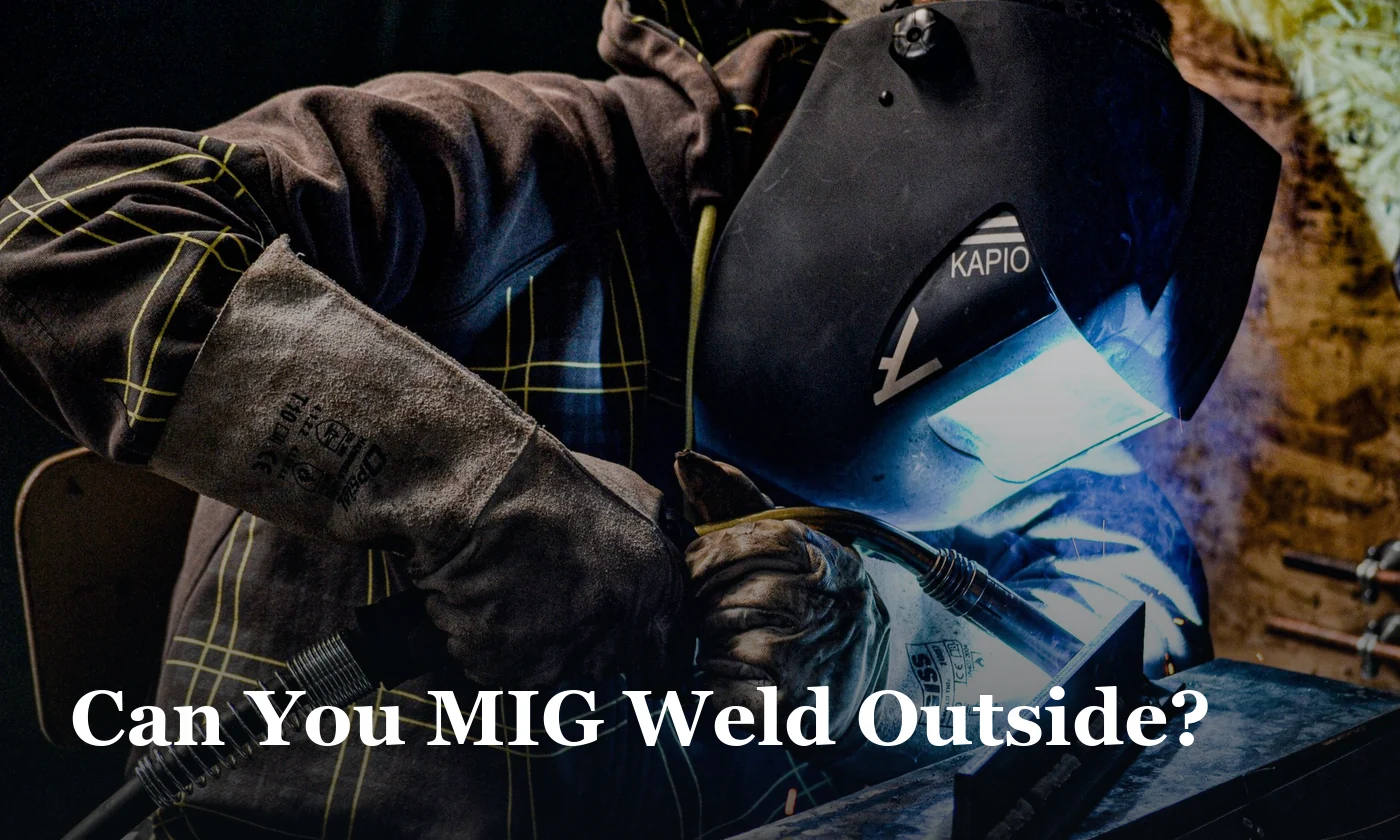
MIG welding in a garage or shop is one thing. Taking the equipment outside — whether for a fence repair, a trailer fix, or a field fabrication job — raises a different set of questions entirely.
Yes, you can MIG weld outside, but wind is your biggest obstacle. MIG welding relies on shielding gas to protect the molten weld pool from atmospheric contamination. Even a light breeze can blow that gas coverage away, causing porosity, weak welds, and poor fusion. With the right setup — windbreaks, adjusted gas flow, and proper positioning — outdoor MIG welding is completely achievable.
Why Wind Is the Real Problem, Not the Outdoors
MIG welding outdoors isn’t inherently dangerous or impossible. The real issue is shielding gas disruption.
When you pull the trigger, your welder releases a flow of shielding gas — typically a mix of argon and CO₂ — that forms an invisible bubble around the arc and molten pool. That gas prevents oxygen and nitrogen from contaminating the weld.
Wind as light as 5–8 mph can strip away that coverage. The result is a porous, contaminated weld that looks acceptable on the surface but has internal voids and reduced strength.
Rain, humidity, and direct sunlight add secondary challenges, but wind is what turns a solid outdoor weld into scrap.
How to Protect Your Shielding Gas Outdoors
The most effective solutions are straightforward and don’t require expensive equipment.
Use a windbreak:
- Welding screens or welding blankets set up around your work area block the wind effectively.
- Plywood panels, tarps stretched between posts, or even the tailgate of a truck can redirect airflow away from the weld zone.
- Position your body naturally between the wind source and the arc when possible.
Increase your gas flow rate slightly: Indoors, a standard flow rate of around 15–20 CFH (cubic feet per hour) is usually sufficient. Outdoors, bumping to 20–25 CFH compensates partially for light air movement. Be cautious with this — too much flow creates turbulence at the nozzle and actually pulls in air. If you’re unsure about baseline settings, it helps to understand the right gas flow rate for MIG welding before making outdoor adjustments.
Keep the nozzle closer to the workpiece: A shorter stick-out (the distance between the contact tip and the base metal) reduces the distance the shielding gas has to travel. In windy conditions, aim for 3/8 to 1/2 inch stick-out rather than your normal 1/2 to 3/4 inch.
When to Consider Flux Core Instead
If the wind is consistent and you can’t build an effective windbreak, flux core welding becomes the smarter choice.
Flux core wire uses a flux compound inside the wire itself, which generates its own shielding when it burns. This makes it far more resistant to wind interference because it doesn’t rely on external shielding gas coverage.
Self-shielded flux core wire, such as Lincoln Electric Innershield NR-211-MP, is specifically designed for outdoor and field welding. It’s a common choice for construction sites, pipeline work, and any application where controlling the environment is impractical.
The tradeoff is more spatter and a slightly rougher bead profile compared to solid wire with gas. For structural work or situations where appearance matters less than strength, that’s a reasonable compromise.
Outdoor Conditions That Affect Weld Quality Beyond Wind
Wind gets most of the attention, but other environmental factors matter too.
Moisture and humidity: Welding in rain or heavy humidity introduces hydrogen into the weld pool, which can cause hydrogen-induced cracking in higher-strength steels. Keep your base metal dry and avoid welding on surfaces with standing moisture.
Cold temperatures: Cold metal below approximately 32°F (0°C) cools the weld pool faster than expected, which can cause cracking, especially in thicker sections. Preheating the base metal helps, particularly on anything heavier than 1/4 inch.
Direct sunlight: Glare and heat aren’t just uncomfortable — direct sunlight can make it harder to see your puddle clearly through the helmet, even with an auto-darkening lens. Shade the work area when possible.
Dirty base metal: Outdoor metal is often coated in rust, mill scale, paint, or moisture. Contaminated surfaces cause porosity and inconsistent fusion. Grinding or wire-brushing the weld zone before starting isn’t optional — it’s necessary.
Equipment Setup for Outdoor MIG Welding
A few practical setup adjustments make a noticeable difference outside.
Gas cylinder stability: Use a cart or secure the cylinder to a fixed object. A cylinder knocked over mid-weld is a serious hazard and wastes expensive gas.
Cable management: Longer hose runs in an open environment are common outdoors. Keep the gun cable as straight as practical to avoid wire feed drag, which causes inconsistent arc behavior.
Welder protection: If rain is possible, keep the welder itself under cover. Most portable MIG units aren’t sealed against water ingress. A welding cart with a canopy or a tarp overhead is sufficient.
For portable outdoor jobs, machines like the Lincoln Electric Power MIG 210 MP handle variable conditions reasonably well due to their dual-voltage capability and wire feed stability — useful when you’re running off a generator rather than shop power.
If you encounter arc irregularities after setting up outside, running through common MIG welding problems and their fixes can help identify whether the issue is environmental or mechanical.
Gas Selection Matters More Outdoors
The shielding gas you use affects how tolerant your weld is to minor contamination.
A 75/25 argon/CO₂ mix (commonly called C25) is the standard choice for mild steel and performs well outdoors when shielding is maintained. Pure CO₂ is cheaper and produces a slightly hotter arc with deeper penetration, but it generates more spatter and is no more wind-resistant.
If you’re welding stainless steel outdoors, maintaining gas coverage becomes even more critical because loss of shielding causes oxidation discoloration and can compromise corrosion resistance. For a full breakdown of how gas selection affects performance, this MIG welding gas selection guide covers the main options by material type.
MIG vs. Flux Core for Outdoor Welding — Quick Comparison
| Factor | MIG (Solid Wire + Gas) | Self-Shielded Flux Core |
|---|---|---|
| Wind sensitivity | High | Low |
| Weld appearance | Cleaner, smoother | Rougher, more spatter |
| Setup complexity | Moderate | Simpler |
| Cost per weld | Higher (gas needed) | Lower (no gas) |
| Best for | Sheltered outdoor areas | Open, windy conditions |
| Material range | Broad | Primarily structural steel |
FAQ
Can you MIG weld in light rain?
Technically possible, but not recommended. Moisture on the base metal causes hydrogen contamination and porosity. Wet conditions also increase electric shock risk. If the metal is damp, dry it with a heat gun or torch before welding, and keep the welder itself protected from direct exposure.
What wind speed is too much for MIG welding outside?
In practice, winds above 5–8 mph without a windbreak will consistently compromise shielding gas coverage. At 10+ mph, you’ll see noticeable porosity in your welds. Use a windscreen at those speeds, or switch to self-shielded flux core wire.
Does outdoor humidity affect MIG welding?
Yes. High humidity increases moisture absorption in the weld zone, which contributes to porosity and can cause hydrogen cracking in higher-carbon or high-strength steels. It’s most critical to keep the base metal surface dry, especially for structural applications.
Do I need a different gas flow rate for outdoor MIG welding?
Generally, yes. A modest increase from your indoor setting — around 20–25 CFH instead of 15–20 CFH — helps compensate for light air movement. Avoid going significantly higher, since excessive flow creates turbulence at the nozzle that pulls in atmospheric air and defeats the purpose.
Can I use a regular MIG welder on a generator outside?
Yes, with some caution. Generator power can fluctuate, which affects arc stability. Use a generator rated at least 20–30% above your welder’s rated amperage draw, and if possible, choose a model with stable sine wave output. Inverter-based generators produce cleaner power than conventional generators for welding applications.
Is it safe to MIG weld outdoors from a fume exposure standpoint?
Outdoors is actually better than indoors for fume exposure in most cases, since natural ventilation disperses welding fumes far more effectively than indoor spaces. Still, position yourself upwind of the arc so fumes blow away from your breathing zone, and wear appropriate respiratory protection.
What if my welds look fine but are still porous after moving outside?
Invisible internal porosity is the frustrating reality of gas shielding loss. If beads look smooth but test welds break with a spongy fracture, wind disruption is the most likely cause. Check your windbreak setup, tighten stick-out distance, verify gas flow, and inspect the gun nozzle for spatter buildup that restricts gas flow.
MIG welding outside is practical and common — it just requires respecting the one factor that makes it different from shop work: wind. Build a windbreak, check your gas flow, keep the metal clean and dry, and outdoor MIG welding produces results just as strong as anything done indoors. When conditions are truly uncontrollable, shifting to self-shielded flux core is the professional call, not a compromise.