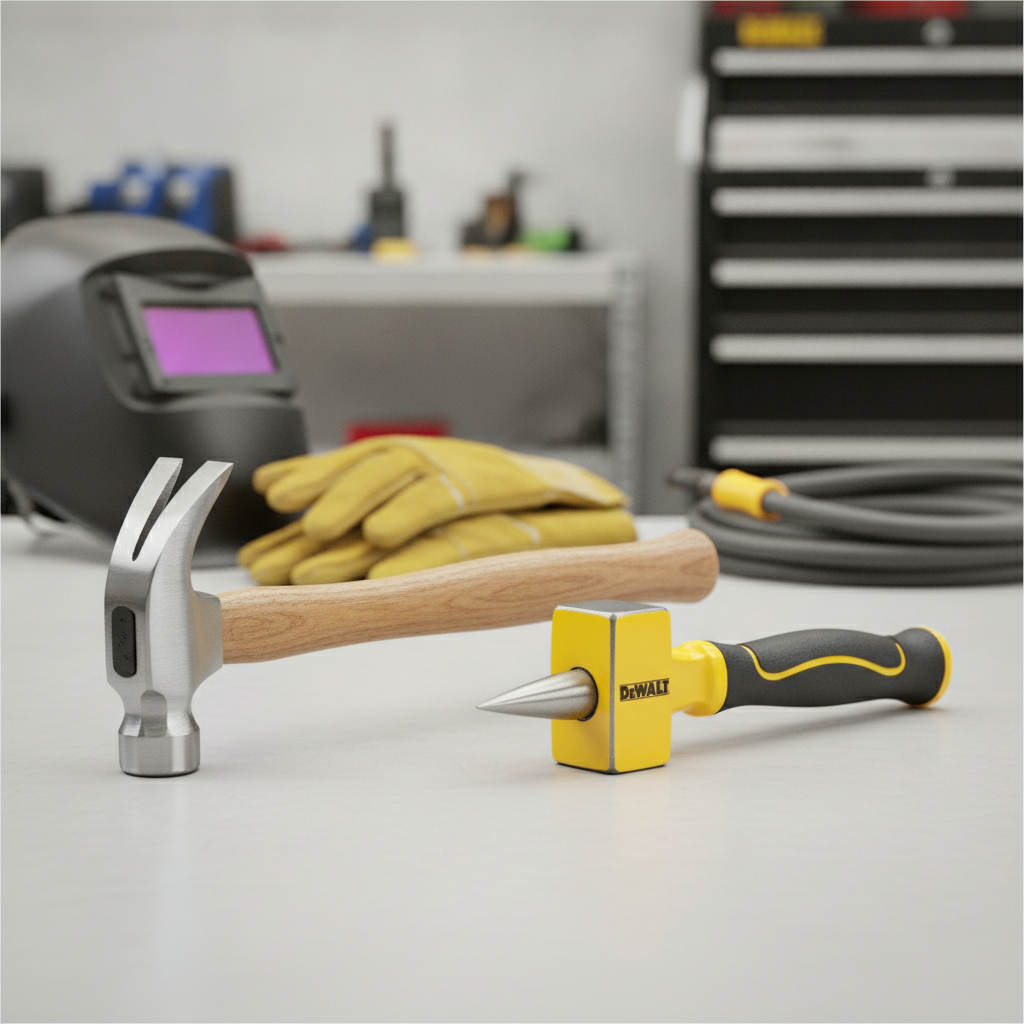
After laying down a MIG bead, you’re left with spatter, slag remnants, and scale that need to come off before grinding, painting, or inspection. The right chipping hammer makes that cleanup faster, safer, and less frustrating.
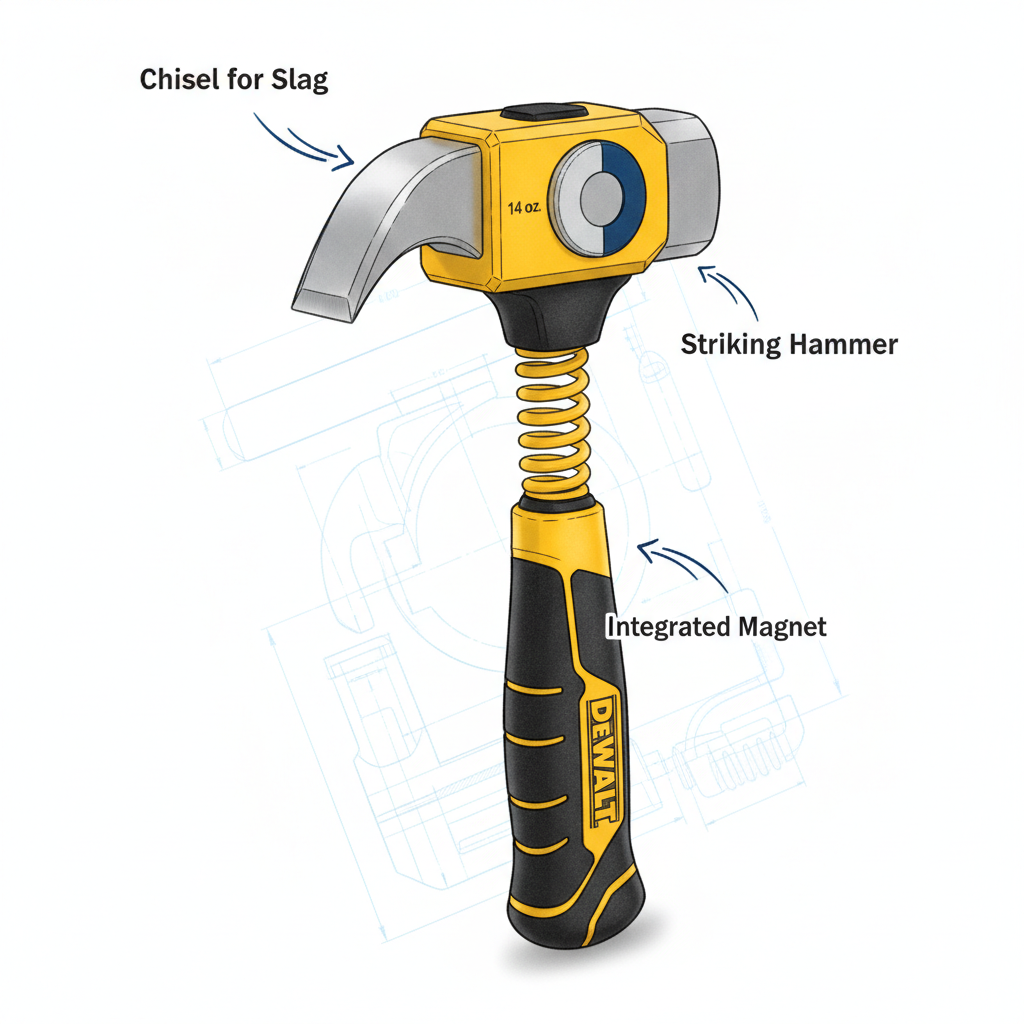
The DeWalt 14 oz MIG weld hammer (commonly referenced as the DWHT51064) is a dedicated post-weld cleanup tool designed for chipping slag, breaking up spatter, and knocking scale off weld seams. It weighs 14 ounces, features a hardened steel head with a chisel end and a pick end, and includes a heat-resistant handle — making it well-suited for regular use around hot weld zones.
What Makes a 14 oz Weld Hammer Different From a Standard Hammer
A weld hammer isn’t a regular ball-peen or claw hammer repurposed for the shop floor. The head geometry is purpose-built for two specific tasks: chipping and picking.
The chisel end drives along flat weld surfaces to crack and flake slag or spatter in a sweeping motion. The pick end handles tighter spots — corners, inside joints, fillet welds, and areas where a flat chisel can’t reach cleanly.
At 14 oz, this hammer sits in a comfortable middle range. It’s heavy enough to generate meaningful strike force without fatiguing your wrist during extended cleanup sessions. Lighter hammers (around 8–10 oz) feel nimble but require more strikes. Heavier hammers (16+ oz) move slag faster on thick plate but get tiring on repetitive light work.
Key Features of the DeWalt 14 oz MIG Weld Hammer
The construction details matter more than most buyers expect when they first pick one up.
Head material and hardness: The striking head is made from hardened steel. This matters because slag and weld scale are surprisingly abrasive, and a softer head will deform over time at the pick tip and chisel edge.
Handle design: DeWalt uses a coiled wire or spring-wrapped steel handle on this model, depending on the specific version. This design serves two purposes: it absorbs some vibration on impact and it doesn’t conduct heat the way a solid metal handle would. After chipping near a fresh weld pass, handle temperature is a real consideration.
Balance point: The 14 oz weight is distributed to keep the balance close to the head, which improves control during precise picking work in tight weld joints.
Overall length: Typically around 13–14 inches, which gives enough reach to work on joints at an arm’s length without crowding the hot metal.
Most welders use a chipping hammer without thinking much about technique. A few habits make a difference.
Flat and horizontal welds respond well to the chisel end. Work at a low angle, almost parallel to the surface, and let the edge slide under the slag rather than driving straight down. This pops slag off in larger pieces and reduces the chance of embedding fragments in the base metal.
Vertical and overhead welds require more caution. Slag falls away from the joint, and eye protection is non-negotiable. Use shorter, controlled strikes rather than aggressive swings.
Fillet welds and inside corners are where the pick end earns its place. The pointed tip gets into the root of the joint where slag tends to trap and harden. On multi-pass welds, cleaning each pass before the next is laid down improves fusion quality — trapped slag between passes creates inclusions that weaken the joint.
If you’re working on thinner materials and struggling with consistent results, understanding how to MIG weld thin metal without burning through will reduce the cleanup work needed in the first place.
How It Compares to Other Common Weld Hammers
Feature
DeWalt 14 oz Weld Hammer
Generic Chipping Hammer
Estwing E3-WH Weld Hammer
Head material
Hardened steel
Varies (often mild steel)
Solid steel
Handle type
Coiled wire / spring steel
Varies
Leather grip
Weight
14 oz
Typically 8–12 oz
12 oz
Pick end quality
Well-defined, hardened
Often blunt
Sharp, precise
Heat resistance
Good
Variable
Good
Durability
High
Moderate
High
The Estwing E3-WH Weld Hammer is another frequently used option in professional shops. It’s a one-piece forged steel construction, which some welders prefer for its indestructibility. The DeWalt tends to be easier on the wrist over long sessions due to the coiled handle absorbing more vibration.
Generic imported chipping hammers work for occasional use but the pick tips tend to dull or deform faster, making cleanup on tight joints more labor-intensive.
Common Mistakes When Using a Weld Hammer
A few habits consistently cause problems, especially for welders new to post-weld cleanup.
Chipping too early: Hitting slag while the weld is still hot and glowing can cause the bead to crack due to thermal shock, particularly on higher-carbon steels or in colder ambient temperatures. Let the weld cool to dull black before chipping.
Using too much force on thin material: Hard strikes on light gauge material can distort the workpiece, especially near the weld toe where the metal is already under residual stress. Use controlled, medium-force taps rather than full swings.
Neglecting eye protection: Slag fragments and spatter chips travel fast and at unpredictable angles. Safety glasses alone aren’t always enough — a face shield is better practice during active chipping.
Skipping intermediate cleaning on multi-pass welds: This is one of the more common causes of slag inclusions on heavier work. Each pass should be cleaned before the next. You can also refer to tips on troubleshooting common MIG welding problems if slag inclusions are showing up consistently in finished welds.
Maintenance and Longevity
A quality weld hammer like the DeWalt 14 oz will last years with minimal care.
– Keep the pick tip sharp. A dull pick slides off slag instead of biting into it. A quick pass with a bench grinder or file every few months maintains effectiveness.
– Inspect the handle attachment. On coiled handle versions, check periodically that the handle isn’t loosening at the head. A loose head is a safety issue.
– Store away from moisture. The hardened steel head can develop surface rust if left in damp conditions, which won’t immediately affect performance but shortens lifespan over time.
FAQ
What does the 14 oz weight mean for daily shop use?
The 14 oz designation refers to the hammer’s total weight. In practical terms, it places this tool in a mid-weight category — heavy enough to chip slag efficiently without requiring excessive swing force, but light enough to use for extended periods without significant wrist fatigue. Most welders doing regular shop work find 12–16 oz to be the practical sweet spot for chipping hammers.
Can I use a DeWalt weld hammer for stick welding cleanup as well as MIG?
Yes. Stick welding (SMAW) produces heavier, more continuous slag coverage than MIG welding, so chipping hammers see even heavier use in stick welding workflows. The same chisel and pick geometry applies. The DeWalt 14 oz handles both processes well, though stick welding cleanup may dull the pick tip faster due to the volume of slag involved.
Is the handle on the DeWalt weld hammer truly heat resistant?
The coiled spring steel handle design significantly reduces heat transfer compared to a solid metal handle. In practice, brief contact with the handle shortly after chipping hot welds is manageable. However, it’s not rated as a heat-proof insulating handle. For very hot work or rapid successive passes, using leather gloves adds additional protection.
What’s the difference between a chipping hammer and a scaling hammer?
A chipping hammer (like this DeWalt model) has a chisel end and a pick end, designed for breaking specific deposits at targeted spots. A scaling hammer typically has two chisel ends or a flat face and is used for removing broader surface scale, mill scale, or paint from large flat areas. For post-weld MIG cleanup, a chipping hammer is the correct choice.
How do I know if my weld hammer needs replacing?
Watch for these signs: the pick tip has become blunt and rounded despite sharpening, the chisel edge has chipped or cracked, the handle is loose at the head and can’t be tightened, or the head shows deep pitting or deformation. A compromised pick tip wastes significant time on every weld. Replacement is usually more practical than continued use of a badly worn tool.
Does the type of weld hammer affect weld quality?
Indirectly, yes. A sharp, well-balanced chipping hammer allows complete slag removal between passes and before inspection or coating. Incomplete slag removal leads to slag inclusions in multi-pass welds, adhesion failures in paint or coatings, and missed defects during visual inspection. The tool itself doesn’t change how the weld is deposited, but it directly affects the quality of post-weld finishing.
Is the DeWalt 14 oz weld hammer suitable for structural or heavy fabrication work?
It’s well-suited for general fabrication and structural work. Heavy plate welding, where slag is thicker and more tenacious, may benefit from slightly heavier chipping hammers in the 16–20 oz range for pure efficiency. That said, most fabricators keep a 14 oz hammer on hand for detailed cleanup work even when heavier hammers are available for initial slag removal.
Final Thoughts
The DeWalt 14 oz MIG weld hammer is a practical, well-built tool that handles post-weld cleanup efficiently across a wide range of applications. The 14 oz weight, hardened head, and heat-resistant coiled handle make it a reliable daily-use option for both home fabricators and professional welders. Keeping the pick tip sharp and developing consistent cleanup habits — especially on multi-pass welds — will get the most out of it. It’s not a glamorous piece of equipment, but clean welds start with clean work, and the right chipping hammer is part of that process.