MIG welding stainless steel trips up a lot of welders who assume it works the same as welding mild steel. The material behaves differently, reacts to heat differently, and it punishes the wrong gas selection almost immediately.
MIG welding stainless steel requires a 308L or 316L stainless wire, a tri-mix shielding gas (typically 90% helium, 7.5% argon, 2.5% CO₂), and lower heat input than mild steel. Use a push angle, keep travel speed consistent, and allow welds to cool naturally to preserve corrosion resistance.
Why Stainless Steel Requires a Different Approach
Stainless steel contains chromium, which forms a passive oxide layer that gives it corrosion resistance. When that layer is disrupted by excessive heat, contamination, or improper shielding gas, you lose the properties that make stainless valuable in the first place.
A few things make stainless more demanding:
– Lower thermal conductivity — heat builds up faster and stays localized, which increases warping risk
– Higher thermal expansion — stainless moves more than mild steel as it heats and cools
– Sensitization — overheating causes chromium carbide precipitation at grain boundaries, reducing corrosion resistance
– Contamination sensitivity — contact with carbon steel tools, grinding wheels, or even dirty gloves can embed carbon into the surface
Understanding these properties isn’t just theory. It directly shapes every decision you make at the machine. For a deeper look at why welding stainless steel is more challenging than mild steel, the material science behind it explains a lot.
Choosing the Right Wire for the Job
Wire selection is one of the most important decisions in MIG welding stainless. The wrong wire either produces a weak joint or introduces corrosion points.
| Wire Type | Best Use Case | Key Property |
|—|—|—|
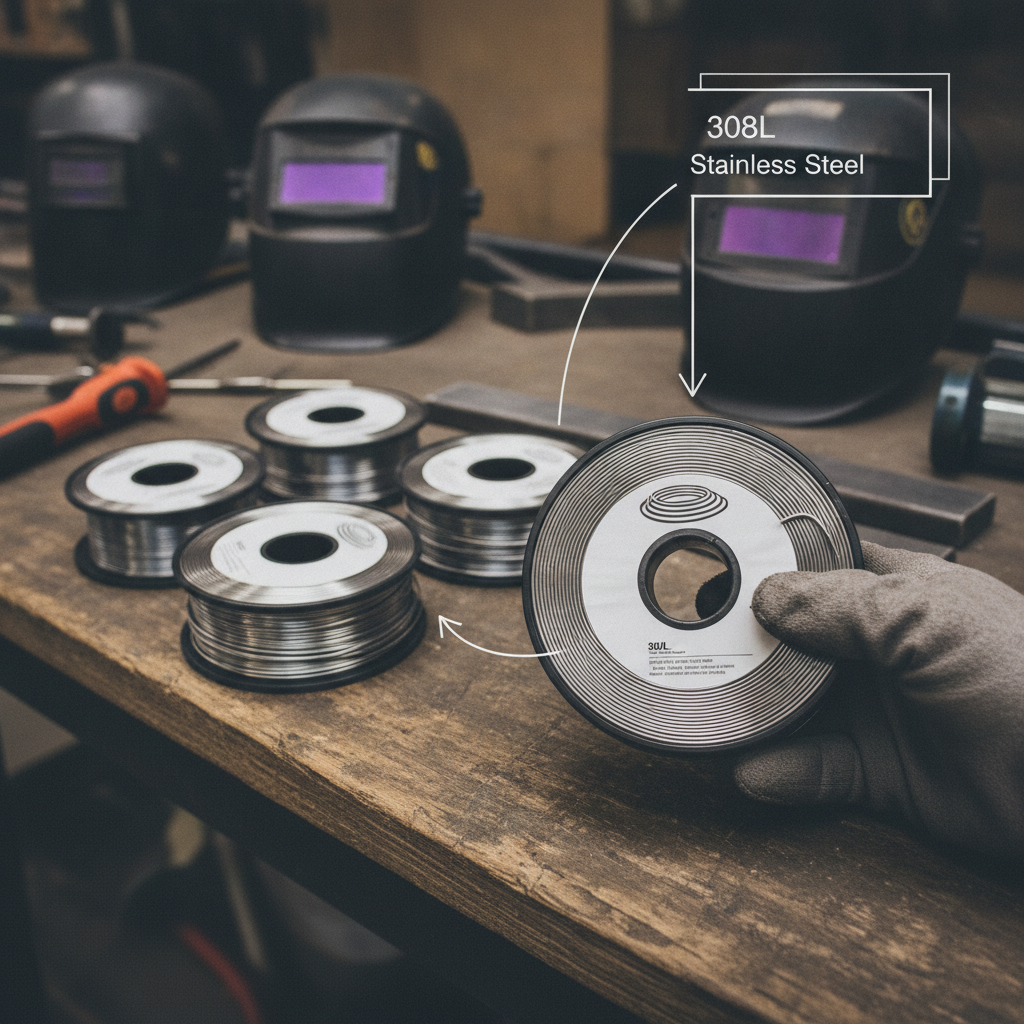
| 308L | Welding 304 and 308 stainless | Most common choice for general stainless work |
| 316L | Welding 316 stainless or marine/chemical environments | Higher molybdenum content, better corrosion resistance |
| 309L | Welding stainless to carbon steel (dissimilar metals) | Bridges the metallurgical gap between materials |
The “L” designation matters — it indicates low carbon content, which reduces the risk of sensitization during welding. For most shop and fabrication work on 304 stainless, ER308L wire is the standard starting point.
Wire diameter is typically .023″ or .030″ for thinner material (16–18 gauge) and .035″ for heavier sections. Going too heavy on thin stainless almost guarantees burn-through or distortion.
Shielding Gas: The Biggest Variable Most Beginners Get Wrong
Using the wrong shielding gas is the fastest way to ruin a stainless weld. Standard C25 (75% argon / 25% CO₂) — the go-to for mild steel — contains too much CO₂ for stainless. The excess carbon oxidizes the weld surface and compromises corrosion resistance.
The correct gas for MIG welding stainless is tri-mix: 90% helium / 7.5% argon / 2.5% CO₂, often sold under names like HeliStar or Stainless Mix. Some welders use 98% argon / 2% CO₂ as a simpler alternative, though tri-mix generally produces better arc stability and bead appearance.
Flow rate typically runs 15–20 CFH, similar to mild steel MIG work. You can check a detailed MIG welding shielding gas selection chart to compare gas options by material type.
Machine Settings for MIG Welding Stainless
Stainless requires slightly lower voltage and tighter wire feed speed than you’d use for mild steel at the same thickness. The goal is a stable arc with minimum heat input.
General starting settings by material thickness:
| Material Thickness | Wire Diameter | Voltage | Wire Feed Speed |
|—|—|—|—|
| 16 gauge (0.060″) | .023″ | 14–16V | 150–200 IPM |
| 14 gauge (0.075″) | .030″ | 16–18V | 180–230 IPM |
| 1/8″ | .035″ | 18–20V | 200–260 IPM |
| 3/16″ | .035″ | 20–22V | 240–300 IPM |
These are starting points, not absolutes. Every machine runs slightly differently. Dial in on scrap material first, listen for that smooth crackling arc sound, and check the bead profile before moving to your actual workpiece.
For more dialed-in guidance, these MIG welding stainless steel settings that work cover real-world machine adjustments in more detail.
Step-by-Step: How to MIG Weld Stainless Steel
1. Prepare the Base Metal
Clean the weld area thoroughly with acetone or a stainless-specific cleaner. Use stainless steel wire brushes only — never share brushes between carbon steel and stainless. Any carbon steel contamination embeds into the surface and causes rust to develop right at the weld.
2. Set Up Your Machine
Install your stainless wire, set the correct shielding gas and flow rate, and dial in your voltage and wire feed speed for the material thickness. Use a contact tip one size up from the wire diameter — stainless wire runs slightly hotter and a tighter tip can cause feeding issues.
3. Position the Work
Clamp or fixture the workpiece to minimize movement during welding. Stainless warps more than mild steel, so tacking frequently at short intervals before running full beads reduces distortion significantly.
4. Use a Push Angle
With MIG welding, the push technique (gun angled 5–15 degrees away from the direction of travel) works better on stainless. It keeps the shielding gas ahead of the weld pool, which is especially important because stainless is more reactive to contamination.
5. Maintain Consistent Travel Speed
Slow travel deposits too much heat. Too fast and you get poor fusion. A steady, even pace produces the best bead profile and reduces heat buildup. On thin material, keep moving — pausing even briefly causes heat concentration that leads to warping or burn-through.
Stainless retains heat longer than mild steel. On multi-pass welds or longer runs, allow each pass to cool before continuing. You can use a wet rag nearby to cool the surrounding area but never quench the weld bead itself — rapid cooling can crack the joint.
7. Post-Weld Cleaning
After welding, the heat-affected zone will show discoloration (typically gold, blue, or gray oxidation). This surface oxidation contains chromium-depleted metal that’s more vulnerable to corrosion. Clean it with a stainless wire brush, pickling paste, or electrochemical weld cleaner to restore the passive layer.
Common Problems and How to Fix Them
Porosity in the weld bead
Usually caused by contamination or inadequate gas coverage. Check for drafts in your work area, increase flow rate slightly, and ensure the base metal is clean and dry.
Excessive distortion or warping
A sign of too much heat input. Use more tack welds, weld in shorter intervals, and allow the work to cool between passes. Clamping or fixturing before welding also helps considerably.
Burn-through on thin stainless
Reduce voltage, increase travel speed, or switch to a smaller wire diameter. On very thin material (20–22 gauge), some welders prefer to use a stitch or pulse technique rather than a continuous bead. The techniques for MIG welding thin metal without burning through apply directly to thin stainless work.
Dark, crusty weld surface
This is usually a gas problem. Verify your tri-mix cylinder isn’t empty, check all fittings for leaks, and confirm the regulator is actually flowing at the torch.
Wire feeding problems
Stainless wire is stiffer than mild steel wire. Use U-groove drive rolls, a Teflon or nylon liner, and keep the gun cable as straight as practical to reduce feeding resistance.
Keeping Your Equipment Dedicated to Stainless
Cross-contamination is a real problem that experienced welders take seriously. Keep a separate set of wire brushes, grinding discs, and clamps for stainless work only. Even brief contact with tools that have touched carbon steel can leave iron particles on the surface.
If you’re using a Miller Multimatic 215 or a Lincoln Electric Square Wave TIG 200 for multi-process work, clearly label which accessories go with stainless. It’s a small habit that prevents a lot of expensive rework.
FAQ
Can you MIG weld stainless steel without tri-mix gas?
You can use 98% argon / 2% CO₂ as a simpler alternative to tri-mix. Pure argon alone is not recommended for MIG on stainless because it causes arc instability. Avoid standard C25 gas entirely — the high CO₂ content introduces too much carbon and compromises the weld’s corrosion resistance.
What happens if you use the wrong wire on stainless steel?
Using carbon steel wire on stainless creates a galvanically mismatched joint that will corrode at the weld. Using the wrong stainless wire grade — such as 308 wire on 316 base metal in a marine environment — may produce a structurally sound weld but with reduced corrosion resistance in the intended application.
How do you prevent warping when MIG welding stainless steel?
Use more tack welds spaced at shorter intervals before running full beads. Weld in a skip or backstep pattern on longer joints. Clamp the workpiece firmly, keep heat input as low as possible, and avoid stopping in the middle of a bead. Stainless warps more than mild steel, so fixturing is important.
Is MIG or TIG better for welding stainless steel?
TIG produces cleaner, more precise welds with better appearance and corrosion resistance — it’s the preferred method for thin stainless, food-grade applications, and visible work. MIG is faster, more practical for thicker material, and easier to learn. For structural fabrication, exhaust work, or field repairs, MIG is a reasonable choice with proper technique and gas selection.
Can I MIG weld stainless steel to mild steel?
Yes, but you need the right wire. Use ER309L wire, which is specifically designed for dissimilar metal joints between stainless and carbon steel. Standard 308L wire is not formulated to bridge the metallurgical difference between the two base metals and can produce a brittle weld zone.
Why does my stainless MIG weld turn dark or discolored?
Discoloration is caused by oxidation at elevated temperatures. Gold or straw coloring indicates mild oxidation; dark blue or black suggests excessive heat or inadequate shielding gas coverage. Significant discoloration means the chromium-depleted zone needs to be cleaned with a stainless wire brush or pickling compound to restore corrosion resistance.
What is the best wire speed for MIG welding 304 stainless?
Wire speed depends on wire diameter and material thickness, but a common starting point for .030″ wire on 14-gauge 304 stainless is around 180–220 IPM. MIG welding 304 stainless steel has specific characteristics that affect how the arc behaves compared to other grades, so testing on scrap before committing to the final weld is always worthwhile.
The Bottom Line
MIG welding stainless steel is absolutely achievable with the right wire, the right gas, and deliberate heat management. Most failures trace back to one of three things: using C25 gas, skipping surface prep, or moving too slowly and overheating the base metal. Get those three variables right and the rest comes down to practice and technique.
Clean material, correct consumables, and consistent travel speed will take you further than any machine setting alone.