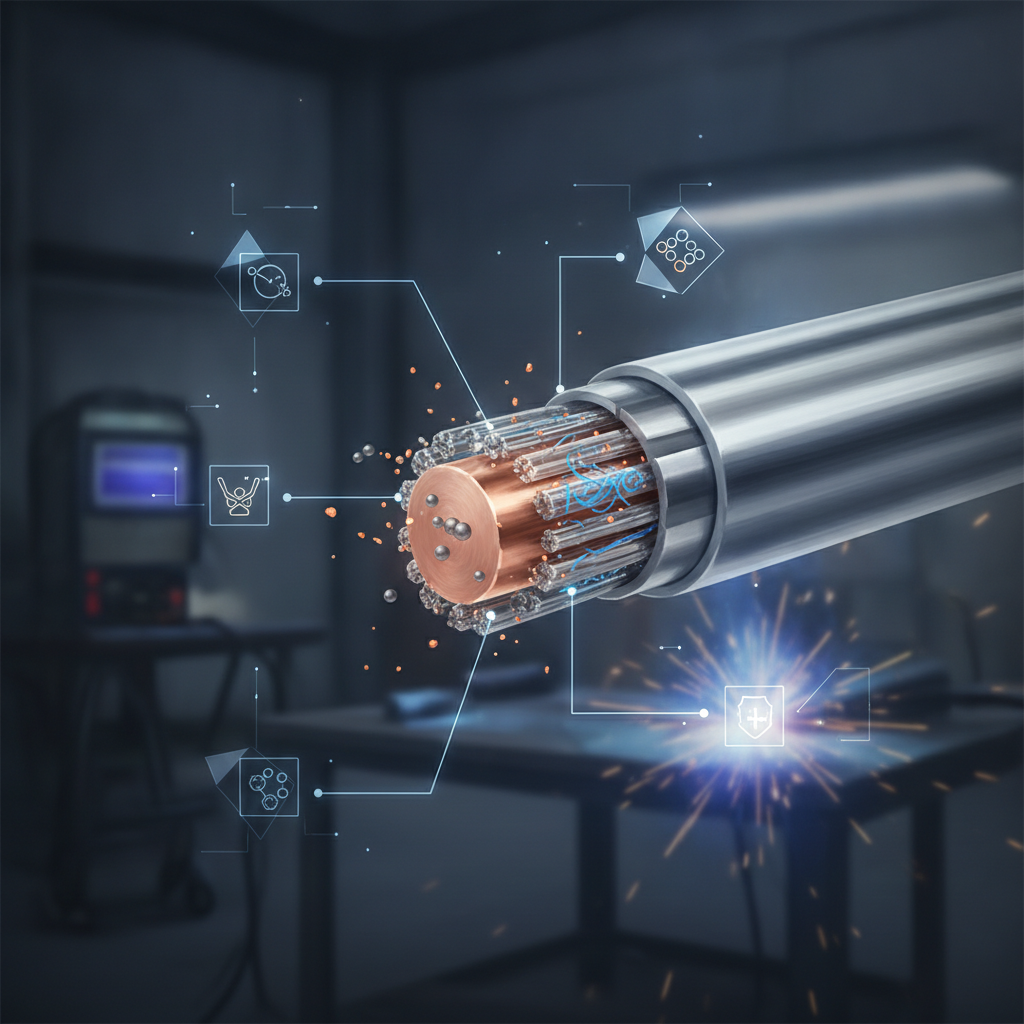
If you’ve ever loaded a spool of MIG wire and wondered what exactly you’re feeding into the weld, you’re not alone. The wire isn’t just generic metal — its composition directly affects weld strength, bead appearance, and how well the joint holds up over time.
MIG welding wire is most commonly made from mild steel with a thin copper coating, though the exact composition varies by application. Stainless steel wire contains chromium and nickel alloys, aluminum wire is made from aluminum alloys such as ER4043 or ER5356, and flux-cored wire contains a metal sheath filled with flux powder. Each type is engineered to match specific base metals and welding conditions.
Why Wire Composition Matters More Than Most Beginners Expect
The wire in MIG welding isn’t just a filler — it’s also the electrode that carries the electrical current to create the arc. That means its chemical makeup affects arc stability, spatter levels, mechanical strength, and how the finished weld responds to stress, heat, and corrosion.
Choosing the wrong wire for your base metal is one of the most common causes of weak or brittle welds. A wire that’s slightly mismatched might look fine on the surface but fail under load.
The Most Common Type: Copper-Coated Mild Steel Wire
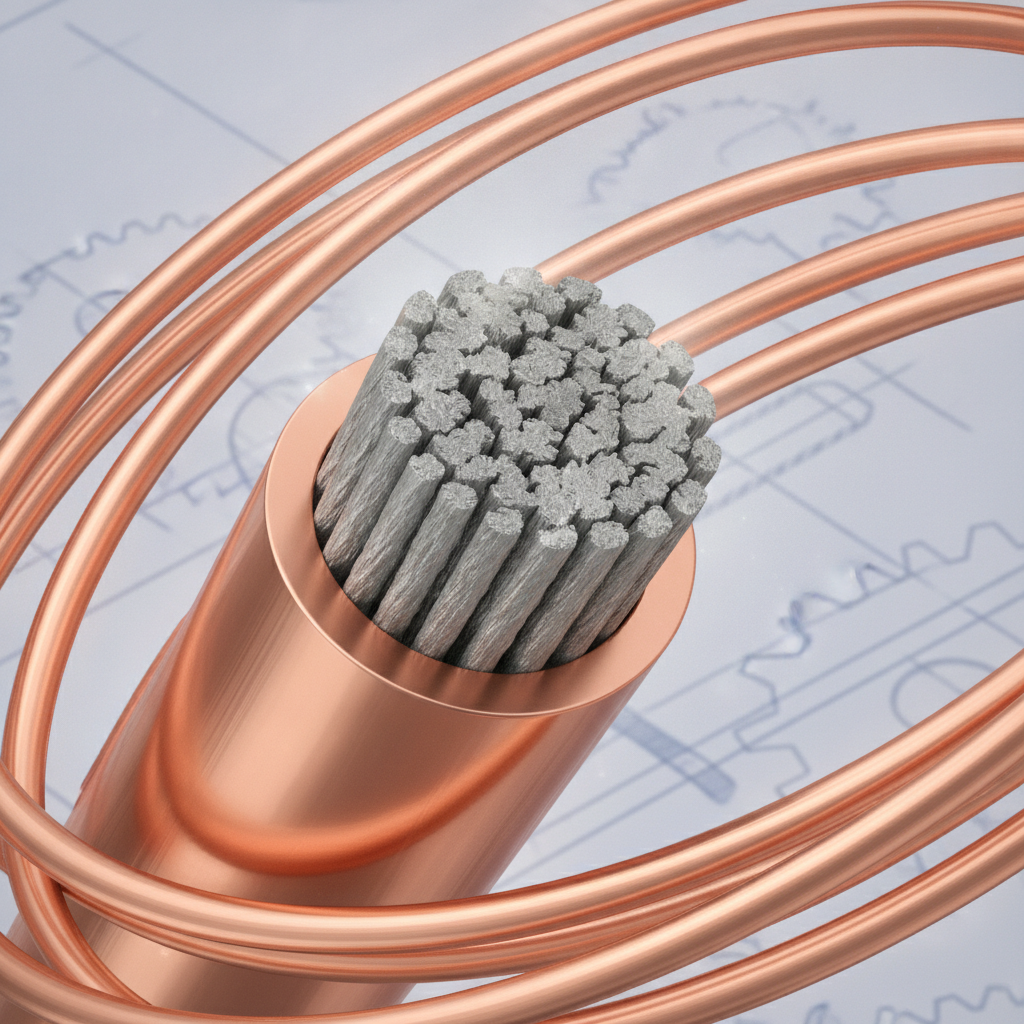
The majority of hobby and production MIG welding uses solid mild steel wire with a thin copper coating. The copper serves two purposes: it improves electrical conductivity between the wire and the contact tip, and it protects the steel wire from oxidizing while it sits on the spool.
The steel core itself is a low-carbon alloy. Common classifications include:
– ER70S-3 — A basic all-purpose wire suited for clean, uncontaminated steel. Less forgiving on mill scale or rust.
– ER70S-6 — The most widely used classification. Contains higher levels of manganese and silicon, which act as deoxidizers and produce cleaner welds on mildly rusty or scaled surfaces.
The “70” in the classification refers to a minimum tensile strength of 70,000 psi. The “S” indicates solid wire. These aren’t just industry codes — they tell you something practical about how the wire will perform.
In practice, ER70S-6 is the default choice for most fabrication, automotive, and general repair work. You’ll find it in spools ranging from 0.023″ to 0.045″ diameter, with 0.030″ and 0.035″ being the most common for home shops and light fabrication.
Stainless Steel MIG Wire Composition
Stainless steel MIG wire is an alloy of iron, chromium, and nickel, with the specific ratio depending on the application. The most common classification is ER308L, which matches the composition of 304 stainless steel — the type used in kitchen equipment, automotive exhaust, and food processing.
Key stainless wire classifications include:
| Classification | Chromium % | Nickel % | Best For |
|—————-|————|———-|———-|
| ER308L | 19–21% | 9–11% | 304 stainless steel |
| ER309L | 23–25% | 12–14% | Joining stainless to mild steel |
| ER316L | 18–20% | 11–14% | Marine/chemical environments |
The “L” suffix indicates low carbon content, which reduces the risk of carbide precipitation during welding — a process that can cause corrosion along the weld zone if carbon content is too high. If you’re MIG welding 304 stainless steel, using ER308L wire with the correct shielding gas is standard practice.
Aluminum MIG Wire: A Different Animal
Aluminum wire is made from aluminum alloys, not steel. It’s softer, more prone to birdnesting in the wire feed system, and requires different handling than steel or stainless wire.
The two most common aluminum wire alloys are:
– ER4043 — A silicon-aluminum alloy. Flows easily, produces cleaner-looking welds with less cracking sensitivity. Good for general aluminum fabrication and castings.
– ER5356 — A magnesium-aluminum alloy. Stronger than ER4043, better for structural applications and parts under load. Slightly more crack-sensitive on certain alloys.
Because aluminum wire is so soft, it typically requires a spool gun to feed reliably rather than pushing it through a long liner. The technique for MIG welding aluminum with a spool gun is quite different from steel work — push angle, travel speed, and heat management all change significantly.
Flux-Cored Wire: A Composite Structure
Flux-cored wire looks like solid wire from the outside but has a hollow metal sheath filled with flux compounds. This design eliminates the need for external shielding gas in some configurations, or enhances performance with gas in others.
There are two main types:
Self-shielded flux-cored wire (FCAW-S) — The flux inside generates its own shielding gas when burned. No external gas tank is required, making it useful for outdoor welding where wind would disperse shielding gas. The Lincoln Electric Innershield NR-211-MP is a well-known example used in fieldwork and construction.
Gas-shielded flux-cored wire (FCAW-G) — Requires external shielding gas but produces higher-quality, more consistent welds. Common in structural steel fabrication and heavy manufacturing.
The flux filling typically contains deoxidizers, slag-forming compounds, arc stabilizers, and alloying elements. This is why flux-cored wire often produces a slag layer over the weld bead that must be chipped away — similar to stick welding. For a closer look at settings that work with this wire type, the flux core MIG welding settings chart covers voltage and wire speed configurations in detail.
Wire composition and wire diameter work together. Thinner wire (0.023″–0.030″) is typically used for thin sheet metal and lighter work. Thicker wire (0.035″–0.045″) handles heavier plate and higher deposition rates.
The composition stays consistent within a classification, but the diameter changes how the wire melts and how much heat input is required. Running 0.035″ ER70S-6 on 16-gauge sheet metal with improper settings will cause burn-through — not because the wire chemistry is wrong, but because the combination of diameter and settings exceeds what the material can handle.
Getting the right balance of MIG wire speed and voltage settings is just as important as selecting the right wire type.
How to Read MIG Wire Labeling
Wire spools are labeled with standardized AWS (American Welding Society) classifications. Once you know what the codes mean, choosing the right wire becomes straightforward.
For solid steel wire: ER70S-6
– E = Electrode
– R = Rod (can be used as filler rod too)
– 70 = Minimum tensile strength (70,000 psi)
– S = Solid wire
– 6 = Chemical composition designation (higher manganese/silicon)
For flux-cored wire: E71T-11
– E = Electrode
– 7 = Minimum tensile strength (70,000 psi)
– 1 = All-position capable
– T = Tubular (flux-cored)
– 11 = Usability designation (self-shielded, no gas required)
Knowing how to decode these classifications helps you avoid picking up the wrong spool and wondering why your welds aren’t behaving correctly.
FAQ
What is the most common MIG welding wire used for steel?
ER70S-6 is the most widely used MIG wire for welding mild steel. It contains manganese and silicon as deoxidizers, which help it perform well on steel with light surface rust or mill scale. It’s the default choice for automotive work, home fabrication, and general repair welding across a wide range of material thicknesses.
Is MIG welding wire solid or hollow?
It depends on the type. Solid MIG wire — the kind used in most standard MIG setups — is solid throughout. Flux-cored wire looks similar from the outside but has a hollow metal tube filled with flux compounds. Self-shielded flux-cored wire generates its own gas shield from the burning flux, while gas-shielded flux-cored wire uses both.
Why is MIG wire copper coated?
The thin copper coating on mild steel MIG wire serves two practical purposes. It improves electrical conductivity between the wire and the contact tip, which helps maintain a stable arc. It also acts as a corrosion barrier, protecting the steel wire from oxidizing while stored on the spool between uses.
Can I use the same MIG wire for aluminum and steel?
No. Steel and aluminum require completely different wire compositions. Steel wire used on aluminum will produce a weak, brittle joint that won’t hold. Aluminum wire is a soft aluminum alloy (typically ER4043 or ER5356) and won’t work on steel. Always match the wire to the base metal you’re welding.
What is ER70S-6 wire made of?
ER70S-6 is a low-carbon steel alloy wire with elevated manganese (typically 1.40–1.85%) and silicon (0.80–1.15%) content compared to simpler classifications like ER70S-3. These elements act as deoxidizers during welding, reducing porosity and improving weld quality on base metals with minor surface contamination. It also contains trace amounts of copper (usually less than 0.50%) from the surface coating.
Does wire composition affect shielding gas selection?
Yes, there’s a direct relationship. Solid steel wire typically runs with a 75/25 argon/CO2 mix or pure CO2. Stainless steel wire requires a tri-mix or argon-rich gas to prevent oxidation of the chromium content. Aluminum wire requires pure argon. Using the wrong shielding gas with a given wire will cause porosity, oxidation, or a compromised weld. The MIG welding shielding gas selection chart breaks down the right gas combinations for each wire type.
What wire is used for gasless MIG welding?
Gasless MIG welding uses self-shielded flux-cored wire, not solid wire. The flux inside the wire produces shielding gases and slag when burned, eliminating the need for an external gas cylinder. Common classifications include E71T-11 and E71T-GS, both of which are designed for use without shielding gas on mild steel.
The Practical Takeaway
Wire composition is the foundation of a good MIG weld. Most mild steel work calls for ER70S-6 solid wire, stainless work uses chromium-nickel alloy wire like ER308L, and aluminum requires a dedicated aluminum alloy wire fed through a spool gun. Flux-cored wire adds another dimension with its built-in flux system for outdoor or high-deposition work. Matching the wire classification to your base metal — and pairing it with the correct shielding gas and settings — is what separates clean, strong welds from frustrating, inconsistent results.