
Getting your MIG welder dialed in correctly makes the difference between clean, strong welds and a mess of spatter and porosity. The Wolf MMA and MIG welding chart is one of the most referenced quick-setup tools for hobbyists and workshop users running Wolf welding machines.
The Wolf MMA and MIG welding chart provides recommended settings for wire feed speed, voltage, and amperage based on material thickness and wire diameter. For MIG welding mild steel, typical settings range from around 40–60A for 0.6mm wire on thin sheet metal up to 150–180A for 0.9mm or 1.0mm wire on 4–6mm plate. Always treat the chart as a starting point and fine-tune from there based on your actual weld pool behavior.
What the Wolf Welding Chart Actually Covers
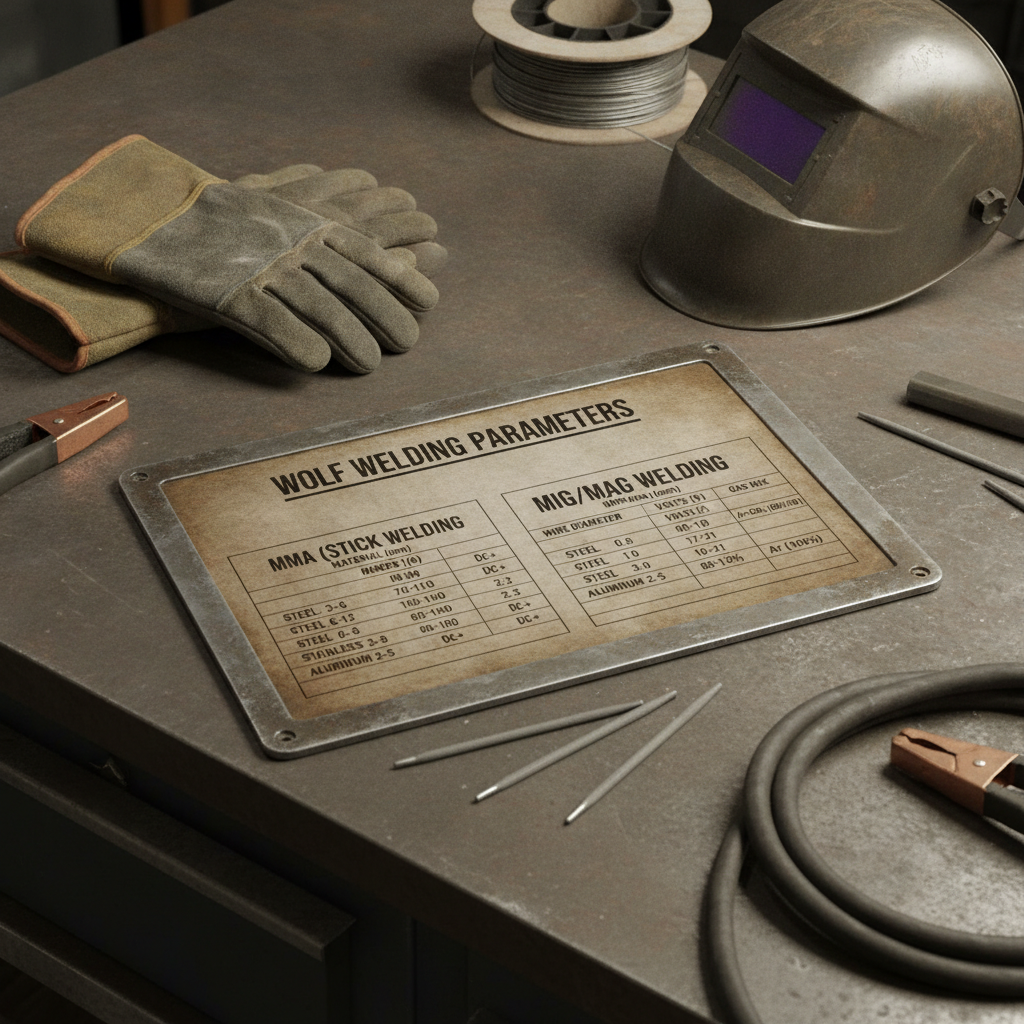
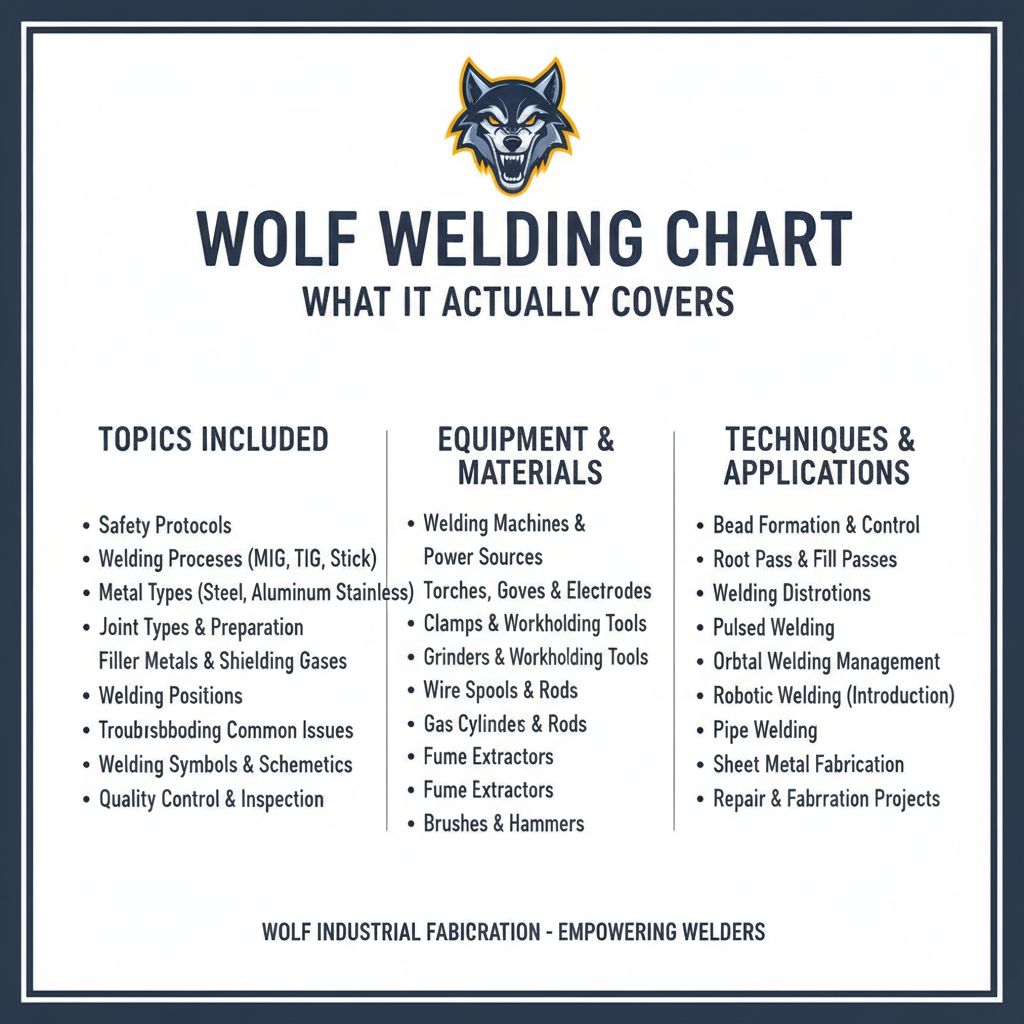
Wolf produces a range of budget-friendly and mid-range welding machines sold widely in the UK and Europe. Their machines typically include a printed or digital reference chart covering two main processes:
– MMA (Manual Metal Arc) — also called stick welding, using coated electrodes
– MIG (Metal Inert Gas) — using a continuous wire feed with shielding gas or flux-core wire
The chart maps electrode or wire size against material thickness and gives a suggested amperage range. For MIG machines, it also references wire feed speed settings, which are usually numbered dials rather than precise meters-per-minute values on entry-level units.
Wolf MIG Welding Settings Chart
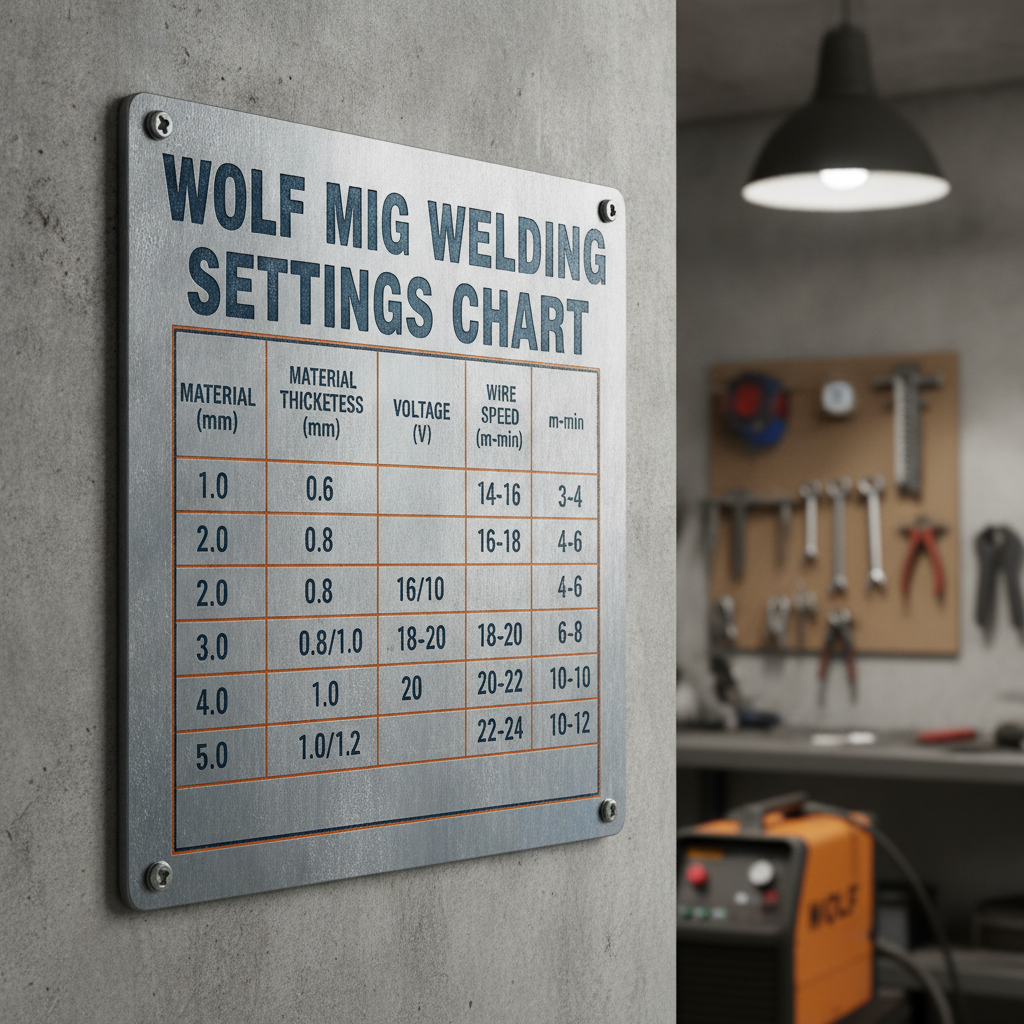
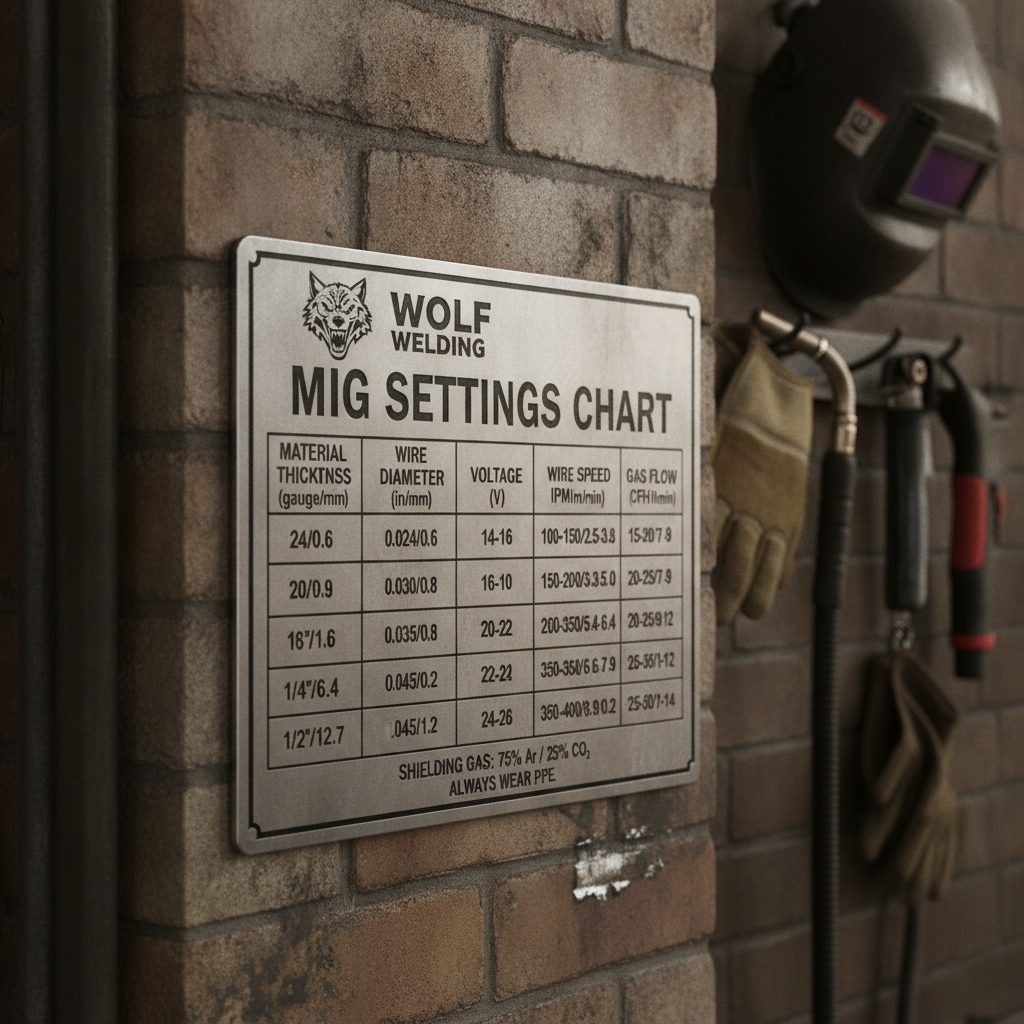
The table below reflects typical Wolf MIG machine recommendations for mild steel using ER70S-6 wire with a 75/25 Argon/CO₂ shielding gas mix. These figures align with the general guidance found on Wolf machine panels and documentation.
| Material Thickness | Wire Diameter | Voltage Setting | Amperage (Approx.) | Wire Feed Speed |
|---|---|---|---|---|
| 0.6 – 0.8mm | 0.6mm | Low (1–2) | 40–60A | 2–3 |
| 1.0 – 1.5mm | 0.6mm | Low-Mid (2–3) | 60–80A | 3–4 |
| 1.5 – 2.5mm | 0.8mm | Mid (3–4) | 80–110A | 4–5 |
| 2.5 – 4.0mm | 0.8mm | Mid-High (4–5) | 110–140A | 5–6 |
| 4.0 – 6.0mm | 0.9–1.0mm | High (5–6) | 140–180A | 6–8 |
Note: Voltage and wire feed numbers refer to dial positions on typical Wolf MIG machines, not absolute values. Actual output varies by model.
On Wolf machines with numbered dials rather than digital readouts, matching the dial position to the material thickness column is the fastest way to get close. From there, listen to the arc — a steady crackling sound like frying bacon indicates a good arc. Popping and spitting usually means wire feed is too fast or voltage is too low.
Wolf MMA (Stick) Welding Settings Chart
MMA welding with Wolf machines follows standard electrode amperage guidelines. The chart below covers common electrode types and sizes.
| Electrode Diameter | Electrode Type | Recommended Amperage | Typical Use |
|---|---|---|---|
| 1.6mm | E6013 / E7018 | 35–55A | Very thin steel, sheet metal |
| 2.0mm | E6013 | 50–80A | Light fabrication, thin sections |
| 2.5mm | E6013 / E7018 | 70–110A | General mild steel fabrication |
| 3.2mm | E6013 / E7018 | 100–140A | Structural work, thicker plate |
| 4.0mm | E7018 / E6011 | 130–180A | Heavy plate, structural steel |
E6013 electrodes are the most forgiving for beginners — they run well on AC and DC, produce a soft arc, and are easy to restart. E7018 electrodes require a slightly higher amperage and work best on DC with a low-hydrogen technique. Wolf MMA machines typically output DC, which suits both electrode types well.
How to Read and Apply the Chart Correctly
The chart gives you a starting range, not a fixed answer. Several variables shift the ideal settings in practice:
– Joint type — a butt joint on 3mm plate needs slightly more heat than a lap joint on the same thickness
– Position — overhead and vertical welding typically require 10–15% less amperage than flat position
– Metal condition — mill scale, rust, or paint increases resistance and can require minor adjustments
– Ambient temperature — cold metal in a winter workshop absorbs heat faster, sometimes requiring a small bump in settings
A practical approach is to run a test bead on scrap material of the same thickness before committing to the actual workpiece. Watch the bead profile — a flat, slightly convex bead with good tie-in at the edges is ideal. A high, narrow bead suggests insufficient heat. A wide, flat, or undercut bead suggests too much.
Common Setup Mistakes When Using the Chart
Most problems beginners encounter come from misreading the chart or ignoring the variables around it.
Using the wrong wire diameter is one of the most frequent issues. Running 0.8mm wire on 1mm sheet metal at chart-recommended settings for 0.8mm wire will likely burn through. Match wire diameter to the thinner end of the material range first.
Ignoring gas flow rate is another overlooked factor. Wolf MIG machines require shielding gas set at roughly 8–12 litres per minute for most applications. Too low and you get porosity; too high and turbulence pulls in atmospheric contamination.
Setting wire feed speed without adjusting voltage throws the arc out of balance. On Wolf’s dial-based machines, voltage and wire feed are adjusted together — moving one without the other is a common cause of erratic arc behavior.
Shielding Gas Recommendations for Wolf MIG Machines
Wolf MIG machines are compatible with standard shielding gases available from most welding suppliers.
| Gas Type | Mix | Best For | Notes |
|---|---|---|---|
| Argon/CO₂ | 75/25 | Mild steel general work | Most common, good penetration and finish |
| Pure CO₂ | 100% | Mild steel, budget option | More spatter, deeper penetration |
| Argon/CO₂ | 90/10 | Thin sheet, cosmetic welds | Cleaner finish, less spatter |
| Pure Argon | 100% | Aluminium (MIG) | Only for aluminium wire setups |
For most users running a Wolf MIG on mild steel, a 75/25 Argon/CO₂ mix is the practical default. It balances penetration, spatter control, and bead appearance well across the thickness ranges the chart covers.
Troubleshooting Arc and Weld Quality Problems
Even with correct chart settings, problems appear. Here’s how to diagnose the most common ones:
Excessive spatter
– Voltage too low for the wire feed speed
– Contaminated base metal or wire
– Incorrect gas mix or insufficient flow rate
Porosity (holes or pits in the weld)
– Shielding gas not flowing or flow rate too low
– Drafts in the workspace disrupting gas coverage
– Contaminated base metal (oil, rust, paint)
– Wet or damaged flux-core wire
Burn-through on thin material
– Amperage or voltage too high for the thickness
– Travel speed too slow
– Consider using 0.6mm wire and the lowest voltage setting
Incomplete fusion or cold lap
– Amperage too low
– Travel speed too fast
– Incorrect torch angle (should be 10–15° push or pull angle)
Arc won’t strike or keeps sticking (MMA)
– Amperage too low for the electrode diameter
– Electrode is damp — bake E7018 electrodes at 120°C for one hour if they’ve been exposed to moisture
FAQ
What settings should I use on a Wolf MIG welder for 3mm mild steel?
For 3mm mild steel on a Wolf MIG machine, use 0.8mm ER70S-6 wire with a mid-to-high voltage setting (around dial position 4–5 on most Wolf units) and a wire feed speed of 5–6. Amperage should land in the 110–140A range. Run a test bead on scrap first and adjust if the bead profile looks too convex or shows undercut at the edges.
Can I use a Wolf MIG welder without gas using flux-core wire?
Yes. Most Wolf MIG machines support gasless flux-core wire (typically E71T-GS in 0.8mm or 0.9mm). When switching to flux-core, reverse the polarity on the machine from DCEP to DCEN — the torch lead goes to negative and the earth to positive. Settings from the standard chart will need slight adjustment, as flux-core typically runs at slightly lower wire feed speeds for the same amperage range.
Why does my Wolf MMA welder keep sticking to the electrode?
Electrode sticking almost always means the amperage is set too low for the electrode diameter. Check the chart for the minimum recommended amperage for your electrode size and increase by 5–10A. Also ensure the electrode is dry — moisture in the coating causes erratic arc behavior and sticking, particularly with E7018 low-hydrogen electrodes.
How accurate is the Wolf welding chart for stainless steel or aluminium?
The Wolf welding chart is primarily calibrated for mild steel. Stainless steel typically requires 10–15% less amperage than mild steel at the same thickness due to lower thermal conductivity. Aluminium MIG welding requires a spool gun or push-pull setup, pure argon shielding gas, and significantly different wire feed speeds — the standard chart does not apply directly to aluminium.
What’s the difference between Wolf MIG and MMA settings, and can one machine do both?
Wolf produces combination MIG/MMA machines (often labeled MIG-MMA or multi-process) that handle both processes. MIG uses continuous wire feed with shielding gas for faster, cleaner welds on thinner material. MMA uses coated stick electrodes and is better suited for outdoor work, thicker material, and rusty or painted surfaces. The settings charts for each process are separate — MIG uses voltage and wire feed, while MMA uses amperage only.
What wire feed speed should I use for 1.5mm sheet metal on a Wolf MIG?
For 1.5mm mild steel, 0.6mm or 0.8mm wire at dial position 3–4 with a wire feed speed of 3–5 is a reasonable starting point. The arc should sound smooth and consistent. If you hear irregular popping, increase voltage slightly or reduce wire feed speed. Thin sheet is unforgiving — err toward lower settings and increase gradually rather than starting too hot.
How do I convert Wolf dial settings to actual voltage and amperage values?
Wolf’s entry-level and mid-range MIG machines use stepped or continuous dials that don’t display absolute values. The best approach is to use a clamp meter on the welding lead to measure actual output amperage during a test weld. Alternatively, Wolf’s product documentation for specific models sometimes includes a dial-to-output reference table. Contacting Wolf’s UK technical support line can also provide model-specific calibration data.
Final Thoughts
The Wolf MMA and MIG welding chart is a reliable starting framework, not a rigid rulebook. Material condition, joint design, position, and machine-to-machine variation all shift the ideal settings slightly. Spend time on scrap material before every new job, listen to the arc, and watch the weld pool — those real-time signals will tell you more than any chart can. Once you’ve built a feel for how your specific Wolf machine responds, the chart becomes a fast reference rather than a crutch.