
If you’ve ever watched a MIG weld arc up and wondered what’s actually happening at that glowing tip, you’re asking the right question. The temperature involved is far beyond anything most people encounter in everyday life.
MIG welding generates arc temperatures between approximately 6,000°F and 10,000°F (3,300°C to 5,500°C) at the point of the electric arc. The weld pool itself sits at roughly 2,900°F to 3,500°F (1,600°C to 1,930°C) depending on the base metal. By comparison, the surface of the sun is around 10,000°F — so a MIG arc approaches solar surface temperatures.
The Difference Between Arc Temperature and Weld Pool Temperature
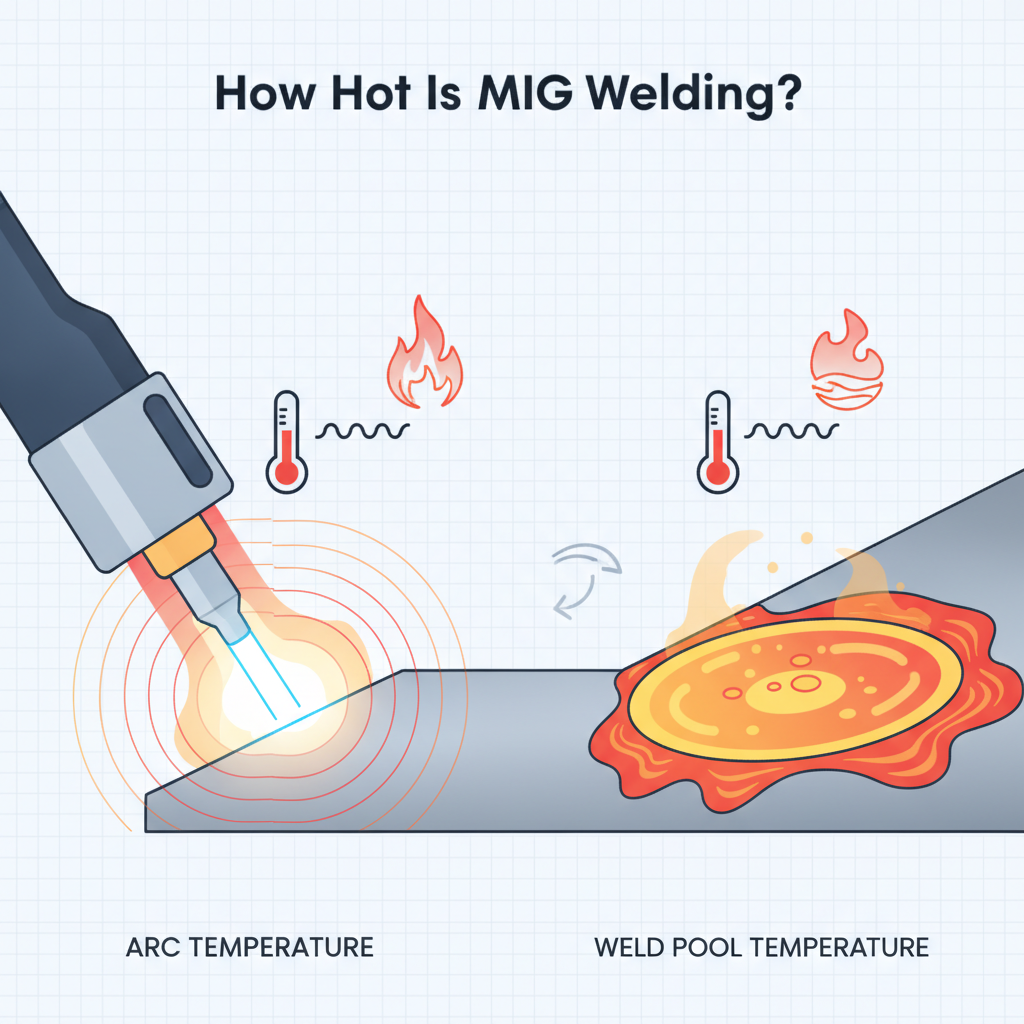
These two numbers often get confused, so it’s worth separating them clearly.
The arc temperature is the temperature of the electrical discharge itself — the intense plasma column between the wire electrode and the base metal. This is the extreme figure, often cited between 6,000°F and 10,000°F.
The weld pool temperature is what the molten metal actually reaches. For mild steel, this is typically around 2,800°F to 3,000°F, which is above steel’s melting point of roughly 2,500°F. The arc delivers far more energy than needed to melt the metal — the excess drives penetration, fusion, and heat transfer into the surrounding base material.
In practice, the arc temperature rarely matters to the welder directly. What matters is how that energy transfers into the weld pool and the surrounding heat-affected zone (HAZ).
How MIG Welding Heat Compares to Other Processes
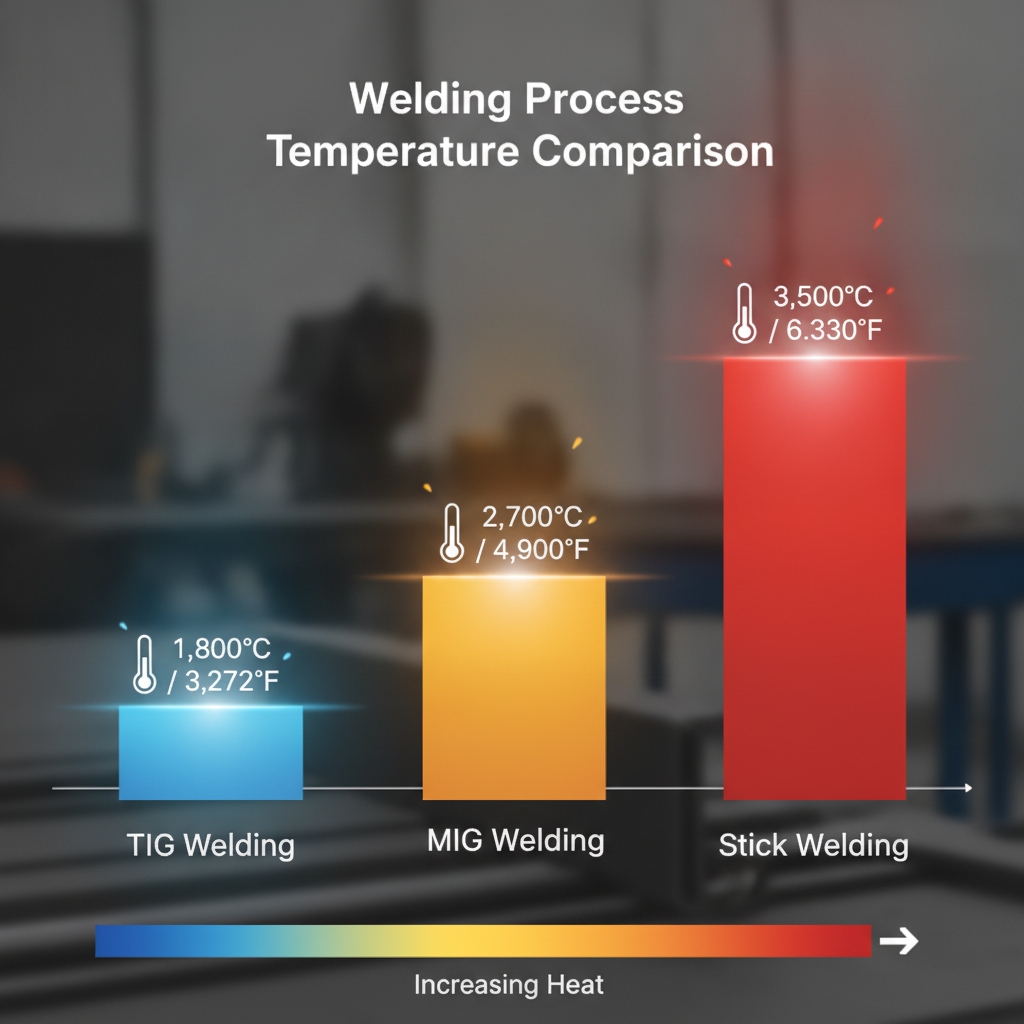
MIG (Metal Inert Gas) welding isn’t the only high-heat process, and arc temperature alone doesn’t tell the full story. Here’s how it stacks up against other common welding and cutting methods.
| Process | Arc / Flame Temperature | Notes |
|---|---|---|
| MIG Welding | ~6,000°F – 10,000°F | Most common process; good heat control |
| TIG Welding | ~11,000°F – 19,000°F | Higher arc temp; more precise heat input |
| Stick (SMAW) Welding | ~7,000°F – 10,000°F | Similar range to MIG |
| Oxy-Acetylene Welding | ~5,600°F – 6,300°F | Lower than arc welding |
| Plasma Cutting | ~25,000°F – 30,000°F | Extreme plasma temperature |
TIG welding can produce a hotter arc than MIG, but TIG is also far more controllable at lower heat inputs. MIG tends to deposit more material faster, which means it moves heat into the base metal more aggressively in many situations. Choosing between TIG and MIG often comes down to material thickness and how much heat the application can tolerate.
What Affects How Much Heat MIG Welding Generates
Not every MIG weld runs at the same heat level. Several factors directly control how much thermal energy enters the base metal.
Voltage Higher voltage increases arc length and spreads heat over a wider area. Lower voltage concentrates heat into a smaller spot. Most hobbyist MIG welders operate between 14V and 22V depending on material thickness.
Wire Feed Speed Wire feed speed controls amperage in MIG welding. Faster wire feed means higher amperage, which means more heat. Slower feed reduces heat input — useful when welding thin sheet metal.
Travel Speed Moving the gun faster reduces total heat deposited per inch. Slowing down concentrates heat and increases penetration. This is one of the most overlooked variables when trying to avoid warping or burn-through.
Wire Diameter Thicker wire requires more amperage to melt properly, which raises heat input. A 0.035″ wire runs hotter than a 0.023″ wire at the same voltage.
Shielding Gas Composition Gas mix affects arc behavior and heat transfer. CO₂-heavy mixtures run hotter and produce deeper penetration. Argon-rich blends produce a softer, more focused arc. For mild steel, the gas mix choice directly influences heat input and bead profile.
Heat-Affected Zone: What Happens Beyond the Arc
The weld pool isn’t the only area that gets hot. The heat-affected zone (HAZ) is the surrounding base metal that experiences elevated temperatures without actually melting.
In the HAZ, grain structure changes. Steel can harden, soften, or become brittle depending on carbon content and cooling rate. On thin materials, the HAZ spreads quickly and can cause warping visible even inches away from the weld.
Managing the HAZ is often more important than managing the arc itself. Techniques that help include:
- Using short, intermittent tack welds to control cumulative heat
- Allowing the workpiece to cool between passes
- Using a backing bar (copper or aluminum) to draw heat away from the weld zone
- Welding in a stitch pattern on long seams instead of running a single continuous bead
Why MIG Welding Temperature Matters for Safety
The temperatures involved in MIG welding create several real hazards beyond just touching a hot part.
The arc emits intense ultraviolet and infrared radiation, which can cause arc eye (photokeratitis) and skin burns within seconds of unprotected exposure. A proper auto-darkening helmet rated to at least shade 10 is essential. The Lincoln Electric Viking 3350 is a well-regarded option that handles MIG and multi-process work.
Spatter and sparks travel several feet from the weld area and remain hot enough to ignite combustible materials for several minutes. A cleared work zone and proper fire-resistant welding blankets reduce this risk significantly.
Metal remains dangerously hot long after the arc stops. Steel that has cooled enough to lose its visible glow can still be above 500°F. Always use welding gloves and tongs to handle recently welded parts, and mark hot metal clearly when working with others nearby.
For a more complete picture of the risks involved, understanding the full safety picture around MIG welding is worth reviewing before you start.
Heat Management When Welding Different Materials
Different metals respond very differently to MIG welding heat, and understanding this changes how you approach each job.
Mild Steel Most forgiving. Tolerates a wide range of heat inputs and doesn’t require preheating for thin to medium sections. Most MIG work happens on mild steel at 115–200 amps.
Stainless Steel Highly sensitive to excess heat. Too much heat causes carbide precipitation (sensitization), which reduces corrosion resistance. Short welds, lower amperage, and faster travel speeds preserve the material’s properties. Dialing in the right settings for stainless MIG welding is critical to avoiding these heat-related problems.
Aluminum Extremely high thermal conductivity means heat dissipates quickly at first, then builds up fast. This creates a narrow window between cold laps and burn-through. Aluminum typically requires higher wire feed speeds and more amperage than steel of the same thickness.
Thin Sheet Metal (under 1/8″) Burn-through is the primary risk. Lower voltage, 0.023″ wire, and faster travel speeds are standard approaches. Many welders switch to flux core or gasless wire on thin material where heat control is tricky with solid wire.
FAQ
What temperature does MIG welding melt steel at?
Steel melts at approximately 2,500°F to 2,750°F depending on carbon content. The MIG weld pool typically sits above this range — around 2,800°F to 3,200°F — to ensure proper fusion. The arc itself burns far hotter, but it’s the weld pool temperature that determines whether the base metal fuses properly with the filler wire.
How hot does the metal get after MIG welding?
Immediately after the arc stops, the surrounding metal in the heat-affected zone can range from 400°F to over 1,000°F, depending on how long you were welding and the thickness of the material. A freshly completed weld bead can remain above 500°F for several minutes. Thin sheet metal cools much faster than heavy plate.
Is MIG welding hotter than TIG welding?
The MIG arc is generally cooler than a TIG arc — TIG can produce arc temperatures above 11,000°F. However, MIG typically deposits more heat into the base metal per unit of time because it runs at higher wire feed speeds and sustains a longer arc. TIG offers finer heat control, especially at low amperages, which makes it preferable for heat-sensitive materials.
Can MIG welding start a fire?
Yes. Sparks and spatter from a MIG arc can travel 10 feet or more and remain hot enough to ignite paper, wood, insulation, and flammable liquids for several minutes after landing. Always clear the weld area of combustibles, use fire-resistant welding blankets on nearby materials, and keep a fire extinguisher accessible. Never weld near fuel tanks, gas lines, or containers that previously held flammable substances.
Does higher amperage always mean better penetration in MIG welding?
Higher amperage generally increases penetration, but there’s a practical limit. Too much heat on thin material causes burn-through. On thick plate, insufficient heat causes poor fusion at the root. The right amperage depends on material thickness, joint type, and position. Most MIG welders follow a rough guideline of 1 amp per 0.001″ of material thickness as a starting reference.
Why does my MIG weld leave discoloration on the metal?
Heat discoloration — the blue, gold, or purple tinting seen around welds — is caused by oxidation of the metal surface as it cools. On mild steel, this is mostly cosmetic. On stainless steel, discoloration indicates excessive heat input that may have compromised the corrosion-resistant surface layer. Proper shielding gas coverage and reduced heat input minimizes discoloration on sensitive materials.
How do I reduce heat distortion when MIG welding?
Use intermittent stitch welds instead of long continuous beads, weld in a back-step sequence, clamp the workpiece firmly before starting, and allow cooling time between passes. For thin sheet metal, a copper backing bar draws excess heat away quickly. Balancing welds on both sides of a joint also helps offset distortion forces.
MIG welding operates at temperatures that dwarf almost anything else encountered in a workshop setting. The arc approaches solar surface temperatures, while the weld pool itself exceeds the melting point of most common metals. What separates a skilled welder from a beginner isn’t the ability to generate that heat — it’s the ability to control where it goes, how much enters the base metal, and how quickly it dissipates. Managing heat input through voltage, wire feed speed, and travel speed is where the real craft lies.