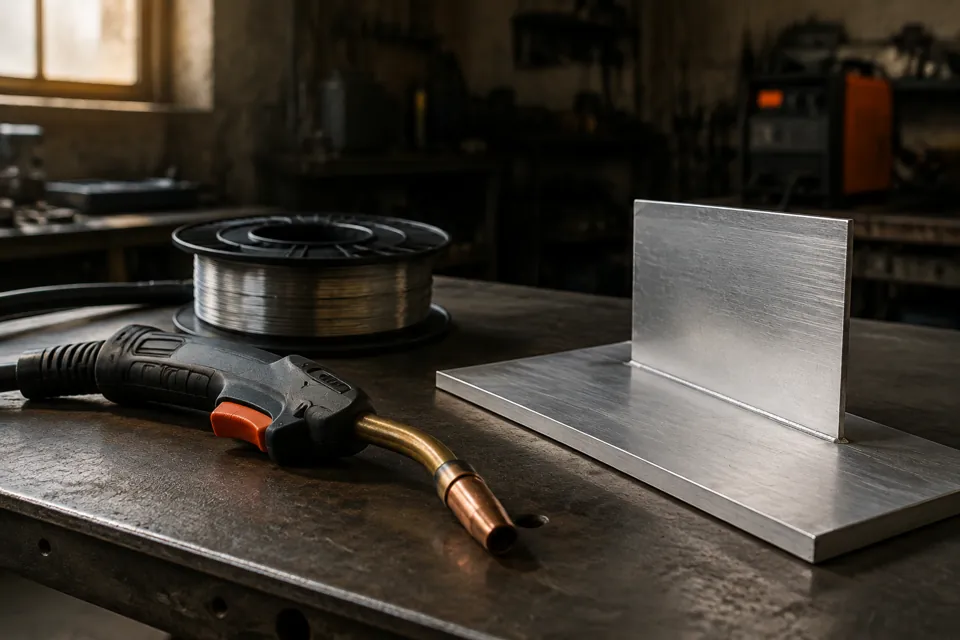
You’ve got a MIG welder sitting in your garage and an aluminum repair job staring you down. It’s a fair question — why buy a dedicated TIG setup when you already own a wire-feed machine?
Yes, you can use a MIG welder to weld aluminum, but it requires specific equipment and technique adjustments. Standard MIG setups designed for steel will not work reliably on aluminum without modifications. At minimum, you’ll need 100% pure argon shielding gas, aluminum-specific filler wire (typically ER4043 or ER5356), and either a spool gun or a Teflon-lined push-pull system to feed the soft wire without bird-nesting.
Why Aluminum Behaves Differently Than Steel
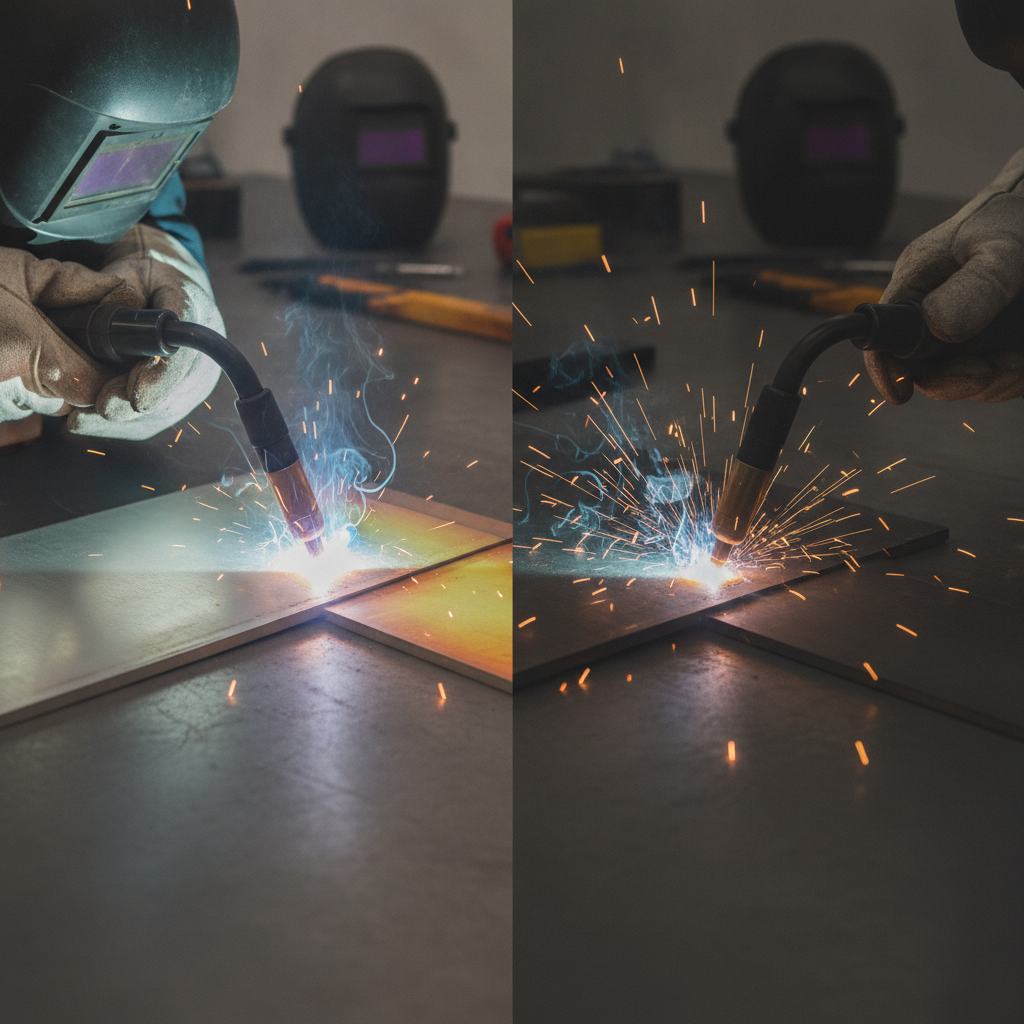
Aluminum isn’t just a lighter version of steel — it reacts completely differently under heat. Its thermal conductivity is roughly six times higher than steel, meaning heat disperses rapidly across the workpiece. That makes it easy to get a cold start followed by sudden burn-through once the base metal reaches temperature.
Aluminum also forms a tough oxide layer on its surface. That oxide melts at around 3700°F, while the base aluminum beneath it melts at roughly 1200°F. If you don’t break through the oxide layer first, you’ll get poor fusion and porosity.
The MIG process handles oxide cleaning through a phenomenon called cathodic cleaning. When running DCEP (electrode positive), the arc action blasts away the oxide layer as you weld. This is one reason MIG and TIG are the standard choices for aluminum over stick welding.
The Equipment Changes You’ll Need
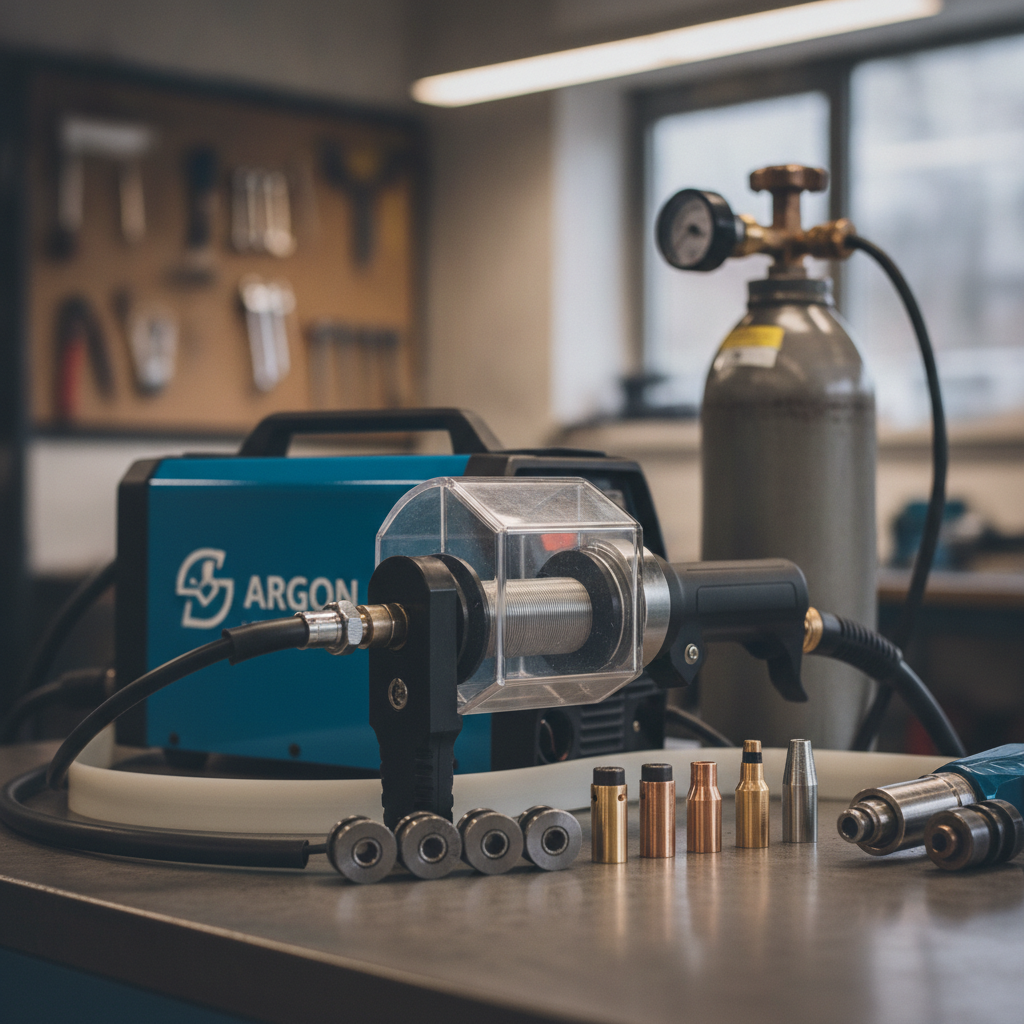
Most standard MIG welders can theoretically run aluminum, but the machine’s setup needs to match the material. Using a steel-configured machine on aluminum wire is a reliable path to frustration.
Here’s what needs to change:
- Shielding gas: Switch completely to 100% argon. The CO2 blends used for steel will cause excessive porosity and arc instability on aluminum. If you want a deeper look at shielding gas selection, the complete guide to MIG shielding gas selection covers argon and blend options in detail.
- Wire type: Use ER4043 or ER5356 aluminum wire. ER4043 is more forgiving and crack-resistant; ER5356 is stronger and better for structural applications.
- Wire feed system: This is the critical issue. Aluminum wire is soft and tends to kink or bird-nest inside a standard steel liner. A spool gun or push-pull gun eliminates most feeding problems.
- Contact tip: Use a tip sized slightly larger than the wire diameter (e.g., a 0.035″ tip for 0.030″ wire) because aluminum expands significantly when heated.
- Drive rolls: Replace V-groove knurled rolls with U-groove smooth rolls. Knurled rolls shave and deform soft aluminum wire.
Spool Gun vs. Standard Torch: Which Works Better?
This is where most hobbyists hit a wall. Running aluminum wire through a standard 10–15 foot MIG torch liner is extremely difficult. The wire buckles and jams before it ever reaches the contact tip.
A spool gun solves this by mounting a small 1-pound wire spool directly at the gun handle, eliminating the long feed path entirely. It’s the most common solution for occasional aluminum welding on standard MIG machines.
The Lincoln Electric Magnum 100SG is a widely used spool gun that works with several mid-range Lincoln machines, and the Miller Spoolmate 150 is another common option compatible with many Miller MIG welders. Both give you clean, consistent wire delivery specifically for aluminum. You can find more detail on fitting a spool gun to a Lincoln MIG welder if that’s the platform you’re working with.
Push-pull systems are the professional alternative — better for longer welds and higher-production environments — but they cost considerably more and typically require a compatible machine.
MIG Aluminum Settings: What to Dial In
Aluminum runs hotter than you might expect compared to steel of the same thickness. You’ll generally use higher voltage and wire feed speed settings.
| Aluminum Thickness | Wire Diameter | Voltage Range | Wire Feed Speed |
|---|---|---|---|
| 1/16″ (1.6mm) | 0.030″ | 15–17V | 250–300 IPM |
| 1/8″ (3.2mm) | 0.035″ | 18–21V | 300–380 IPM |
| 3/16″ (4.8mm) | 0.035″ | 21–24V | 380–450 IPM |
| 1/4″ (6.4mm) | 3/64″ | 24–27V | 420–500 IPM |
These are starting points. Actual settings depend on your machine, travel speed, and joint configuration. For a more thorough breakdown, the aluminum MIG welding settings chart provides specific wire feed, voltage, and gas settings across a wider range of thicknesses.
Always run aluminum in a push angle (torch angled away from the direction of travel). Dragging causes contamination and poor penetration.
Cleaning Aluminum Before Welding
Surface prep matters more with aluminum than with most metals. Skipping this step is one of the most common causes of porosity and weak welds.
- Degrease with acetone or a dedicated aluminum cleaner. Remove oil, grease, and cutting fluids completely.
- Remove the oxide layer with a dedicated stainless steel wire brush — never one that’s been used on steel. Cross-contamination introduces iron particles and creates problems.
- Weld promptly. The oxide layer begins reforming within minutes of brushing. Try to start welding within 20–30 minutes of prep.
Preheating thick aluminum (over 1/4″) to around 200–250°F can help with cold starts and fusion consistency, but avoid excessive preheat because aluminum shows no color change before it melts — you won’t get any visual warning before burn-through.
Common Problems and How to Fix Them
Porosity: Usually caused by moisture, oil contamination, wrong shielding gas, or insufficient gas coverage. Check your gas flow rate (typically 20–30 CFH for aluminum) and verify you’re running straight argon.
Wire bird-nesting: The wire bunches at the drive rolls because of a kink or feeding resistance. The fix is usually a spool gun. If you’re running a standard torch, ensure the liner is Teflon-lined and as short as possible.
Burn-through: Aluminum reaches melting temperature faster than the arc’s visual cues suggest. Move faster, reduce voltage slightly, or try a stitch/tack-and-move approach on thin material. For thin aluminum specifically, patching small holes in aluminum involves similar technique adjustments.
Poor fusion or cold laps: Often caused by insufficient heat, moving too slowly, or incomplete oxide removal. Check that you’re actually achieving penetration rather than just laying wire on the surface.
Arc instability: Confirm your gas is 100% argon, check connections for leaks, and make sure the contact tip is appropriate for aluminum use.
When MIG Isn’t the Best Choice for Aluminum
MIG is practical for aluminum, but it has real limitations. On thin material under 1/8″, TIG welding offers significantly more control and produces cleaner results. TIG also handles complex joint geometries and cosmetically critical work much better.
For short repair welds or where portability matters, MIG with a spool gun is genuinely useful. For precision fabrication, aerospace work, or material under 1/16″, TIG is the more appropriate process — specifically pulsed TIG for aluminum, which gives you better heat control and reduces distortion on thinner sections.
The bottom line: MIG aluminum is a capable production process for material 1/8″ and thicker. Below that threshold, the process becomes increasingly difficult to control.
FAQ
Can any MIG welder run aluminum, or do I need a specific machine?
Most MIG welders with spool gun compatibility can run aluminum with the right setup. The machine needs to support 100% argon shielding gas and accept a spool gun or push-pull torch. Budget flux-core-only machines typically cannot. Mid-range machines like the Hobart Handler 210MVP or Lincoln Electric 210 MP generally support aluminum welding with the appropriate spool gun attachment.
Do I need a special liner for MIG aluminum welding?
Yes. If you’re attempting to push aluminum wire through a standard torch (rather than using a spool gun), you need a Teflon or PTFE liner rather than a standard steel spiral liner. Steel liners create too much friction for soft aluminum wire, causing inconsistent feeding and bird-nesting. Most spool guns bypass this issue entirely by eliminating the long feed path.
What’s the difference between ER4043 and ER5356 aluminum wire?
ER4043 contains silicon, which makes it more fluid and easier to work with. It’s better for general repairs, castings, and crack-prone alloys. ER5356 is a magnesium-based wire that’s stronger and more corrosion-resistant, making it preferred for marine applications and structural work. When in doubt, ER4043 is the more forgiving starting point for beginners.
Can you MIG weld aluminum without a spool gun?
Technically yes, but it’s very difficult with most standard MIG setups. You need a short, straight Teflon-lined torch, minimal drive roll tension, and U-groove drive rolls. In practice, even experienced welders find that a spool gun is the most reliable solution for consistent aluminum wire feeding. Without one, expect feeding problems unless your machine has a push-pull system.
What shielding gas percentage should I use for MIG welding aluminum?
Use 100% argon — no exceptions. Unlike steel, which benefits from CO2 or mixed gases, aluminum requires pure argon for stable arc characteristics and proper cathodic cleaning of the oxide layer. Flow rate should typically be between 20–30 cubic feet per hour. Higher flow rates can cause turbulence and actually pull in atmospheric contamination.
Why does my aluminum MIG weld look gray and dirty instead of shiny?
A gray, sooty weld appearance usually indicates contamination, insufficient gas coverage, or the wrong shielding gas. Verify you’re running straight argon, check for gas leaks, ensure the aluminum was properly cleaned with acetone and a dedicated stainless brush, and confirm your flow rate is adequate. Moisture in the gas line is another less obvious cause.
Is MIG welding aluminum as strong as TIG welding aluminum?
Both processes can produce structurally sound welds when done correctly. The difference lies in control and consistency. TIG welding allows finer heat input control, which typically produces less porosity and better cosmetic results on thinner material. For thick structural aluminum in production environments, MIG is faster and entirely adequate. For thin or precision work, TIG generally produces superior results.
MIG welding aluminum is absolutely doable with the right setup — it’s not a workaround or a compromise, it’s a legitimate industrial process used in boat manufacturing, trailer fabrication, and structural aluminum work every day. The key is recognizing that aluminum demands different equipment and technique than steel, not just a wire swap. Get the spool gun, switch to argon, use the right wire, and clean the metal properly. The results will follow.