Choosing the wrong lens shade for MIG welding isn’t just uncomfortable — it’s a genuine eye safety risk. Too light and the arc will burn your retinas. Too dark and you can’t see what you’re welding.
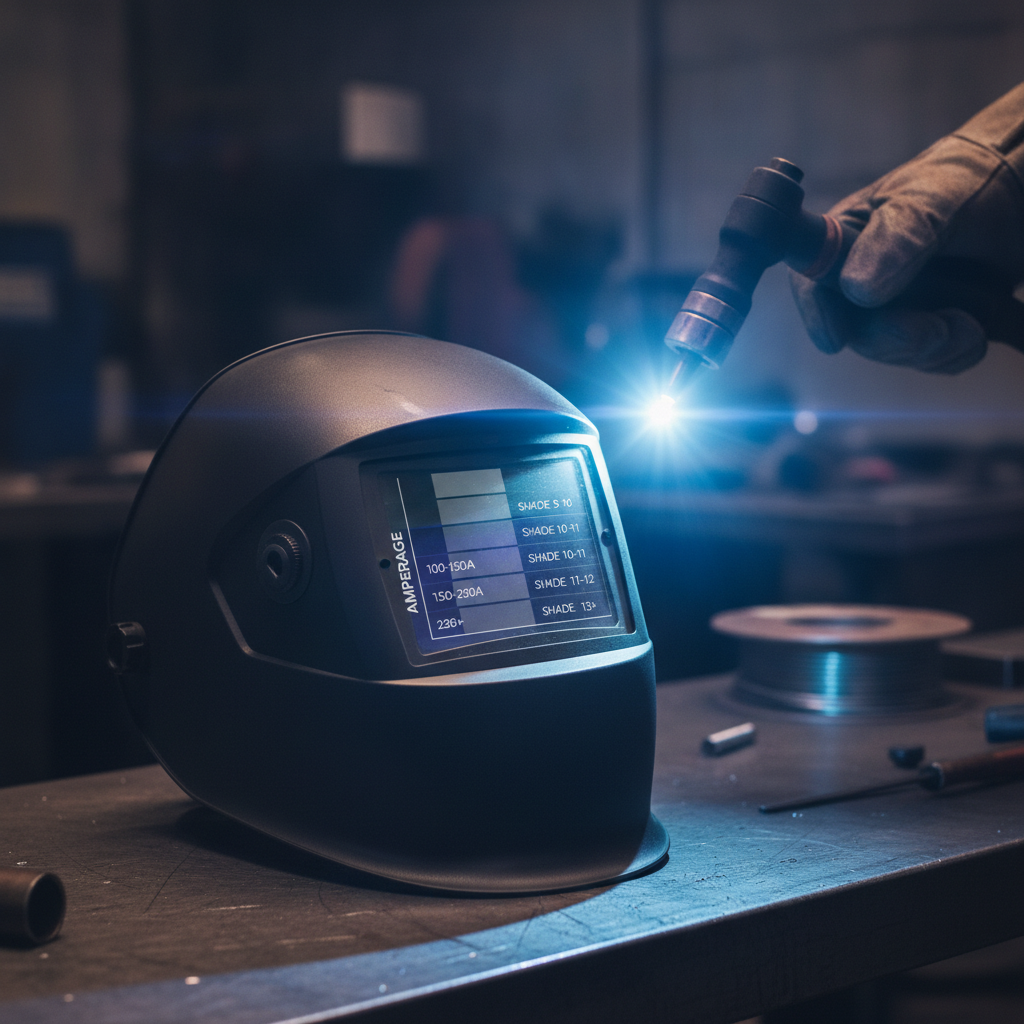
For MIG welding, the correct lens shade is typically between shade 10 and shade 13. Most hobbyist and light industrial MIG welding at standard amperages (75–200A) is best done at shade 10 or 11. Higher amperage work (200A+) generally requires shade 12 or 13. The American National Standards Institute (ANSI) and AWS both recommend shade 10 as a minimum starting point for MIG welding.
Why Lens Shade Matters More Than Most Beginners Realize
The arc in MIG welding emits intense ultraviolet (UV), infrared (IR), and visible light radiation simultaneously. Your eyes cannot detect UV damage until it’s already done — a condition called arc eye (photokeratitis), which feels like sand in your eyes hours after exposure.
Lens shade numbers represent optical density. Each increase in shade number blocks a meaningful additional percentage of harmful radiation. The difference between a shade 9 and a shade 11 isn’t minor — it’s a significant reduction in UV and IR transmission.
That said, going too dark creates a different problem. If you can’t clearly see the weld puddle, your technique suffers and weld quality drops. The goal is the darkest shade that still lets you read the puddle comfortably.
MIG Welding Shade Recommendation by Amperage
Amperage is the primary variable that determines which shade you need. Higher current produces a brighter, more intense arc.
| Welding Current (Amps) | Recommended Shade | Minimum Shade |
|————————|——————-|—————|
| Under 60A | Shade 7–8 | Shade 7 |
| 60–160A | Shade 10 | Shade 9 |
| 160–250A | Shade 10–11 | Shade 10 |
| 250–350A | Shade 12 | Shade 11 |
| 350–500A | Shade 13 | Shade 12 |
Most home garage and light fabrication MIG welding falls in the 80–180A range, making shade 10 the most practical everyday choice. If you’re welding thicker plate or running a higher-output machine like a Lincoln Electric PRO-MIG 180 at or near maximum amperage, bumping to shade 11 gives your eyes better protection without sacrificing puddle visibility.
ANSI and AWS Shade Standards for MIG Welding
Both ANSI Z87.1 and AWS F2.2 provide lens shade selection tables specifically for MIG welding (referred to in standards as GMAW — Gas Metal Arc Welding).
AWS recommends:
– Shade 10 as the minimum for most GMAW applications
– Shade 11–12 for heavier plate work or higher arc currents
– Shade 13 for high-amperage heavy fabrication
These are minimum safety standards, not preferences. In practice, most experienced welders run one shade higher than the minimum to account for variability in arc conditions and material reflectivity. Stainless steel, for example, tends to produce a slightly brighter arc than mild steel at the same amperage — something worth factoring in when you’re dialing in your MIG stainless steel settings.
Fixed Shade vs. Auto-Darkening Helmets
This is where most beginners have the biggest decision to make.
Fixed shade helmets use a passive lens permanently set to a specific shade. They’re simple, affordable, and reliable — nothing to battery-fail mid-weld. The downside is you flip the helmet down blind before every arc strike.
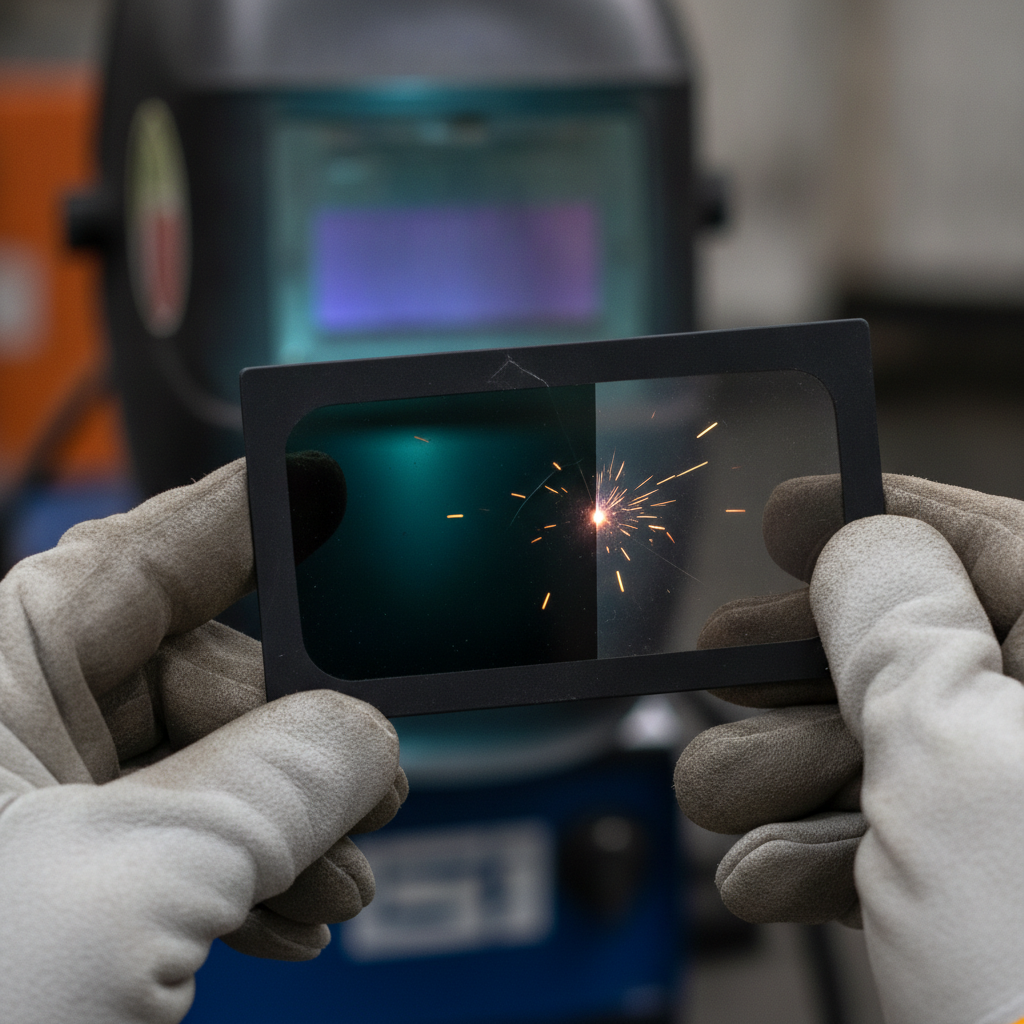
Auto-darkening helmets use an electronic filter that switches from a light state (typically shade 3–4) to a dark state (shade 9–13) within milliseconds of arc detection. You can position the torch, check your joint, and start welding without flipping your head down.
For MIG welding specifically, auto-darkening helmets with an adjustable shade range of 9–13 are the practical choice. Most quality auto-darkening helmets, including the Lincoln Electric Viking 3350 and the YESWELDER True Color Solar Auto Darkening Welding Helmet, cover this range and allow on-the-fly shade adjustment as you switch between jobs.
Key specs to look for in an auto-darkening helmet for MIG welding:
– Shade range: At minimum, shade 9–13
– Switching speed: 1/25,000 second or faster
– Solar + battery powered: More reliable than battery-only
– Arc sensors: At least 2, ideally 4 for better detection in tight positions
A common mistake beginners make is buying a helmet with a fixed auto-darkening shade (often locked at shade 10) only to find they need shade 11 for thicker work. Always confirm the shade is adjustable.
How Wire Feed Welding Compares to Other Processes
It’s worth knowing where MIG fits relative to other processes, since welding shade requirements vary significantly across techniques.
| Process | Typical Shade Range |
|—————–|———————|
| MIG / GMAW | 10–13 |
| Flux Core / FCAW | 10–13 |
| Stick / SMAW | 10–14 |
| TIG / GTAW | 9–13 |
| Oxy-Acetylene | 5–8 |
| Plasma Cutting | 7–9 |
MIG and flux core (gasless MIG) welding share essentially the same shade range, which makes sense since the arc characteristics are similar. If you switch regularly between processes, an auto-darkening helmet with a wide shade range covers all of them.
Common Mistakes with Welding Lens Shade
Using a shade that’s too low. Shade 9 is occasionally used for light MIG work, but most AWS guidance puts the minimum at shade 10. Shade 9 is better suited to TIG welding at low amperage. Using it for MIG is a small but real risk.
Assuming the same shade works for every job. Running thin sheet metal at 80A and then switching to 3/8″ plate at 200A with the same shade 10 lens is fine, but at 250A and above, reconsidering shade 12 is worth it.
Ignoring lens quality in favor of shade number alone. A cheap fixed lens at shade 10 may not meet ANSI Z87.1 standards for UV and IR filtration. Always verify the lens meets relevant optical and safety certifications, not just the shade number on the box.
Forgetting that reflected arc light matters. Working in enclosed spaces or near reflective surfaces (polished stainless, aluminum) increases total light exposure. In those conditions, moving up one shade is a reasonable precaution.
One of the broader dangers of MIG welding people underestimate is cumulative UV exposure — repeated brief exposure to a slightly-too-light lens adds up over time, even without obvious immediate discomfort.
FAQ
What shade lens do I need for MIG welding mild steel?
For mild steel MIG welding at typical hobbyist amperage (80–175A), shade 10 is the standard recommendation and covers the majority of jobs. If you’re regularly running above 200A on thicker material, moving to shade 11 provides better eye protection without meaningfully reducing puddle visibility.
Can I use a shade 9 lens for MIG welding?
Technically yes at very low amperage (under 75A), but AWS recommends shade 10 as the minimum for most MIG applications. Shade 9 is more appropriate for low-amperage TIG welding. Using shade 9 for general MIG welding puts you below the recommended safety threshold.
What shade is best for flux core MIG welding?
Flux core welding (FCAW) uses the same shade range as standard MIG — shade 10 to 13 depending on amperage. Because flux core often runs at higher amperages than short-circuit MIG on thin material, shade 11 is a common choice for medium-duty flux core work.
Does the shade number matter differently for auto-darkening vs. fixed helmets?
The shade number itself means the same thing regardless of helmet type — it measures optical density. The key difference is that auto-darkening helmets also need to meet switching speed and arc sensitivity standards. A properly functioning auto-darkening helmet at shade 10 protects identically to a fixed shade 10 lens.
Is shade 10 dark enough for all MIG welding?
Shade 10 is sufficient for most common MIG welding up to around 200A. Above that threshold — particularly on heavy plate or structural work — shade 11 or 12 is more appropriate. For high-amperage industrial MIG above 350A, shade 13 is the safer choice.
Can welding with the wrong shade damage your eyes permanently?
Yes. Repeated or prolonged exposure to arc radiation through an insufficiently dark lens can cause photokeratitis (arc eye) in the short term and cumulative retinal damage over time. UV damage to the eyes is painless during exposure, which makes it especially deceptive. Always use the correct shade or one shade higher.
What shade works if I’m doing both MIG and stick welding?
Both processes overlap in the shade 10–12 range. Stick welding at higher amperage typically requires shade 12–14, while MIG sits at 10–12. An auto-darkening helmet with an adjustable shade range of 9–13 covers both processes comfortably with a quick adjustment between jobs.
The Practical Takeaway
Shade 10 handles the majority of MIG welding work done in home shops and light fabrication. If you’re running higher amperages regularly or working with reflective materials, shade 11 or 12 is the smarter call. An auto-darkening helmet with an adjustable shade range of 9–13 gives you the flexibility to match the shade to the job rather than forcing every weld through the same fixed lens. Never go below the minimum AWS-recommended shade to try to see the puddle better — improve your technique instead.