Choosing the wrong shielding gas is one of the most common reasons MIG welds turn out porous, spattered, or weak — even when the settings seem right. The gas you use directly affects arc stability, penetration, and how clean the finished weld looks.
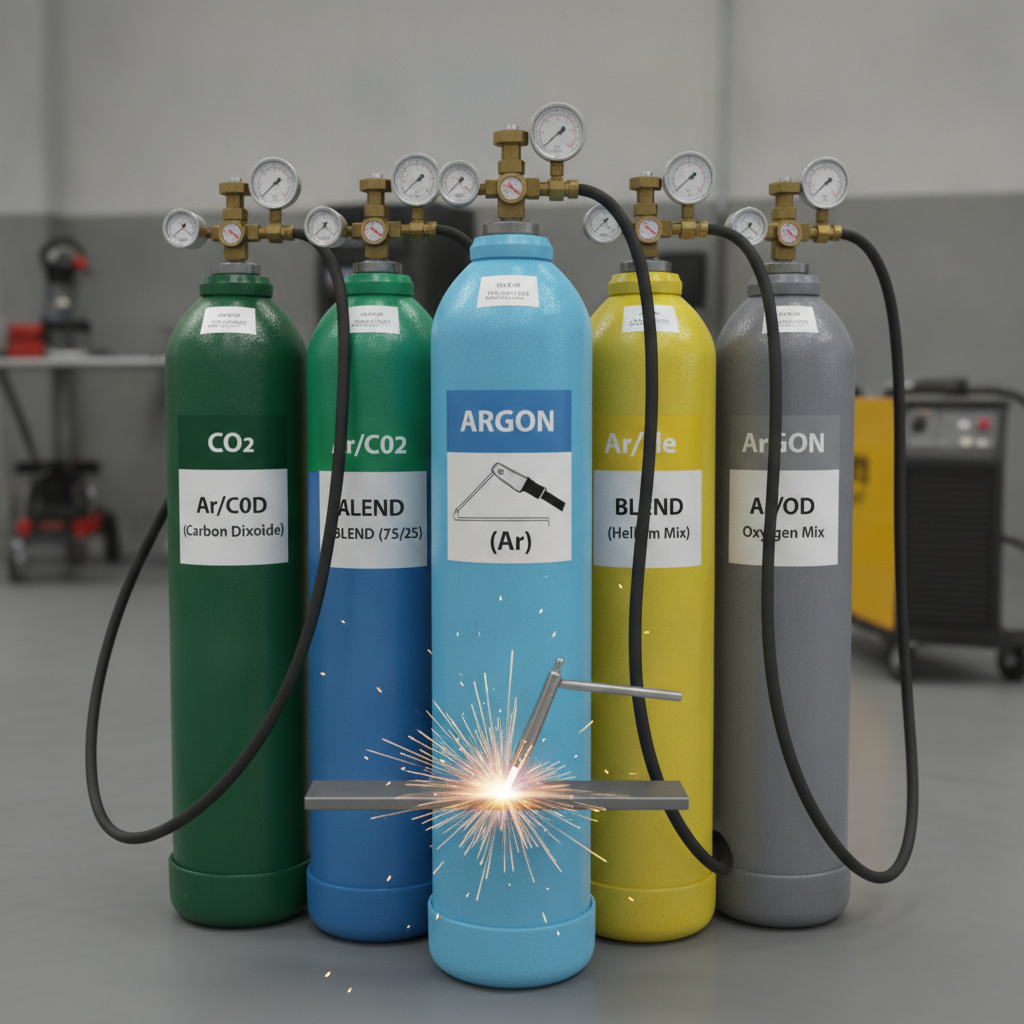
For most MIG welding applications, a 75% argon / 25% CO₂ mixture (commonly called C25) is the go-to shielding gas. It works well on mild steel, produces a stable arc, and minimizes spatter. Pure CO₂ is a lower-cost option for basic steel work. Stainless steel typically requires a tri-mix of argon, CO₂, and helium, while aluminum requires 100% pure argon.
Why Shielding Gas Matters
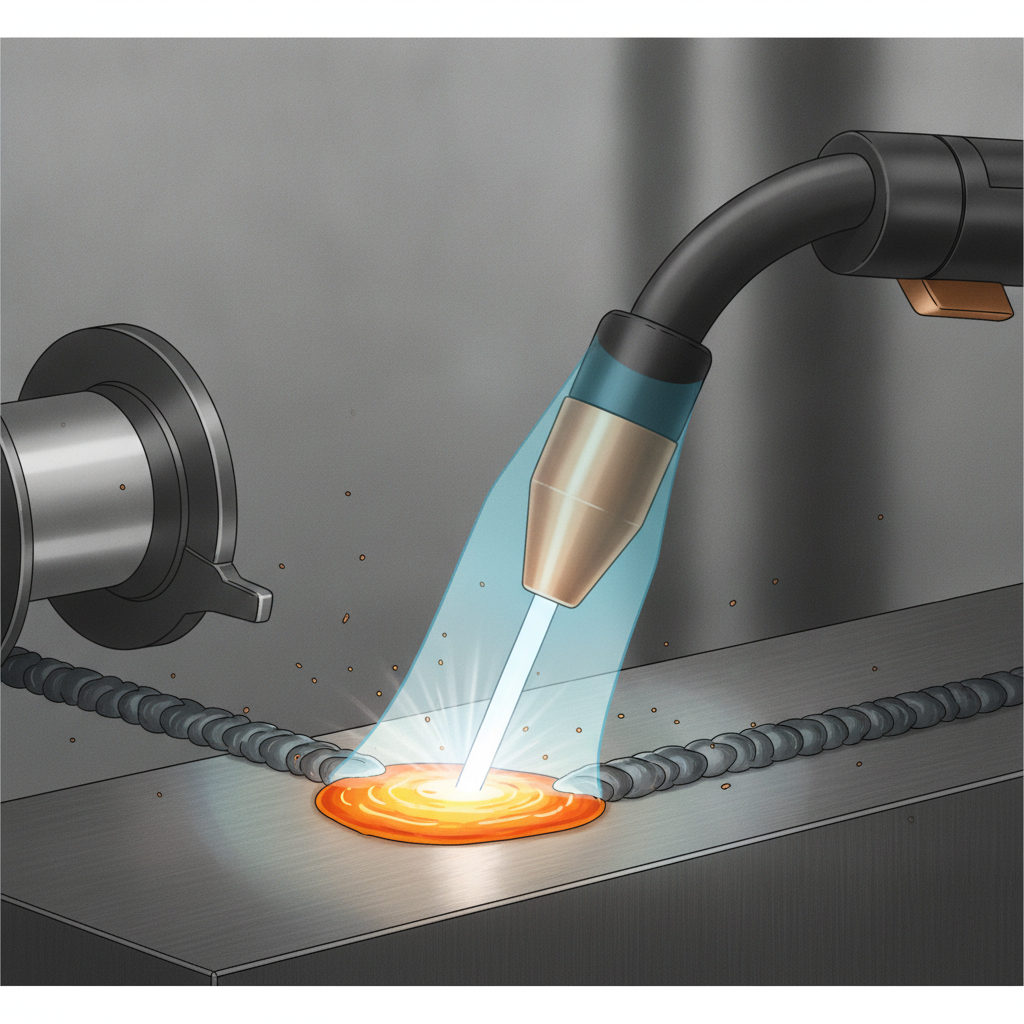
MIG welding produces a molten weld pool that’s extremely reactive to oxygen and nitrogen in the surrounding air. Without a shielding gas flowing around the arc, you’d get weld contamination, porosity, and brittle joints.
The shielding gas doesn’t just protect the weld. It also influences how the arc transfers metal, how much spatter you deal with, how deep the weld penetrates, and how the finished bead looks.
Different gases have different properties, which is why there’s no single “best” gas for every situation.
The Most Common MIG Welding Gases
Here’s a breakdown of the gases used most frequently in MIG welding:
| Gas | Common Mixtures | Best For |
|—|—|—|
| Argon + CO₂ | 75/25 (C25), 90/10 | Mild steel, general fabrication |
| 100% CO₂ | Pure CO₂ | Budget mild steel welding |
| 100% Argon | Pure argon | Aluminum |
| Tri-Mix | 90% He / 7.5% Ar / 2.5% CO₂ | Stainless steel |
| Argon + CO₂ (higher Ar) | 90% Ar / 10% CO₂ | Thin steel, automotive |
| Argon + Helium | Various | Aluminum, exotic alloys |
Argon/CO₂ Mix for Mild Steel
The 75/25 argon/CO₂ blend is the most widely used MIG shielding gas for mild steel, and for good reason. It delivers a smooth arc, manageable spatter, and solid penetration across a wide range of material thicknesses.
The argon stabilizes the arc and improves bead appearance, while the CO₂ adds penetration and keeps costs lower than pure argon blends. In practice, most welders running mild steel projects in a shop or garage will use C25 without thinking twice.
For thinner materials — like automotive body panels — a 90/10 argon/CO₂ mix is worth considering. The higher argon content reduces heat input and spatter, which makes it easier to control burn-through on thin gauge steel. You can get a deeper look at how these blends compare in this CO₂ vs argon mix comparison for mild steel.
100% CO₂ works for MIG welding mild steel and costs significantly less per cubic foot than argon blends. It produces deeper penetration than C25, which can be useful on thicker material.
The tradeoff is a noticeably rougher arc and much more spatter. You’ll spend more time grinding and cleaning welds. Most professional shops avoid pure CO₂ for this reason, but it’s a reasonable choice for rough structural work where appearance isn’t a priority.
100% Argon for Aluminum
Aluminum MIG welding requires pure argon — no CO₂, no mix. CO₂ will oxidize aluminum and ruin the weld completely.
Pure argon produces a soft, stable arc that handles aluminum’s thermal conductivity and oxide layer without burning through or creating excessive porosity. Most aluminum MIG setups also use a spool gun to prevent wire feeding problems, and the aluminum MIG welding settings chart covers the full picture of voltage, wire feed, and gas flow rates for this material.
Tri-Mix for Stainless Steel
MIG welding stainless steel typically calls for a tri-mix gas — usually around 90% helium, 7.5% argon, and 2.5% CO₂. This combination helps control the weld puddle, reduces carbide precipitation, and produces cleaner, flatter beads on stainless.
Some welders use a simpler 98% argon / 2% CO₂ mix for stainless, which is more affordable and easier to source. The 2% CO₂ provides just enough oxidizing character to stabilize the arc without compromising the stainless surface. For detailed settings when running stainless, the guide on MIG welding stainless steel settings goes into the specifics.
How Flow Rate Affects Gas Performance
Even with the right gas, poor flow rate will cause weld defects. Too little flow means atmospheric contamination reaches the weld pool. Too much creates turbulence that actually draws in air rather than keeping it out.
A typical starting point for most indoor MIG welding is 15–25 CFH (cubic feet per hour) or roughly 7–12 liters per minute. Outdoor welding or larger nozzles may require higher flow rates to maintain adequate coverage.
Setting MIG welding gas pressure correctly is a small adjustment that makes a noticeable difference in weld quality, especially when you’re troubleshooting porosity that doesn’t seem to have an obvious cause.
Welding Without Shielding Gas
It’s worth noting that not all MIG welding requires an external shielding gas. Flux-core wire (FCAW) uses a flux compound inside the wire that creates its own shielding when it burns. This works well outdoors or in windy conditions where gas coverage is unreliable.
Gasless flux-core welding produces more smoke and spatter than gas-shielded MIG, and the welds typically require more cleanup. For indoor shop work on clean steel, gas-shielded MIG is generally the better choice.
Can I use 100% argon for MIG welding mild steel?
Technically yes, but it’s not ideal. Pure argon on steel produces an unstable, erratic arc with inconsistent penetration. The weld profile tends to be narrow and humped. Some argon/CO₂ blend is almost always better for steel. Pure argon is really only appropriate for aluminum and some TIG applications.
What happens if I use the wrong shielding gas for MIG welding?
Using the wrong gas causes a range of problems including porosity, excessive spatter, unstable arc, poor fusion, and discoloration. Using CO₂ on aluminum will produce a completely failed weld. On steel, using pure argon will result in a rough, poorly fused bead. Gas choice directly affects structural integrity, not just appearance.
Is C25 the same as 75/25 argon CO₂?
Yes. C25 is simply the industry shorthand for a blend of 75% argon and 25% carbon dioxide. It’s the most common pre-mixed cylinder you’ll find at welding supply shops and hardware stores. It’s the standard starting point for most mild steel MIG welding and works with wire sizes from .023″ up through .045″.
Can I MIG weld stainless steel with C25?
It’s possible but not recommended for quality work. C25 contains more CO₂ than stainless steel tolerates well, which can cause carbide precipitation near the weld and reduce corrosion resistance. For stainless steel, use tri-mix or a 98% argon / 2% CO₂ blend for cleaner, more reliable results.
Does shielding gas affect MIG welding spatter?
Significantly. Higher CO₂ content increases spatter because it creates a more reactive, globular transfer mode. Lower CO₂ or higher argon content transitions toward spray transfer, which is much cleaner. Switching from pure CO₂ to a C25 blend is one of the fastest ways to reduce spatter without changing any other settings.
What gas does a Lincoln Electric Weld-Pak 140 use?
The Lincoln Electric Weld-Pak 140 is designed to run with standard C25 (75/25 argon/CO₂) for mild steel work, which covers the majority of projects it’s sized for. It can also run with 100% CO₂. For aluminum, 100% argon is required, though aluminum MIG welding at that power level has some limitations.
How do I know if my shielding gas coverage is adequate?
Porosity — small holes or pits in the weld bead — is the clearest sign of insufficient gas coverage. Other signs include surface discoloration, excessive spatter, and a rough or inconsistent bead profile. If you’re seeing porosity but your gas is connected and flowing, check for drafts, a clogged nozzle, or a flow rate that’s too high or too low.
Practical Takeaway
For most welders working on mild steel, C25 is the correct answer — it’s versatile, widely available, and produces clean welds across a broad range of conditions. Beyond mild steel, the gas selection depends on the base material: pure argon for aluminum, tri-mix or low-CO₂ argon blend for stainless. Getting the gas right won’t fix every problem in a weld, but using the wrong gas will almost guarantee you have problems to fix.