
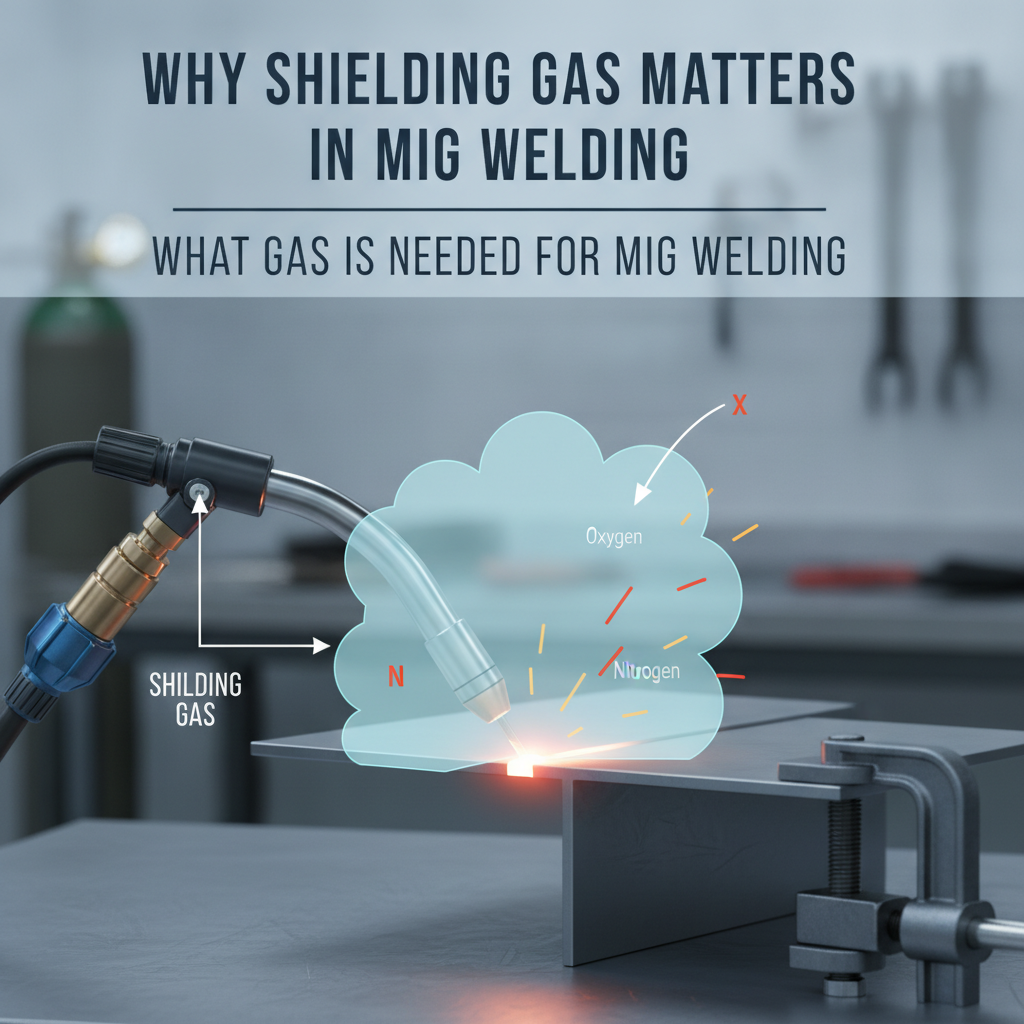
Why Shielding Gas Matters in MIG Welding
The Most Common MIG Welding Gases Explained
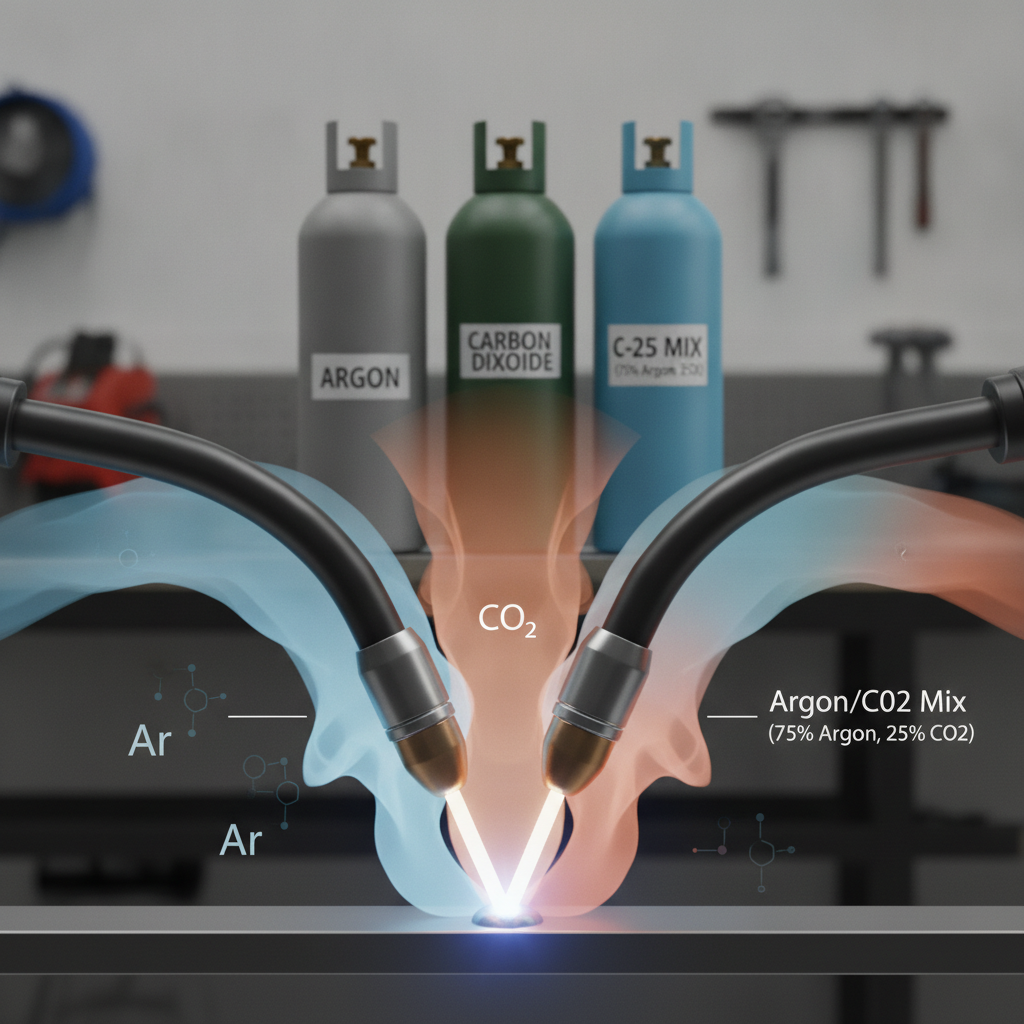
75% Argon / 25% CO₂ (C25) — The Standard for Mild Steel
C25 is the most widely used shielding gas in MIG welding, and for good reason. It balances arc stability, penetration, and spatter control in a way that pure gases typically don’t achieve alone. The argon provides a smooth, stable arc while the CO₂ component adds heat and improves fusion into the base metal. Spatter is manageable, cleanup is minimal, and the bead profile is clean. This mix works across a wide range of material thicknesses, making it the default choice for most garage and shop work on mild steel. If you’re just getting started with MIG welding, C25 is the gas to begin with.Pure CO₂ (100%) — Budget Option with Trade-Offs
Pure CO₂ is significantly cheaper than argon-based mixes and provides deep penetration. It’s commonly used in production environments where cost is a priority and some extra spatter is acceptable. The downside is that the arc runs hotter and less stable compared to C25. Spatter increases noticeably, and the bead tends to be rougher. For structural work where appearance isn’t critical, pure CO₂ performs well. For visible welds or thinner material, C25 is a better choice.Pure Argon — For Aluminum Only
Pure argon is the correct gas for MIG welding aluminum. Argon’s inert properties work well with aluminum’s unique oxide layer and thermal characteristics. Attempting to use CO₂ or C25 on aluminum will cause severe porosity and arc instability. Aluminum also typically requires a spool gun setup to manage the soft wire properly. If you’re working with aluminum, MIG welding aluminum with a spool gun covers the technique side of this in practical detail.Stainless Steel Gas Mixes
Stainless steel requires a different approach. The two most common options are: – 98% Argon / 2% CO₂ — Good general-purpose stainless mix, produces clean welds with minimal oxidation – Tri-Mix (90% Helium / 7.5% Argon / 2.5% CO₂) — Better arc stability and heat distribution, preferred for thicker stainless Using standard C25 on stainless will compromise corrosion resistance by introducing too much carbon into the weld. Getting the gas right here matters more than it does with mild steel.Gas Selection by Material — Quick Reference
| Base Metal | Recommended Gas | Notes | |—|—|—| | Mild Steel | 75% Ar / 25% CO₂ (C25) | Best overall performance | | Mild Steel | 100% CO₂ | Budget option, more spatter | | Aluminum | 100% Argon | Pure argon only | | Stainless Steel | 98% Ar / 2% CO₂ | Standard stainless mix | | Stainless Steel | Tri-Mix (He/Ar/CO₂) | Better for thicker sections | | Thin Sheet Metal | 90% Ar / 10% CO₂ | Less heat, cleaner finish | For a deeper breakdown across more materials and situations, the MIG welding gas selection chart covers the full range of options with specific guidance for each application.What Happens If You Use the Wrong Gas
Using an incorrect shielding gas creates problems that are easy to misdiagnose as technique errors. Common symptoms include: – Excessive porosity — Small holes or pits in the weld, often caused by contamination – Rough, spattered bead — Can indicate too much CO₂ or the wrong mix for the material – Arc instability — Erratic or sputtering arc, often related to gas type or flow issues – Discoloration on stainless — Heavy oxidation caused by incorrect gas chemistry – Burn-through on thin material — Using a high-heat gas like pure CO₂ on light gauge sheet Most of these symptoms disappear quickly once the correct gas is matched to the material and settings.Flow Rate: Getting the Gas Pressure Right
Having the right gas isn’t enough — it also needs to flow at the correct rate. Too little flow allows air to contaminate the weld pool. Too much flow creates turbulence that actually pulls air into the shielding zone. For most indoor MIG welding, a flow rate between 15 and 25 CFH (cubic feet per hour) or approximately 7 to 12 litres per minute is typical. Outdoor work or larger nozzles may require slightly higher flow. Setting gas pressure incorrectly is one of the most overlooked causes of poor welds. The full details on MIG welding gas pressure settings are worth reviewing if you’re troubleshooting quality issues.Can You MIG Weld Without Gas?
Yes — but only with flux core wire, not solid wire. Flux core welding uses a wire filled with flux compounds that generate their own shielding when burned. This makes it practical for outdoor work or situations where carrying a gas cylinder isn’t feasible. However, flux core welding produces more spatter, a rougher surface, and requires slag removal after each pass. It’s a workable solution in certain situations, not a straight replacement for gas-shielded MIG. Machines like the Lincoln Electric Weld-Pak 140 are popular choices that support both gas and gasless flux core operation, giving flexibility when conditions change.Argon Mix Ratios Beyond C25
The 75/25 C25 blend is the most common, but other argon/CO₂ ratios exist and serve specific purposes: – 90% Ar / 10% CO₂ — Better for thin sheet metal, reduces heat input and burn-through risk – 85% Ar / 15% CO₂ — Middle ground, slightly more penetration than C25 – 80% Ar / 20% CO₂ — Closer to C25 performance In practice, C25 handles most mild steel work effectively. Switching to a higher argon ratio is worth considering when working with material under 18 gauge where burn-through is a concern.FAQ
Can I use pure argon for MIG welding mild steel? Pure argon doesn’t work well for mild steel MIG welding. It produces an unstable arc, poor fusion, and an uneven bead profile on ferrous metals. Argon needs CO₂ or oxygen added to properly ionize on steel. Reserve pure argon for aluminum. For mild steel, use C25 or pure CO₂ depending on your priorities. What gas is used for MIG welding stainless steel? The standard gas for MIG welding stainless steel is 98% Argon / 2% CO₂. This minimizes carbon pickup, which would compromise the corrosion resistance that makes stainless useful. Tri-mix (90% Helium / 7.5% Argon / 2.5% CO₂) is used on heavier sections where better heat distribution and arc stability are needed. Is CO₂ or C25 better for MIG welding? C25 generally produces cleaner welds with less spatter and better arc stability than pure CO₂. Pure CO₂ costs less and offers deeper penetration, making it a reasonable choice for structural welds where appearance isn’t the priority. For most hobbyists and light fabrication work, C25 delivers noticeably better results. How do I know if my shielding gas is flowing correctly? Set the regulator to the correct flow rate — typically 15 to 25 CFH for indoor MIG welding — and check for steady flow at the nozzle before striking an arc. Porosity, erratic weld appearance, or spatter that suddenly worsens mid-weld can all indicate a gas flow problem. Check the hose connections, regulator, and gas valve on the welder if symptoms appear. What gas do I need for MIG welding aluminum? 100% pure argon is required for MIG welding aluminum. No CO₂ should be mixed in. Aluminum also demands cleaner base metal, correct wire type (ER4043 or ER5356), and usually a push technique with a spool gun. Getting the aluminum MIG welding settings dialed in matters as much as the gas choice. Can I use the same gas for MIG and TIG welding? Pure argon is used in both TIG welding and aluminum MIG welding, so there is overlap. However, the C25 mix commonly used for mild steel MIG is not appropriate for TIG welding. TIG welding on steel, stainless, and aluminum all use pure argon or helium blends depending on the application. Keep gas choices matched to the process and material. How long does a shielding gas cylinder last? It depends on cylinder size and flow rate. A standard 40 cubic foot cylinder running at 20 CFH gives roughly 2 hours of arc time. Larger 80 or 125 cubic foot cylinders are more practical for regular shop use. If you want to estimate usage accurately, the process for calculating gas consumption in MIG welding makes it straightforward to plan ahead.For most MIG welding applications, C25 (75% Argon / 25% CO₂) will cover the majority of mild steel work cleanly and reliably. Match pure argon to aluminum, use 98% Ar / 2% CO₂ for stainless, and dial in your flow rate correctly. Getting those three things right removes a significant number of the variables that cause weld quality problems.